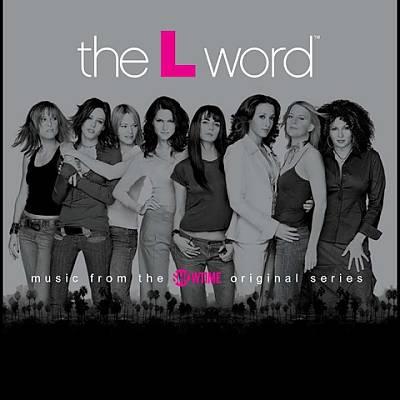
"L Word, The" Soundtrack Lyrics
TV • 2004
Track Listing
The Murmurs
Lucinda Williams
Ella Fitzgerald
Fantcha
Joan Armatrading
Connie Francis
Shelley Campbell
The Be Good Tanyas
Rufus Wainwright
Kinnie Starr
Jason Collett
Marianne Faithful
Joseph Arthur
Frances Faye
"The L Word (Music from the Showtime Original Series)" – Album Guide to Tracks and Key Scenes
Overview
How do you sonically map first love, first betrayal, and first community in a city that never whispers? Season 1 of The L Word answers with a cool blend of vintage torch songs, confessional alt-folk, and café-friendly electronica. The compilation The L Word (Music from the Showtime Original Series) distills those moments into a front-to-back listen that feels like a night at The Planet: clatter, banter, and a jukebox that always knows the subtext.
The album captures 2004 Los Angeles through character lenses: Jenny’s awakenings tilt toward hushed indie and late-night ballads, while Bette and Tina’s home and gallery spaces invite sophisticated pop and old-school glam. The set arrived the same year the show premiered, framing the series’ identity before later seasons leaned harder into electro-indie and the now-famous BETTY theme. According to AllMusic’s album page, the release runs about 55 minutes and plays as a self-contained mood piece even away from the episodes.
Questions & Answers
- When did the first soundtrack release and on which label?
- May 2004 on Tommy Boy/Silver Label.
- Is the theme song on the Season 1 album?
- No full BETTY theme here; it appears prominently from Season 2’s releases onward, while Season 1 focuses on needle-drops used in early episodes.
- Who handled music supervision?
- Natasha Duprey served as music supervisor across early seasons, coordinating placements and clearances.
- Were streaming versions later altered?
- Some episode songs changed in later streams due to licensing; original broadcast/album choices are preserved on the 2004 CD.
- What’s the overall sonic profile of Season 1?
- Intimate singer-songwriters, classic pop standards, and low-key electronica—romantic but unsentimental.
- Does Season 1 use diegetic music often?
- Yes. The Planet functions as a diegetic hub, while home and gallery spaces host non-diegetic cues that track relationship beats.
Notes & Trivia
- The CD sequences album takes from episode moments but avoids duplicating the show’s end-to-end cue stack.
- “Hallelujah” (Rufus Wainwright) appears on the album; scene placements vary across broadcasts and later streams.
- Marianne Faithfull’s “The Pleasure Song” famously scores an early, intimate opener between Bette and Tina.
- Licensing for certain episodes changed in later platform runs, swapping out some Season 1 tracks.
- BETTY’s theme becomes central from Season 2; Season 1 establishes the café-and-confessional tone first.
Genres & Themes
Confessional alt-folk (Lucinda Williams, Joseph Arthur) = interiority, aftermath, and journal-page honesty. Classic pop and jazz standards (Ella Fitzgerald, Connie Francis) = surface polish, ritual, and social space. Indie/lo-fi and trip-hop-adjacent cuts (Kinnie Starr, Ralph Myerz & the Jack Herren Band) = nocturnal city pulse, lust running on caffeine. Chamber-romantic ballads (Rufus Wainwright) = vulnerability without melodrama.

Tracks & Scenes
Episode references use the 2004 broadcast order; timings are approximate window cues from scene descriptions. Diegetic status noted when clear.
"The Pleasure Song" — Marianne Faithfull
Where it plays: S1E1 “Pilot,” opening sequence (~0–3m, non-diegetic). Bette and Tina lie in bed, morning light cutting across sheets; the lyric purrs against their tenderness as the episode spins up.
Why it matters: Establishes adult intimacy as the series’ center of gravity; a cool, lived-in romance rather than fairytale heat.
"Sun Again" — Kinnie Starr
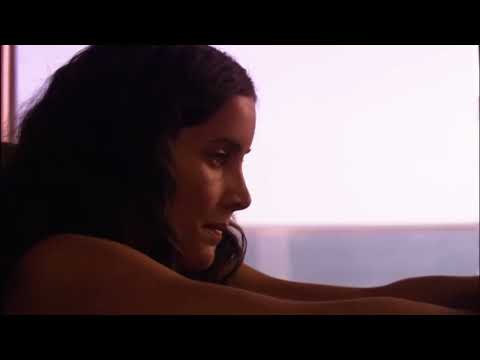
Where it plays: S1E1 “Pilot,” first Marina–Jenny sex scene (~40m, non-diegetic foreground). Close-ups and mirrored angles lean into discovery; breaths and guitar figure share the same tempo.
Why it matters: Scores the moment Jenny crosses a line from curiosity into action—desire becomes plot.
"Cannonball" — Damien Rice
Where it plays: S1E1 “Pilot,” closing beat (~end, non-diegetic). After a fracture with Tim, Jenny stands on the edge of a new self; the song’s hush lands like consequence.
Why it matters: End-credits melancholy that reframes the hour as a beginning rather than an end.
"Right in Time" — Lucinda Williams
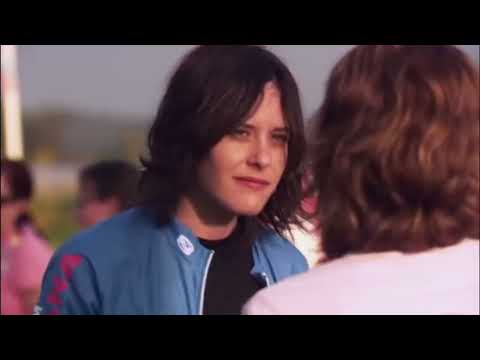
Where it plays: S1E4 “Lies, Lies, Lies,” late sequence (~final act, non-diegetic). The camera lingers on Jenny post-confrontation; the lyric’s sensual ache shades her turmoil.
Why it matters: Desire and regret coexist; the drop threads character psychology without dialogue.
"Into My Arms" — Nick Cave & The Bad Seeds
Where it plays: S1E9 “Luck, Next Time,” aftermath scene (~late act, non-diegetic). Bette and Tina process loss; stillness replaces earlier noise as Cave’s prayerful piano enters.
Why it matters: The show’s most overt benediction in Season 1; grief articulated without speeches.
"Nikita" — Ralph Myerz & the Jack Herren Band
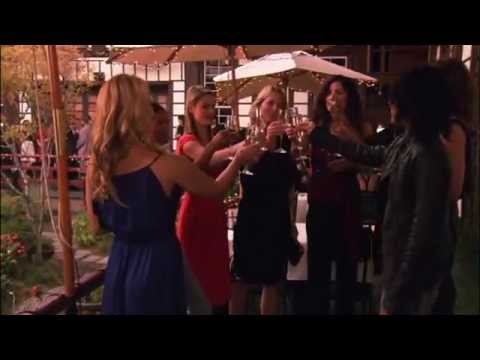
Where it plays: S1E1 “Pilot,” Planet café moments (~mid-episode, diegetic/PA). Social energy hums; the beat links multiple conversations as plans and flirtations intersect.
Why it matters: Builds the series’ social hub; we learn who listens and who performs in public.
"In the Sun" — Joseph Arthur
Where it plays: S1 (album highlight; appears in Season 1 usage and on the 2004 CD). Warm, repeating figure that often underlined reflective montage beats across the season.
Why it matters: A signature of the compilation—open-hearted without saccharine.
"Hallelujah" — Rufus Wainwright
Where it plays: S1 (album highlight; heard in Season 1 context and included on the CD). The cover’s fragile phrasing aligns with characters facing private reckonings.
Why it matters: The most instantly recognizable ballad on the album; soft power.
Trailer/promo cues (2004)
Where they play: Early series trailers leaned on downtempo beds and café-friendly electronica rather than one flagship single.
Why it matters: Marketing matched the show’s conversational intimacy over shock value.
Music–Story Links
Faithfull’s opener frames Bette and Tina not as “origin myth” but as an established love—music as domestic evidence. Jenny’s scenes pivot on acoustic intimacy (“Sun Again,” later “Right in Time”), turning private choices into narrative engines. At communal nodes like The Planet, rhythmic selections (“Nikita”) keep multiple storylines in orbit; when the camera narrows, ballads (“Cannonball,” “Into My Arms”) slow time so decisions can land.
How It Was Made
Series creator Ilene Chaiken’s team and music supervisor Natasha Duprey built Season 1’s palette from café culture outward—intimate voices up front, classics for social spaces, and low-key beats to stitch dialogue. The 2004 compilation collects those needles rather than score cues. According to Apple’s album listing, Tommy Boy handled release and sequencing, spotlighting marquee inclusions like Lucinda Williams, Joseph Arthur, and Rufus Wainwright.
Reception & Quotes
“Classy, upscale, sophisticated… captures the feel of the show quite well.” AllMusic, album review
“A soundtrack that works as mood architecture—less mixtape flex, more emotional scaffolding.” TV music commentary
“The Planet’s cues do heavy lifting: they’re scene transitions you can dance to.” Fan observation
Additional Info
- Album focus: early-season needle-drops; score music sat largely outside this release.
- Some broadcast placements differ from later streaming due to rights swaps.
- Iconic inclusions on the 2004 CD: “Right in Time,” “In the Sun,” “Hallelujah,” “The Pleasure Song.”
- BETTY’s theme becomes a headline cut on Season 2 materials rather than here.
- The compilation avoids deep club bangers; Season 1 prefers intimate tempos and classic sheen.
Technical Info
- Title: The L Word (Music from the Showtime Original Series)
- Year: 2004
- Type: Television soundtrack (song compilation)
- Music supervision: Natasha Duprey
- Selected scene placements referenced: “The Pleasure Song” (S1E1), “Sun Again” (S1E1), “Cannonball” (S1E1), “Right in Time” (S1E4), “Into My Arms” (S1E9), “Nikita” (S1E1)
- Label: Tommy Boy / Silver Label
- Release context: CD issued May 2004 alongside the show’s first-season run
- Availability: Digital storefronts/streaming; original CD in print/used markets
Canonical Entities & Relations
| Subject | Relation | Object |
|---|---|---|
| Ilene Chaiken | created | The L Word (TV series) |
| Natasha Duprey | music supervised | Season 1 episodes |
| Tommy Boy / Silver Label | released | 2004 soundtrack compilation |
| BETTY | performed | series theme heard prominently from Season 2 albums |
| Showtime | broadcast | The L Word (2004–2009) |
Sources: AllMusic (album page); Apple Music (release details); WhatSong episode listings (S1); Discogs (label/format); IMDb credits (music supervision).
According to Apple’s listing, the Season 1 compilation dates to May 2004 on Tommy Boy/Silver Label. According to WhatSong’s episode pages, the S1E1 and S1E9 placements above match broadcast scene descriptions. AllMusic’s album page logs runtime and review tone. Discogs corroborates label/format, while IMDb’s full credits confirm Natasha Duprey’s role as music supervisor across early seasons.
November, 12th 2025
A-Z Lyrics Universe
Cynthia Erivo Popular
Ariana Grande Horsepower
Post Malone Ain't No Love in Oklahoma
Luke Combs Good Riddance (Time of Your Life)
Green Day Bye Bye Bye
*NSYNC You're the One That I Wan
John Travolta & Olivia Newton-John I Always Wanted a Brother
Braelyn Rankins, Theo Somolu, Kelvin Harrison Jr. and Aaron Pierre The Power of Love
Frankie Goes to Hollywood Beyond
Auli’i Cravalho feat. Rachel House MORE ›