
"Candyman" Soundtrack Lyrics
Movie • 2021
Track Listing
Sammy Davis Jr.
L. Young
Ravyn Lenae
Philip Glass, Michael Riesman, The Western Wind
The Adults
Fiona Apple
Orchestre Paillote
Jamila Woods
Death
Destiny’s Child
"Candyman (Original Motion Picture Soundtrack)" – Album Guide to Tracks and Key Scenes
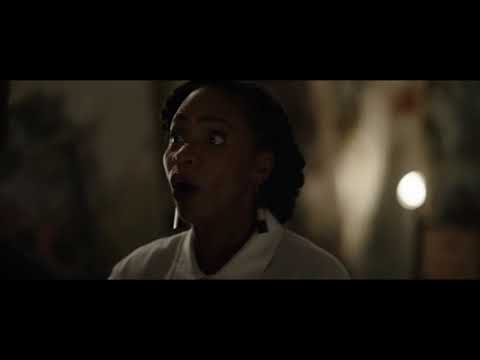
Overview
What happens when a horror legend built on whispers and mirrors gets a soundtrack that sounds like the hive inside his head? Candyman (2021) answers that by giving the urban legend a score that feels half ritual, half nervous breakdown. Where the 1992 film leaned on Philip Glass’s gothic minimalism, Robert Aiki Aubrey Lowe builds an almost living sound-organism around Anthony McCoy’s unraveling mind and the history of Cabrini-Green.
The story follows Anthony, a Chicago artist who goes digging into the Candyman myth for inspiration and instead finds a lineage of violence that rewrites his own past. The soundtrack tracks that journey from curiosity to possession. Early on, familiar source songs — Sammy Davis Jr., Ravyn Lenae, Fiona Apple, Jamila Woods — make the world feel social, contemporary, almost casual. Bit by bit, those warm, recognizable tracks drain away and Lowe’s voice-driven score takes over, like the legend swallowing the film.
Structurally, you can hear the arc: arrival, adaptation, rebellion, collapse. The opening needle-drop “The Candy Man” lures you in with sugary nostalgia before the track itself starts to subtly warp. Mid-film, pieces like “Rows and Towers” and “The Sweet” twist the everyday sounds of elevators, buzzing lights, and voices into an anxious hum. By the time “Resurrection” by Death plays near the end, the movie has fully committed to Candyman as a collective haunting, not a single monster.
In terms of style, the soundtrack moves in phases. The early source cues sit in soul, R&B and alternative — retro lounge (“The Candy Man”), neo-soul (“Sticky”), art-pop (“Shameika”) — to underline the surface: gentrified lofts, gallery openings, smart urban banter. As the story digs deeper, the palette swings toward experimental vocal writing, noise textures and avant-garde classical language: drones, choral clusters, and aleatoric strings imply history pressing in from all sides. When the film needs blunt force, punk-adjacent grit (“Resurrection”) steps in, turning the final montage into something closer to a protest chant than a simple horror coda.
What makes this soundtrack distinct is how little it behaves like a traditional horror score. Melodies rarely resolve. Cues feel like environments instead of themes. Pop songs aren’t there just to sell playlists; they mark social spaces — apartments, galleries, bathrooms, living rooms — that the supernatural slowly contaminates. The result is a soundtrack that keeps working long after the jump scares: it leaves a kind of sonic residue, the sense that the hum of your own apartment might be hiding a choir of ghosts.
How It Was Made
The producers didn’t go to a mainstream Hollywood composer for this sequel. They approached Robert Aiki Aubrey Lowe — also known in experimental circles as Lichens — specifically because of his voice and his background in live, improvisatory sound art. Director Nia DaCosta wanted the score to echo what Philip Glass achieved in 1992 but without simply repeating it: something formally bold, instantly recognizable, and rooted in Chicago rather than generic horror tropes.
Lowe’s solution was to build the score around layered human voice and modular synthesis. He recorded himself in multiple registers — chest, throat, nasal — and stacked those takes into dense choral clusters for cues like “Rows and Towers,” which serves as a kind of theme for Cabrini-Green. On top of that, he added manipulated field recordings from the neighborhood: buzzing electrical boxes, elevator mechanisms, insects, even stretched fragments of the actors’ dialogue. Those sounds are sliced, looped, and pitched until they become rhythmic tremors and spectral textures rather than identifiable noises.
“Music Box” is the clearest bridge to the original film. Lowe keeps the four-note cell from Glass’s theme but dislocates it: the tempo stays steady while contrabass notes and noise elements slide around it, creating the feeling that the old legend is still there but warped by time and new victims. Lowe has mentioned that he deliberately wrote this cue late in the process, after he had already established his own sonic language, so that the Glass reference feels absorbed into the new score instead of overshadowing it.
The score was recorded between 2020 and 2021 and released as Candyman (Original Motion Picture Soundtrack) with 34 tracks on digital, CD, and a series of deluxe 2×LP vinyl pressings from labels like Back Lot Music, Waxwork Records and Sacred Bones. Vinyl editions emphasize the art angle: heavy-weight colored records, gatefold jackets with satin finishes, and booklet pages mimicking an exhibition catalog. It fits the film’s focus on visual art and turns the soundtrack itself into a collectible object, not just a background listen.
Behind the scenes, the music team also included music supervisor Mandy Mamlet, whose task was to balance the needle-drops with the abrasive score. Her song picks lean heavily into Black artists and Chicago-rooted sounds, so even the briefest pop cue feels politically charged inside a story about gentrification, police violence, and the ownership of urban narratives.
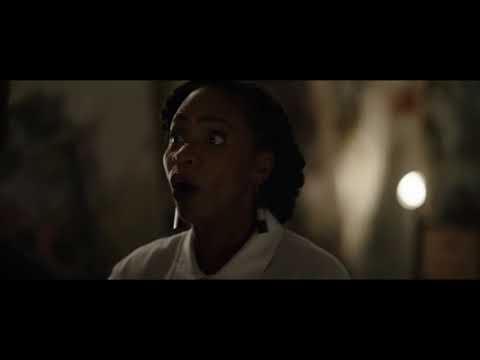
Tracks & Scenes
Below are the key musical moments from Candyman (2021), including in-film songs, major score cues, and the now-famous trailer remix. Timestamps are approximate and follow the theatrical cut.
"The Candy Man" — Sammy Davis Jr.
Scene: Around 00:00:00 and reprised near 01:17:00. The film opens on the classic Willy Wonka tune as studio logos play over inverted shots of Chicago high-rises and drifting bees. The sound mix gradually distorts the song — slight pitch warps, subtle filtering — hinting that this sweetness is rotten. A fragment returns late in the film, playing over shadow-puppet end credits that recount historic killings tied into the Candyman “hive.” The track is non-diegetic; characters never hear it, but the audience does, as if the legend itself is singing.
Why it matters: Starting a racially charged horror movie with a candy jingle about “sunrise and rainbows” is deliberate irony. The lyrics promise harmless treats while the picture shows a city built on invisible violence. It sets up one of the film’s main tricks: using familiar, nostalgic sounds as lures before they become traps.
"Gotta See Change" — L. Young
Scene: About 00:02:00. In a 1977 flashback, the camera follows young Billy through the Cabrini-Green projects. “Gotta See Change” floats in from a police car radio and nearby speakers, warming the scene with laid-back soul. The officers arrive searching for Sherman Fields, and the mood shifts as tension creeps into the frame while the song continues underneath. This placement is diegetic at first (heard in-world) but mixed loud enough that it also feels like a score layer.
Why it matters: The title lyric is almost too on-the-nose — “change” is exactly what Cabrini-Green doesn’t get in terms of justice. The track paints a normal neighborhood afternoon just before police brutality ruptures it, making the ensuing violence feel like an intrusion into everyday Black life rather than a horror-movie set-up.
"Sticky" — Ravyn Lenae
Scene: Around 00:07:00 in Anthony and Brianna’s apartment. It plays softly while Brianna hosts a small gathering with her brother Troy and his boyfriend Grady. People lean on kitchen counters, pour wine, trade jokes, and flex about the art world; the track hums along in the background as chill, contemporary R&B, presumably coming from a home speaker.
Why it matters: This is the “normal life” baseline. The groove suggests warmth, romance, and creative hustle — the kind of gentrified, Instagram-ready existence that sits on top of Cabrini-Green’s erased history. Because the film later returns to this apartment with much darker energy, Lenae’s song marks an early, fragile moment before everything curdles.
"Music Box" — Philip Glass
Scene: Early in the film during Troy’s candlelit storytelling scene. The original 1992 Candyman theme plays as Troy recounts the legend of Helen Lyle and Daniel Robitaille, visualized through shadow puppets. The cue is non-diegetic but mixed almost like a diegetic presence — the tinkling pattern and choral swell seem to seep out of the walls as the room falls quiet.
Why it matters: This is the most direct bridge between the two movies. The theme carries the emotional memory of the 1992 film: mournful, romantic, religious. Dropping it under a distorted retelling of that story — where Helen is wrongly mythologized as the villain — underlines how folklore gets rewritten, and how the new film is arguing with the old legend even as it quotes it.
"Like the Moon" — The Adults
Scene: Roughly 00:14:00. Anthony sits at his laptop researching Helen Lyle, scrolling old clippings and online forums about Cabrini-Green. “Like the Moon” plays under the sequence, with airy vocals and a steady, slightly melancholic groove. The song covers a mini-montage that includes Anthony walking through the ruined row houses and photographing a chapel; it fades as he becomes more absorbed in the myth.
Why it matters: The track’s floaty, nocturnal feel mirrors Anthony’s curiosity tipping into obsession. Lyrically and sonically, it frames him as someone emotionally drifting — a man pulled by tides he doesn’t fully see. The contrast between the song’s dreamy tone and the stark images of demolition and decay makes the research feel dangerous even before the horror elements arrive.
"Shameika" — Fiona Apple
Scene: Mid-film in art critic Finley Stevens’ high-rise apartment. The song plays from a turntable as Finley pours wine and performs her own importance to Anthony, explaining that she now “understands” his controversial piece. As the conversation turns uncomfortable, the track continues — Fiona Apple’s insistent piano and vocal tumble around the room — and keeps playing while the Sherman Fields manifestation of Candyman kills Finley in her bathroom.
Why it matters: The choice is darkly funny and pointed. “Shameika” is about a girl who tells the singer she has potential; here, the song scores a white critic lecturing a Black artist about how his trauma-themed work “works” in the market. As the murder happens just out of Anthony’s sight, the song shifts from artsy ambiance to cold soundtrack of denial and exploitation.
"Kadia Blues" — Orchestre de la Paillote
Scene: Later in the film, in Brianna’s apartment living room. Brianna and Troy sit together, decompressing about their family history and about the disturbing turn in Anthony’s behavior. “Kadia Blues” plays low in the background with vintage West African/Latin-tinged swing, almost like an old LP someone put on without thinking.
Why it matters: The laid-back, cosmopolitan feel underlines how far Brianna has climbed from the chaos of her childhood, but it also hints at the diaspora roots the legend keeps summoning. The track’s age and analog warmth make the space feel safe for confession; when the supernatural violence starts encroaching on this domestic sphere, the memory of this cue reinforces what’s at stake.
"Lonely" — Jamila Woods feat. Lorine Chia
Scene: Around 00:59:00 in the high school bathroom sequence. A Black girl, Trina, sits alone in a stall with her headphones on, listening to “Lonely” while a group of white classmates plays the Candyman mirror game at the sinks. From her perspective, the mix is muffled and intimate; from the audience’s view, the song widens out as Candyman appears and slaughters the other girls, visible only in reflections and glimpses under stall doors.
Why it matters: It’s one of the film’s most disturbing juxtapositions: a song by a Chicago artist about isolation and inner life, used as a barrier against everyday bullying — and then against supernatural violence. The fact that Trina survives because she keeps her headphones on and looks away adds another layer; the music becomes both escape and shield, while the off-screen killings comment on who gets harmed when urban legends become games for people who treat them as jokes.
"Resurrection" — Death
Scene: Final act and into the end credits. After the climactic sequence in the police car and the row houses — with Candyman massacring the officers and revealing his face as Daniel Robitaille — “Resurrection” plays over images and shadow puppetry. The track’s raw, proto-punk energy sits under the rolling names and visual montages of historical victims, pushing the ending past individual revenge toward collective rage.
Why it matters: Using a song from the band Death is almost too perfect; the title alone echoes Candyman’s status as a revenant built from many murders. The gritty analogue recording and relentless drive ground the supernatural finale in something recognizably human and political, tying the legend to real-world cycles of racist violence.
Key score cues — Robert Aiki Aubrey Lowe
"Prologue"
Scene: Early establishing sequence of the legend and opening tone. The cue blends choral whispering, insect-like buzzes and unstable drones, hinting that even the city’s silence is populated. It plays under abstract imagery and sets up the idea that the score is less an orchestra and more a haunted sound installation.
Why it matters: It tells you immediately that this isn’t a traditional orchestral horror score. Instead, you’re inside a constructed soundscape built from bodies, buildings, and machines, which fits a story about a ghost born from structural violence.
"The Sweet"
Scene: Used around the early contemporary scenes where Anthony first toys with saying “Candyman” and begins work on his “Say My Name” piece. The cue alternates between shimmering tones and harsh, scraping textures, like sugar glass being cracked.
Why it matters: It’s the sound of curiosity turning sour. The title nods to candy, but the cue keeps pulling away from anything comforting, matching Anthony’s movement from ironic art concept to genuine obsession.
"Rows and Towers"
Scene: Recurring whenever the camera emphasizes Cabrini-Green’s architecture — the remaining row houses, high-rise projects, and gentrified developments — and in moments when Anthony feels the “hive” closing in. Layers of Lowe’s voice stack into an almost choral fog, with pulsing low notes mimicking the mass of buildings.
Why it matters: Director and composer have both framed this cue as the musical voice of Cabrini-Green itself rather than any single character. It sonifies the idea that Candyman is a collective of stories and victims embedded in the neighborhood’s concrete and steel.
"Music Box" — score version
Scene: Lowe’s interpolation of Glass’s theme appears not only in the Troy story scene but also in altered form near the end and over parts of the credits. Contrabass and processed noise smear the once-clear pattern, making it feel like an old memory being replayed through damaged tape.
Why it matters: It’s the sonic equivalent of the film’s thesis: you can’t erase the original Candyman, but you can reframe the myth so that it points at systems instead of single boogeymen.
"Say My Name" — Destiny’s Child (trailer remix)
Scene: First major trailer (February 2020). A slowed-down, horror-processed version of the group’s 1999 hit underscores a montage of mirror games, bees, and violent flashes. The original Destiny’s Child vocals are retained but stretched, chopped and paired with fragments of the Glass score, turning a turn-of-the-millennium R&B anthem into a dread motif.
Why it matters: The phrase “Say my name” is the entire ritual of Candyman boiled down to four words; building the trailer around a remix of this song was a marketing masterstroke. It never appears in the film itself, which keeps the movie’s internal sound world tighter, but the trailer version did so much cultural work that many viewers now mentally add it to the franchise’s unofficial musical canon.
Notes & Trivia
- The film’s working title during production was literally Say My Name, the same phrase that powers both the mirror ritual and the famous Destiny’s Child track.
- Composer Robert Aiki Aubrey Lowe reportedly lived within walking distance of the real Cabrini-Green area for a time and drew on that experience when he built his field-recording palette.
- Cellist-composer Hildur Guðnadóttir, known for Chernobyl and Joker, contributes subtle cello lines and background vocals on parts of the score, further blurring the line between voice and instrument.
- The soundtrack briefly made the Academy Awards shortlist for Best Original Score — horror scores rarely get that far — before missing the final nomination slate.
- Death’s “Resurrection” use late in the film helped spur new interest in the band’s back catalogue among younger horror fans discovering them for the first time.
- There is an entirely separate track, “H00dByAir” by Playboi Carti, reportedly recorded for the film’s broader soundtrack ecosystem, though it sits outside the core score album.
- Lowe released singles “Rows and Towers” and “The Sweet” ahead of the full album, positioning the score more like an experimental record than a typical behind-the-scenes soundtrack.
Music–Story Links
The cleverness of the Candyman (2021) soundtrack isn’t just in song choice; it’s in how those songs are threaded through character turns and plot beats.
When Anthony and Brianna host friends over “Sticky,” the moment doesn’t feel like horror at all — it plays as a modern, aspirational Black creative couple living in a gentrified neighborhood. The comfort of that track makes Anthony’s later physical and mental deterioration land harder; we remember the easy banter and realize how quickly that life evaporates once the legend hooks into him.
“Music Box” ties Troy’s retelling of Helen Lyle’s story directly back to the original film, but the script twists the details so that Helen becomes the monster in the urban legend. The unchanged musical motif over a changed story sums up the film’s interest in who controls the narrative: the tune is constant, but whose pain it represents is up for grabs.
In the high school bathroom, “Lonely” does triple duty. On the surface, it underscores Trina’s isolation and refusal to participate in the mirror game. At a second level, its Chicago origins emphasize that Candyman’s violence is inseparable from the city’s own musical culture. On a third level, the way the song continues while the killings happen just out of her sight underlines the film’s point that Black kids often survive not because they’re safe, but because they’ve learned to look away from trauma that doesn’t surprise them anymore.
“Kadia Blues” and “Shameika” both explore class and taste. Troy and Brianna’s living room chat plays over a world-music deep cut that signals their educated, art-world status; Finley’s apartment murder is scored to an art-pop track beloved by critics. In each case, the music speaks to who has access to which spaces — and who gets killed there when supernatural justice arrives.
Finally, the combination of Lowe’s “Rows and Towers” choral mass with “Resurrection” by Death in the last stretch reframes Candyman not as a singular slasher but as a hive of victims turned avenger. Anthony’s personal tragedy merges into a collective identity, and the score follows suit: individual motifs blur into a crowd, then into a punk scream that refuses to resolve neatly.
Reception & Quotes
Critical response to the Candyman (2021) soundtrack split along interesting lines. Many film-music writers praised its originality and its commitment to sound design over melody, while some traditionalists found it too abstract compared to Philip Glass’s earlier themes. In general, horror critics valued how tightly the score locks to the film’s politics and visual style rather than trying to stand alone as “nice” listening.
The album release itself drew attention from vinyl collectors and experimental music fans. Limited pressings on colored vinyl sold quickly through labels like Waxwork and Sacred Bones, helped by striking cover art that echoed the film’s emphasis on contemporary Black art and gallery spaces. Digital releases on streaming platforms made it easier for curious viewers to revisit specific cues like “Rows and Towers” or “The Sweet” after seeing the movie.
“It’s terrifying, but also sad and strangely beautiful; more like an organism than a traditional score.” — a Quietus review
“Lowe’s textures mix buzzing field recordings with choral smears, pulling you into a state of slow, sneaking dread.” — a Los Angeles Times feature on the score
“If you like scores such asArrivalorUnder the Skin, this is very much in that conceptual, texture-first lineage.” — a film-music critic’s assessment
“Composer Robert Aiki Aubrey Lowe’s music has its own grip, merging ambient drone, synth and choral voices into one persistent unease.” — a trade-review comment
Among fans, discussion often circles back to two points: whether the new score “replaces” Philip Glass in their minds (it doesn’t, but it stands beside it), and how effective the “Say My Name” trailer remix was in selling the film. Even people lukewarm on the movie often single out the bathroom scene and the shadow-puppet credits as moments where image and music fuse perfectly.
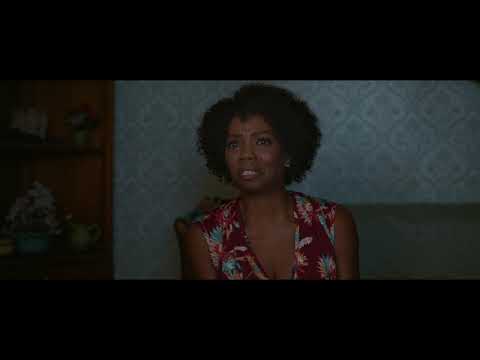
Interesting Facts
- Lowe’s score uses very little conventional orchestration; many cues are nothing but manipulated voice, electronics, and on-location recordings.
- The field recordings include buzzing electrical boxes and insects from Chicago, literally embedding the city’s hum into the music.
- “Music Box” on the 2021 album is credited as a Philip Glass piece within Lowe’s score, reflecting its status as a reimagined classic theme.
- The soundtrack album runs about 73 minutes across 34 tracks, meaning a lot of short, scene-specific cues rather than a handful of long suites.
- Special-edition vinyl versions often include a small art booklet that mimics an exhibition catalogue, echoing Anthony’s artist storyline.
- The first trailer’s “Say My Name” remix sparked a wave of thinkpieces about slowed-down pop songs in horror marketing and became a textbook example of that trend.
- Major song databases and soundtrack sites list only this film as using the original Destiny’s Child “Say My Name” recording in a high-profile way, and only in marketing rather than the feature itself.
- Lowe’s Candyman score sits in his discography between the Italian film Il colpo del cane and the psychological horror Master, marking a sustained run of film work after years in more underground music scenes.
Technical Info
- Title: Candyman (Original Motion Picture Soundtrack)
- Film: Candyman (2021), feature film sequel to the 1992 movie
- Year: 2021 (film and album)
- Type: Film score / Original Motion Picture Soundtrack with select legacy theme interpolation
- Primary composer: Robert Aiki Aubrey Lowe (credited also under the moniker Lichens)
- Key legacy theme: “Music Box” by Philip Glass, reworked within Lowe’s score
- Music supervisor: Mandy Mamlet
- Featured in-film songs: “The Candy Man” (Sammy Davis Jr.), “Gotta See Change” (L. Young), “Sticky” (Ravyn Lenae), “Music Box” (Philip Glass), “Like the Moon” (The Adults), “Shameika” (Fiona Apple), “Kadia Blues” (Orchestre de la Paillote), “Lonely” (Jamila Woods feat. Lorine Chia), “Resurrection” (Death)
- Album length: Approx. 72–73 minutes, 34 tracks
- Labels: Back Lot Music (digital/CD), Waxwork Records and Sacred Bones (vinyl editions and select physical formats)
- Release date (album): 27 August 2021 (aligned with the film’s theatrical release window)
- Recording period: 2020–2021, with field recordings and studio sessions
- Notable pre-release singles: “Rows and Towers,” “The Sweet”
- Notable physical editions: Multiple 2×LP colored-vinyl pressings with gatefold packaging and art booklets
- Awards trajectory: Shortlisted for the Academy Award for Best Original Score; nominated by several critics’ groups and Black-focused awards bodies.
- Streaming availability: Widely available on major platforms (Spotify, Apple Music and others) as a standalone album.
Questions & Answers
- Is all of Candyman’s music on the official soundtrack album?
- No. The 34-track album focuses on Robert Aiki Aubrey Lowe’s score and his interpolation of “Music Box.” The diegetic songs by Sammy Davis Jr., Ravyn Lenae, Fiona Apple, Jamila Woods and others appear in the film but are not collected together on a separate “songs from and inspired by” compilation.
- Does Destiny’s Child’s “Say My Name” appear in the movie itself?
- No. The track (in a slowed-down horror remix built from the original vocals) is used in the early marketing trailers only. Inside the feature, the phrase “say my name” is referenced in dialogue and in Anthony’s artwork, but the song never plays.
- How closely does Lowe’s score follow Philip Glass’s original Candyman music?
- Only in spirit and in one key theme. Lowe reuses and reworks “Music Box” / “Helen’s Theme” but otherwise builds a new language from layered voice, modular synth, and field recordings. It feels more like an eerie sound installation than a traditional melodic sequel to Glass.
- Is the soundtrack effective as a stand-alone album, or does it only work with the film?
- It’s demanding but rewarding on its own. Fans of textural, experimental scores — think Under the Skin or Chernobyl — tend to enjoy the album straight through. Listeners who want strong melodies may find it more effective as part of the film than as casual background music.
- Are there different versions of the Candyman (2021) soundtrack on vinyl?
- Yes. Waxwork Records and Sacred Bones have issued several colored-vinyl variants and limited runs, often with different colorways but the same 2×LP track listing. All of them include the complete score; the main differences are packaging, color and scarcity.
Canonical Entities & Relations
| Subject | Relation | Object |
|---|---|---|
| Nia DaCosta | directs | Candyman (2021 film) |
| Jordan Peele | produces | Candyman (2021 film) |
| Robert Aiki Aubrey Lowe | composes score for | Candyman (2021 film) |
| Philip Glass | composed original score for | Candyman (1992 film) |
| Candyman (Original Motion Picture Soundtrack) | is soundtrack of | Candyman (2021 film) |
| Sammy Davis Jr. | performs | “The Candy Man” |
| Destiny’s Child | performs | “Say My Name” (used in trailer remix) |
| Jamila Woods | performs | “Lonely” (with Lorine Chia) |
| Back Lot Music | releases | Candyman (Original Motion Picture Soundtrack) digital/CD |
| Waxwork Records | releases | Candyman (Original Motion Picture Soundtrack) vinyl editions |
| Monkeypaw Productions | produces | Candyman (2021 film) |
| Cabrini-Green Homes | serves as primary setting for | Candyman (2021 film) |
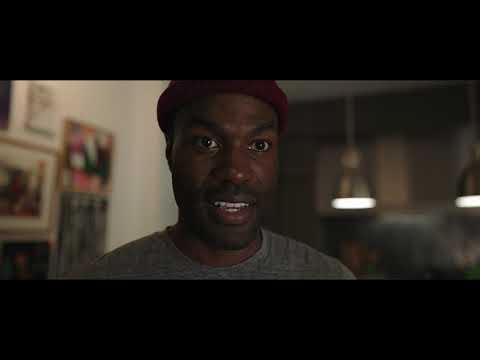
Sources: Wikipedia entries for film and soundtrack; Newsweek soundtrack guide; ScreenRant song breakdown; Vague Visages “Soundtracks of Cinema: Candyman”; Music News & Rumors “Super Soundtrack: ‘Candyman’”; LA Times and Hollywood Reporter coverage of the score; Motion Picture Association and IndieWire interviews with Robert Aiki Aubrey Lowe; label materials from Waxwork Records, Sacred Bones, and retail listings.
November, 15th 2025
A-Z Lyrics Universe
Cynthia Erivo Popular
Ariana Grande Horsepower
Post Malone Ain't No Love in Oklahoma
Luke Combs Good Riddance (Time of Your Life)
Green Day Bye Bye Bye
*NSYNC You're the One That I Wan
John Travolta & Olivia Newton-John I Always Wanted a Brother
Braelyn Rankins, Theo Somolu, Kelvin Harrison Jr. and Aaron Pierre The Power of Love
Frankie Goes to Hollywood Beyond
Auli’i Cravalho feat. Rachel House MORE ›