Say My Name Lyrics – Destiny’s Child
Soundtrack Album: Candyman
[Intro: Rodney "Darkchild" Jerkins]
Darkchild 99
[Chorus: Beyoncé & Destiny's Child]
Say my name, say my name
If no one is around you, say, "Baby, I love you"
If you ain't runnin' game
Say my name, say my name
You actin' kinda shady, ain't callin' me "baby"
Why the sudden change?
Say my name, say my name
If no one is around you, say, "Baby, I love you"
If you ain't runnin' game
Say my name, say my name
You actin' kinda shady, ain't callin' me "baby"
Better say my name
[Verse 1: Beyoncé]
Any other day I would call, you would say
"Baby, how's your day?" But today, it ain't the same
Every other word is "Uh-huh, yeah, okay"
Could it be that you are at the crib with another lady?
If you took it there, first of all, let me say
I am not the one to sit around and be played
So prove yourself to me if I'm the girl that you claim
Why don't you say the things that you said to me yesterday?
[Pre-Chorus: Destiny's Child & Beyoncé]
I know you say that I am assuming things
Something's goin' down, that's the way it seems
Shouldn't be no reason why you're actin' strange
If nobody's holdin' you back from me
'Cause I know how you usually do
Where you're sayin' everything to me times two
Why can't you just tell the truth?
If somebody's there then tell me who
[Chorus: Beyoncé & Destiny's Child]
Say my name, say my name (Say my name, is around you)
If no one is around you, say, "Baby, I love you" (Love you)
If you ain't runnin' game
Say my name, say my name (Say my name, say my name)
You actin' kinda shady, ain't callin' me "baby" (Baby, yeah, yeah)
Why the sudden change?
Say my name, say my name
If no one is around you, say, "Baby, I love you" (Ye-yeah, ye-yeah, yeah)
If you ain't runnin' game (No, no, no, no, no, no)
Say my name, say my name
You actin' kinda shady, ain't callin' me "baby"
Better say my name
[Verse 2: Beyoncé]
What is up with this? Tell the truth, who you with?
How would you like it if I came over with my clique?
Don't try to change it now sayin' you gotta bounce
When two seconds ago said you just got in the house
It's hard to believe that you are at home by yourself
When I just heard the voice, heard the voice of someone else
Just this question, why do you feel you gotta lie?
Gettin' caught up in your game when you cannot say my name
[Pre-Chorus: Destiny's Child & Beyoncé]
I know you say that I am assuming things
Something's goin' down, that's the way it seems
Shouldn't be no reason why you're actin' strange
If nobody's holdin' you back from me
'Cause I know how you usually do
Where you're sayin' everything to me times two
Why can't you just tell the truth?
If somebody's there then tell me who
[Chorus: Beyoncé & Destiny's Child]
Say my name, say my name (Say my name)
If no one is around you, say, "Baby, I love you" (I love you)
If you ain't runnin' game
Say my name, say my name (Say my name, say my name)
You actin' kinda shady, ain't callin' me "baby" (Say my name)
Why the sudden change? (Sudden change)
Say my name, say my name (Say my name)
If no one is around you, say, "Baby, I love you" (If ain't nothin' changed, oh)
If you ain't runnin' game (Baby, say my name)
Say my name, say my name
You actin' kinda shady, ain't callin' me "baby" (Ooh, oh)
Better say my name
[Bridge: Beyoncé & Rodney "Darkchild" Jerkins]
Oh, yeah (Where my ladies at?)
Ye-yeah, ye-yeah, yeah (Please say that, come on)
Ye-yeah, ye-yeah, ye-yeah, ye-yeah (All the girls say)
Ye-yeah, ye-yeah (I can't hear ya)
Ye-yeah, ye-yeah, ye-yeah, ye-yeah (All the girls say)
Ye-yeah, ye-yeah, ye-yeah, ye-yeah (All the girls say)
Ye-yeah, ye-yeah, ye-yeah, ye-yeah
Ye-yeah, ye-yeah (Break it down)
Oh, woah, woah (Ye-ye-yeah)
(Uh, uh-uh, DC, take it to the bridge, come on)
[Pre-Chorus: Destiny's Child & Beyoncé]
I know you say that I am assuming things
Something's goin' down, that's the way it seems
Shouldn't be no reason why you're actin' strange
If nobody's holdin' you back from me
'Cause I know how you usually do
Where you're sayin' everything to me times two
Why can't you just tell the truth?
If somebody's there then tell me who
[Chorus: Beyoncé & Destiny's Child]
Say my name, say my name
If no one is around you, say, "Baby, I love you" (If no one is around you)
If you ain't runnin' game (Call me your boo)
Say my name, say my name (And tell me what you love to do)
You actin' kinda shady, ain't callin' me "baby" (Woah)
Why the sudden change?
Say my name, say my name
If no one is around you, say, "Baby, I love you" (Say, "Baby, I love you")
If you ain't runnin' game (Baby, say my name)
Say my name, say my name (Say my name, say my name)
You actin' kinda shady, ain't callin' me "baby" (Shady, baby)
Better say my name
Say my name, say my name
If no one is around you, say, "Baby, I love you" (Say, "Baby, I love you")
If you ain't runnin' game
Say my name, say my name (Say my name)
You actin' kinda shady, ain't callin' me "baby" (Say my name)
Why the sudden change? (Ye-yeah, ye-yeah)
Say my name, say my name (Ye-yeah, ye-yeah)
If no one is around you (Ye-yeah, ye-yeah)
Say, "Baby, I love you" (Ye-yeah, ye-yeah, ye-yeah, ye-yeah)
If you ain't runnin' game (Ye-yeah, ye-yeah)
Say my name, say my name (Ye-yeah, ye-yeah)
You actin' kinda shady (Ye-yeah, ye-yeah)
Ain't callin' me "baby" (Ye-yeah, ye-yeah, ye-yeah, ye-yeah)
Better say my name
[Outro: Beyoncé]
Thou shalt know she can't love you

Candyman
Soundtrack Lyrics for Movie, 2021
Track Listing
Sammy Davis Jr.
L. Young
Ravyn Lenae
Philip Glass, Michael Riesman, The Western Wind
The Adults
Fiona Apple
Orchestre Paillote
Jamila Woods
Death
Destiny’s Child
Song Overview

Review and Highlights
Quick summary
- Third single from the 1999 album "The Writing's on the Wall", produced by Rodney "Darkchild" Jerkins and released as a single in late 1999.
- Built on a fractured R&B-pop groove inspired partly by UK 2-step, with stacked harmonies and a tense phone-conversation narrative.
- Became a global hit: number 1 on the US Billboard Hot 100 and ARIA charts, multi-platinum in the US and UK, and a top 10 entry across Europe and Oceania.
- Won two Grammy Awards in 2001 (Best R&B Performance by a Duo or Group with Vocals and Best R&B Song) and an MTV Video Music Award for Best R&B Video.
- Music video introduced Michelle Williams and Farrah Franklin into Destiny's Child, while the recording still featured original members LeToya Luckett and LaTavia Roberson, making it a flashpoint in the group's history.
"Say My Name" is one of those turn-of-the-millennium tracks where the production and the story pull in the same direction. Rodney Jerkins builds a beat that never quite settles, full of stuttering drums, syncopated strings, and chopped guitar figures that seem to argue with each other. Over that restless bed, Destiny's Child deliver a tight, almost conversational lead, with harmonies sliding in and out like a chorus of inner voices. According to Jerkins and contemporary reports, his first version leaned heavily into 2-step club sonics, and Beyonce initially hated it; only after he stripped and rebuilt the track did the group hear the single hidden inside that jungle of ideas. Columbia Records released the reworked single as the third cut from "The Writing's on the Wall", and the rest is chart history.
Where many R&B songs of the era go for lush smoothness, this one stays jagged. The kick drum hits in asymmetrical patterns, the bass ducks and reappears, and the synth stabs keep shifting accents. The vocals match that feeling: Beyonce delivers lines like "Any other day I would call, you would say, 'Baby, how's your day?'" with clipped precision, then the group tumbles into a hook that feels more like a chant than a typical chorus. The harmonies are dense but clean: Kelly Rowland doubles and answers the lead, LeToya Luckett adds high harmonies in the pre-chorus, and LaTavia Roberson anchors the lower lines as the song builds. This layering is part of why critics often point to "Say My Name" when they talk about the blueprint for modern R&B girl-group arrangements.
Lyrically, the song sits squarely in the late-90s tradition of suspicious partners and power shifts, alongside tracks like TLC's "No Scrubs" and the group's own "Bills, Bills, Bills". But here the focus is narrower and more cinematic. We do not get a whole relationship arc; we get a single phone call where the protagonist realises in real time that something is wrong. The tension comes from tiny details: a delayed answer, filler words, a sudden change of plans. That specificity is one reason Billboard later named it the best song of the year 2000, and why it keeps resurfacing in pop culture lists and think pieces decades later.
Key takeaways from the track
- A rhythmically complex, syncopated arrangement that still lands as instantly catchy radio R&B.
- A focused narrative built around a single phone call, where suspicion crystallises into clarity and decisiveness.
- Showcase for Destiny's Child's stacked harmonies and for Beyonce's early "rap-singing" phrasing that, as The New Yorker later argued, helped reshape mainstream pop delivery.
- Career turning point for Rodney Jerkins, cementing the "Darkchild" sound as a commercial force and leading to further work with Destiny's Child and Beyonce.
- Historic single in the group's story: a hit recorded by the original lineup, promoted with a video featuring the new lineup, triggering lawsuits and long-running debates about management and control.
Screen & media placements
"Say My Name" was not written as a film theme, but it has had a busy afterlife on screens and stages in several different forms.
Candyman (2021) - trailer use - non-diegetic. The first trailer for Nia DaCosta's "Candyman" reboot, released online in February 2020, uses a slowed-down, horror-tinged remix built on the original Destiny's Child hook. The phrase "say my name" matches the urban legend at the center of the story and functions like a horror incantation. The track sits over montage-style images rather than in a specific onscreen performance, turning a late-90s R&B hit into a source of uncanny tension.
Zoey's Extraordinary Playlist (Season 1, Episode 6) - TV series - diegetic within the show's musical conceit. In the episode "Zoey's Extraordinary Night Out", a character sings "Say My Name" as a so-called "heart song", essentially revealing her inner turmoil about her relationship. The performance functions as a dramatic beat: the lyric about secrecy and double lives maps neatly onto an engagement in trouble. The version used is a cover, but the dramatic power relies on the listener recognising the Destiny's Child original in the background.
Beyond those prominent uses, the song is a staple of 90s and 2000s nostalgia playlists in television, fashion campaigns, and radio-branded specials. It also appears indirectly through interpolations and samples, such as ArrDee's UK hit "Flowers (Say My Name)", which repurposes the hook in a UK rap context.
Creation History
The making of "Say My Name" is a small case study in how a difficult studio experiment can become a defining hit. The group and their team brought in Rodney "Darkchild" Jerkins as one of several producers for "The Writing's on the Wall", looking to push their sound beyond their debut. Jerkins has said the early demo grew out of a night in a London club, where UK 2-step garage was reshaping how R&B and dance beats interacted. Back in the studio he built a track full of busy percussion, shifting syncopations, and layered textures.
Beyonce later recalled hearing that first version and thinking it was simply too chaotic. There was, in her words, "too much stuff" and it sounded like a "jungle"; she could not imagine fitting a song on top of it. Her father and manager Mathew Knowles encouraged Darkchild to rework the mix while the group were busy with other album duties. When he returned with a leaner, more balanced version, the group suddenly heard the potential. This iteration kept the off-kilter groove but carved out space for lead lines, harmonies, and call-and-response details. According to interviews Jerkins has given in later years, he felt strongly that "Say My Name" could be a number-one record once he found that balance, and label promotion executives agreed.
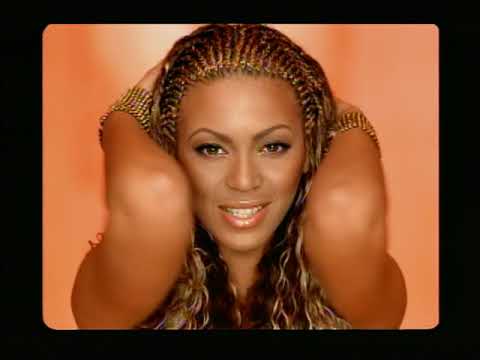
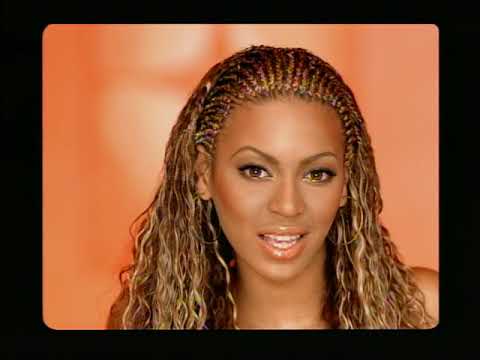
The music video, directed by Joseph Kahn, adds another layer to the story. Shot in bright, monochrome sets that resemble designer living rooms, it presents each member in a color-coded environment: orange, blue, red, and white. Midway through, the rooms and performers begin to swap rapidly, matching the track's jittery energy. The stylish concept masked a complicated reality. By the time the video was filmed in early 2000, original members LeToya Luckett and LaTavia Roberson had been dismissed following disputes with management, and Michelle Williams and Farrah Franklin had joined. The single still featured the original quartet's vocals, but the video introduced the new lineup, with Williams and Franklin miming parts that Luckett and Roberson had recorded. That decision helped generate press attention but also led to lawsuits and to the widely told story that some members only discovered they were out of the group when the video premiered.
This mix of studio innovation, label strategy, and internal drama is part of why "Say My Name" sits at the center of Destiny's Child's narrative. It is not just a hit single; it is the hinge between an aspiring R&B quartet from Houston and the global pop force that would dominate the early 2000s.
Song Meaning and Annotations

Plot
The plot of "Say My Name" is deceptively simple: a woman calls her partner and, during that single phone call, becomes convinced that he is cheating on her. In the chorus she issues a challenge: if nobody else is in the room, he should be able to say "Baby, I love you" and use her name freely. His hesitations, evasions, and oddly flat responses signal that someone else might be listening, and that he is trying to hide the relationship.
Verse 1 sets up the contrast. On a normal day he picks up the phone with warmth and curiosity. Today he offers little more than "uh-huh, yeah, okay". She notices the pattern and, in one of the key lines, asks if he is "at the crib with another lady". She also asserts boundaries: she will not "sit around and be played" and demands proof that she is the woman he claims her to be.
The pre-chorus deepens the suspicion. She calls out his claim that she is "assuming things" and notes that his behaviour has changed with no clear reason. She knows how he usually acts, how he normally doubles down with sweet talk, and that makes the current distance feel even more suspicious. The hook then turns those doubts into a repeated demand: "Say my name," a refrain that functions both as test and as command.
Verse 2 tightens the screws. She presses him to explain contradictions: moments earlier he said he had just arrived home, now he suddenly "has to bounce". She has heard another voice in the background. When he tries to shut down the conversation, she asks why he feels the need to lie and points out that his inability to say her name is itself incriminating. By the time the bridge rolls around, the narrative has shifted from private confusion to collective solidarity, with the call-and-response "Where my ladies at?" and "All the girls say" bringing in a wider chorus of women who have seen similar patterns.
In the brief spoken outro, "Thou shalt know she can't love you", the track points forward to the next album cut, "She Can't Love You", continuing an album-long chain of relationship "commandments". That framing casts the song not only as a personal moment but as part of a larger moral code about self-respect and romantic honesty.
Song Meaning
On its surface, "Say My Name" is about catching a partner in the act of hiding you. The key idea is that genuine love does not need to be whispered or concealed. If a relationship is honest, your partner should be able to say your name freely, even in front of other people. The refusal or inability to do so becomes a stand-in for a broader pattern of secrecy, half-truths, and double lives.
Underneath that, the song is about intuition and pattern recognition. The protagonist is not trawling through phones or hiring detectives. She is comparing how he speaks today with how he spoke yesterday, how quickly he used to answer with pet names, and how often he now reaches for throwaway fillers. That shift in tone, combined with changes in his story ("just got in the house" versus "gotta bounce"), convince her that something is wrong. The pre-chorus makes this explicit: "Something's going down, that's the way it seems." She trusts her read of the situation enough to confront him directly.
The repeated hook turns an accusation into a mantra of self-worth. To insist that someone "say my name" is to insist on visibility, acknowledgment, and public recognition. It rejects any arrangement where a woman is kept in the shadows while a man maintains another image in front of friends, family, or another partner. This is very much in line with the late-90s R&B climate, where songs by Destiny's Child, TLC, and others often framed romantic conflict in terms of financial responsibility, respect, and independence.
Musically, the tense, stop-start beat mirrors the emotional arc. The harmonies swell when she asserts herself and pull back when doubt creeps in. The result is a track that sounds like a mind whirring through questions while the body stays remarkably composed. According to lists by outlets such as Rolling Stone and NME magazine, this blend of narrative and production is a major reason the song stands as one of the era's landmark singles.
Annotations
Producer Rodney Jerkins is heard in the intro using his trademark tag, "Darkchild 99".
That short spoken line is more than branding. At the time, producer tags were becoming a way for behind-the-scenes hitmakers to build identity, especially in R&B and hip hop. Here it signals the arrival of a particular sound: dense, syncopated, and heavily layered. Jerkins has said that people still call out "Darkchild 99" to him decades later, which shows how tightly that tag is fused with this specific song.
When this first came out, and even now, people think that he says, "Darkchild, na na."
Misheard tags are part of pop folklore. The confusion underscores how quickly the intro became part of listener memory; the exact wording matters less than the mood it sets. But hearing it correctly does shift the emphasis. "Darkchild 99" pins the song to a specific moment, marking it as a snapshot of the producer's sound at the turn of the millennium.
Beyonce plays a character who suspects her lover is cheating on her. She calls him on the phone and asks him to say her name to prove that he is still faithful... He hesitates because he does not want the woman he is cheating with to know her name.
That reading lines up neatly with how the verses are structured. The song never states outright that he is cheating; we never hear his side directly. Instead, we infer betrayal from hesitation, evasive phrasing, and the presence of another voice. The narrative keeps us inside her perception, which makes the chorus feel like both test and verdict: his failure to say her name becomes all the proof she needs.
When you call your partner and say things that sound like you care, such as "Baby, how's your day going?", that makes them think the relationship is going well... However, saying phrases such as "uh-huh", "yeah" or "ok" make one appear disinterested.
This annotation rightly zooms in on conversational micro-signals. The writer is describing what psychologists might call a shift in "attunement". The partner has gone from engaged reciprocity to flat minimal responses, and the protagonist picks up on that immediately. The line "But today, it ain't the same" is not just about the words; it is about the entire tone of the interaction.
The individual she is referring to is being questioned about their behaviour... they employ a simple gaslighting technique by saying she is "assuming things".
Gaslighting is a strong word, but the lyric fits the pattern. When she raises rational questions about his behaviour, he does not address the specifics; instead he reframes her concerns as paranoia. In interviews, LeToya Luckett has mentioned that this line grew from her own experience with a partner who accused her of "assuming stuff" even when she had concrete evidence. That autobiographical detail adds sting to the pre-chorus: what sounds like a generic argument line is actually pulled from a real situation.
Stuttering can be a sign of nervousness, especially when someone is attempting to make up a lie on the spot. This behaviour makes Beyonce further suspicious that their partner is cheating.
The phrase "sayin' everything to me times two" can be read literally as repetition. Musically, that repetition lets the vocalists play with echo and overlap; narratively, it suggests a flustered speaker scrambling for words. The interpretation that this is nervous stuttering fits neatly with the rest of the evidence she gathers: strange timing, strange tone, and now strange speech patterns.
Spoken outro by Beyonce, introducing the next song on the album, "She Can't Love You". "The Writing's on the Wall" has a theme of commandments in the style of the Decalogue, all of them appearing on the album.
Here the annotation rightly pushes us to think beyond the single. The outro line, "Thou shalt know she can't love you", sounds like it could have been carved onto one of the faux stone tablets that appear in the album art. Several songs are framed as relationship commandments, and "Say My Name" plays the role of the moment where truth is forced into the open. It is not just about catching one unfaithful partner; it is about a broader rule: do not accept a relationship where your worth is hidden.
Rhythm, harmony, and production details
Under the hood, "Say My Name" is a masterclass in controlled complexity. The track sits in a minor key often analysed as C minor or F minor, with a tempo around 67 beats per minute that feels like 134 in double-time. The drums lean on 808-style kicks and snares hitting in unexpected places, while syncopated strings and a wah-wah guitar flicker around the edges. The backing track drops elements in and out, creating pockets of space for the vocals and then filling them with sudden flurries of sound.
Vocally, the range runs roughly from Bb3 to D5 in the original arrangement, placing the melody in a sweet spot for many altos and mezzos. The hooks rely on tight three and four part harmonies, but the production keeps those stacks crisp: you can pick out individual lines if you listen closely, though on radio they merge into one gleaming block of sound. The effect is almost percussive. Consonants hit like drum hits, while held vowels create the sustained tension that keeps the song from ever feeling relaxed.
Language, idioms, and cultural touchpoints
"Say My Name" is packed with colloquial phrases that situate it firmly in late-90s African American vernacular English and R&B storytelling. "Runnin' game" frames cheating as a hustle, a strategic manipulation. "You actin' kinda shady" turns suspicion into a compact character judgment. "You gotta bounce" and "my clique" place the scene in a world of informal social codes and group dynamics. These phrases are not decorative; they carry social information about who these characters are and how they navigate their relationships.
The core metaphor, though, is simple enough to travel globally: saying someone's name as a test of loyalty. That is part of why the hook has proved so portable. It has been interpolated in UK rap hits, flipped into moody classical crossover covers, and echoed in everything from Hozier's soulful reinterpretations to Olafur Arnalds's string-led version. Each time, the phrase "say my name" brings its emotional baggage along, whether the arrangement is stripped-back piano or thick, late-90s R&B rhythm.
Gender politics and emotional arc
At the level of gender politics, the song fits Destiny's Child's broader project: insisting that women do not have to accept half-hearted commitment. The protagonist is not begging for reassurance; she is setting terms. If he cannot even say her name, she is willing to walk. That stance resonated in a period when R&B radio was full of narratives about romantic negotiation, and it helped position the group as standard-bearers for a certain kind of assertive, self-respecting femininity.
The emotional arc is compressed but clear. Verse 1 is confusion shading into suspicion. The pre-chorus is an internal lawyer making the case: here is the pattern, here is the shift, here is what it means. The chorus turns that argument into a demand. Verse 2 adds external confirmation in the form of another voice and contradictory statements. By the time we reach the bridge and the final choruses, the protagonist's mind seems made up. The question is no longer "Is he cheating?" but "What am I going to do now that I know?"
Key Facts
- Artist: Destiny's Child
- Featured: No featured vocalist on the original album version; additional vocals and ad-libs by producer Rodney "Darkchild" Jerkins.
- Composer / Songwriters: Rodney Jerkins, Fred Jerkins III, LaShawn Daniels, Beyonce Knowles, Kelly Rowland, LeToya Luckett, LaTavia Roberson.
- Producer: Rodney "Darkchild" Jerkins.
- Release date (album): July 27, 1999, as part of the album "The Writing's on the Wall".
- Release date (single): October 14, 1999, first issued in Japan, with US radio and physical releases following in early 2000.
- Genre: R&B, pop.
- Instruments / sound palette: Drum machines and 808-style programming, electric bass, synthesized strings, wah-wah guitar licks, layered lead and backing vocals, subtle keyboard textures.
- Label: Columbia Records (with releases in different territories via Sony affiliates).
- Mood: Suspicious, tense, assertive, groove-driven.
- Length: 4:31 (album version), about 4:00 (radio and video edit).
- Track number: 12 on "The Writing's on the Wall".
- Language: English.
- Album: "The Writing's on the Wall" (primary studio album); also anthologised on collections like "#1's" and later compilations.
- Music style: Late-90s R&B-pop hybrid with 2-step-influenced rhythm, dense vocal arranging, and a strong call-and-response chorus.
- Poetic meter: Mostly conversational iambic and anapestic patterns, heavily syncopated to match the beat; refrains structured as short repeated phrases for hook strength.
Canonical Entities & Relations
- Destiny's Child - recorded - the song "Say My Name" for the album "The Writing's on the Wall".
- Rodney Jerkins - produced and co-wrote - "Say My Name".
- Beyonce Knowles - sang lead vocals on - "Say My Name" verses and choruses.
- Kelly Rowland - provided harmony and co-lead vocals on - "Say My Name".
- LeToya Luckett - co-wrote and sang harmony on - "Say My Name".
- LaTavia Roberson - co-wrote and sang harmony on - "Say My Name".
- Joseph Kahn - directed - the "Say My Name" music video.
- Mathew Knowles - managed - Destiny's Child during the "Say My Name" era.
- Columbia Records - released - the "Say My Name" single worldwide.
- Grammy Awards - honored - "Say My Name" with two awards in 2001.
- Billboard - ranked - "Say My Name" as the best song of 2000 and among the top girl group songs.
- Rolling Stone - placed - "Say My Name" at number 285 on its 500 Greatest Songs of All Time list.
Questions and Answers
- Who produced "Say My Name" by Destiny's Child?
- Rodney "Darkchild" Jerkins produced the track and also co-wrote it. His distinctive syncopated production style and trademark spoken tag "Darkchild 99" frame the entire recording.
- When did Destiny's Child release "Say My Name"?
- The song first appeared on the album "The Writing's on the Wall", released July 27, 1999. It was then issued as the album's third single, beginning with a Japanese release on October 14, 1999, followed by US radio in January 2000 and full physical single releases in early 2000.
- Who wrote "Say My Name"?
- The songwriting credits list Rodney Jerkins, Fred Jerkins III, LaShawn Daniels, Beyonce Knowles, Kelly Rowland, LeToya Luckett, and LaTavia Roberson. That mix of the production camp and all four original group members was typical for the album.
- What is "Say My Name" about in simple terms?
- It is about a woman who realises during a phone call that her partner may be cheating. She tests him by asking him to say her name and tell her he loves her. His hesitations, half-answers, and sudden excuses convince her that he is hiding the relationship from someone else in the room.
- Why is the phrase "say my name" so important in the song?
- Saying someone's name publicly is a sign of acknowledgment and commitment. In the song, his refusal to say her name suggests that he is treating her as a secret. The hook turns that small act of naming into the core test of whether the relationship is honest. That is part of why the phrase has become a cultural shorthand for demanding recognition.
- How did "Say My Name" change Destiny's Child's career?
- Commercially, it was their second US number-one single, their first Australian number one, and a major international hit, pushing "The Writing's on the Wall" to multi-platinum status. Artistically, it proved they could handle complex, cutting-edge production while maintaining mainstream appeal. It also ended up marking the transition from the original quartet to the trio lineup that would dominate the early 2000s.
- What awards did the song win?
- "Say My Name" won two Grammys in 2001 (Best R&B Performance by a Duo or Group with Vocals and Best R&B Song), the MTV Video Music Award for Best R&B Video in 2000, a Soul Train Lady of Soul Award for Best R&B/Soul Single (Group, Band or Duo), and a BMI Pop Award for Most Played Song. It has also placed high on retrospective lists by Billboard, NME magazine, Rolling Stone, and Pitchfork.
- Why does the track feel so rhythmically restless?
- The beat is heavily syncopated, with kicks and snares landing off the expected grid and instruments dropping in and out. Jerkins drew inspiration from the club-oriented 2-step sound, but then reshaped it into a slower, more spacious R&B framework. The vocals often emphasise off-beats, and the harmonies answer the lead in quick bursts, all of which keeps the groove constantly shifting.
- Are there notable remixes or alternate versions of "Say My Name"?
- Yes. Official single releases included a Timbaland remix featuring Static Major and Timbaland, Maurice Joshua's "Last Days of Disco Millennium" mix, UK garage-inflected Dreem Teem and Noodles mixes, and the Daddy D remix, among others. Later, producers like Cyril Hahn created popular unofficial remixes that brought the track into house and future-bass contexts.
- Which artists have covered "Say My Name" in interesting ways?
- There are many covers. Olafur Arnalds and Arnor Dan turned it into a slow, orchestral piece for a 2016 "Late Night Tales" compilation, stretching the harmonies into a cinematic landscape. Hozier recorded a moody, blues-influenced cover for Spotify Studios that leans into the song's sensual undercurrent. There are also pop, acoustic, and rock takes from acts such as Dua Lipa, Pentatonix, and a range of YouTube and streaming-era artists.
- How is "Say My Name" used in the Candyman trailer?
- The trailer for the 2021 film uses a slowed, reimagined version of the hook as a horror motif. The familiar melody is reharmonised over dark textures and sound design, and the phrase "say my name" connects directly to the film's central legend, where speaking the name summons the titular figure. It is a textbook example of how trailer editors repurpose pop songs to create new moods.
Awards and Chart Positions
Major chart peaks
| Territory / Chart | Peak position | Notes |
|---|---|---|
| US Billboard Hot 100 | 1 | Second US number one for Destiny's Child, spending multiple weeks on top. |
| US Hot R&B/Hip-Hop Songs | 1 | Topped the main R&B chart, underscoring its core-genre success. |
| US Rhythmic Airplay | 1 | Heavy rotation on rhythmic and crossover formats. |
| Australia ARIA Singles Chart | 1 | First Australian number one for the group. |
| UK Singles Chart | 3 | Biggest UK hit for the group up to that point. |
| Netherlands (Dutch Top 40) | 4 | Strong airplay and sales across continental Europe. |
| New Zealand Singles | 4 | Helped cement the group's presence in Oceania. |
| Poland Singles | 2 | High placement in emerging European markets for R&B. |
Certifications (selected)
| Country | Certification | Indicative units (sales + streams) |
|---|---|---|
| United States (RIAA) | 3x Platinum | Approx. 3,000,000 units. |
| United Kingdom (BPI) | 3x Platinum | Approx. 1,800,000 units. |
| Australia (ARIA) | 2x Platinum | Approx. 140,000 units. |
| New Zealand (RMNZ) | 4x Platinum | Approx. 120,000 units. |
| France (SNEP) | Gold (multiple periods) | Combined several hundred thousand units over physical and streaming eras. |
Critical lists and honors
- Two Grammy Awards in 2001: Best R&B Performance by a Duo or Group with Vocals and Best R&B Song, plus nominations for Record of the Year and Song of the Year.
- MTV Video Music Award for Best R&B Video (2000).
- Soul Train Lady of Soul Award for Best R&B/Soul Single (Group, Band or Duo).
- BMI Pop Award for Most Played Song.
- Billboard: ranked number seven on the "100 Greatest Girl Group Songs of All Time" and named the best song of the year 2000.
- NME magazine: placed in the list "150 Best Tracks of the Past 15 Years".
- Rolling Stone: number 285 on the 2021 edition of the "500 Greatest Songs of All Time".
- Pitchfork: number eight on the 2022 list "The 250 Best Songs of the 1990s".
How to Sing "Say My Name"
From a vocalist's perspective, "Say My Name" is less about huge high notes and more about rhythm, diction, and blend. The original sits in a minor key often notated as C minor, with an effective vocal range around Bb3 to D5 for the lead line. The tempo feels like a brisk 134 BPM in double-time, but the phrasing sits across that grid in a very syncopated way.
Core technical profile
- Approximate vocal range (lead): Bb3 to D5.
- Key: Commonly charted as C minor or F minor; think of it practically as a mid-range minor-key song for female voices.
- Tempo: Around 67 BPM, felt as 134 BPM in double-time.
- Main challenges: Tight rhythmic precision, clean consonants, and keeping pitch locked in while delivering conversational phrasing.
Step-by-step approach
-
Lock in the groove before singing
Start by clapping or tapping along to the instrumental. Feel the strong beats on 1 and 3, then add snaps on the off-beats. The verses rely on riding slightly behind the beat without dragging. If you can speak the lyrics in time over a metronome at 67 BPM (or 134 BPM in double-time), you are halfway there. -
Speak the verses with clear diction
Treat the first verse like a monologue. Speak "Any other day I would call, you would say 'Baby, how's your day?'" in rhythm, paying attention to where the syllables fall. Only then add pitch. Clarity on words like "runnin' game", "kinda shady" and "clique" is critical; the groove will fall apart if consonants blur. -
Plan breathing around the hook
The chorus repeats "Say my name" and then runs straight into "If no one is around you..." with little space. Practice inhaling on the final consonant of "name" and again during tiny rests before "You actin' kinda shady". Use quiet, quick breaths so they do not break the line. Good breath planning keeps the hook punchy rather than gasping. -
Shape the pre-chorus as a build
Lines like "I know you say that I am assuming things" should climb in intensity without jumping in volume too early. Think of it as presenting evidence in a case: each bar adds a new piece of information, leading to the verdict of the chorus. Support with steady airflow and avoid pushing chest voice too hard on top notes like "seems" and "strange". -
Add accents and light ad-libs
Once the basic parts are secure, add stylistic touches: a slight fall on the second "say my name", a tiny scoop into "baby", a gentle riff at the end of the last chorus. Keep these ornaments short and rhythmically locked; the original recording leaves most of the virtuosity to the layered harmonies rather than long runs. -
Work on harmony or double-tracking
If you are singing in a group, assign one singer to the main melody and others to the harmony lines on "Say my name, say my name" and the pre-chorus. Practice sustaining pure intervals without sliding. If you are recording yourself, try doubling the main hook an octave below or above at low volume to mimic the stacked-vocal effect. -
Use close mic technique
The verses are quite intimate. On a microphone, stay close and sing slightly softer in volume, letting the mic do the work. Pull back a little on the biggest chorus entries to avoid distortion. Keep plosive consonants ("b" in "baby") under control by angling slightly off-axis. -
Watch the main pitfalls
Common issues include rushing the lyrics, over-singing the hook (which should feel more like a chant than a belted line), and going sharp when tension rises in the pre-chorus. Recording yourself and listening back against the original can quickly reveal whether you are matching the pocket and tuning.
For practice, it can help to loop a stripped-down instrumental or a metronome with a light percussion pattern. Start by alternating between spoken and sung versions of each section, then put them together once timing and pitch feel natural.
Additional Info
A few stray facts make "Say My Name" even more interesting once you dig beyond the broad strokes. One is just how disputed the early studio reaction was. While Beyonce has said she did not enjoy the first version of the track, producer Fred Jerkins has recalled that the group liked it, just not as much as the final mix. That tension between experimentation and accessibility is audible in the finished record: you can hear traces of club-oriented ideas reined in for radio.
Another layer is the way the song crystallised Rodney Jerkins's public identity. In later interviews, including recent coverage around his induction into the Songwriters Hall of Fame, he has singled out "Say My Name" as one of his favorite productions and a track he felt had the "catchphrase that pays". Everywhere he goes, he hears people quoting "Darkchild 99", which underlines how thoroughly the producer tag became part of the song's hook.
The track also sits at an important point in Beyonce's artistic development. Critics such as Jody Rosen have argued that her rhythm-forward, half-rapped delivery on songs like "Say My Name" created a new template for pop phrasing, blending rap cadences with R&B melody. You can trace a line from these verses to later solo work where she leans into that talk-singing zone, especially on agile, quick-fire lines.
Visually, the Joseph Kahn video has aged into a time capsule of turn-of-the-century pop design: color blocking, metallic fabrics, and sharp, almost geometric choreography. According to later commentary, the shoot was a scramble, with new members Michelle Williams and Farrah Franklin having limited time to learn the moves. The finished video nonetheless looks tightly controlled, which helped it stand out on MTV and BET rotations and contributed to the song's visual iconography.
Culturally, the song's afterlives say as much about its strength as its initial chart run. Olafur Arnalds and Arnor Dan's 2016 cover on "Late Night Tales: Olafur Arnalds" reimagined it as a slow, string-heavy nocturne; Hozier's Spotify Studios version foregrounded a darker, smoldering side of the lyrics. Trailers, TV shows, and streaming-era reinterpretations have all leaned on the same core insight: that a simple phrase like "say my name" can carry layers of meaning about love, fear, ego, and power, long after the specific fashions of 1999 have faded.
Sources: Wikipedia articles on the song and album; Grammy.com features; Billboard chart data; Rolling Stone and Pitchfork lists; NME magazine retrospective pieces; People interviews with Rodney Jerkins and Destiny's Child members; Rap-Up and other coverage of the Candyman trailer; Musicstax and SingingCarrots technical song data.
A-Z Lyrics Universe
Cynthia Erivo Popular
Ariana Grande Horsepower
Post Malone Ain't No Love in Oklahoma
Luke Combs Good Riddance (Time of Your Life)
Green Day Bye Bye Bye
*NSYNC You're the One That I Wan
John Travolta & Olivia Newton-John I Always Wanted a Brother
Braelyn Rankins, Theo Somolu, Kelvin Harrison Jr. and Aaron Pierre The Power of Love
Frankie Goes to Hollywood Beyond
Auli’i Cravalho feat. Rachel House MORE ›