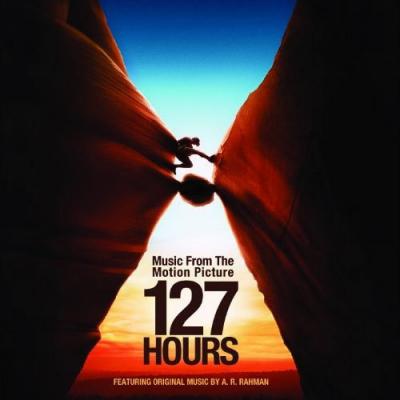
"127 Hours" Soundtrack Lyrics
Movie • 2010
Track Listing
Free Blood
A.R. Rahman
A.R. Rahman
A.R. Rahman
Bill Withers
Vladimir Ashkenazy
Plastic Bertrand
A.R. Rahman
Esther Phillips
A.R. Rahman
A.R. Rahman
A.R. Rahman
Sigur Ros
Dido
"127 Hours" Soundtrack Description
Questions and Answers
- Is there an official soundtrack album?
- Yes. 127 Hours: Music from the Motion Picture was released in November 2010 by Interscope and Fox Music; it mixes A. R. Rahman’s score with select songs.
- Who composed the score, and what’s the signature sound?
- A. R. Rahman composed it. The score leans on layered acoustic/electric guitars with textural electronics and the distinctive harpejji he plays.
- Which songs most viewers remember from the film?
- Free Blood’s “Never Hear Surf Music Again,” Bill Withers’ “Lovely Day,” Sigur Rós’s “Festival,” and the original theme “If I Rise” by Rahman & Dido.
- What track underscores the climactic liberation?
- Sigur Rós’s “Festival” surges through the escape sequence, while “If I Rise” carries the emotional coda and end stretch.
- Who supervised the music clearances?
- Music supervision is credited to Ian Neil.
- Did the soundtrack receive awards recognition?
- It earned Oscar nominations for Best Original Score and Best Original Song (“If I Rise”), among multiple critics’ citations.
Notes & Trivia
- Rahman reportedly completed much of the score within a few weeks, shaping cues before final picture lock (as noted by the Los Angeles Times).
- Aron Ralston’s beloved jam band Phish is referenced on-screen; Franco-as-Ralston even sings a snatch of “Sleeping Monkey.”
- Rahman’s theme “If I Rise,” co-written with Dido and Rollo Armstrong, became the film’s awards magnet and a fan-favorite closer.
- The album blends modern cues with crate-digging choices: Chopin’s Nocturne (Vladimir Ashkenazy performance) shares space with Plastic Bertrand’s punk yelp.
- Opening needle-drop “Never Hear Surf Music Again” instantly sets Boyle’s propulsive, split-screen rhythm (according to The Playlist’s preview).
- Empire magazine praised the use of Sigur Rós as the most effective exterior track in the set.
- Bill Withers’ “Lovely Day” is used ironically—cheerful groove vs. dire reality—one of Boyle’s signature tonal flips (as NME once pointed out).
Overview
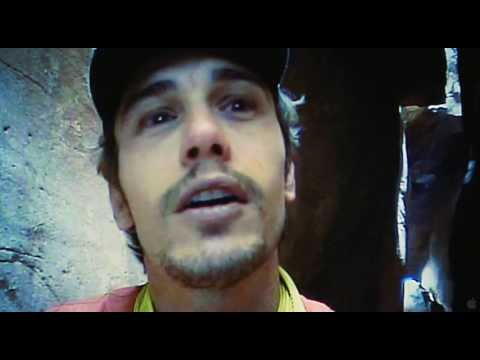
Why does a sun-dappled anthem like “Lovely Day” turn tragic inside a slot canyon? Because Danny Boyle weaponizes contrast. 127 Hours keeps us pinned with Aron Ralston, and the soundtrack becomes his inner DJ—spiking adrenaline, hallucinating memory, and finally, finding resolve.
Rahman’s guitar-forward score doesn’t crowd the space; it breathes with the canyon, then tightens like a tourniquet. Around it, Boyle threads a grab-bag of songs that mirror Ralston’s mindset: cocky momentum at the start, gallows humor mid-way, and a hard-won, almost sacred bloom at the end. The mix is lean—no wall-to-wall jukebox—so every placement lands.
Genres & Themes
- Textural guitar score → interior monologue: layered acoustics and processed lines mimic thought loops, fear spikes, and problem-solving focus.
- Indie/post-rock swells → transcendence: Sigur Rós’s slow-build catharsis tracks the threshold between pain and freedom.
- 70s soul sunshine → dramatic irony: Withers’ “Lovely Day” casts stubborn optimism against dehydration and isolation.
- Punk fizz & Euro-novelty → manic humor: Plastic Bertrand and other bright cues puncture dread, reflecting Boyle’s tonal play.
- Classical nocturne → memory & poise: Chopin’s refinement rubs against the grit, framing Ralston’s curated self-image.
Key Tracks & Scenes
“Never Hear Surf Music Again” — Free Blood
Where it plays: High-octane prologue—biking, driving, desert dash (opening minutes). Non-diegetic.
Why it matters: Announces the hyper-kinetic cutting and Ralston’s breezy invulnerability before the fall.
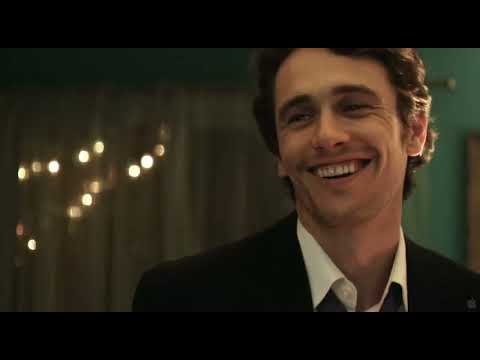
“Lovely Day” — Bill Withers
Where it plays: Mid-ordeal “keep spirits up” sequence; a bitterly cheerful hallucination of normalcy (~midfilm). Non-diegetic.
Why it matters: The grin-and-bear-it groove underlines denial giving way to acceptance; the title turns into a dare.
Nocturne No. 2 in E-flat, Op. 9 No. 2 — Frédéric Chopin (Vladimir Ashkenazy)
Where it plays: Reflective interlude/flashback texture. Non-diegetic.
Why it matters: A polished, “civilized” counterpoint to sandstone, dust, and blood—memory as refuge.
“Festival” — Sigur Rós
Where it plays: The liberation rush and post-escape surge near the climax (final reel). Non-diegetic.
Why it matters: A slow build to euphoria; the drop into ecstatic drums matches breath returning to the body.
“If I Rise” — A. R. Rahman & Dido
Where it plays: Emotional coda and closing stretch into credits (end section). Non-diegetic.
Why it matters: A lullaby of survival—soft voices over luminous timbre, sealing the ordeal with grace.
| Track–Moment Index | Scene / Beat | Diegetic? | Approx. Time |
|---|---|---|---|
| “Never Hear Surf Music Again” — Free Blood | Split-screen rush: bike → car → trailhead | No | ~00:02 |
| “Lovely Day” — Bill Withers | Morale montage; gallows optimism amid thirst | No | ~00:45 |
| Nocturne in E-flat — Chopin (Ashkenazy) | Memory/poise interlude | No | ~00:55 |
| “Festival” — Sigur Rós | Release and stumble into light | No | ~01:20 |
| “If I Rise” — Rahman & Dido | Aftermath and end crawl | No | ~01:28 |
Note: Timestamps are approximate and based on common home-video runtimes; placements may shift by edition.
Music–Story Links (characters & plot beats as connected to songs)
- Self-myth vs. reality: The cocky pulse of “Never Hear Surf Music Again” mirrors Ralston’s solo-hero narrative—right until rock meets hubris.
- Denial’s groove: “Lovely Day” tries to conjure comfort; its sunny loop becomes a taunt when thirst and time grind him down.
- Memory as medicine: Chopin’s nocturne frames curated memories—order and elegance as a temporary anesthetic.
- Crossing the threshold: “Festival” times its lift to the moment resolve outmuscles fear; drums = heartbeat returning to agency.
- Reconnection: “If I Rise” folds human voices around him, sonically re-joining him to the world outside the crack.

How It Was Made (supervision, score, behind-the-scenes)
Rahman and Boyle had a shorthand from Slumdog Millionaire, so Rahman began sketching guitar-centric cues early. He incorporated harpejji textures and quick, iterative writing to meet the production timeline (as reported by the Los Angeles Times and Collider).
Clearances and placements ran through veteran supervisor Ian Neil, balancing left-field picks (Free Blood) with legacy catalog (Bill Withers, Chopin/Ashkenazy). The trailer famously used Band of Horses’ “The Funeral,” which isn’t on the film album—one of those marketing-only choices that still shaped audience memory.
Reception & Quotes
Critics largely saluted the combination of a taut, intimate score and judicious song drops. The album became a sleeper favorite for late-night listening—yes, even with the title association.
“Slow-burn, reflective cues that ultimately penetrate in a big way… with exterior tracks from Free Blood, Bill Withers and, most effectively, Sigur Rós.” —Empire magazine
“Rahman’s talents can compete favorably in an otherwise stale film-scoring environment.” —Filmtracks
“There’s something about the way Danny Boyle uses popular music… to augment his storytelling.” —ChartAttack
As stated in the 2011 Vanity Fair Oscars round-up, the film scored nominations for Original Score and Original Song (“If I Rise”).
Technical Info
- Title: 127 Hours: Music from the Motion Picture
- Year: 2010
- Type: Movie soundtrack (album + score selections)
- Composer: A. R. Rahman
- Theme Song: “If I Rise” — A. R. Rahman & Dido (lyrics by Dido and Rollo Armstrong)
- Music Supervision: Ian Neil
- Labels: Interscope Records; Fox Music
- Notable Placements: “Never Hear Surf Music Again,” “Lovely Day,” Chopin Nocturne (Ashkenazy), “Ça plane pour moi,” “If You Love Me (Really Love Me),” “Festival.”
- Release Context: Digital release Nov 2, 2010; physical later in Nov 2010. Trailer music included Band of Horses’ “The Funeral” (not on album).
- Awards: Oscar nominations (Original Score; Original Song), multiple critics’ wins for “If I Rise.”
- Availability: Stream/download on major platforms; CD issued in select regions. (according to Apple Music listings)
Canonical Entities & Relations
| Subject | Relation | Object |
|---|---|---|
| A. R. Rahman | composed | 127 Hours (score) |
| Danny Boyle | directed | 127 Hours (film) |
| Ian Neil | supervised music for | 127 Hours (film) |
| Dido | performed/co-wrote | “If I Rise” |
| Rollo Armstrong | co-wrote lyrics for | “If I Rise” |
| Sigur Rós | performed | “Festival” |
| Bill Withers | performed | “Lovely Day” |
| Interscope Records | released | 127 Hours: Music from the Motion Picture |
| Fox Music | co-released | 127 Hours: Music from the Motion Picture |
| Aron Ralston | life story depicted in | 127 Hours (film) |
Sources: Empire magazine; Los Angeles Times; Vanity Fair; The Playlist; IMDb; Wikipedia; Apple Music; Filmtracks; ChartAttack; Collider; NME magazine.
This is exciting movie about a canyoneer guy, who in his searches for free spirit was clutched by a huge rock in the middle of nowhere in Utah in 2003. This film is based on real events, revealed in the memories of Aron Ralston, who eventually left his hand in the rocky mountains. The interest to such kind of survival movies says that the public is eager to see them, as perfectly conveyed by the 2015’s Everest with Jason Clarke in the main role, directed by a man with outstanding name – Baltasar Kormákur. Everest is also based on true events, a book titled ‘Left For Dead: My Journey Home from Everest’ by B. Weathers. Too self-confident person, too easy considering his life, gets the bones broken in the very, very tight and uncrowded place, in the desert of Utah state, USA. There is no force on Earth more powerful than a will to live. It can move rocks and James Franko in the leading part tremendously fantastic reveals this essence, the main line of the film. When a person seriously stuck somewhere, with no phone connection, very limited water stock & only a few most essential things there to help him, only an outstanding power of will to live shall make him be untrapped, freed out of this narrow place, almost becoming his natural graveyard. The most part are instrumental compositions, having no lyrics, like R.I.P., which is a total contrast to Liberation Begins. They convey the change of mood of the protagonist, who most part of the time tries to free himself from the stone-jammer. A.R. Rahman is the known composer for such gloomy, desperate and hopeful emotional instrumental things. He had demonstrated his skills in the several other films before. But Bill Withers' Lovely Day makes the life not so uniquely bad, as the circumstances try to reveal us. Its lyrics give hope, as we all need.October, 22nd 2025
A-Z Lyrics Universe
Cynthia Erivo Popular
Ariana Grande Horsepower
Post Malone Ain't No Love in Oklahoma
Luke Combs Good Riddance (Time of Your Life)
Green Day Bye Bye Bye
*NSYNC You're the One That I Wan
John Travolta & Olivia Newton-John I Always Wanted a Brother
Braelyn Rankins, Theo Somolu, Kelvin Harrison Jr. and Aaron Pierre The Power of Love
Frankie Goes to Hollywood Beyond
Auli’i Cravalho feat. Rachel House MORE ›