Soundtracks:  A B C D E F G H I J K L M N O P Q R S T U V W X Y Z #


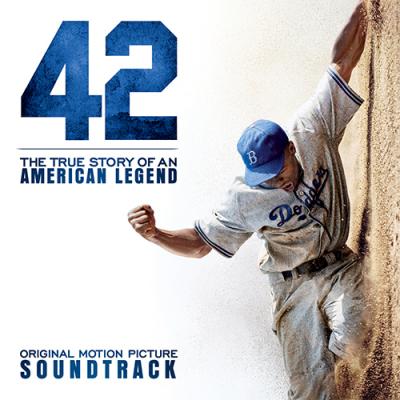
42 Album Cover

"42" Soundtrack Lyrics

Movie • 2013

Track Listing


"42" Soundtrack Description

Official trailer still from '42' (2013): Jackie Robinson stepping up to the plate
“42” theatrical trailer, 2013

Questions and Answers

Is there an official soundtrack album for “42”?
Yes—two, actually: 42 (Original Motion Picture Soundtrack) with period songs and one score cue, and 42 (Original Motion Picture Score) by Mark Isham. Both were released April 9, 2013.
Who composed the score?
Mark Isham composed the orchestral score, recorded with a large ensemble; WaterTower Music issued the album in 2013.
What song plays over the end credits?
Sister Wynona Carr’s gospel gem “The Ball Game” rolls over the credits—an on-theme benediction about playing fair.
Are classic 1940s artists actually used in the film?
Yes. Needle-drops include Duke Ellington, Nat King Cole Trio, Wynonie Harris, Hank Williams, Louis Jordan, and more.
Is there a cue tied to Jackie’s daring base-running?
Yep—look for Isham’s track “Jackie Steals,” which underscores one of the film’s signature on-base sequences.
Where can I stream the albums?
Both the songs compilation and the score are available on major platforms (e.g., Apple Music and Spotify).

Notes & Trivia

  • Two companion albums dropped on the same day: a period-songs set and Mark Isham’s full score (as noted by Film Music Reporter).
  • The songs album threads jump-blues, swing, country, and gospel to match the late-’40s soundscape (according to WaterTower Music’s release info).
  • Melora Hardin recorded a new rendition of “Begin the Beguine” in classic band-singer style for the film’s world.
  • Count Basie’s “Did You See Jackie Robinson Hit That Ball?”—written by Buddy Johnson—tips the cap directly to Robinson’s legend.
  • Sister Wynona Carr’s “The Ball Game” is the end-credits lift; several reviewers called it out as a perfectly on-message closer.
Trailer frame from '42' showing Branch Rickey in the press box, brass and strings swelling
Figure 2: Press-box gravitas meets big-hearted orchestration.

Overview

Why score nobility with swing at the edges? Because 42 tells a story that lives in clubhouses and cathedrals at once. The soundtrack pairs Mark Isham’s orchestral writing—French horns, proud trumpet, lyrical strings—with crate-dug 1940s sides that ring with jukebox energy. It’s baseball as ritual and as noise.

The choices avoid museum glass. Jump-blues and big-band cues rub shoulders with Isham’s clean, theme-forward writing to track Jackie Robinson’s calm under pressure, Branch Rickey’s calculated faith, and the roar of ballparks in a country mid-change. The closer—Sister Wynona Carr’s “The Ball Game”—turns a gospel metaphor into a curtain call that actually lands.

Genres & Themes

  • Orchestral Americana ↔ Dignity under fire: Horns and trumpet frame Robinson’s poise without over-sentimentality.
  • Jump-blues & swing ↔ Locker-room pulse: Wynonie Harris, Duke Ellington, and Nat King Cole set the era’s everyday rhythm.
  • Honky-tonk country ↔ Road miles & grind: Hank Williams’ “Move It On Over” sketches the traveling life and frayed tempers.
  • Gospel ↔ Moral center: “The Ball Game” functions like a benediction—play fair, finish well.
In-game action shot from the '42' trailer with crowd noise riding a brisk swing rhythm
Figure 3: Swing on the radio, spikes on the dirt—the film keeps both in the mix.

Key Tracks & Scenes

“The Ball Game” — Sister Wynona Carr
Where it plays: End credits; a reflective coda after the final montage (non-diegetic).
Why it matters: A gospel parable about “playing fair” maps cleanly to the film’s ethic and leaves the crowd on its feet.

“Did You See Jackie Robinson Hit That Ball?” — Count Basie & His Orchestra
Where it plays: Celebratory placement late in the film/credits material (non-diegetic).
Why it matters: A period shout-out to Robinson written during his prime; the lyrics (not quoted here) celebrate his on-field impact.

“Move It On Over” — Hank Williams
Where it plays: Period source needle-drop used to color travel/locker-room vibes (diegetic/source).
Why it matters: Brings in honky-tonk texture—America in motion, rules in flux.

“Straighten Up and Fly Right” — Nat King Cole Trio
Where it plays: Source music in a social/club context (diegetic).
Why it matters: Light swing with a moral spine; it mirrors Jackie’s restraint strategy.

“Jackie Steals” — Mark Isham (score)
Where it plays: Tense base-path sequence; editorial rhythm syncs to the lead and throw (non-diegetic).
Why it matters: Tightly wound ostinatos and brass swells turn footwork into myth.

Track–Moment Index (compact)
Song / CueSceneDiegetic?Approx. Time
“The Ball Game” — Sister Wynona CarrEnd credits roll after final montageNo~2:05:00
“Did You See Jackie Robinson Hit That Ball?” — Count BasieCelebratory late-film/credits usageNo~2:03:00
“Move It On Over” — Hank WilliamsTravel/locker-room colorYes~0:40:00
“Straighten Up and Fly Right” — Nat King Cole TrioClub/social ambianceYes~0:30:00
“Jackie Steals” — Mark IshamBase-steal set-pieceNo~1:15:00
“Pee Wee and Jackie” — Mark IshamCrosley Field arm-over-shoulder momentNo~1:22:00

Note: Times are approximate scene anchors; placements are consolidated from label notes and widely cited track associations.

Music–Story Links (characters & plot beats as connected to songs)

  • Poise vs. provocation: Isham keeps brass noble and melodies spare when crowds jeer—dignity wins the mix even when the scene doesn’t.
  • Clubhouse anthropology: Jump-blues and swing cues act like sonic props—cigarette smoke, card games, frayed jokes—before the game tightens.
  • Public witness: The Pee Wee Reese moment plays under restrained scoring; no sermonizing, just a melody that widens the frame to the stands.
  • Final benediction: “The Ball Game” reframes baseball as a life parable, turning the credits into a coda about how to play.
Locker-room moment in the '42' trailer; muted strings and horn theme underline resolve
Figure 4: Quiet rooms, big choices—the score lets silence breathe.

How It Was Made (supervision, score, behind-the-scenes)

Composer Mark Isham built a traditional, theme-driven score with prominent French horns and solo trumpet to voice Robinson’s nobility; recording took place with a large orchestra, and WaterTower Music released the album alongside the songs set (as reported by Film Music Reporter). The label’s materials and industry listings confirm both releases landed on April 9, 2013 (according to WaterTower Music and Apple’s store pages).

Music supervision is credited to Margaret Yen and Peter Afterman, whose period selections stitch together radio, jukebox, and ballpark culture without turning the film into a jukebox musical. The songs album notably includes one of Isham’s cues as a bridge cut, while the separate score album carries 21 tracks that mirror the film’s narrative spine.

Reception & Quotes

Response split in two lanes: reviewers praised the craft and warmth of Isham’s themes, while some film critics felt the score leaned sentimental. The songs choices drew nods for era feel and for ending on gospel rather than bombast (as summarized across trade reviews and album write-ups).

42 is a lovely little score that builds to its necessary crescendo at the end.” — Filmtracks review
“That vintage gospel end-credits cut is the perfectly tuned grace note.” — city arts commentary

Both albums remain easy to find on streaming; physical editions have also circulated via WaterTower’s channels and retail listings.

Technical Info

  • Title: 42 (Original Motion Picture Soundtrack) — songs; 42 (Original Motion Picture Score) — score
  • Year: 2013
  • Type: Movie
  • Composer: Mark Isham
  • Music Supervision: Margaret Yen; Peter Afterman
  • Label: WaterTower Music (both albums)
  • Release Date: April 9, 2013
  • Selected notable placements: “The Ball Game” (end credits); “Did You See Jackie Robinson Hit That Ball?”; “Move It On Over”; “Straighten Up and Fly Right”
  • Availability: Streaming on Apple Music and Spotify; digital/retail listings for physical editions

Canonical Entities & Relations

SubjectRelationObject
Brian Helgelandwrote & directed42 (2013)
Mark Ishamcomposed42 (Original Motion Picture Score)
WaterTower Musicreleasedboth 42 albums
Margaret Yen; Peter Aftermansupervisedmusic for 42
Sister Wynona Carrperformed“The Ball Game” (end credits)
Count Basie & His Orchestraperformed“Did You See Jackie Robinson Hit That Ball?”
Duke Ellingtonperformed“Don’t Get Around Much Anymore”
Nat King Cole Trioperformed“Straighten Up and Fly Right”
Hank Williamsperformed“Move It On Over”

Sources: WaterTower Music; Film Music Reporter; IMDb Soundtracks; Apple Music; Spotify; Wikipedia (albums & credits); MovieMusic.com; Variety & review aggregations.

October, 22nd 2025

Get info about '42' film: IMDb, Wikipedia
A-Z Lyrics Universe

Lyrics / song texts are property and copyright of their owners and provided for educational purposes only.