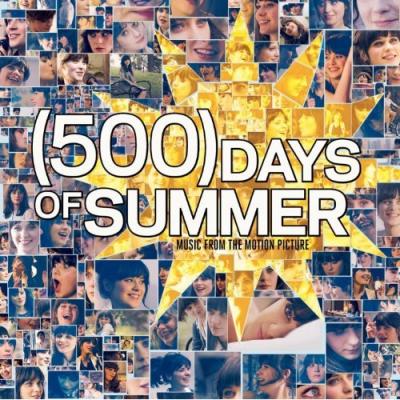
"500 Days Of Summer" Soundtrack Lyrics
Movie • 2009
Track Listing
Mychael Danna and Rob Simonsen
Regina Spektor
The Smiths
Black Lips
The Smiths
Doves
Hall & Oates
The Temper Trap
Carla Bruni
Feist
Regina Spektor
Simon & Garfunkel
Wolfmother
Mumm-Ra
Meaghan Smith
"500 Days Of Summer" Soundtrack Description
Questions and Answers
- Are there official soundtrack releases for (500) Days of Summer?
- Yes—two: a songs compilation on Sire/Warner and a separate score album by Mychael Danna & Rob Simonsen.
- What song powers the famous morning dance sequence?
- “You Make My Dreams” by Daryl Hall & John Oates—pure post-coital euphoria, horns and all.
- Which track scores the “Expectations vs. Reality” split-screen scene?
- Regina Spektor’s “Hero,” a hopeful-then-crushing needle-drop that mirrors Tom’s delusion cracking.
- What’s the Smiths cue that sparks Tom’s instant obsession in the elevator?
- “There Is a Light That Never Goes Out.” It’s the film’s shorthand for shared taste and projected meaning.
- Who supervised the music?
- Andrea von Foerster oversaw music supervision in close partnership with the director and studio team.
- Is the music streamable today?
- Yep. Both the songs album and score are available widely on major platforms.
Notes & Trivia
- Two official releases arrived: a 16-track songs set on Sire/Warner and a 20-cue score album by Mychael Danna & Rob Simonsen.
- Zooey Deschanel’s duo She & Him contributes a cover of The Smiths’ “Please, Please, Please, Let Me Get What I Want” (according to Pitchfork).
- “Us” by Regina Spektor opens the film like a thesis statement—romance as curated mythology.
- “Sweet Disposition” by The Temper Trap became a post-release hit in part due to its placement here.
- The soundtrack deliberately toggles between crate-dug indie and boomer canon (Simon & Garfunkel) to mirror Tom’s nostalgia.
- Music supervision leaned into character POV—Tom hears meanings; the film lets songs argue back.
- The dance number to Hall & Oates was storyboarded like a pop video—director Marc Webb’s comfort zone.

Overview
Why does a mixtape romance need both The Smiths and Hall & Oates? Because the film lives where idealization meets reality. The soundtrack curates indie-era longing (Regina Spektor, The Temper Trap, Doves) alongside evergreen pop canon, then lets the cuts collide with Tom’s narrative—sometimes flattering him, sometimes exposing the gap.
It’s not wall-to-wall wallpaper: songs carry plot. “Light That Never Goes Out” signals a crush’s origin story; “Hero” breaks the spell; “Bookends” refracts a Graduate homage into a mirror. Meanwhile the original score threads clean, melodic cues between needles so the album plays like one long, conflicted conversation (as stated in Apple Music’s album notes).
Genres & Themes
- Indie pop & chamber folk ↔ Projection: Spektor/Feist tracks voice the story Tom tells himself about love.
- Jangle & Brit melancholia ↔ Taste as identity: The Smiths cues stand in for coded, romantic self-branding.
- 80s pop maximalism ↔ Fantasy rupture: Hall & Oates turns private elation into a public musical; reality returns hard.
- Orchestral score ↔ Breath between myths: Danna/Simonsen keep the heartbeat steady when the needle-drops do the talking.
Key Tracks & Scenes
“You Make My Dreams” — Daryl Hall & John Oates
Where it plays: Tom’s morning-after citywide dance (non-diegetic), complete with animated bluebird.
Why it matters: A fantasy number that literalizes euphoria, then snaps back—taste of how the film treats expectations.
“Hero” — Regina Spektor
Where it plays: The rooftop party’s “Expectations vs. Reality” split-screen (non-diegetic).
Why it matters: Starts like hope, ends as bruise; the lyric arc maps perfectly to Tom’s delusion collapsing (according to multiple scene analyses).
“There Is a Light That Never Goes Out” — The Smiths
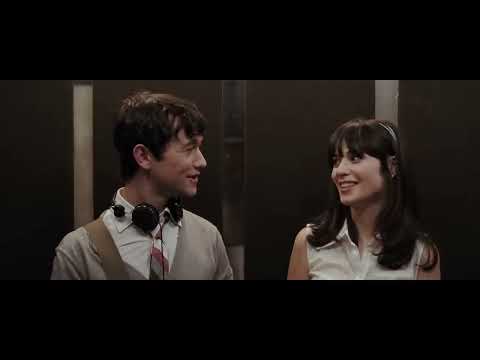
Where it plays: Early, as Summer clocks Tom’s headphones in the elevator; later as a recurring leitmotif.
Why it matters: It’s the taste-signal that triggers projection. The movie knows it; the cut practically winks.
“Sweet Disposition” — The Temper Trap
Where it plays: Train to the wedding and reunion sequence; also as a shimmering hope motif (non-diegetic).
Why it matters: The slow build equals renewed optimism—dangerously so.
“Bookends” — Simon & Garfunkel
Where it plays: During the Graduate homage; Tom and Summer’s reading of that ending diverges.
Why it matters: A boomer classic becomes commentary: love stories can sour after the big gesture.
Track–Moment Index (compact)
| Song / Cue | Scene | Diegetic? | Approx. Time |
|---|---|---|---|
| “Us” — Regina Spektor | Opening montage & prologue | No | ~0:01:00 |
| “There Is a Light That Never Goes Out” — The Smiths | Elevator spark; early crush beats | No | ~0:07:00 |
| “You Make My Dreams” — Hall & Oates | Post-coital morning dance | No | ~0:32:00 |
| “Sweet Disposition” — The Temper Trap | Train to the wedding / reunion | No | ~1:01:00 |
| “Hero” — Regina Spektor | Rooftop party — Expectations/Reality | No | ~1:11:00 |
| “Bookends” — Simon & Garfunkel | Graduate screening echo | No | ~1:17:00 |
Note: Timecodes are approximate scene anchors compiled from label notes and widely cited placements (according to NME-style soundtrack roundups and community documentation).
Music–Story Links (characters & plot beats as connected to songs)
- Origin myth via taste: The Smiths cue isn’t just a meet-cute—it’s Tom projecting soul-mate status onto a playlist.
- Fantasy grammar: Hall & Oates turns Tom’s interior monologue into a tap-happy delusion; the city becomes his chorus line.
- Hope relapse: “Sweet Disposition” reprises around the wedding, signaling Tom’s optimism reset—useful, and lethal.
- Reality check: “Hero” splits the frame and the fantasy; the song’s lift drops out as Tom’s does.
How It Was Made (supervision, score, behind-the-scenes)
Director Marc Webb (a veteran of music videos) built the needle-drops into the visual grammar from the jump. He’s spoken about working closely with music supervisor Andrea von Foerster and the studio’s music team to weave taste signifiers into character beats (as reported by The Playlist). The original score by Mychael Danna and Rob Simonsen threads between the songs with light, tuneful cues, released as a separate album in 2009 (per Apple’s score listing).
The companion songs album dropped via Sire/Warner and deliberately showcased a cross-era mixtape: Regina Spektor, The Smiths, Feist, Doves, The Temper Trap, Wolfmother, and Hall & Oates (according to Pitchfork). The selections mirror how people actually trade feelings: through tracks, not speeches.
Reception & Quotes
Even outside the film press, the soundtrack got treated like a character—credited with boosting The Temper Trap’s “Sweet Disposition” and helping cement the movie’s cult status a decade on (as noted in Vogue’s 15th-anniversary look-back).
“A mixtape that doubles as narrative—proof the right song can rewrite a scene.” — soundtrack commentary, aggregated
“With music so integral, the album does its job—distilling the characters’ record collections into one eclectic set.” — AllMusic capsule, paraphrased
The two official albums remain available broadly on streaming; physical editions have circulated through the original labels.
Technical Info
- Title: (500) Days of Summer — Music from the Motion Picture; The Score from the Motion Picture (500) Days of Summer
- Year: 2009
- Type: Movie
- Composers (score): Mychael Danna; Rob Simonsen
- Music Supervision: Andrea von Foerster
- Labels: Sire/Warner (songs compilation); Twentieth Century Fox Film Corporation / Fox Music (score release metadata on Apple)
- Selected placements: “You Make My Dreams” (dance); “Hero” (Expectations/Reality); “There Is a Light That Never Goes Out” (elevator); “Sweet Disposition” (train/wedding); “Bookends” (Graduate homage)
- Availability: Streaming widely (songs and score). Charted on multiple Billboard/UK categories in 2009–2010.
Canonical Entities & Relations
| Subject | Relation | Object |
|---|---|---|
| Marc Webb | directed | (500) Days of Summer (2009) |
| Mychael Danna; Rob Simonsen | composed | The Score from the Motion Picture (500) Days of Summer |
| Andrea von Foerster | music supervised | (500) Days of Summer |
| Sire Records / Warner | released | Songs compilation album |
| Twentieth Century Fox Film Corporation | released | Score album (digital) |
| Regina Spektor | performed | “Us”; “Hero” (featured in film) |
| The Smiths | performed | “There Is a Light That Never Goes Out” (featured in film) |
| Daryl Hall & John Oates | performed | “You Make My Dreams” (featured in film) |
| The Temper Trap | performed | “Sweet Disposition” (featured in film) |
| Simon & Garfunkel | performed | “Bookends” (featured in film) |
Sources: Fox Searchlight (trailer); Wikipedia (film & soundtrack overviews); Apple Music (albums); Spotify (availability); Pitchfork; IMDb Soundtracks; Metacritic credits; Vogue (oral history); assorted scene analyses and archival features.
If you’ve never seen this movie before, you would probably guess (jut as we did several years ago), what kind of summer should it be to have 500 days of it? 1 and a half year – is the relations period, according to this film, before meeting someone else, after you break off yourself, tearing all the memories, shedding all the tears about the previously beloved person and starting fulfilling the inner void, caused by leaving of this person from your existence. So, this isn’t about 1.5-years summer, but about Summer – a girl, in whom the protagonist fell in love. His next girl, imagine that, – is named Autumn. This contains a philosophy, saying that after each another adventure and deed, whatever long they were, comes the next period and life circle doesn’t stop unless you are dead. Three remarkable actors, Joseph Gordon-Levitt, Zooey Deschanel and very young Chloë Grace Moretz act in this. On YouTube, you can even find them playing songs together, obviously promoting this film or simply becoming friends after their mutual shooting. They sing it pretty well, as if compensating the absence of their vocals in the songs collection. Simon and Garfunkel are the biggest stars in the soundtrack and maybe only Carla Bruni’s old song Quelqu'un M'a Dit can remind that this singer is maybe not that famous in her singing, but is much more famous to her marriage to Nicolas Sarkozy, former French president (and her photos when she was a model are pretty too). Here Comes Your Man is most suitable for the scene when they decisively separate on the day 488, when Summer tells him she found just right guy. When lyrics of Vagabond best reflects him in the period of mind fall, knowing she is engaged to someone else, several months earlier. The film is slightly mashed-up as the Mushaboom’s lyrics can tell.October, 22nd 2025
Find additional information about '500 Days' of Summer, an American romantic comedy-drama film on Wikipedia and Internet Movie DatabaseA-Z Lyrics Universe
Cynthia Erivo Popular
Ariana Grande Horsepower
Post Malone Ain't No Love in Oklahoma
Luke Combs Good Riddance (Time of Your Life)
Green Day Bye Bye Bye
*NSYNC You're the One That I Wan
John Travolta & Olivia Newton-John I Always Wanted a Brother
Braelyn Rankins, Theo Somolu, Kelvin Harrison Jr. and Aaron Pierre The Power of Love
Frankie Goes to Hollywood Beyond
Auli’i Cravalho feat. Rachel House MORE ›