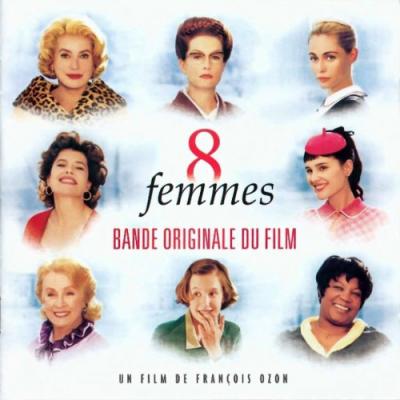
"8 femmes" Soundtrack Lyrics
Movie • 2002
Track Listing
Mamy (Danielle Darrieux)
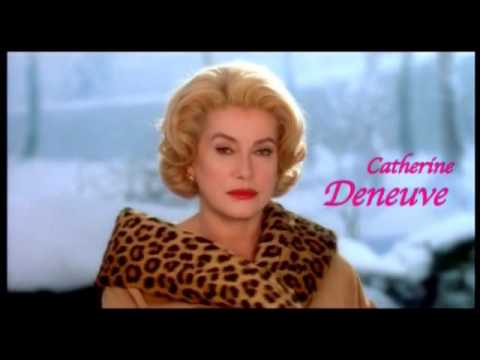
Gaby (Catherine Deneuve)
Louise (Emmanuelle Béart)
Chanel (Firmine Richard)
Suzon (Virginie Ledoyen)
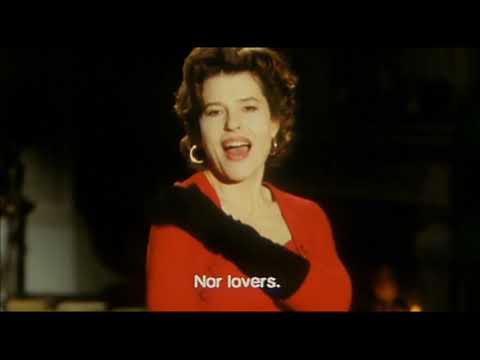
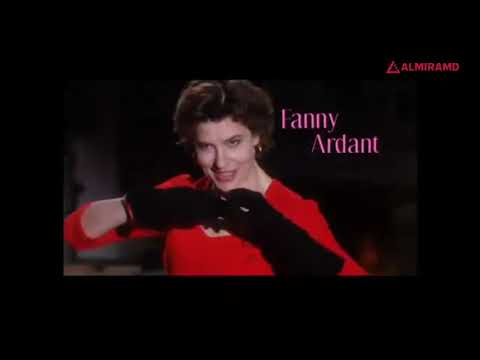
Pierrette (Fanny Ardant)
Augustine (Isabelle Huppert)
Catherine (Ludivine Sagnier )
"8 femmes (Bande originale du film)" Soundtrack Description
Questions and Answers
- Is there an official soundtrack album for 8 femmes?
- Yes. The album 8 femmes (Bande originale du film) compiles the cast’s eight songs plus Krishna Levy’s instrumental cues; it was issued by WEA/Warner in 2002. (according to AllMusic)
- Who composed the score?
- Krishna Levy, whose orchestral writing nods to Bernard Herrmann and classic melodrama textures while leaving space for the actresses’ vocal numbers. (as summarized on Wikipedia’s production notes)
- Do the actresses sing on the soundtrack?
- They do. Each leading character performs one number in full: Deneuve, Ardant, Huppert, Béart, Ledoyen, Sagnier, Darrieux, and Firmine Richard each get a spotlight. (according to Wikipedia and IMDb song credits)
- What songs are performed in the film?
- Among them: “Papa t’es plus dans l’coup” (Catherine), “Message personnel” (Augustine), “À quoi sert de vivre libre” (Pierrette), “Mon amour, mon ami” (Suzon), “Pour ne pas vivre seul” (Madame Chanel), “Pile ou face” (Louise), “Toi jamais” (Gaby), and “Il n’y a pas d’amour heureux” (Mamy).
- When did the album come out and how long is it?
- May 2002 in France; typical listings show ~41 minutes. (as listed by Muziekweb and AllMusic)
- Is the album still available?
- Physical CDs circulate via catalog sellers; digital availability varies by region, but the album is documented across major databases. (per Discogs/AllMusic)
Additional Info
- The commercial CD is credited to WEA Music France (common catalog nos. 0927430272/0927430275). (according to Discogs)
- Muziekweb logs a French release in May 2002 with a total runtime around 40:50. (as stated in Muziekweb’s entry)
- AllMusic groups the release under Krishna Levy with track listings and credits for the actresses. (according to AllMusic)
- IMDb’s soundtrack page lists the original writers behind each classic French song adapted for the film’s performances. (according to IMDb)
- Each musical number happens inside the story world, with characters often turning to camera—the film’s most notorious stylistic swing.
- The production design and Levy’s score consciously echo 1950s Hollywood melodramas filtered through Sirk/Herrmann references. (per Wikipedia’s production notes)
Overview
How do you stage a murder mystery that keeps breaking into song and still lands an emotional punch? 8 femmes plays it straight-faced and candy-coated. Krishna Levy’s score sketches a chilly, Herrmann-tinged frame—strings, woodwinds, and little alarm bells—then the cast takes over: eight stars, eight solos, each a confession or dodge set to a familiar French tune.
The soundtrack album captures that balance. It moves from sly pastiche to earnest feeling without apology: Isabelle Huppert’s brittle “Message personnel,” Fanny Ardant’s smoky “À quoi sert de vivre libre,” Catherine Deneuve’s resigned “Toi jamais,” Danielle Darrieux’s timeless “Il n’y a pas d’amour heureux.” It’s a chamber piece disguised as a jukebox. (as summarized by The New Yorker’s contemporaneous review and AllMusic’s release page)
Genres & Themes
- Chanson standards ↔ confessionals: familiar melodies become character testimonies; the nostalgia softens, then sharpens, the reveals.
- Neo-melodrama score ↔ suspense frame: Levy’s orchestration anchors the whodunit between acts, a clean palate for each song.
- Cabaret staging ↔ direct address: performers pivot to the lens; intimacy (and alibi) arrive in the same breath.
- 1950s gloss ↔ 2000s irony: the Dior-inspired palette winks, but the lyrics still bruise.
Key Tracks & Scenes
“Papa t’es plus dans l’coup” — Ludivine Sagnier (Catherine)
Where it plays: Early burst of teen insouciance; diegetic, within the parlor scene (~00:10).
Why it matters: Announces the film’s rulebook: secrets will sing themselves out—sometimes with a grin. (per Wikipedia’s musical numbers)
“Message personnel” — Isabelle Huppert (Augustine)
Where it plays: Augustine’s private plea turned spotlight; diegetic, mid-film (~00:35).
Why it matters: Huppert weaponizes vulnerability; a shy aunt becomes the room’s sharpest blade.
“À quoi sert de vivre libre” — Fanny Ardant (Pierrette)
Where it plays: A smoky, defiant turn from the black-sheep sister; diegetic, around the film’s midpoint (~00:45).
Why it matters: The number doubles as character manifesto—freedom at a cost. (according to AllMusic’s cue list)
“Pile ou face” — Emmanuelle Béart (Louise)
Where it plays: Seduction lesson staged as a demonstration; diegetic, late-middle (~01:00).
Why it matters: Flips power in the room; Béart sheds the maid’s uniform as the song swells. (per Wikipedia’s scene summary)
“Toi jamais” — Catherine Deneuve (Gaby)
Where it plays: Post-confrontation reckoning; diegetic (~01:10).
Why it matters: A velvet dagger—resentment sung as elegance.
“Il n’y a pas d’amour heureux” — Danielle Darrieux (Mamy)
Where it plays: Coda over the final tableau; diegetic, direct address (~01:40).
Why it matters: The film’s final word; no happy love—only the truth left humming. (as noted in Wikipedia and The New Yorker’s review)
Track–Moment Index (approximate)
| Song | Performer / Character | Scene | Diegetic? | Approx. Time |
|---|---|---|---|---|
| Papa t’es plus dans l’coup | Ludivine Sagnier / Catherine | Early parlor burst | Yes | ~00:10 |
| Message personnel | Isabelle Huppert / Augustine | Confessional turn | Yes | ~00:35 |
| À quoi sert de vivre libre | Fanny Ardant / Pierrette | Smoky showcase | Yes | ~00:45 |
| Pile ou face | Emmanuelle Béart / Louise | “Lesson” performance | Yes | ~01:00 |
| Toi jamais | Catherine Deneuve / Gaby | Reckoning in the salon | Yes | ~01:10 |
| Il n’y a pas d’amour heureux | Danielle Darrieux / Mamy | Final tableau | Yes | ~01:40 |
Music–Story Links (characters & plot beats)
- Mask drops → “Message personnel”: Augustine pivots from nerves to clarity; the song says what her dialogue can’t.
- Reputation vs. reality → “À quoi sert de vivre libre”: Pierrette’s bravado reads as both armor and admission.
- Servant/agent → “Pile ou face”: Louise seizes the frame—the number literally rewrites the room’s hierarchy.
- Marriage ledger → “Toi jamais”: Gaby sings a balance sheet of attention and neglect; plot accusations suddenly feel personal.
- Last word → “Il n’y a pas d’amour heureux”: Mamy’s closing line turns the whodunit into a lament about love’s cost.
How It Was Made (supervision, score, behind-the-scenes)
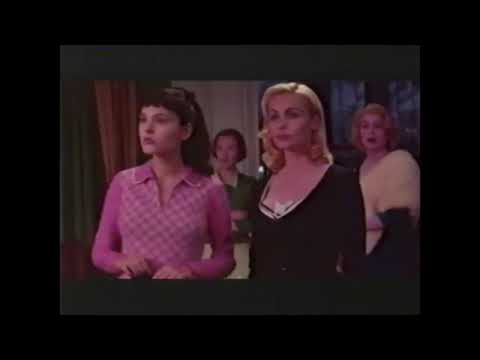
François Ozon staged the numbers as in-world performances that occasionally meet the lens, a choice that lets the actresses own their archetypes and then crack them open. Costume designer Pascaline Chavanne worked in a Dior-adjacent New Look to match the period setting; Levy’s score keeps tension simmering between songs. (as outlined on Wikipedia’s production section)
The album curates those showpieces with connective cues. Database entries tie the release to WEA Music France with multiple catalog numbers for digipak/standard variations; archival listings place the French street date in spring 2002. (according to Discogs and Muziekweb)
Reception & Quotes
Response was broadly positive, with critics embracing the film’s campy precision and ensemble fireworks; the music is where sentiment sneaks past the lacquer. (as reflected on Rotten Tomatoes and contemporary press)
“A gorgeous, if disjointed, spectacle… made endurable—if not entirely comprehensible—by its eye-popping cast.” Ann Hornaday, The Washington Post (quoted on Wikipedia)
“Huppert… steals every scene… the uptight aunt with the most dangerous song.” Jonathan Curiel, San Francisco Chronicle (via Wikipedia)
“Camp and true… a warped adoration of star-quality actresses.” Lisa Schwarzbaum, Entertainment Weekly (quoted on Wikipedia)
For a deeper critical angle on how the numbers play, see the 2002 review in The New Yorker (as stated in The New Yorker’s coverage).
Technical Info
- Title: 8 femmes — Bande originale du film
- Year: 2002 (France)
- Type: Movie (musical whodunit)
- Composer: Krishna Levy
- Primary performers (songs): Catherine Deneuve (“Toi jamais”), Fanny Ardant (“À quoi sert de vivre libre”), Isabelle Huppert (“Message personnel”), Emmanuelle Béart (“Pile ou face”), Virginie Ledoyen (“Mon amour, mon ami”), Ludivine Sagnier (“Papa t’es plus dans l’coup”), Danielle Darrieux (“Il n’y a pas d’amour heureux”), Firmine Richard (“Pour ne pas vivre seul”)
- Label / Catalog (FR): WEA Music — commonly listed as 0927430272 / 0927430275 (digipak)
- Release window / Length: May 2002; ~41 minutes
- Album status: Official OST; CD widely documented, regional digital availability varies
Canonical Entities & Relations
| Subject | Relation | Object |
|---|---|---|
| François Ozon | directed | 8 femmes (2002) |
| Krishna Levy | composed | 8 femmes score |
| WEA Music France | released | 8 femmes — Bande originale du film (2002) |
| Catherine Deneuve | performed | “Toi jamais” |
| Fanny Ardant | performed | “À quoi sert de vivre libre” |
| Isabelle Huppert | performed | “Message personnel” |
| Emmanuelle Béart | performed | “Pile ou face” |
| Virginie Ledoyen | performed | “Mon amour, mon ami” |
| Ludivine Sagnier | performed | “Papa t’es plus dans l’coup” |
| Danielle Darrieux | performed | “Il n’y a pas d’amour heureux” |
| Firmine Richard | performed | “Pour ne pas vivre seul” |
Sources: AllMusic; Discogs; Muziekweb; Wikipedia (8 Women); IMDb Soundtrack page; Rotten Tomatoes; The New Yorker review.
October, 22nd 2025
A-Z Lyrics Universe
Cynthia Erivo Popular
Ariana Grande Horsepower
Post Malone Ain't No Love in Oklahoma
Luke Combs Good Riddance (Time of Your Life)
Green Day Bye Bye Bye
*NSYNC You're the One That I Wan
John Travolta & Olivia Newton-John I Always Wanted a Brother
Braelyn Rankins, Theo Somolu, Kelvin Harrison Jr. and Aaron Pierre The Power of Love
Frankie Goes to Hollywood Beyond
Auli’i Cravalho feat. Rachel House MORE ›