Soundtracks:  A B C D E F G H I J K L M N O P Q R S T U V W X Y Z #


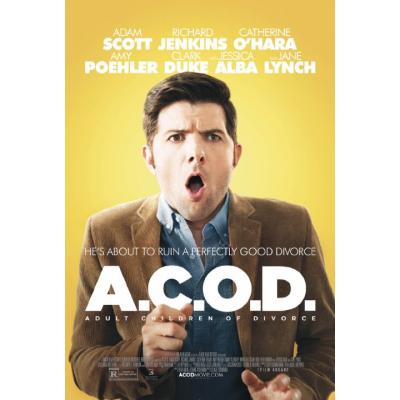
A.C.O.D. Album Cover

"A.C.O.D." Soundtrack Lyrics

Movie • 2013

Track Listing


“A.C.O.D.” Soundtrack: Description.

Background

Where this soundtrack sits in the 2010s indie-comedy universe

  • 2013 gave us a wave of slightly bruised comedies about grown-ups who aren’t quite as grown as they look. “A.C.O.D.” lands right in that pocket, all sharp elbows and soft melodies.
  • The score leans on nimble guitars, quietly percussive textures, and those modest synth flecks you hear in mid-2010s indie drama-comedies—music that doesn’t hog the scene so much as tilt it.
  • Song placements feel like companions to Carter’s emotional whiplash: playful when his family behaves, dissonant when it doesn’t (which, frankly, is most of the time).

Plot & Character Breakdown

The setup

  • Carter is the poster child for holding it together. Adult, efficient, convincing smile that says “I’m fine.” He isn’t. Years after his parents’ explosive divorce, he’s dragged back into the battlefield for his younger brother’s impending wedding.
  • Enter a twist: Carter was once part of a childhood study on divorce. The researcher—still curious, a little too delighted—wants to revisit her famous case study. Chaos finds a clipboard.

Main players

Carter
  • The consummate fixer. Performance driven. Allergic to mess, yet drawn to it like weather. The soundtrack often tracks his micro-spirals—jaunty rhythms turning skittish at the edges.
Hugh (Father)
  • Charming, stubborn, convinced he’s right because—well—he felt right at the time. Music around him favors plucky motifs that sound confident until they wobble.
Melissa (Mother)
  • Volcanic one moment, icy the next. The cues shift from brittle strings to elastic basslines, mirroring that snap from sarcasm to sincerity.
Lauren (Carter’s partner)
  • The voice of reason who’s tired of auditioning for that role. Her scenes breathe; the songs here tend to exhale, all open chords and patient tempos.
Sondra (Hugh’s wife)
  • Spiky, funny, dangerously good at pettiness. The needle-drops with her flirt with power-pop punch, like a smirk you can dance to.
Trey (Carter’s brother)
  • In love, hopeful, too sincere to survive this family unscathed. His moments catch the film’s warmest textures—shakers, handclaps, guitar lines that glow like late-afternoon windows.
Dr. Judith (the researcher)
  • Clinical curiosity dressed up as help. Themes around her use tidy patterns—metronomic pulses and pencil-tap percussion—like an experiment tapping its own clipboard.

The arc (no spoilers, just the flavor)

  • Rehearsal dinners are minefields; the movie knows it. Every cue is a step that might explode, then—somehow—resolves into a shrug and a half-smile.
  • Carter tries to manage other people’s feelings like a spreadsheet. The soundtrack taps patiently on the glass, reminding him he’s not a formula.
  • By the end, the film doesn’t promise healing so much as tolerable weather. The music echoes that: less thunder, more drizzle you can walk through.

Musical Styles & Themes

Palette

  • Light indie rock scaffolding: clean guitars, compact drums, basement-show intimacy scaled for cinemas.
  • Subtle synth cushions that steer clear of gloss; think practical mood lighting rather than a spotlight.
  • Occasional string swells that gesture instead of grandstand. They arrive, they nod, they leave.

Motif work

  • Control vs. Chaos: Tight, looped phrases for Carter’s sense of order; sudden rhythmic hiccups when family history kicks the door in.
  • Truth and its aftertaste: Minor-key shadings when characters speak plainly; brighter chords when they perform for each other.
  • Love that’s almost ready: Warm, unhurried progressions for the romance thread, with percussion that feels like a heartbeat that’s learned boundaries.

Track Highlights & Scene Connections

Opening Title Beat

  • Jumpy, optimistic, all elbows-in. Sets the thesis: adulting as controlled stumble. The cue teases brightness but sneaks in a bass note that says, “Careful.”

The Study Revealed

  • When Carter discovers he was a research subject, the music turns clinical—clicks, taps, neat little arpeggios. It’s tidy enough to be rude.

Rehearsal Dinner—The Slow Unravel

  • Guitars arrive like family members: a little late, slightly out of tune with each other, but somehow harmonizing. You hold your breath; the snare keeps time like someone counting to ten.

Late-Night Confession

  • Airy pads, a simple melodic figure that repeats the way anxious thoughts do. The cue doesn’t judge; it sits on the curb with you.

Final Montage

  • A gentle uptick, as if the film believes in maintenance over miracles. The ending song carries that sweet, ordinary courage of showing up again tomorrow.

Production & Behind-the-Scenes

How the soundtrack supports the film’s tone

  • “A.C.O.D.” is a comedy that refuses to laugh at its characters. The music follows suit—kind, observant, never smug.
  • Placement strategy leans on contrast: jaunty cues under awkward truths, hushed textures under loud arguments. That opposition is the point; people rarely sound the way they feel.

Editorial rhythms

  • Transitions often ride on musical tails—end of a scene, shimmer of a chord, we’re in the next room. It’s confident, like the film knows you’ll catch up.
  • Dialog-heavy sequences give the score breathing gaps, so when a cue returns, it lands like a thought you’ve been trying to finish all day.

Reviews & Social Proof

Critical temperature

  • Critics split the check here. Many praised the cast’s comic timing and the film’s humane eye; others wanted a sharper satirical bite. The music mostly got nods for taste—smart, unfussy, scene-first.

Audience murmur

  • Fans of character-forward comedies connected with the soundtrack’s modesty. It’s the kind of album you can work to, or drive to, or quietly second-guess your life to—useful music, in the best sense.
“You’re an A.C.O.D.—Adult Child of Divorce.” Dr. Judith, explaining the label that both clarifies and complicates everything

Technical Info

  • Title: A.C.O.D. (Original Motion Picture Soundtrack)
  • Film Release Year: 2013
  • Type: Score and song compilation for feature film
  • Primary Mood: Wry, melancholy-adjacent, fleet-footed
  • Use Case: Dialogue-friendly background, reflective listening, post-family-dinner decompression

Cast (by prominence, 2013)

Lead & Core Ensemble
  • Adam Scott as Carter—perpetual mediator, spreadsheet in human form.
  • Richard Jenkins as Hugh—charm that doubles as deflection.
  • Catherine O’Hara as Melissa—deadpan warmth with teeth.
  • Amy Poehler as Sondra—wickedly funny, weaponized civility.
  • Mary Elizabeth Winstead as Lauren—clarity with limits.
  • Clark Duke as Trey—romantic and earnest, the hopeful outlier.
  • Jane Lynch as Dr. Judith—the researcher who never met a boundary she couldn’t reframe.
  • Jessica Alba as Michelle—fellow veteran of divorce fallout, mirror held to Carter.
Supporting & Notables
  • Ensemble of friends, coworkers, and wedding orbiters—the chorus that turns each scene into a small social experiment.

How it plays on headphones

Mix & Master feel

  • Everything sits close. Vocals in licensed tracks feel like conversation distance; drums avoid big-room drama, sticking to tight skins and crisp hats.
  • Low end is present but polite; it nudges, never stomps.

Theme you’ll hum later

  • The main recurring figure—four notes that slant upward then hesitate—isn’t flashy. But it sneaks up on you in the grocery store hours later. Which, for a film about the mess we inherit, feels right.

Liner-Note Style Observations

Three small truths the soundtrack understands

  • Comedy lands harder when the music doesn’t elbow you in the ribs.
  • People repeat themselves; good cues do, too—just different enough, like growth.
  • Family is percussion: sometimes it keeps you steady, sometimes it’s just loud.

FAQ

Is the “A.C.O.D.” soundtrack more songs or score?
A measured blend. The score knits scenes, while select needle-drops add color and character voice.
Do I need to see the film to enjoy the album?
No, though context helps. It’s designed to be lived with—errands, journaling, night walks.
What’s the overall vibe?
Light on its feet, quietly bittersweet, with humor tucked in the hi-hats.
Does it get loud?
Rarely. Even the punchier tracks aim for propulsion over volume.
Where does the music hit hardest emotionally?
Late-night conversations and moments where characters stop performing and tell the truth, however briefly.

September, 18th 2025


A-Z Lyrics Universe

Lyrics / song texts are property and copyright of their owners and provided for educational purposes only.