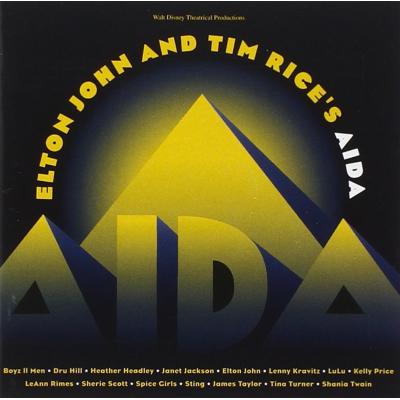
"Aida (complete libretto)" Soundtrack Lyrics
Musical • 1990
Track Listing
›Prologue
›EVERY STORY
›A SLAVE BARGE
›FORTUNE FAVORS THE BRAVE
›RADAMES' QUARTERS
›THE PAST IS ANOTHER LAND
›THE DOCKS
›ANOTHER PYRAMID
›HOW I KNOW YOU
›MY STRONGEST SUIT
›THE PHARAOH'S PRIVATE BANQUET ROOM
›FORTUNE FAVORS THE BRAVE (Reprise)
›ENCHANTMENT PASSING THROUGH
›AMNERIS' DRESSING ROOM
›STRONGEST SUIT (Reprise)
›THE NUBIAN SLAVE CAMP
›DANCE OF THE ROBE
›THE NILE'S EDGE
›ELABORATE LIVES
›THE GOD'S LOVE NUBIA
›STARSCAPE
›A STEP TOO FAR
›THE PRISON
›EASY AS LIFE
›THE WAR ROOM OF THE PALACE
›LIKE FATHER, LIKE SON
›RADAMES' LETTER
›RADAMES' GARDEN
›WRITTEN IN THE STARS
›I KNOW THE TRUTH
›AMNERIS' DRESSING ROOM
›THE ROYAL WEDDING
›THE DOCKS
›THE JUDGEMENT HALL
›ELABORATE LIVES (Reprise)
›THE INTERIOR OF THE TOMB
›ENCHANTMENT PASSING THROUGH (Reprise)
›EVERY STORY (Reprise)
"Aida (complete libretto)" Soundtrack: Description.
Production
From page to stage (and back again)
Plot & Characters
The libretto sits you right in the crossfire of power and feeling. We open in a museum—two modern strangers, a Pharaoh’s statue, a pulse of destiny—and drop into Ancient Egypt where a Nubian princess, enslaved but unbowed, collides with a golden-boy captain and a fashion-icon princess who’s sharper than her wardrobe lets on. The text sketches lives that want opposite things at the same time: loyalty to a people, duty to a crown, and the kind of love that makes both look small.Who’s who
- Aida — Nubian princess in disguise; the libretto writes her spine first, then her tenderness.
- Radames — Egyptian captain, heir apparent; the page gives him swagger, then lets guilt undo the seams.
- Amneris — Pharaoh’s daughter; a comedic entrance, a tragic exit, and a journey from surface to soul.
- Zoser — Minister/father; plots like a bass line—always there, always driving.
- Mereb — Young Nubian who recognizes Aida; the conscience of the story.
- Amonasro — Aida’s father; duty personified, every line a weight.
- Framing — That museum prologue and epilogue matter; the libretto is explicit about reincarnation echoes, letting the story loop forward into us.
Track Highlights
I still remember the first time that hook crashed in my earbuds on a rattling bus, the city flaring outside. Not subtle, just effective. The libretto ties each number to a beat of story:- Every Story Is a Love Story — Amneris as narrator, setting the lens and daring the audience to take love seriously again.
- Fortune Favors the Brave — Radames’ march-song; the swagger is the point, so later the show can puncture it.
- The Past Is Another Land — Aida’s identity statement; the libretto’s stage directions ride close to the lyric’s heat.
- Another Pyramid — Zoser’s palace intrigue, stylized as pop-reggae; plotting you can dance to.
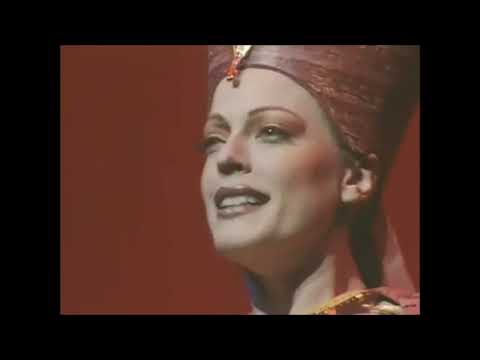
- My Strongest Suit — Amneris’ fashion runway; the text balances glitter with fear of being seen.
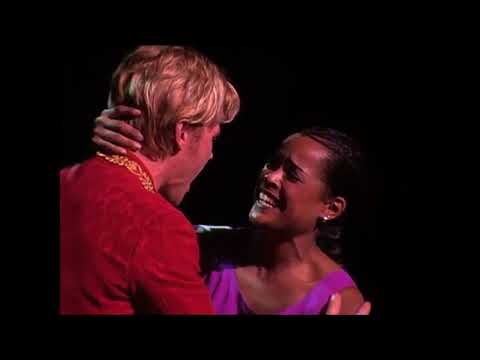
- Enchantment Passing Through — A duet that smells like the river at night; minimal movement, maximum ache.
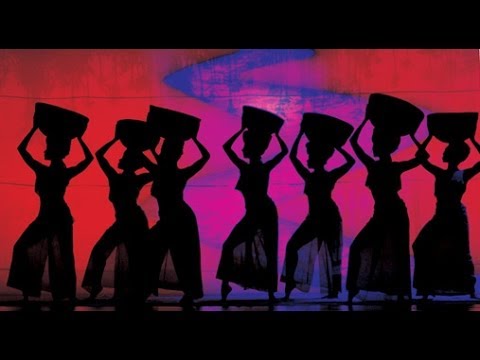
- Dance of the Robe — Community anthem; the libretto leans on drum and call-and-response cues.
- Not Me / A Step Too Far — Denial unraveling; counterpoint as confession booth.
- Elaborate Lives — Whispered surrender; the blocking asks for stillness, which is its own special effect.
- The Gods Love Nubia — Gospel lift; the stage directions function like an extra voice in the harmony.
- I Know the Truth — Amneris’ reckoning; fewer words, bigger consequences.
- Written in the Stars — Lovers bargaining with fate; also the crossover single that hit radio hard in 1999.
Musical Styles & Themes
Elton John paints with a mixed palette—Motown shimmer for Amneris, reggae edges for the schemers, gospel for the community’s spine, and straight-up pop balladry when two people forget the empire outside. The libretto doesn’t pretend to be a musicology lecture; it’s theatrical collage, aiming for impact, not archaeological accuracy. That choice keeps the theme clear: love versus loyalty, self versus nation. Big chords where the heart shouts, quiet verses when it finally tells the truth.Behind the Scenes
There’s lore baked into the margins. Before Broadway, an Atlanta staging with a notorious morphing pyramid scared the tech crew and confused the tone. Chicago 1999 brought the reboot—and a very real scare: near the finale, a suspended “tomb” set piece failed and dropped roughly eight feet with Heather Headley and Adam Pascal inside. Both were treated and released, and the set was grounded afterward. Theater is fragile, then steel; sometimes in the same scene.Reviews & Social Pulse
Not everyone swooned opening week. One early NYC review shrugged that the most striking thing about Aida was how “un-striking” it felt—“glaring and blaring” but not transcendent. Fair. Yet the box office told a warmer story, and the Grammys and Tonys put medals on its chest. Fans—especially school and regional performers who lived inside these songs—kept the score humming far past Broadway. Legacy is messy that way; it’s not a single verdict, it’s a chorus.Cast & Notable Replacements
Original Broadway Cast (2000)
- Aida — Heather Headley
- Radames — Adam Pascal
- Amneris — Sherie René Scott
- Zoser — John Hickok
- Mereb — Damian Perkins
- Amonasro — Tyrees Allen
- Pharaoh — Daniel Oreskes
- Nehebka — Schele Williams
Replacements by year
2001–2002
- Amneris — Taylor Dayne (2001), Idina Menzel (2001–2002), Felicia Finley (2002–2003)
- Aida — Simone (2001–2002)
2003
- Aida — Toni Braxton (Jul–Nov 2003), Saycon Sengbloh (Jun 2003)
- Amneris — Mandy Gonzalez (mid-2003)
- Radames — Will Chase (2003–2004)
2004 (Closing company)
- Aida — Deborah Cox (Feb–Sep 2004)
- Zoser — Micky Dolenz (Jan–Sep 2004)
Pop-crossover spotlights
- Michelle T. Williams stepped into the title role late 2003; proof the score happily straddles radio and proscenium.
Technical Info
- Type — Musical (complete libretto / book + lyrics)
- Year (as requested) — 1990 (note: Broadway premiere occurred March 23, 2000; libretto reflects that era)
- Primary creators — Music: Elton John; Lyrics: Tim Rice; Book: Linda Woolverton, Robert Falls, David Henry Hwang
- Broadway run — Palace Theatre, Mar 23, 2000 – Sep 5, 2004 (1,852 performances)
- Cast album — “Elton John & Tim Rice’s Aida: Original Broadway Cast Recording,” released June 2000 (Buena Vista/Walt Disney Records), later a Grammy winner
- Concept album — 1999 release with Sting, Spice Girls, Shania Twain, Lenny Kravitz, Elton John & LeAnn Rimes, et al.
- Chart note — “Written in the Stars” peaked at No. 29 on the Hot 100 and No. 2 on Adult Contemporary in 1999
Quotes
“Opera people can be very elitist.”Elton John, on why this version belongs on Broadway’s turf
“Perhaps the most striking aspect…is how un-striking it is. Glaring and blaring, yes.”Early NYC review
“I learned so much about love… and sacrifices with Aida.”Heather Headley
FAQ
- Is the “1990” label accurate for this libretto?
- Not really. The libretto reflects development in the late 1990s and the Broadway run starting March 23, 2000. The 1990 tag reads more like a shorthand for the decade.
- What exactly does the complete libretto include?
- Full dialogue, lyrics, and stage directions—the textual spine actors and directors use to stage the musical.
- How does it differ from Verdi’s opera?
- Same bones (Aida–Radames–Amneris; the tomb), different voice. Pop, gospel, Motown, and reggae flavors replace 19th-century opera idioms, and the museum frame is new.
- Do the songs match specific scenes?
- Almost beat-for-beat: fashion-runway comedy for Amneris, river-night intimacy for “Enchantment Passing Through,” and gospel solidarity for “The Gods Love Nubia.”
- Where do the radio hits fit?
- They began on the 1999 concept album—“Written in the Stars” charted—then the Broadway cast album re-rooted them in character and plot.
September, 23rd 2025
A-Z Lyrics Universe
Popular lyrics
Defying Gravity
Cynthia Erivo Popular
Ariana Grande Horsepower
Post Malone Ain't No Love in Oklahoma
Luke Combs Good Riddance (Time of Your Life)
Green Day Bye Bye Bye
*NSYNC You're the One That I Wan
John Travolta & Olivia Newton-John I Always Wanted a Brother
Braelyn Rankins, Theo Somolu, Kelvin Harrison Jr. and Aaron Pierre The Power of Love
Frankie Goes to Hollywood Beyond
Auli’i Cravalho feat. Rachel House MORE ›
Cynthia Erivo Popular
Ariana Grande Horsepower
Post Malone Ain't No Love in Oklahoma
Luke Combs Good Riddance (Time of Your Life)
Green Day Bye Bye Bye
*NSYNC You're the One That I Wan
John Travolta & Olivia Newton-John I Always Wanted a Brother
Braelyn Rankins, Theo Somolu, Kelvin Harrison Jr. and Aaron Pierre The Power of Love
Frankie Goes to Hollywood Beyond
Auli’i Cravalho feat. Rachel House MORE ›
New soundtracks
GOAT
Supergirl
Avatar: Fire and Ash
Nativity 2: Danger in the Manger!
How to Train Your Dragon (Movie)
Wicked: For Good. The Original Score
Wicked: For Good
Candyman
From the World of John Wick. Ballerina
Kiss of the Spider Woman (Movie)
Sinners
TRON: Ares
F1 The Album
Red Clay
Zootopia 2
ZOMBIES 4: Dawn of the Vampires
KPop Demon Hunters
MORE ›
Lyrics / song texts are property and copyright of their owners and provided for educational purposes only.