
"Ain't Misbehavin'" Soundtrack Lyrics
Musical • 1990
Track Listing
Ain't Misbehavin' Cast
Ain't Misbehavin' Cast
Ain't Misbehavin' Cast
Ain't Misbehavin' Cast
Ain't Misbehavin' Cast
Ain't Misbehavin' Cast
Ain't Misbehavin' Cast
Ain't Misbehavin' Cast
Ain't Misbehavin' Cast
Ain't Misbehavin' Cast
Aint Misbhavin Cast
Ain't Misbehavin' Cast
Ain't Misbehavin' Cast
Ain't Misbehavin' Cast
Ain't Misbehavin Cast
Ain't Misbehavin' Cast
Ain't Misbehavin' Cast
Ain't Misbehavin' Cast
Ain't Misbehavin' Cast
Ain't Misbehavin Cast
Ain't Misbehavin' Cast
Ain't Misbehavin' Cast
Ain't Misbehavin' Cast
Ain't Misbehavin' Cast
Ain't Misbehavin' Cast
Ain't Misbehavin' Cast
Ain't Misbehavin' Cast
Ain't Misbehavin' Cast
Ain't Misbehavin' Cast
Ain't Misbehavin' Cast
Ain't Misbehavin' Cast
"Ain't Misbehavin'" Soundtrack: Description.

Where this album sits, and why 1990 matters
The title says it straight: a love letter to Thomas “Fats” Waller dressed as a musical revue. No convoluted plot, no fussy overture trying to prove itself—just a band, five electric performers, and a room that starts buzzing the second the stride piano hits oxygen. The show premiered in 1978 and ate Broadway alive; by the time the 1990 compact-disc issue rolled around, the recording felt less like a re-release and more like a passport back to a club that somehow never closed. You can almost smell the cigarette smoke curling off the cymbals. The 1990 CD is what many people first owned at home—spine bent, tray a little cracked, liner notes dog-eared—because it finally made the definitive stage recording easy to carry around. RCA Victor Broadway/Masterworks kept the sequencing tight: an arc that moves from flirt to frenzy to soft confession and back to a joint that is, by the end, absolutely jumping.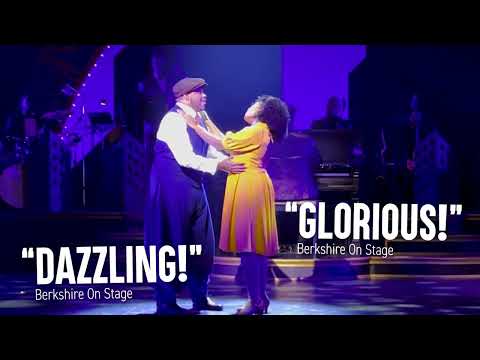
Production snapshot: the people behind the swing
Even before the Broadway run exploded, the DNA was there: conceived and directed by Richard Maltby, Jr., staged with pinpoint musicality by Arthur Faria, the music arranged/orchestrated by Luther Henderson—a craftsman who could thread Waller’s improvisational spark into the iron-on seams of a scripted evening. Pianists on stage included Henderson himself early on, then heavyweights Hank Jones and Frank Owens. That blend—reverent but not fossilized—made the album feel present tense even on a silver disc stamped twelve years later. And the performers? They weren’t just singing Waller; they were living in his grin. Nell Carter, André De Shields, Armelia McQueen, Ken Page, and Charlaine Woodard make call-and-response feel like the most natural form of breathing. No padding, no filler; the cuts move like a set in a club where the clock can be convinced to slow down if you ask nicely.Track Highlights, with the scenes they conjure
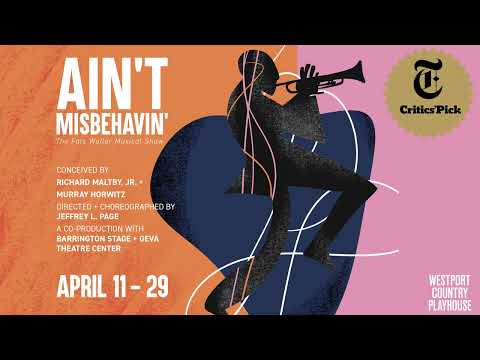
- Ain’t Misbehavin’ / Lookin’ Good but Feelin’ Bad — The curtain-raiser that walks with swagger and a wink. On disc, you hear the room warm up instantly, the band nudging the singers like old friends elbowing each other at the bar.
- Honeysuckle Rose — A duet that lands like two dancers trading the shine step. The phrasing is playful, but underneath you can feel Henderson’s charts stitching the call-and-response into something sturdier than nostalgia.
- Handful of Keys — Piano flex, pure and simple. It’s the kind of track that makes you straighten in your chair because the left hand is walking and the right hand is laughing—stride at its most athletic.
- Your Feet’s Too Big — Comedy you can two-step to. The bass line smirks; the vocal ad-libs land. This is where the revue’s club DNA is loudest—the audience on the recording becomes a character, complicit and delighted.
- (What Did I Do to Be So) Black and Blue — The mood turn. Time dilates. The arrangement gives the lyric room to ache without dragging the tempo into sentimentality. The album earns its gravitas here, honoring Waller’s depth as more than a grin.
- The Joint Is Jumpin’ — Controlled chaos, doors off the hinges. Brass shouts, voices riff, and the band races you to the last shout chorus. Every time I spin it, I swear the stereo smells like spilled gin.
- Spreadin’ Rhythm Around — Second-act sparkle that feels like a parade rolling down Lenox Ave. This is the track that tells you the party isn’t over; it’s just changing neighborhoods.
Musical styles & themes: stride, sass, and the soft center
If you’re new to Waller, imagine a piano style that’s basically athletic poetry—left hand laying down four-to-the-bar heartbeat, right hand spilling jokes and fireworks. Henderson’s arrangements take those club improvisations—gloriously inconsistent by nature—and tame them just enough to be repeatable night after night. You still hear the looseness; you also feel the rigging that keeps the ship from capsizing. Thematically, the album lives at the crossroads of flirtation and resilience. Flirty numbers that bounce off the ceiling; then a tune like “Black and Blue” opens a window to weather: race, dignity, longing. The revue format means no single protagonist, but the songs themselves become characters—bold, coy, wounded, defiant.Plot & character map (for a revue, not a book musical)
There’s no linear story; instead, think of a night that starts at a posh midtown room and ends deep downtown where the floorboards remember everyone’s first mistake. The “characters” are five archetypes—The Charmer, The Beltress, The Romantic, The Clown, The Cool Cat—taking turns as leads and foils. Across the album, they cycle through micro-stories: a roast disguised as a love song (“Your Feet’s Too Big”), a whispered confession (“Black and Blue”), a late-night boast (“The Joint Is Jumpin’”). It’s episodic, but not random; by the final cuts, you’ve basically lived a whole night out and caught a little history lesson on the side.Behind the scenes: how the sound got its teeth
Luther Henderson’s fingerprints are everywhere. He was the architect who made stride workable in a theatrical lab—finding the places where spontaneity could be bottled without going flat. As he once explained, the trick was weaving improvisations into a repeatable language for actors and band; that alchemy is what you’re hearing in the crisp dovetailing of vocals and pit. And the players weren’t shy. On the original production, onstage pianists like Hank Jones didn’t just accompany—they narrated with their hands, tossing sly quotes and rhythmic nudges that turned ensembles into conversations. That carries on the album: you can hear the keyboard steering traffic, making space when a joke lands, pushing when a chorus starts to levitate.Reviews & social proof
“Conjured the between-the-wars dream world.” — Frank Rich, on the 1988 revival
“Not just a good time … a valuable history lesson.” — André De ShieldsAwards don’t make the music better, but they do tell you how it landed. The show scooped up the Tony for Best Musical and a raft of other nods; the TV capture in 1982 put an Emmy in the cabinet too, with Nell Carter as its sunbeam and thunderclap both. That halo lingers over the 1990 disc—it feels canon because it is.
Cast by years (highlights)
1978 Original Broadway Company
- Nell Carter
- André De Shields
- Armelia McQueen
- Ken Page
- Charlaine Woodard
1988 Broadway Revival (select)
- Patti Austin
- Terri White
- Ken Prymus
- Eric Riley
- Jackie Lowe
1982 Television Version
- Televised with the original Broadway cast; the energy translates shockingly well on tape—proof that lightning can be bottled if you’ve got the right jar.
Technical info (release, label, charts, miscellany)
- Title: Ain’t Misbehavin’ — Original Broadway Cast Recording (1990 CD issue)
- Type: musical soundtrack (revue)
- Year: 1990 (compact disc edition widely distributed)
- Label: RCA Victor Broadway / Masterworks (BMG family)
- Conceived/Directed by: Richard Maltby, Jr.
- Musical Staging/Choreography: Arthur Faria
- Arrangements/Orchestrations: Luther Henderson
- Onstage/Pit pianists (notable): Luther Henderson, Hank Jones, Frank Owens
- Signature tracks: Ain’t Misbehavin’; Honeysuckle Rose; Handful of Keys; Your Feet’s Too Big; Black and Blue; The Joint Is Jumpin’; Spreadin’ Rhythm Around
- Accolades (show): Tony Award for Best Musical; Drama Desk Outstanding Musical; 1982 TV version earned an Emmy for Nell Carter
More voices
“Stride is athletic poetry. Make the left hand walk, the right hand talk.” — a rule the album obeys in every chorus
“Arranging is translation.” — you can hear Henderson translating club heat into theater clarity
Why this one still clicks
Let’s be honest: revues can feel like mixtapes in formalwear. This one doesn’t. The 1990 CD moves—gracefully, sometimes rowdily—because the source material was built for oxygen and audiences, and the team knew how to trap lightning without losing charge. I still remember the first time “The Joint Is Jumpin’” hit the living room at a slightly irresponsible volume; neighbors forgave me, eventually. That’s the kind of artifact this is: a keepsake with teeth, not a museum piece gathering dust.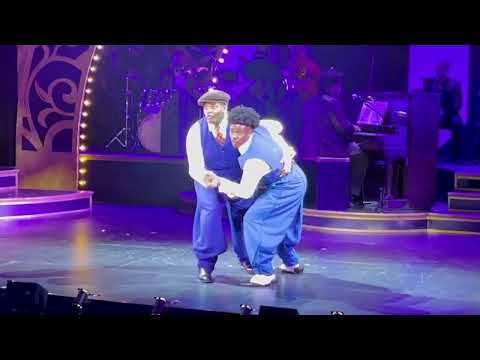
FAQ
- Is the 1990 CD a new recording?
- No. It’s the widely circulated compact-disc issue of the original cast recording, preserving the show’s definitive performances in a digital format.
- Does the album include dialogue or just music?
- Primarily songs, with minimal connective tissue—true to the revue format, which privileges flow over book scenes.
- Where should a first-time listener start?
- Spin the title track, then drop into “Black and Blue” for the emotional core, and close with “The Joint Is Jumpin’.” That arc mirrors the show’s night-out shape.
- Was the show captured on video?
- Yes—the 1982 television version with the original cast exists and helped cement the piece’s legacy beyond Broadway.
- What makes these arrangements special?
- They thread Waller’s improvisational spirit through repeatable, theatrical structures—so you get spontaneity that still lands on a dime.
September, 23rd 2025
A-Z Lyrics Universe
Cynthia Erivo Popular
Ariana Grande Horsepower
Post Malone Ain't No Love in Oklahoma
Luke Combs Good Riddance (Time of Your Life)
Green Day Bye Bye Bye
*NSYNC You're the One That I Wan
John Travolta & Olivia Newton-John I Always Wanted a Brother
Braelyn Rankins, Theo Somolu, Kelvin Harrison Jr. and Aaron Pierre The Power of Love
Frankie Goes to Hollywood Beyond
Auli’i Cravalho feat. Rachel House MORE ›