Soundtracks:  A B C D E F G H I J K L M N O P Q R S T U V W X Y Z #

List of artists: A B C D E F G H I J K L M N O P Q R S T U V W X Y Z #


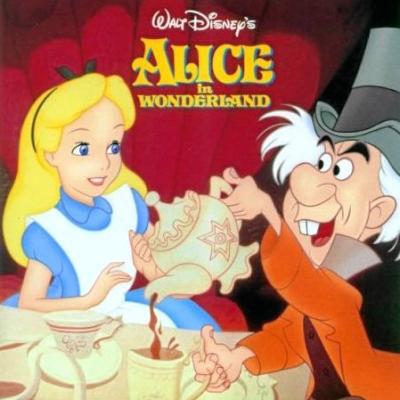
Alice in Wonderland Album Cover

"Alice in Wonderland" Lyrics

Cartoon • Soundtrack • 1998

Track Listing

Alice In Wonderland Lyrics

Bob Hilliard, Sammy Fain, Oliver Wallace, Ted Sears, Mack David, Al Ho

In A World Of My Own Lyrics

Bob Hilliard, Sammy Fain, Oliver Wallace, Ted Sears, Mack David, Al Ho

I'm Late Lyrics

Bob Hilliard, Sammy Fain, Oliver Wallace, Ted Sears, Mack David, Al Ho

Curiosity Leads To Trouble / Simply Impassable Lyrics

The Sailor's Hornpipe / The Caucus Race Lyrics

We're Not Waxworks Lyrics

How D'Ye Do And Shake Hands Lyrics

Bob Hilliard, Sammy Fain, Oliver Wallace, Ted Sears, Mack David, Al Ho

The Walrus And The Carpenter Lyrics

Bob Hilliard, Sammy Fain, Oliver Wallace, Ted Sears, Mack David, Al Ho

Old Father William Lyrics

We'll Smoke The Blighter Out Lyrics

Bob Hilliard, Sammy Fain, Oliver Wallace, Ted Sears, Mack David, Al Ho

All In The Golden Afternoon Lyrics

The Flowers

What Germs Are You? Lyrics

A E I O U Lyrics

The Caterpillar

A Serpent! Lyrics

Alone Again / 'Twas Brillig / Lose Something Lyrics

The Unbirthday Song Lyrics

The Tulgey Wood Lyrics

Very Good Advice Lyrics

Bob Hilliard, Sammy Fain, Oliver Wallace, Ted Sears, Mack David, Al Ho

Whom Did You Expect Lyrics

Paiting The Roses Red / March Of The Cards Lyrics

Bob Hilliard, Sammy Fain, Oliver Wallace, Ted Sears, Mack David, Al Ho

The Queen Of Hearts / Who's Been Painting My Roses Red? Lyrics

A Little Girl / Let The Game Begin / I Warn You Child Lyrics

Caucus Race Lyrics

Bob Hilliard, Sammy Fain, Oliver Wallace, Ted Sears, Mack David, Al Ho

Twas Brillig Lyrics

Bob Hilliard, Sammy Fain, Oliver Wallace, Ted Sears, Mack David, Al Ho


"Alice in Wonderland" Soundtrack Description

Alice in Wonderland lyrics, 1998 Trailer

How this soundtrack found its rabbit hole
Alice in Wonderland Soundtrack Trailer. Lyrics
Alice in Wonderland television soundtrack trailer image, 1998
Composer: Richard Hartley. Label: Varèse Sarabande, with Hallmark Entertainment in the mix on rights and release. The date on the spine reads 1998, which fits the score’s life even if many remember the broadcast splash that arrived shortly after. What matters is the sound: orchestral, wry, a little sideways. Not the sugar rush you might expect, more of a clever wink from the pit. The first time I heard the opening motif, I felt that familiar Wonderland tilt—like the floor moved a degree and no one told the furniture. Harp flutters, woodwinds gossiping in the corner, and strings that never quite settle. It’s tuneful, yes, but with a sly grin. The sort of score that lets you think you’re safe and then pulls a trapdoor made of oboes.

Production context (and why the music feels bigger than TV)

Alice in Wonderland Soundtrack Trailer. Lyrics
Alice in Wonderland television soundtrack trailer image, 1998
This project came out of a lavish, star-studded screen version that leaned into puppetry and practical trickery alongside performers you know by name. A big world for a small screen, which explains why Hartley’s cues flex: delicate chamber colors for intimacy, then full-bodied orchestral swells when the cards are on the lawn and tempers spike. You can hear the production value in the brass alone; they arrive like a royal decree and vanish like a cat’s grin.

Musical Styles & Themes

Alice in Wonderland Soundtrack Trailer. Lyrics
Alice in Wonderland Soundtrack Trailer, 1998
There’s a polite Englishness to the writing—a drawing-room poise—shot through with carnival whimsy. Woodwinds do the heavy lifting for mischief: flutes spiral whenever curiosity spikes; clarinets wobble under jokes that land slightly off-center. Low strings keep secrets. High strings are the gossip. Percussion, when it appears, has a toybox quality: not thunder, but thimble taps, a wink, a bounce. Motivic play is the engine. Hartley stitches little cells—a three-note “what now?” question, a see-sawing half step for teacup chaos—and lets them mutate as Alice changes size, mood, and nerve. A recurring lullaby-like figure hints at stage fright and self-belief; by the end, it stands taller, shoulders back. It’s character development in melody form.

Track Highlights & Scene Links

Alice in Wonderland Soundtrack Trailer. Lyrics
Alice in Wonderland television soundtrack trailer still, 1998
Opening Motif / “Cherry Ripe” Thread — A genteel prelude that doubles as Alice’s inner monologue about performance anxiety. The tune surfaces in fragments whenever she’s measuring herself against a task. It’s tidy, then suddenly bashful, like a curtsey interrupted. “Rabbit Hole” — Scales slither downward with a dizziness that never tips into menace. The orchestration does something neat here: winds blur the edges as if gravity is more suggestion than rule. It’s falling as choreography. “Caucus Race” — Ridiculous in the best way. Bassoons hustle; piccolo forgets its indoor voice. The music literally runs in circles, arrives where it began, and pretends that was the plan. “Mr. Rabbit’s House” / Growth Spurt — Brass puff up, then puff up again. The harmony strains at its seams—exactly like the walls in the frame. It’s comic escalation scored with a straight face. “The Blossom Tree” & “All in the Golden Afternoon” nods — Sun-dappled textures without going full saccharine. Harp as sunlight through leaves. You can almost smell grass that isn’t there. “Lobster Quadrille” — Formal dance steps with sand in the shoe. The rhythm smiles, but the harmony side-eyes it. Perfect for a scene that’s both courtly and deeply silly. Finale / Self-Belief Theme — The melody that used to hesitate now lands its notes with a small, earned triumph. Not fireworks—something better: composure.

Full Plot & Character Map

Alice in Wonderland Soundtrack Trailer. Lyrics
Alice in Wonderland Score Trailer, 1998
Alice is supposed to sing for a garden crowd and hates the idea—stage fright dressed as politeness. She bolts, spies a flustered White Rabbit, and follows him underground, into a logic where soup argues with poetry and identity is as slippery as a bar of soap. That tiny door? The music makes it feel like an invitation and a dare. She grows, shrinks, cries a flood, and washes into a “Caucus Race” that goes nowhere (on purpose). On she goes, through eccentric rooms and stranger conversations: a Caterpillar with existential questions, flowers with opinions and immaculate posture, twins who argue like seasoned vaudevillians. The Mad Hatter’s tea table isn’t a meal so much as an endurance sport; time itself taps out. The score treats every threshold as a key change—new scale, new rules. Court arrives, with pastry politics and tarts as evidence. Alice finally says the quiet part out loud: authority can be nonsense. The sound answers by standing up straight behind her. Back home, the party hasn’t started without her—the point being, she hasn’t missed her chance to be herself. She opens her mouth, sings what she wants, not what she was told. The motif that wobbled no longer does.

Who’s who, and why the music fits them

Alice
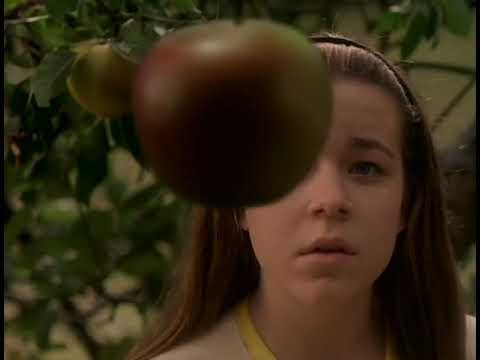
Tina Majorino
Shy at first, flinty by the end. Hartley gives her light, questioning figures that gradually learn to breathe. You can hear the spine growing.
Queen of Hearts
Miranda Richardson
Trumpet flourishes and mock pageantry—everything’s oversized, like a temper tantrum staged by an orchestra. When she barks, the brass answers with a velvet hammer.
Mad Hatter
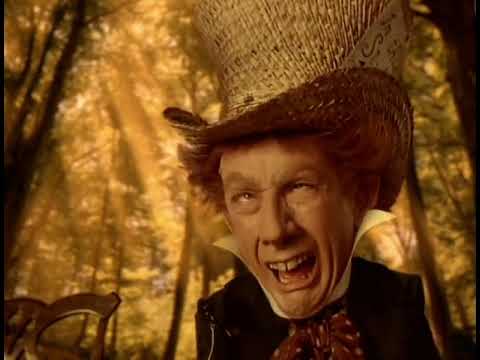
Martin Short
Clattering meters, hatpins for hi-hats. The writing trips on purpose, lands with jazz hands, then denies it did anything at all.
Cheshire Cat
Whoopi Goldberg
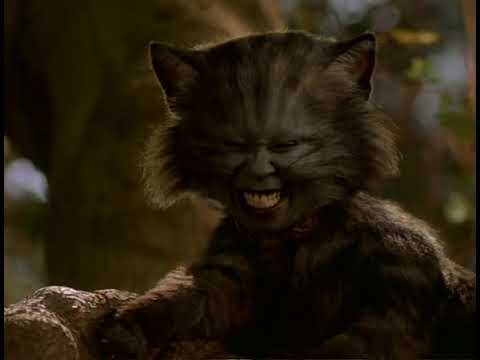
Clarinet smirks. Harmonies that slide in and out like a door the cat won’t hold open. Presence felt more than seen.
White Rabbit
Richard Coombs, voice
Nervy little rhythms, as if the metronome drank too much tea. Every cue with him is late-on-time.
White Knight
Christopher Lloyd
A noble theme with elbows—gallant, yes, but you can hear the dents in the armor.

Behind the Scenes

Creature effects and puppetry gave the world texture—fur that rustles, shells that clack—and the score plays nice with tangible sound. There’s a lot of air in the writing; it lets footsteps and feather swishes breathe. Digital effects were numerous, yet Hartley never fights the frame; he frames it. And there are little nods to Tenniel’s illustrations in the orchestration—sharp silhouettes, crisp edges—especially when the Hatter enters, head three sizes too large for polite society.

Reviews & Social Pulse

The short version: audiences showed up, critics tipped hats, awards followed. The broadcast landed huge viewership and the production took home hardware, including recognition for the score’s work in stitching a sprawling fantasy into a single, beating thing. The music community keeps it alive: reissues, playlists, and the occasional deep-cut fan debate about whether the “Quadrille” should count as a banger (it should).

Quotes

“Off with their heads!” Queen of Hearts
“Who are you?” Caterpillar
“Why is a raven like a writing desk?” Mad Hatter
“Then you don’t need us anymore.” White Rabbit

FAQ
Alice in Wonderland Soundtrack Trailer, Songs Lyrics
Alice in Wonderland television soundtrack trailer frame, 1998
Is this the same music as the classic mid-century cartoon?
No—different animal. This is Richard Hartley’s late-90s television score: orchestral, witty, and written to shadow a large-scale screen adaptation with puppetry and practical effects rather than pure animation.
What makes the score feel “Wonderland” without leaning on pastiche?
Motivic mischief and orchestration. Hartley favors woodwinds and nimble strings, bending harmony just enough to keep you off-balance—but never so much you fall.
Can I listen straight through, or is it better in scenes?
Both. It’s scene-savvy music that still plays like a suite. If you want a sampler, jump from the opener to the tea table chaos and finish with the finale’s steadying breath.
Is there a standout dance cue?
“Lobster Quadrille.” It waltzes with wet shoes and still somehow nails the turn. Try not to smile. Go on, try.
Does the album include songs with lyrics?
A handful of character pieces surface, woven into the underscore. They’re staged like story beats, not pop singles.
Who is this for?
Anyone who likes orchestral storytelling with personality—kids who like a little edge, grown-ups who like a little whimsy, collectors who file their scores next to tea tins.

Technical Notes

  • Title: Alice in Wonderland (Original Television Soundtrack)
  • Year: 1998
  • Composer: Richard Hartley
  • Type: Cartoon-adjacent orchestral score for a fantasy screen adaptation
  • Label: Varèse Sarabande (rights in partnership with Hallmark Entertainment)
  • Length: ~71 minutes
  • Notable cues (no full tracklist): Opening motif tied to “Cherry Ripe,” “Rabbit Hole,” “Caucus Race,” “Mr. Rabbit’s House,” “The Blossom Tree,” “Lobster Quadrille,” Finale
  • Awards context: The production this score supports earned major television honors, with music among the recognized crafts.

A small personal note

Alice in Wonderland Soundtrack Trailer. Lyrics
Alice in Wonderland score trailer still, 1998
I still remember the first time that woodwind swirl hit—felt like someone cracked a window in a stuffy room. That’s Hartley’s trick here. He lets air into a story we think we know by heart, turns the kaleidoscope a quarter turn, and suddenly the pattern is new. Not louder. Sharper. And kinder, too, in the way only a score can be when it takes a nervous kid by the hand and says, quietly, you’ve got this.

September, 23rd 2025


A-Z Lyrics Universe

Lyrics / song texts are property and copyright of their owners and provided for educational purposes only.