Soundtracks:  A B C D E F G H I J K L M N O P Q R S T U V W X Y Z #


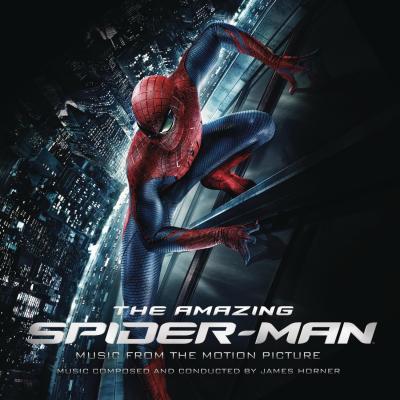
Amazing Spider Man, The Album Cover

"Amazing Spider Man, The" Soundtrack Lyrics

Movie • 2012

Track Listing


"Amazing Spider Man, The" Soundtrack Description

Amazing Spider Man, The lyrics, 2012
Amazing Spider Man, The lyrics, 2012 Trailer

What this score actually feels like

Strong coffee at midnight energy. James Horner writes Peter Parker like a diary you’re not supposed to read—piano lines that start small, catch a draft, and suddenly you’re gliding over Queens with a stupid grin you can’t wipe off. Brass gets the cape moments, sure, but the real hook is human-scale: woodwinds that blink, strings that second-guess, a theme that grows like confidence. The first cue hit and, I swear, it felt like the movie exhaled.
Amazing Spider Man, The Soundtrack Trailer. Lyrics
Amazing Spider Man, The movie Soundtrack Trailer, 2012

Production Notes

  • Composer: James Horner—melody-first architect, returning to capes after a long gap since his 90s swashbuckling run.
  • Director: Marc Webb, steering a reboot that leans into first love and science homework—and asks the music to hold both the skyscraper swing and the hallway blush.
  • Brief: Big but intimate. The score had to keep the camera at street level even when the frame goes IMAX.
  • Album release: Issued by Sony Classical in early July 2012 to coincide with the film’s U.S. rollout.
  • Runtime (album): right around 76–77 minutes, depending on edition.
Amazing Spider Man, The Soundtrack Trailer. Lyrics
Amazing Spider Man, The movie Soundtrack Trailer, 2012

Background & context

Reboots can flatten personality; this one let the composer color outside the usual superhero lines. Horner builds character first, fireworks second, and it shows when the romance cues land without syrup, and the action cues sprint without turning into pure percussion gyms.

Musical Styles & Themes

  • Peter’s motif: A piano idea that tiptoes, then opens its shoulders. It’s the kid before the mask, all curiosity and nerves.
  • Hero architecture: When the suit’s on, brass and strings stride, but countermelodies keep the swagger honest. Triumph feels earned, not pasted on.
  • Oscorp textures: Ticking patterns, glassy harmonies, the low hum of fluorescent lights. Science as suspense, with a heartbeat.
  • Romance writing: Woodwinds trade shy phrases with strings; you can hear two people figuring out the same sentence.
  • Action language: Cleanly mapped set-pieces—motifs collide and mutate so you can “read” the chase like panels on a page.
  • End titles glow: The theme returns walking taller, less apologetic, like the city said “okay, kid, you can stay.”

Track Highlights (no full list)

  • Main Title – Young Peter: The thesis. Tentative piano, slow-rising strings; the moment the film’s heart clicks into place.
  • Rooftop Kiss: Sparse oxygen and skyline hush. Horner keeps it simple so the scene can breathe.
  • The Bridge: Momentum like a drumline under your ribs; theme punches through fog and steel.
  • Saving New York: Community and adrenaline stitched together; the score lets the city feel like a character with agency.
  • Promises – Spider-Man End Titles: Curtain call that sends you out taller than you came in.

Film Plot & Characters

  1. Origins, reframed: Peter Parker—kid from Queens, parents missing, questions everywhere—stumbles into Oscorp’s web and a bite that changes physics and priorities.
  2. Becoming: New strength, new mistakes. Uncle Ben’s loss turns impulse into responsibility; the music shifts from curious to purposeful.
  3. The Lizard: Dr. Curt Connors, chasing wholeness, overshoots into tragedy. Dissonance grows scales; empathy never fully leaves.
  4. Love & suspicion: Gwen Stacy is a partner, not a prop—smart, funny, holding her own in labs and stairwells. Their scenes get that quiet Horner glow.
  5. Climax: Midtown chaos, cranes aligning like the city literally lending a hand. The theme stands up, finally chest-out.
Cast breakdown (key roles)
  • Peter Parker / Spider-Man: Andrew Garfield—wiry, restless, painfully sincere.
  • Gwen Stacy: Emma Stone—quick on the uptake, never sidelined by the music or the script.
  • Dr. Curt Connors / The Lizard: Rhys Ifans—good man, bad math; the score lets the sadness linger.
  • Captain George Stacy: Denis Leary—principle vs. vigilante; percussion tightens when he enters.
  • Uncle Ben & Aunt May: Martin Sheen, Sally Field—kitchen-table warmth rendered in woodwinds.

Behind the Scenes

  • Why Horner: Webb wanted size and intimacy—space for wonder, space for awkward teen eye contact. Horner’s melodic instinct was the ticket.
  • Theme lightning: A simple, recognizable Spider-Man line emerged fast in the process; that economy is all over the finished score.
  • Marketing weather: The film rode a loud viral campaign, but the music stayed personal—a nice counterweight to billboards shouting in 3D.
  • Later franchise pivot: Horner didn’t return for the sequel, citing a more action-heavy brief; the contrast only made this first score feel more singular over time.

Quotes

“I wanted to create a score that felt massive and huge but also intimate and small.” Marc Webb, on the film’s musical brief
“James Horner would always excel at creating a very specific, simple theme… I got chills.” Marc Webb, recalling the moment the theme clicked
“[Marc Webb] and I had a very good relationship… the next movie ended up being so terrible, I didn’t want to do it.” James Horner, on exiting the sequel

Reception & Social Pulse

  • Critics in 2012: A common through-line: relief that a superhero score could be melodic again. Themes you can hum, orchestrations you can follow.
  • One review snapshot: called it “rich, vibrant, orchestrationally inventive,” with more than one memorable theme—pretty rare praise for the era.
  • Fans since: The album’s grown a steady cult. Revisit it after years of texture-heavy scores and it lands like sunlight hitting a dark hallway.
  • Conversation piece: People still argue the main theme’s simplicity. That’s the point. Spider-Man’s a folk hero; folk tunes start simple, then stick.

Technical Info

  • Soundtrack Name: Amazing Spider Man, The
  • Year: 2012
  • Type: movie
  • Composer/Conductor: James Horner
  • Label: Sony Classical
  • Album release date: July 3, 2012
  • Album length: 76:53
  • Notable in-film songs (outside the score): Til Kingdom Come; Big Brat; No Way Down; regional theme by SPYAIR for Japan.
  • Chart note: Peaked around the lower rungs internationally; Spain logged a Top 100 appearance.
  • Film release (U.S.): July 3, 2012

FAQ

Amazing Spider Man, The Soundtrack Trailer. Songs Lyrics
Amazing Spider Man, The movie Soundtrack Trailer, 2012
Is this score tied to earlier Spider-Man themes?
No; it’s a fresh musical identity for a new continuity, centered on Peter’s inner life rather than inherited motifs.
Does the album include needle-drops from the film?
It’s primarily Horner’s orchestral score. A few source songs show up in the film, but the album’s focus is the score.
Best first listen?
Run the album front-to-back once. Then revisit “Main Title – Young Peter,” “Rooftop Kiss,” “The Bridge,” and the end titles to hear the arc.
Why didn’t Horner return for the sequel?
He described the next film’s brief as more action-heavy and less character-driven, which didn’t interest him.
What’s the vibe compared to modern superhero scores?
More melody, less texture. You get identifiable themes that transform scene to scene.

Additional Info

  • Date: 2025-09-23
  • If you’re rewatching, give the opening cue your full attention; it sets your emotional horizon for everything after.
  • Vinyl hunts are fun here—later pressings exist; the art looks good squared up at 12 inches.

September, 23rd 2025

'The Amazing Spider-Man' is a 2012 American superhero film based on the Marvel Comics character Spider-Man. Find more on Wikipedia and Internet Movie Database
A-Z Lyrics Universe

Lyrics / song texts are property and copyright of their owners and provided for educational purposes only.