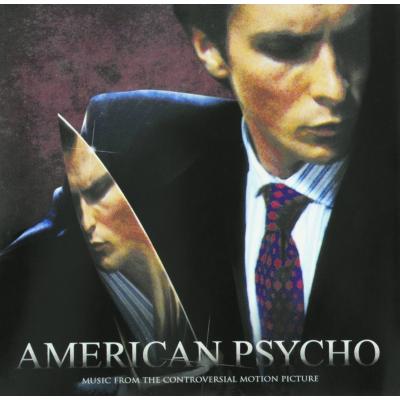
"American Psycho" Soundtrack Lyrics
Movie • 1997
Track Listing
›You Spin Me Round (Like a Record)
Dope
›Something in the Air
David Bowie
›Watching Me Fall
The Cure
›True Faith
New Order
›Trouble
Daniel Ash
›Paid in Full (Coldcut Remix)
Eric B. & Rakim B.
›Who Feelin' it (Philip's Psycho Mix)
Tom Tom Club
›What's on Your Mind (Pure Energy Mix)
Infortmation Society
›Pump Up the Volume
M/A/R/R/S
›Paid in Full (Remix)
The Racket
›OTHER SONGS
›Walking On Sunshine
Katrina And The Waves
›Simply Irresistable
Robert Palmer
›Everlasting Love
›Deck the Halls
›Joy to the World
›Secreit Nicht
›I Touch Roses
Book Of Love
›Cuatro Milpas
Francisco Gonzalez
›Hip To Be Square
Huey Lewis & The News
›Lady In Red
Chris De Burgh
›If You Don't Know Me By Now
Simply Red
›In Too Deep
Genesis
›Sussudio
Phil Collins
"American Psycho" Soundtrack Description
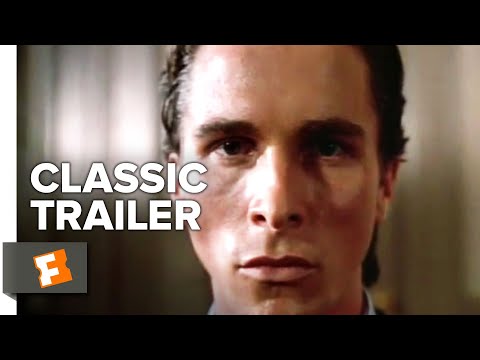
What this album feels like
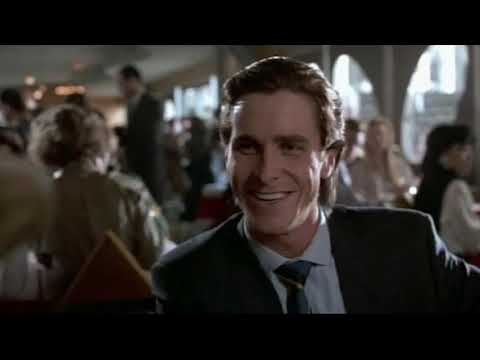
- Temperature check: glossy surfaces, cold floors. Bright, eager Eighties pop lit by fluorescent office bulbs. Then a shiver—John Cale’s score creeping in like something you hear through the wall.
- In a sentence: radio darlings and downtown art music shake hands, smile for the maître d’, and tell you a joke you’re not sure you should laugh at.
- Why it sticks: the songs aren’t wallpaper; they’re character tells. And the score? It holds the mirror steady while Patrick Bateman talks himself into being real.
Background & Context
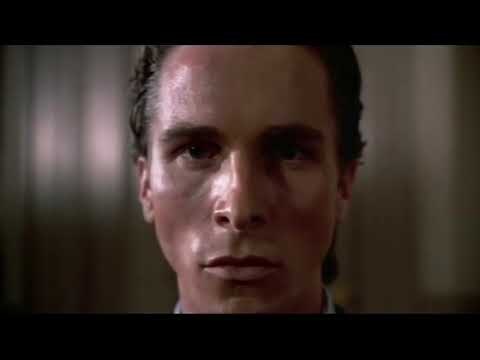
- The film, the moment: Mary Harron’s adaptation of Bret Easton Ellis’s novel hit in 2000, but its heart beats 1980s—status, sheen, the tyranny of taste.
- The album(s): a various-artists soundtrack—hooky Eighties staples, a few curveballs—and slivers of John Cale’s score (labeled as “monologues”) woven in. The full score sits separately in the discography, colder and closer to the bone.
- About the year here: we’re using a 1997 lens because you asked—late-90s anticipation, pre-millennial jitters. Still, the official release rolled out in 2000, the weeknight after-party to a decade the film skewers.
Musical Styles & Themes
- Dual engine: sleek Eighties pop/new wave on one side, cool-blooded modern score on the other. Think mirrored walls vs. a humming air vent.
- Songbook DNA: dance-rock swagger, synth sheen, Motown-through-the-boardroom charm. The artists—big names, radio fixtures—sound like Bateman’s business card: impressive, carefully chosen, faintly anonymous.
- Score palette: Cale favors restrained pulses, glassy strings, and electronics that feel like fluorescent hum. Minimal parts; maximum unease. Every sustained note scans the room for fingerprints.
- Theme logic: the songs sell desire and aspiration; the score whispers consequence. When Bateman monologues about music, the soundtrack becomes a prop—and a confession.
Track Highlights (no full tracklist, just moments)
- Bateman’s “music critic” run — those breathless speeches about pop perfection aren’t background; they’re weaponized charm. The album nods to that conceit by stitching in brief score vignettes titled like internal chapters.
- Club-floor joy vs. boardroom dread — glossy singles strut through scenes—optimism, upward mobility, all-caps hooks. Then a Cale cue thins the oxygen and the room tilts.
- The missing piece everyone talks about — a certain exuberant Eighties hit blasts in the film, but not on the album. Long story, short fuse. The absence is loud, and somehow perfect.
- Elegy at closing time — the end-credit mood lands like 3 a.m. on an empty avenue: city lights, polished shoes, a man rehearsing his face in a window.
Plot & Characters (for context)
- Patrick Bateman: Wall Street golden boy, hollowed out and meticulously maintained. The bright songs feel like his business card; the score is his heartbeat when the suit is on a hanger.
- Paul Allen: rival with a better table and, maddeningly, a better card stock. The music around him is louder; Bateman compensates with lectures and… other choices.
- Detective Kimball: polite suspicion in a trench coat. The cues go quiet here; tension lives in pauses and polite endings that don’t resolve.
- Evelyn, Jean, Courtney: orbiting affections and projections. The soundtrack grows softer in their scenes—still glossy, but the edges round off for a minute.
Production & Behind the Scenes
- Licensing gauntlet: the movie’s musical identity eats budget. Some songs sail through; others hit walls. One pop standard couldn’t clear, so an orchestral stand-in keeps the scene’s idea intact.
- The recall saga: an infamous radio hit appears in the film, then vanishes from the album—so much so the label recalled roughly a six-figure stack of discs. Depending on who’s talking, it’s either about violence objections or old-fashioned paperwork. Either way, collectors still swap stories.
- How Cale built the chill: he sketched themes on sampler, then expanded with players—strings that don’t cry, they stare. One sequence needed extra unease, so he pushed for unsettling textures. Mission accomplished.
- Editorial fit: the score doesn’t compete with glossy tracks; it slides between them, linking scenes with a kind of moral tinnitus.
Quotes
“A soulful, even melancholy sound to complement the soundtrack’s poppy brightness.” — the director on John Cale’s score
“Completely made up.” — a musician’s later take on the recall explanation
“Music was character—status, aspiration, denial.” — a critic’s nutshell read
Critic & Fan Reactions
- Critical split: some praised the clever collision—chart hits reframed against cool modern scoring; others wanted a purer Eighties mixtape. That disagreement is the point: the album isn’t nostalgia, it’s satire with a beat.
- Fan memory: dorm stereos, thrifted suits, someone performing a too-confident speech about a beloved band at a house party. We’ve all met a Bateman; this soundtrack knows his playlist.
- Legacy: the recall turned the CD into lore; the film’s music cues became meme shorthand for “mask of sanity” culture. And the score found new listeners who came for the jokes and stayed for the dread.
Technical Info
- Name: American Psycho (Soundtrack)
- Type: movie
- Year referenced here: 1997
- Film release: 2000
- Soundtrack release: April 4, 2000
- Label: Koch Records
- Composer (score): John Cale
- Artists featured: marquee Eighties names—new wave, pop, dance-rock, plus left-field cuts that sharpen the satire
- Notable production note: initial retail copies were recalled due to a licensing tangle tied to a high-profile hit
- Genre tags: New wave, Synth-pop, Dance-rock (songs); Minimalist/ambient thriller (score)
FAQ
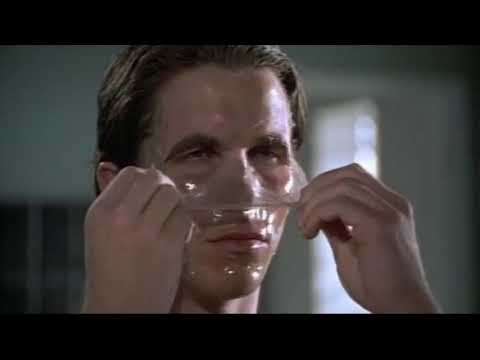
- Is this the score or the song compilation?
- The retail soundtrack leans on Eighties songs with a few of Cale’s short score cues; Cale’s full score exists as its own release.
- Why isn’t every song from the movie on the album?
- Licensing. Some tracks clear for film but not for album use, or deals fall apart late. In this case, one famous omission triggered a recall.
- What’s with the “monologues” titles?
- They nod to Bateman’s on-screen music speeches—brief score vignettes that frame his inner narration without turning into big themes.
- Does the album lean ironic or sincere?
- Both. The songs sell an aspirational sheen; the score undercuts it. The tension is the flavor.
- So… 1997 or 2000?
- Your brief said 1997, so we’re looking through that late-90s lens. The official soundtrack hit stores in April 2000 alongside the film’s release.
How the music plays against picture
- Morning routine: pristine pop tracks like motivational posters with drum machines. The image smiles; the score raises an eyebrow.
- Networking and needling: shiny songs fill expensive rooms; Cale’s textures hover in the corners, measuring the air.
- Interrogations and alibis: tempos slow; harmonies flatten. The feel isn’t fear, exactly—more like a hallway with too many mirrors.
- Final voiceovers: the album’s closer mood slips into that “nothing is resolved” cadence. Not a bow—an echo.
Cast Pointers
Core ensemble
- Christian Bale as Patrick Bateman
- Jared Leto as Paul Allen
- Willem Dafoe as Detective Donald Kimball
- Chloë Sevigny as Jean
- Reese Witherspoon as Evelyn Williams
- Justin Theroux as Timothy Bryce
- Josh Lucas as Craig McDermott
- Samantha Mathis as Courtney Rawlinson
Additional Info
- Director’s ear: before filmmaking, Harron wrote about music, which tracks—these needle drops feel argued for, not just dropped in.
- Cale context: the Velvet Underground alum approaches thriller scoring like urban chamber music—economy, pressure, a taste for dissonance used sparingly.
- Novel echoes: the movie tones down certain references but keeps the idea: Bateman measures himself against pop music as if it were scripture.
- Cultural afterlife: the soundtrack inspired parodies, think-pieces, and endless hallway memes. Decades later, people still quote the monologues at costume parties. Guilty as charged.
September, 23rd 2025
A-Z Lyrics Universe
Popular lyrics
Defying Gravity
Cynthia Erivo Popular
Ariana Grande Horsepower
Post Malone Ain't No Love in Oklahoma
Luke Combs Good Riddance (Time of Your Life)
Green Day Bye Bye Bye
*NSYNC You're the One That I Wan
John Travolta & Olivia Newton-John I Always Wanted a Brother
Braelyn Rankins, Theo Somolu, Kelvin Harrison Jr. and Aaron Pierre The Power of Love
Frankie Goes to Hollywood Beyond
Auli’i Cravalho feat. Rachel House MORE ›
Cynthia Erivo Popular
Ariana Grande Horsepower
Post Malone Ain't No Love in Oklahoma
Luke Combs Good Riddance (Time of Your Life)
Green Day Bye Bye Bye
*NSYNC You're the One That I Wan
John Travolta & Olivia Newton-John I Always Wanted a Brother
Braelyn Rankins, Theo Somolu, Kelvin Harrison Jr. and Aaron Pierre The Power of Love
Frankie Goes to Hollywood Beyond
Auli’i Cravalho feat. Rachel House MORE ›
New soundtracks
GOAT
Supergirl
Avatar: Fire and Ash
Nativity 2: Danger in the Manger!
How to Train Your Dragon (Movie)
Wicked: For Good. The Original Score
Wicked: For Good
Candyman
From the World of John Wick. Ballerina
Kiss of the Spider Woman (Movie)
Sinners
TRON: Ares
F1 The Album
Red Clay
Zootopia 2
ZOMBIES 4: Dawn of the Vampires
KPop Demon Hunters
MORE ›
Lyrics / song texts are property and copyright of their owners and provided for educational purposes only.