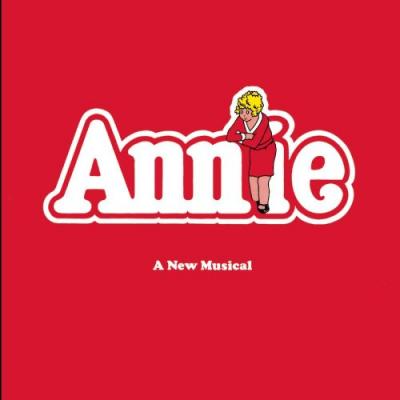
"Annie" Soundtrack Lyrics
Musical • 1997
Track Listing
›Overture
›Maybe
›It's the Hard-Knock Life
›It's the Hard-Knock Life (Reprise)
›Tomorrow
›We'd Like to Thank You
›Little Girls
›Little Girls (Reprise)
›I Think I'm Gonna Like it Here
›N.Y.C.
›NYC (Reprise)/Lullaby
›Easy Street
›You Won't Be an Orphan For Long
›Maybe (Reprise)
›You're Never Fully Dressed Without a Smile
›You're Never Fully Dressed Without a Smile (Children Reprise)
›Easy Street (Reprise)
›Tomorrow (Reprise)
›Something Was Missing
›Annie
›I Don't Need Anything But You
›New Deal For Christmas
›Let's Go to the Movies
›We Got Annie
"Annie 1982" Soundtrack Description
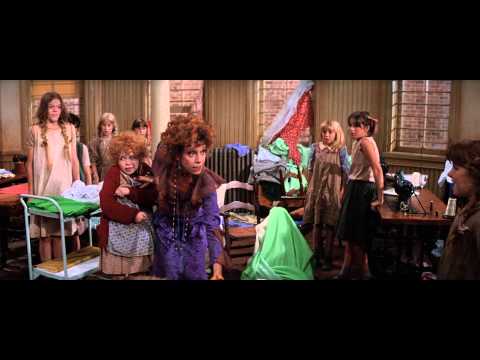
What this album feels like
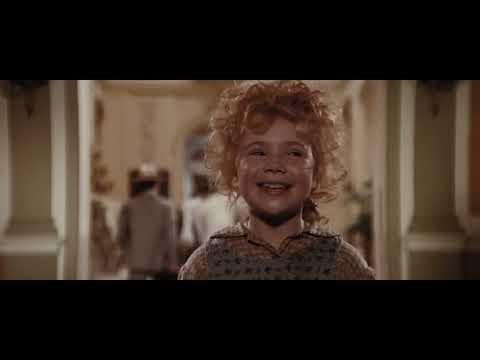
- Immediate mood: brass that smiles, strings that lift, drums that don’t rush the sunshine. It’s Broadway heart wearing a movie’s bigger shoes.
- One-breath vibe: the 1933 fairy tale reimagined for a wide screen—old-school optimism, new numbers written for the film, and performances that swing between vaudeville wink and legit ballad warmth.
- Why it sticks: because the songs aren’t just famous; they’re woven into scenes you can picture by sound alone—mops clattering, a radio jingle turning into an anthem, a White House singalong that shouldn’t work and somehow does.
Background & Context
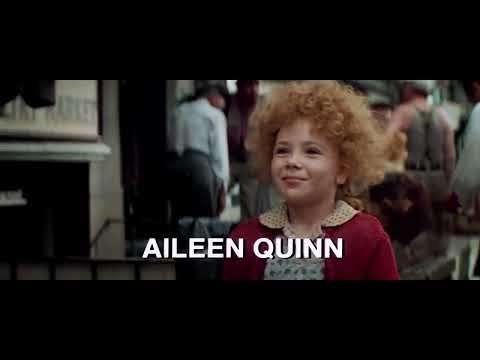
- The film: John Huston’s 1982 adaptation of the 1977 Broadway smash. Cast: Aileen Quinn, Albert Finney, Carol Burnett, Ann Reinking, Tim Curry, Bernadette Peters, Geoffrey Holder, Edward Herrmann—stacked, and very game.
- The music brain trust: songs by composer Charles Strouse and lyricist Martin Charnin; film arrangements/adaptation and conducting by Ralph Burns, who also produced the soundtrack album.
- Film-only additions: five pieces written for the movie—“Let’s Go to the Movies,” “We Got Annie,” “Sandy,” “Dumb Dog,” and the patter duet “Sign.” Several stage numbers were trimmed or swapped to fit Huston’s pacing and the movie’s tone.
- Release snapshot: the soundtrack rolled out with the film in 1982 via Columbia; modern editions list ©/℗ 1982 Sony Music Entertainment.
Musical Styles & Themes
- Old Broadway bones, Hollywood muscle: bright reeds and brasses, roomy strings, and percussion that keeps the choreography crisp. Burns leans into a warm studio sound—big but not bombastic.
- Songbook DNA: golden-age show tunes reframed for the camera. “Tomorrow,” “Maybe,” and “It’s the Hard-Knock Life” keep their theatre phrasing; the film-only cuts slip in with movie logic—montage-friendly, scene-specific, built for edits.
- How the new songs behave: “Let’s Go to the Movies” is a Busby Berkeley daydream; “We Got Annie” is household jubilation; “Sandy” and “Dumb Dog” are street-level character beats; “Sign” is comic paperwork with a melody.
- Theme thread: optimism as rhythm. Even the villain numbers have a wink; the orchestrations keep joy in the pocket.
Track Highlights (no full tracklist, just moments)
- “It’s the Hard-Knock Life” — the mop-bucket drumline that still slaps. On film the rhythm feels louder, the consonants sharper; it’s choreography you can hear.
- “Maybe” — Aileen Quinn records it close and private—less belt, more bedtime. The mic hears the wishing without the stage push.
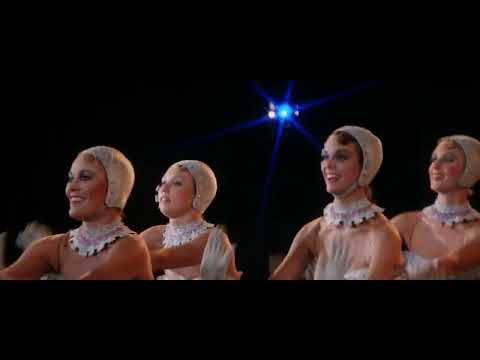
- “Let’s Go to the Movies” — movie love letter about… movies. It blooms into a Rockettes fantasy before snapping back to plot. Pure cinema candy.
- “Little Girls” — Carol Burnett turns exasperation into a comic aria. You can feel the set creak; the orchestra smirks along.
- “We Got Annie” — servants’ chorus as champagne pop. It’s delight sung by a household that finally has a kid in it; grace notes everywhere.
- “You’re Never Fully Dressed Without a Smile” — framed as a radio performance first (with a slick announcer croon), then echoed by the orphans. Same tune, two meanings.
- “Tomorrow (White House Version)” — the famous tune becomes policy pep talk. It’s audacious, sentimental, and—admit it—kind of irresistible.
- “Easy Street” — Burnett/Curry/Peters ooze charm; the orchestration swings hard without losing the grime on the lyric.
Plot & Characters (for context)
- Annie: a North Riverfront kid who refuses gloom. Her songs live high in the melody and right up at the mic—unguarded, cheeky, clear.
- Oliver “Daddy” Warbucks: steel softening in real time. When he shifts, the orchestra warms and the woodwinds stop being so crisp.
- Miss Hannigan: comic menace soaked in bathtub gin. Brass gets sly in her orbit; the rhythm relaxes just enough to wobble.
- Grace Farrell: competence with sparkle. Her features lean into lighter strings and airy ensemble parts—she steadies the room and the tempos.
- Rooster & Lily: grifters with tap shoes for souls. Their numbers grin and strut; the band practically winks.
Production & Behind the Scenes
- Arranging the world: Ralph Burns reshaped the stage material for film timing—shorter intros, bigger tuttis when the camera pulls back, and interludes that cover scene changes instead of set changes.
- The great “Easy Street” redo: a lavish outdoor version was shot, then scrapped for feeling overstuffed; the number was re-staged indoors for a tighter, grimier punch.
- Choreography: Arlene Phillips stages numbers that read on camera—the Rockettes homage inside “Let’s Go to the Movies” hits like a postmodern valentine to studio musicals.
- Film-only tunes, purpose-built: the added songs weren’t filler; they solved movie problems—montage transitions, character beats, a mid-film set piece to justify a palace-sized theatre.
- On the mic: the album keeps the performances close. Stage kids become studio singers; adults lean into character voicing without losing pitch center.
Quotes
“The movie distorted what this musical was.” — Martin Charnin, lyricist
“A daydream of old Hollywood—then boom, back to plot.” — a fan on “Let’s Go to the Movies”
“Burns’s adaptations keep optimism moving like a metronome.” — a soundtrack reviewer’s shorthand
Critic & Fan Reactions
- Then vs. later: the film drew mixed notices, but the album found a long second life in living rooms, school stages, and car stereos—kids learn the canon here.
- Chart note: the 1982 album climbed into the U.S. Top 40, peaking mid-chart and hanging around through holiday play.
- Culture echo: decades later, “Hard-Knock Life” is a pop sample staple and “Tomorrow” is, well, eternal—the soundtrack keeps those versions in rotation.
Technical Info
- Name: Annie (Original Motion Picture Soundtrack)
- Type: movie
- Year: 1982
- Label: Columbia Records (current editions ©/℗ Sony Music Entertainment)
- Music & lyrics: Charles Strouse (music), Martin Charnin (lyrics)
- Arranged/produced by: Ralph Burns
- Notable film-only songs: “Let’s Go to the Movies,” “We Got Annie,” “Sandy,” “Dumb Dog,” “Sign”
- U.S. chart peak: Billboard 200 — No. 35
- Runtime (modern digital edition): ~41 minutes
- Catalog (LP examples): JS 38000 (regional variants exist)
- Genre tags: Musical, Soundtrack, Showtunes
FAQ
- Did the movie add songs that weren’t on Broadway?
- Yes. Five film-only numbers—most famously “Let’s Go to the Movies” and “We Got Annie”—were written to serve specific scenes and pacing.
- Who handled the film arrangements?
- Ralph Burns adapted, conducted, and produced the soundtrack, keeping theatre spirit while shaping cues for camera edits.
- Is “You’re Never Fully Dressed Without a Smile” different here?
- Framed as a radio performance first, then echoed by the orphans—same melody, clever context shift.
- Where does the “White House” version of “Tomorrow” fit?
- Mid-film, as a cheeky singalong with FDR and cabinet—an on-screen joke that plays sweet on record.
- How did the album perform?
- It reached the U.S. Top 40 and has been reissued across formats, keeping the 1982 takes easy to find.
How the music plays against picture
- Orphanage grit: percussion-forward, with kids’ voices cutting through like sunlight on soap suds.
- Warbucks world: fuller orchestra, richer harmonies—money has a sound, and Burns finds it.
- City-as-stage: “Movies” turns New York into a proscenium; the band goes period-lush.
- Villain swagger: swing rhythms and sly brass carry the con with a grin.
- Finale glow: the famous chorus rises clean; hope lands like a button.
Cast Pointers
Main ensemble
- Aileen Quinn — Annie
- Albert Finney — Oliver “Daddy” Warbucks
- Carol Burnett — Miss Hannigan
- Ann Reinking — Grace Farrell
- Tim Curry — Rooster
- Bernadette Peters — Lily St. Regis
- Geoffrey Holder — Punjab
- Edward Herrmann — President Franklin D. Roosevelt
Additional Info
- Radio-to-orphan echo: the “Smile” sequence is a neat sound-design trick—diegetic broadcast turns into playground chorus without losing tempo.
- Why the film-only cuts matter: they’re how the movie breathes between tentpole tunes; remove them and the scenes feel rushed or naked.
- Little production nerd-out: the album’s close-miked vocals let character acting survive the jump from set to LP—Burnett’s rasp, Quinn’s bright edge, Curry’s gleam.
- Legacy note: later adaptations reshuffled songs again; the 1982 versions remain the pop-culture baseline for a lot of listeners.
September, 24th 2025
A-Z Lyrics Universe
Popular lyrics
Defying Gravity
Cynthia Erivo Popular
Ariana Grande Horsepower
Post Malone Ain't No Love in Oklahoma
Luke Combs Good Riddance (Time of Your Life)
Green Day Bye Bye Bye
*NSYNC You're the One That I Wan
John Travolta & Olivia Newton-John I Always Wanted a Brother
Braelyn Rankins, Theo Somolu, Kelvin Harrison Jr. and Aaron Pierre The Power of Love
Frankie Goes to Hollywood Beyond
Auli’i Cravalho feat. Rachel House MORE ›
Cynthia Erivo Popular
Ariana Grande Horsepower
Post Malone Ain't No Love in Oklahoma
Luke Combs Good Riddance (Time of Your Life)
Green Day Bye Bye Bye
*NSYNC You're the One That I Wan
John Travolta & Olivia Newton-John I Always Wanted a Brother
Braelyn Rankins, Theo Somolu, Kelvin Harrison Jr. and Aaron Pierre The Power of Love
Frankie Goes to Hollywood Beyond
Auli’i Cravalho feat. Rachel House MORE ›
New soundtracks
GOAT
Supergirl
Avatar: Fire and Ash
Nativity 2: Danger in the Manger!
How to Train Your Dragon (Movie)
Wicked: For Good. The Original Score
Wicked: For Good
Candyman
From the World of John Wick. Ballerina
Kiss of the Spider Woman (Movie)
Sinners
TRON: Ares
F1 The Album
Red Clay
Zootopia 2
ZOMBIES 4: Dawn of the Vampires
KPop Demon Hunters
MORE ›
Lyrics / song texts are property and copyright of their owners and provided for educational purposes only.