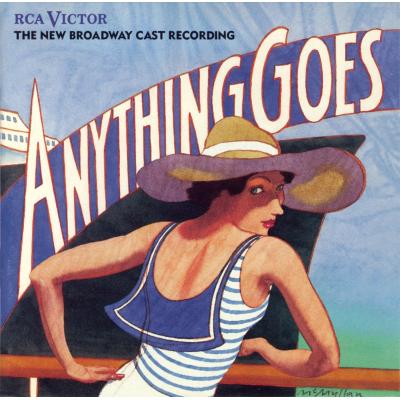
"Anything Goes" Soundtrack Lyrics
Musical • 2004
Track Listing
›Prelude (Instrumental)
›I Get a Kick Out of You
›There's No Cure Like Travel
›Bon Voyage
›You're the Top
›Easy to Love
›I Want to Row on the Crew
›Sailor's Chantey
›Friendship
›It's de-Lovely
›Anything Goes
›Entr'acte (Instrumental)
›Public Enemy Number One
›Blow, Gabriel, Blow
›Goodbye, Little Dream, Goodbye
›Be Like the Bluebird
›All Through the Night
›The Gypsy in Me
›Buddie, Beware
›I Get a Kick Out of You (Reprise)
›Anything Goes (Reprise)
›Take Me Back To Manhattan
"Anything Goes" Soundtrack Description

What this 2004-era album catches—and why it still swings
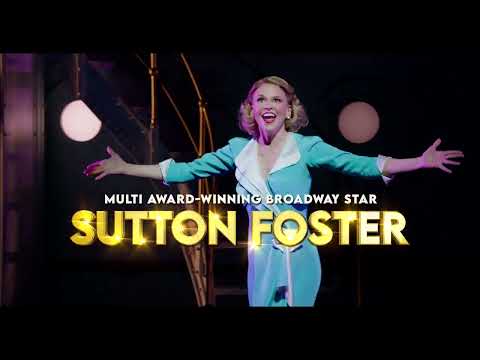
- Snapshot: the London revival’s cast recording that shadowed the 2003–2004 West End run. It’s the souvenir everyone took home while the SS American kept docking at Drury Lane.
- Feel: brass that grins, reeds with a wink, and rhythm sections that strut like they own the promenade deck. The jokes land; the orchestra answers with a rimshot.
- I’ve looped this more than is sensible. It’s not pristine museum Porter. It’s lived-in, high-proof, and a little salty—exactly where this show sings best.
Track Highlights (moments you can taste like sea air)
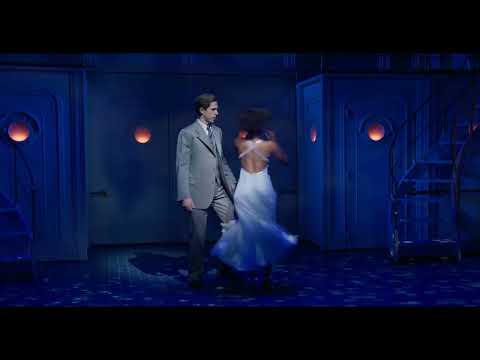
- “I Get a Kick Out of You” — Reno Sweeney — the entrance that sets the social temperature. Here it lands with nightclub poise and just enough sting to remind you: Reno is captain whenever the Captain isn’t looking.
- “You’re the Top” — Reno & Billy — a flirt turned duel turned valentine to wordplay. The recording’s chemistry floats the patter; every rhyme clicks like a champagne flute.
- “Easy to Love” — Billy — the swoon song that turns the deck into a confession booth. Tender, unhurried; you can hear the harbor lights in the phrasing.
- “It’s De-Lovely” — Billy & Hope — added in later revisions, and smartly. The duet glides like a late-night dance when the band has loosened its tie.
- “Friendship” — Reno & Moonface — pure vaudeville fizz. The band leans forward, the tap in the orchestration gets cheeky, and the joke density spikes. A tonal North Star for the whole album.
- “Anything Goes” — Company — the title number detonates like confetti. Brass hits feel like the spotlight blinks; the chorus sounds like a ship that finally decided to flirt back.
- “Blow, Gabriel, Blow” — Reno & Company — the revival tent on a liner. The groove thumps, the choir responds, and suddenly sanctity has rhythm. Try not smiling. Go on. I’ll wait.
- “The Gypsy in Me” — Lord Evelyn — the comic reveal. Foppish exterior; secret embers. The woodwinds tease, and you can almost see the monocle drop.
Musical Styles & Themes
- Porter’s wordplay, renovated: the 1987 revision (kept in London) folds in ringers like “It’s De-Lovely,” reshuffling numbers to accent character beats. The album follows suit; story and song nudge each other into focus.
- Big-band snap with legit theatre polish: the orchestration has brass bite and reed warmth, but never swamps the singers. It’s show dance, not dance club.
- Comedy-through-rhythm: punchlines ride on rhythm-section lift—especially in “Friendship” and the title tune. When the banter swings, the jokes land twice.
- Theme of reinvention: crooks passing as clergy, lovers pretending otherwise, a society siren playing sermonizer—Porter’s score makes disguise feel like freedom.
Plot & Characters (so the songs actually mean something)
- Setting: an ocean liner from New York to London. Stateroom doors, social rules, and everyone pretending not to chase what they want.
- Reno Sweeney: nightclub evangelist and chaos whisperer. Her numbers (“I Get a Kick…,” “Anything Goes,” “Blow, Gabriel, Blow”) function like scene changes for the soul—she flips the atmosphere with a verse.
- Billy Crocker: junior stockbroker turned stowaway romantic. Ballads soften him (“Easy to Love”), while patter duets sharpen his wit (“You’re the Top”).
- Hope Harcourt: society fiancée with a contralto conscience. “It’s De-Lovely” turns her from porcelain to partner-in-crime.
- Moonface Martin: Public Enemy 13, hearts-of-gold division. Comedy ballast. “Be Like the Bluebird” lets him confess he’s just as lost as the pretty people.
- Lord Evelyn Oakleigh: aristocratic oddball. He gets a stealth banger (“The Gypsy in Me”), proving even the tweediest have a drum inside.
- Why it clicks: every major song pushes a mask on or off. The record preserves that—no filler, just plot disguised as pleasure.
Production
- Era covered: the National Theatre revival (late 2002) sailing into the West End and its 2003–2004 Drury Lane run. The cast album tied to that company became the de facto soundtrack of the 2004 season.
- Book used: the Timothy Crouse & John Weidman revision—tightened farce mechanics, added/repositioned numbers (“It’s De-Lovely,” “Friendship”), and a cleaner comic runway.
- Direction style: an almost cinematic lightness—let the jokes breathe, let the dancers sparkle, let Porter’s rhymes do the flirting.
- Why this recording matters: it freezes a West End company mid-sail, with soloists who sell the wit and an ensemble that kicks like a chorus of deckhands on overtime.
Behind the Scenes & lore
- From chaos to classic: the show’s origin story is famously messy—plots swapped, a shipwreck rumor, authors cycling. The refinement happened over decades; this revival benefits from the cleanup and leans into the joy.
- Revisions as restoration: later productions didn’t “modernize” Porter so much as return to his best impulses—give the comedy a metronome, then let the brass grin.
- Why the 2004 window pops: cast chemistry. The leads spark in duets, the comic foils have teeth, and the pit band plays like they secretly moonlight in swing clubs.
Cast Breakdown (2004 era)
Leads associated with the London revival company
- Reno Sweeney: Sally Ann Triplett — a torch-bright belt with club-singer charm. The title number feels custom-tailored.
- Billy Crocker: John Barrowman — matinee warmth, radio-ready sheen. “You’re the Top” turns into a tennis match he intends to win.
- Hope Harcourt: Mary Stockley — silvery tone, steel underneath. “Goodbye, Little Dream, Goodbye” lands like a whispered confession.
- Moonface Martin: Martin Marquez — silliest man on deck; rhythm comedian.
- Lord Evelyn Oakleigh: Simon Day — delightfully eccentric with a surprise blaze in “The Gypsy in Me.”
- Elisha J. Whitney: Denis Quilley — roaring, tipsy, priceless.
- Erma: Annette McLaughlin — the song “Buddie, Beware” becomes a little crime of seduction.
Ship’s company & scene shapers
- Captain: Paul Grunert
- Purser: Robin Soans
- Angels, sailors, gawkers, and grifters: a deep ensemble that sings like a single witty organism.
Critic & Fan Reactions
- Critical split (the fun kind): some reviewers praised the revival’s “liberating lightness,” while others poked at star wattage. Either way, the score got its roses.
- Fans in 2004: adored the crisp band and the comic snap. The album circulated like a boarding pass—everyone who saw the show wanted the sound.
- Longevity: later revivals kept the blueprint, but this London set has a lively swagger—less polite, more party.
Quotes
“Directs with liberating lightness.” — a London broadsheet review of the revival
“Doesn’t leave you saluting its Reno Sweeney… but the score still sparkles.” — a trade-paper take during the West End run
“The ghosts at the Lane feel friendly tonight.” — a leading lady, on moving the show to Drury Lane
FAQ
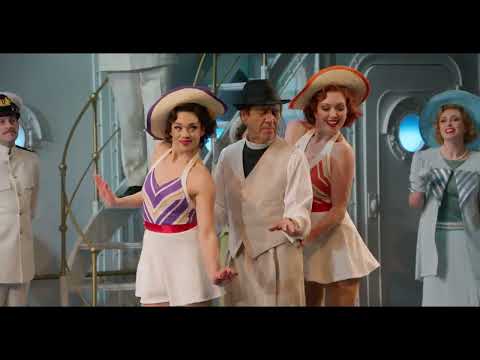
- Is this album a live recording?
- No. It’s a cast recording tied to the London revival company. It captures the stage energy without the coughs and curtain rustle.
- Which script/version does it reflect?
- The Crouse/Weidman revision—streamlined book, strategic song inserts like “It’s De-Lovely,” and sharper farce mechanics.
- Were these the principal West End leads in 2004?
- Yes—this era centered on Sally Ann Triplett (Reno) and John Barrowman (Billy), with a strong comic bench.
- Does it include the big church-barnstormer?
- “Blow, Gabriel, Blow.” It thunders. The choir goes full hallelujah.
- If I already own a classic revival recording, why this one?
- The London band feel. It’s glossy but a touch rowdy—like swing played by people who’ve spilled drinks on tuxedos before.
Technical Info
- Soundtrack title: Anything Goes
- Type: musical
- Era in focus: West End revival associated with the 2004 season
- Primary label (cast album): First Night Records
- Release context: London revival cast recording tied to the National Theatre/Drury Lane company, circulating through 2004
- Script edition: Crouse & Weidman revision (with added/repositioned Porter titles like “It’s De-Lovely,” “Friendship”)
- Core genres: Showtune, Big-band swing, Classic Broadway
- Awards orbiting this revival window: London critics cited the production in end-of-year honors; the National Theatre staging drew major revival kudos.
- Where this shines sonically: tight brass, articulate reed parts, and chorus balances that keep the jokes buoyant.
Additional Info
- Porter’s rhymes age like good gossip: they snap because they’re specific. This album leans into the specificity and lets the band grin about it.
- Listening tip: play “You’re the Top” into “Anything Goes” without a pause. The momentum carries like a smooth Atlantic swell.
- Stage-to-disc translation: you can hear deck choreography in the percussion writing—those offbeats aren’t accidental; they mimic footwork.
- If you’re crate-digging: later digital reissues of this London set exist; they keep the mix punchy and the applause-free flow intact.
September, 24th 2025
A-Z Lyrics Universe
Popular lyrics
Defying Gravity
Cynthia Erivo Popular
Ariana Grande Horsepower
Post Malone Ain't No Love in Oklahoma
Luke Combs Good Riddance (Time of Your Life)
Green Day Bye Bye Bye
*NSYNC You're the One That I Wan
John Travolta & Olivia Newton-John I Always Wanted a Brother
Braelyn Rankins, Theo Somolu, Kelvin Harrison Jr. and Aaron Pierre The Power of Love
Frankie Goes to Hollywood Beyond
Auli’i Cravalho feat. Rachel House MORE ›
Cynthia Erivo Popular
Ariana Grande Horsepower
Post Malone Ain't No Love in Oklahoma
Luke Combs Good Riddance (Time of Your Life)
Green Day Bye Bye Bye
*NSYNC You're the One That I Wan
John Travolta & Olivia Newton-John I Always Wanted a Brother
Braelyn Rankins, Theo Somolu, Kelvin Harrison Jr. and Aaron Pierre The Power of Love
Frankie Goes to Hollywood Beyond
Auli’i Cravalho feat. Rachel House MORE ›
New soundtracks
GOAT
Supergirl
Avatar: Fire and Ash
Nativity 2: Danger in the Manger!
How to Train Your Dragon (Movie)
Wicked: For Good. The Original Score
Wicked: For Good
Candyman
From the World of John Wick. Ballerina
Kiss of the Spider Woman (Movie)
Sinners
TRON: Ares
F1 The Album
Red Clay
Zootopia 2
ZOMBIES 4: Dawn of the Vampires
KPop Demon Hunters
MORE ›
Lyrics / song texts are property and copyright of their owners and provided for educational purposes only.