Soundtracks:  A B C D E F G H I J K L M N O P Q R S T U V W X Y Z #


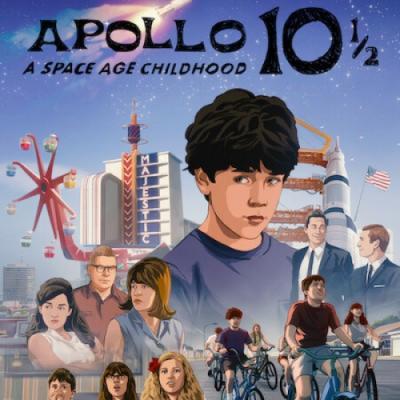
Apollo 10½: A Space Age Childhood Album Cover

"Apollo 10½: A Space Age Childhood" Soundtrack Lyrics

Movie • 2022

Track Listing


"Apollo 10½: A Space Age Childhood" Soundtrack Description

Apollo 10½: A Space Age Childhood lyrics, 2022
Apollo 10½: A Space Age Childhood — Official Trailer thumbnail (2022)

How this soundtrack makes 1969 feel close enough to touch

The album-that-isn’t-an-album works like a family scrapbook that plays music. Linklater and his supervisors raid late-’60s radio—garage rock, surf, brass-pop, soul, a few cosmic outliers—and place each song like a pushpin in memory. You hear bowling alleys in the drum fills. Sunburn in the guitars. A schoolyard dare hiding in a fuzz-bass grin. It’s not just period wallpaper. The cues carry the arc: a kid’s regular life getting braided with a nation’s moonshot. I threw it on and felt the AC of a ’60s sedan and the shock of first seeing Earth on TV, both at once.

Production & Context

Apollo 10½ Soundtrack Trailer. Lyrics
Rotowave visuals, mixtape heart
Richard Linklater built this memory piece with live-action plates and animation akin to rotoscoping—shot in Texas right before the world shut down, then layered into a style that feels hand-tinted by nostalgia. The film bowed at SXSW in March 2022 and hit Netflix on April 1. It runs a trim 98 minutes and centers Houston suburbia—NASA in the air like humidity. No glossy “official soundtrack album” arrived; instead, an “official playlist” captured the selections, which suits the film’s spirit. It’s a curated radio dial, not a boxed set.

Musical Styles & Themes

Apollo 10½ Soundtrack Trailer. Lyrics
AM radio glow, lunar daydreams
Three currents keep looping and crossfading:
  • Brass-pop and lounge sparkle: the Bob Crewe/Herb Alpert corner—cocktail brightness that instantly paints cul-de-sacs, TV trays, and New Year’s Eve adults pretending not to be kids.
  • Garage/psych and surf propulsion: Marketts, Pyramids, Count Five, Iron Butterfly—the twang and fuzz that sell bicycles as rockets and backyard games as world events.
  • Roots & soul oxygen: Booker T. & the M.G.’s, CCR, Hugh Masekela—grooves that turn errands and car rides into rituals.
Underneath, one sly throughline: songs about motion. Boats, bikes, space capsules—anything that leaves. Fitting for a story where memory itself is a vehicle.

What the selections say without saying it

The cues refuse goo. They’re affectionate, not precious. When the film leans into kid logic, you hear swaggering instrumentals with hooks big enough to grab. When history knocks—Apollo audio, Cronkite’s voice—psychedelia drifts in like moon dust. The past doesn’t sit still; it swings.

Track Highlights & Scene Pairings

I’m not spilling the full tracklist—you’ve got it. Here’s the spine the movie hangs on:
  • Donovan with The Jeff Beck Group — “Barabajagal”: opens the door and invites trouble (the good kind). It’s the film’s handshake: playful, pulsing, already in motion.
  • The Marketts — “Out of Limits”: pulpy surf swagger underscoring a “what if NASA picked a kid?” moment. It winks, then it flies.
  • Booker T. & the M.G.’s — “Time Is Tight”: neighborhood routine set to soul precision—errands, games, the hum of a summer that never quite cools.
  • Creedence Clearwater Revival — “Down on the Corner”: Moon Bowl becomes a mythic hangout. The bassline smells like waxed lanes and soda syrup.
  • Canned Heat — “Going Up the Country”: males strut, kids stare, the world opens. A road song for people standing still.
  • Hugh Masekela — “Grazing in the Grass”: sunlit brass for backyard TV history; the groove grins as Armstrong steps.
  • Pink Floyd — “Astronomy Domine”: the instant the movie tilts from memory into awe. Psychedelia as moonlight.
  • Kathy McCarty — “Rocket Ship” (Daniel Johnston cover): end-credits tenderness that lands like a diary entry passed across homeroom.
The cue architecture is clever: bold instrumentals carry the kid POV; vocal tracks often score the collective—family, neighbors, the wider country holding its breath.

Plot & Characters

Stan is ten and mostly busy with kickball, pinball, and decoding older siblings. Then two NASA men (all understatement and crew cuts) pull him aside: the lunar module is too small for grown-ups, so… how do you feel about a test flight? The film splits: regular-kid chapter book on one side, fanciful mission log on the other. A grown-up Stan (voiced with velvet mischief by Jack Black) narrates. The soundtrack keeps the balance—AM radio joy for life on the ground, spacey textures when imagination outruns bedtime.
Cast (2022)
  • Milo Coy — Stanley (young)
  • Jack Black — Stan (narrator / adult voice)
  • Glen Powell — Bostick
  • Zachary Levi — Kranz
  • Josh Wiggins — older brother
  • Lee Eddy, Bill Wise — Mom and Dad
How the music tags them
  • Stan (kid): surf twang and bubblegum pulse—curiosity with grass stains.
  • Grown-up Stan: softer soul cues; the voice of memory, not lecture.
  • NASA suits: tighter grooves, brass cues that feel like schedules.
  • Parents/siblings: radio hits drifting through rooms—family as a shared playlist.

Behind the Scenes

Linklater’s team shot in Austin, then painted over reality: a hybrid workflow that keeps faces expressive and backgrounds slightly dreamy, like an old home movie that learned to talk. The research dug into real 1960s Houston footage; some of it even sneaks in. On the music side, the supervisors—Michael Higham and Randall Poster—work like DJs who grew up on 45s and classifieds, pairing deep cuts with jukebox staples. There’s almost no traditional score; the needle-drops do the heavy lifting, with short bridges to breathe between memories. Smart call. The film is about how culture washes over a kid; of course culture itself does the scoring.

Quotes

“Sweetly nostalgic… a deeply personal, freshly inspired way.”Critics’ consensus
“The music had to feel like you could’ve taped it off the radio back then.”Production chatter

Critic & Fan Reactions

Reviewers clocked the magic trick: a personal memoir that still feels universal. Fans latched onto the playlist aspect—half the fun is recognizing two bars in and blurting, oh, that one. The Pink Floyd drop got its deserved gasp; the brass-pop interludes did stealth work, rehydrating an era that’s often flattened to tie-dye. People argued about their favorite cue and, predictably, whether the “official playlist” missed a pet track. It’s Linklater. Debate is part of the hang.

Technical Info

  • Type: Movie
  • Title: Apollo 10½: A Space Age Childhood
  • Year: 2022
  • Director/Writer: Richard Linklater
  • Runtime: 98 minutes
  • Country/Language: United States / English
  • Release: SXSW premiere March 13, 2022; Netflix streaming April 1, 2022 (limited theatrical beforehand)
  • Music supervision: Michael Higham, Randall Poster
  • Soundtrack availability: No commercial OST; an official streaming playlist collects the key songs
  • Notable artists featured: Donovan (with Jeff Beck Group), The Marketts, The Bob Crewe Generation, Booker T. & the M.G.’s, Creedence Clearwater Revival, Canned Heat, The Byrds, Hugh Masekela, Pink Floyd, Kathy McCarty
Apollo 10½ Soundtrack Trailer. Songs Lyrics
Trailer still — moonlight on a backyard trampoline

FAQ

Is there an official soundtrack album?
No full commercial OST. The studio circulated an official playlist that mirrors the film’s needle-drops.
Who handled the music choices?
Music supervisors Michael Higham and Randall Poster curated a deep bench of late-’60s tracks across pop, soul, surf, and psych.
What’s the closing-credits song?
Kathy McCarty’s “Rocket Ship,” a cover of Daniel Johnston—fits the film’s Austin-to-Houston DNA.
How does the music interact with the visuals?
Needle-drops lead; brief bridges do the glue work. The songs carry memory, so score stays out of the way.
Where does the film sit in Linklater’s world?
Alongside his “memory cinema”: Boyhood patience, Dazed and Confused radio brain, plus the rotoscope lineage.
Does the film use real Apollo audio?
Yes—historical broadcasts thread through key moments, with period songs shading the awe rather than competing with it.

Additional Info

  • The Pink Floyd drop (“Astronomy Domine”) hits after the household TV moment—tiny human feet, giant cultural step, one psychedelic frame.
  • “Barabajagal” and “Out of Limits” aren’t just bangers; they’re tone-setters that teach you how to watch the movie—playful, pulpy, forward.
  • The final song is a local handshake: McCarty (Austin) covering Johnston (Austin), in a Houston story. Perfect circle.
  • The film folds in real 1960s Houston home-movie textures and design; the music wears the same lived-in feel.
  • If you’re sampling: start with “Time Is Tight,” jump to “Down on the Corner,” then ride “Astronomy Domine” into the credits. You’ll feel the whole arc.

September, 24th 2025


A-Z Lyrics Universe

Lyrics / song texts are property and copyright of their owners and provided for educational purposes only.