Soundtracks:  A B C D E F G H I J K L M N O P Q R S T U V W X Y Z #


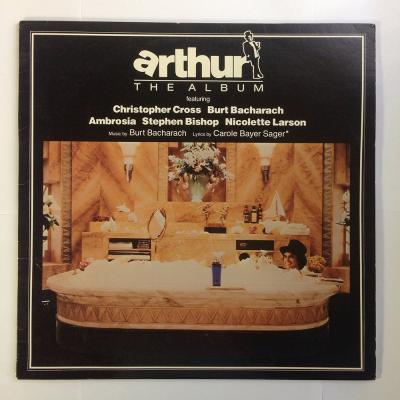
Arthur - The Album Album Cover

"Arthur - The Album" Soundtrack Lyrics

Movie • 2008

Track Listing


html Копировать код

"Arthur - The Album" Soundtrack Description

Arthur - The Album lyrics, 2008
Arthur (1981) — Trailer thumbnail

What this album feels like

Arthur - The Album Soundtrack Trailer. Lyrics
Champagne bubbles, taxi horns, and a melody that refuses to leave
  • Immediate mood: Upper East Side polish with downtown charm. Big-screen romance meets soft-rock ease, then Burt Bacharach’s orchestrations lace everything together like cufflinks you inherited and finally learned to wear.
  • Time-warp, in a good way: first issued with the film in 1981, then digitally remastered and reissued in 2008. The reissue doesn’t modernize so much as dust off the silver—same tunes, fresh sparkle.
  • Why it sticks: one of those rare soundtracks where the theme song became cultural shorthand. But the deep cuts—the Bacharach instrumentals, a sly Ambrosia number, a Nicolette Larson heart-tilter—do the quiet lifting.

Background & Context

Arthur - The Album Soundtrack Trailer. Lyrics
From Park Avenue penthouses to late-night delis: the sound of a city that talks fast but loves long
  • The film: Steve Gordon’s Arthur (1981) pairs Dudley Moore’s tipsy heir with Liza Minnelli’s grounded New Yorker, then lets John Gielgud steal scenes as Hobson, the butler whose one-liners could slice marble.
  • The album: Arthur – The Album was built around new music by Burt Bacharach and Carole Bayer Sager, with performances by Christopher Cross, Stephen Bishop, Ambrosia, and others. In 2008, it returned as a digital remaster—same nine pieces, remixed/remastered for modern platforms.
  • The standard-bearer: Christopher Cross’s “Arthur’s Theme (Best That You Can Do)” went #1, won major awards, and basically lived on radios and in wedding DJs’ crates for years.

Musical Styles & Themes

  • Songbook DNA: soft rock and adult-contemporary warmth—sleek Fender Rhodes, satin strings, and rhythm sections that never hurry the room. Where some ’80s soundtracks shout, this one smiles.
  • Score palette: Bacharach in film mode: pocket-sized cues with elegant modulations, woodwinds that feel like asides, and string writing that can tug without tearing. The instrumentals sketch New York as a waltz you can walk to.
  • Theme logic: the songs handle confession and choice; the instrumental cues handle place and pace. When the camera lingers on a town car window, that’s usually Bacharach doing map work.

Track Highlights (no full tracklist, just moments)

  • “Arthur’s Theme (Best That You Can Do)” — Christopher Cross — the big one. That chorus line—about being caught between the moon and New York City—lands like a shrug and a vow at the same time. It’s glossy, sure, but the ache is real.
  • “Fool Me Again” — Nicolette Larson — a tender glide that somehow didn’t make the final cut of the film but sits perfectly on the album. Soft edges, steady pulse, and a vocal that sounds like a hand on your sleeve.
  • “Poor Rich Boy” — Ambrosia — a wry wink in three and a bit minutes; sonically plush, lyrically knowing. File under: rich-kid blues with manners.
  • “It’s Only Love” — Stephen Bishop — the pop version is breezy; the Bacharach instrumental reprise later on is like finding the same thought written in pencil in the margins.
  • Bacharach’s miniatures: “Touch,” “Money,” “Moving Pictures” — scene-carrying vignettes. They move like cabs at lights: quick, precise, and somehow romantic even when they’re just doing a job.

Plot & Characters (for context)

  • Arthur Bach (Dudley Moore): charming wastrel, professional avoider of adulthood. The soundtrack treats him kindly—songs cushion his folly, strings hint at the better man trying to get a word in.
  • Linda Marolla (Liza Minnelli): quick, frank, unimpressed by chequebooks. When the album leans into sincerity, you can feel her voice in it—even when she isn’t singing.
  • Hobson (John Gielgud): razor-dry butler with inconvenient wisdom. The score gets quieter here—like someone clearing a throat before saying the real thing. He won an Oscar for it, deservedly.
  • Susan Johnson & the Bach family orbit: money as plot device, not destination. The music marks the difference—polished when money talks, open-hearted when love does.

Production & Behind the Scenes

  • Pen and piano: Bacharach & Bayer Sager built the film’s musical spine; for the title theme they teamed with Christopher Cross—and, by way of a cherished lyric fragment, Peter Allen. That famous line reportedly came from an old Allen/Bayer Sager idea; sometimes a perfect lyric just waits for the right movie.
  • 2008 return: the remaster arrived digitally under the Rhino/Warner umbrella—same nine cues, cleaned up. It’s the difference between a beloved cassette and a well-made LP: same songs, fewer smudges.
  • Album architecture: open with Cross, pivot through the Larson/Ambrosia/Bishop run for character color, then let Bacharach’s instrumentals steer us through cabs, foyers, and a final curtain call. Efficient; elegant.
  • Session flavor: the playing is insanely tidy—arranger-bright horns, bass lines that refuse to grandstand, and drum parts that swing just enough to feel like a city underfoot.

Quotes

“When you get caught between the moon and New York City… well, you know the rest.” — a chorus that basically wrote itself into the city’s skyline
“Burt keeps it simple until he doesn’t—one key change and suddenly you’re braver than you were.” — a studio player’s shorthand for the Bacharach effect
“Soft rock, hard choice.” — a critic summing up why this soundtrack still works

Critic & Fan Reactions

  • Then: rave for the theme, warm nods for the set. Reviewers clocked how the music kept the film buoyant without turning saccharine.
  • Now: the 2008 remaster nudged a new round of streams and put the album back in front of people who knew the chorus but never heard the instrumentals.
  • Legacy: the theme’s win cabinet is well known; less discussed is how the little cues taught a generation of rom-coms to walk softly and carry a perfect woodwind line.

Technical Info

  • Name: Arthur – The Album (Soundtrack from the Motion Picture)
  • Type: movie
  • Year: 2008 (digital remaster/reissue of the 1981 soundtrack)
  • Original release: August 14, 1981
  • Label (2008): Rhino Entertainment / Warner Records (digital)
  • UPC (2008 digital): 603497984060
  • Producers: Burt Bacharach; Carole Bayer Sager; Stephen Bishop (album contributions)
  • Key writers: Burt Bacharach; Carole Bayer Sager; Christopher Cross; Peter Allen (title theme credit)
  • Signature single: “Arthur’s Theme (Best That You Can Do)” — U.S. #1; Academy Award & Golden Globe winner for Original Song
  • Format notes: 9 tracks (~29 minutes); 2008 remaster presents “remastered version” tags across the program
  • Genre tags: Soft Rock, Adult Contemporary, Film Score

FAQ

Arthur - The Album Soundtrack Trailer. Songs Lyrics
Elegant cues, big chorus, very New York
So is this a 1981 album or a 2008 album?
Both, depending on what you mean. The music is from the 1981 film; the 2008 date marks the official digital remaster/reissue.
Who actually wrote the title song?
Burt Bacharach, Carole Bayer Sager, and Christopher Cross—with a credit to Peter Allen, whose lyric fragment helped unlock that famous chorus.
Is Nicolette Larson’s “Fool Me Again” in the movie?
No; it’s album-only, which gives the soundtrack a lovely extra shade you won’t hear on screen.
How much of the album is instrumental?
Roughly half. Bacharach’s short cues (“Touch,” “Money,” “Moving Pictures”) act like scene sketches between the vocal numbers.
Did the song really win the big awards?
Yes—an Oscar and a Golden Globe for Original Song, plus a #1 run on the U.S. charts.

How the music plays against picture

  1. Meet Arthur: theme establishes the film’s heartbeat—romance with a grin. You feel the city wink back.
  2. Complications: Larson/Bishop/Ambrosia supply interior monologues in soft focus; the score trims the edges so scenes land cleanly.
  3. Turning point: Bacharach’s instrumentals go gentle and precise—almost like a friend telling you the truth without raising their voice.
  4. Choice made: the melody returns; not louder, just clearer. That’s enough.
Cast Pointers
Main ensemble
  • Dudley Moore — Arthur Bach
  • Liza Minnelli — Linda Marolla
  • John Gielgud — Hobson
  • Jill Eikenberry — Susan Johnson
  • Geraldine Fitzgerald — Martha Bach

Additional Info

  • Album-only gem: the Larson cut being exclusive to the LP/CD is a classic soundtrack move—build the film’s brand, give fans a bonus.
  • Why nine tracks works: no filler. The compact runtime means you actually replay the whole thing—like a short visit with people you like.
  • Listening tip: run “It’s Only Love” in its vocal and instrumental versions back-to-back. It’s a neat masterclass in how arrangement changes meaning without touching the melody.
  • A tiny city note: those woodwind flutters? They feel like crosswalk signals—neat, persistent, oddly comforting.
A strange film about dunce, who has a huge fortune and spend it mediocre leading a fast life. He is constantly laughing. His laughing in the trailer annoys by the end of the second minute. Wildly. Such a woman like Liza Minnelli stars in the film, mostly known to us from the New York, New York film (where she sings the same song). Christopher Cross and Nicolette Larson sang sad melodies. Well, we have what we have, because most of the others are instrumentals. What this movie is about? Situation comedy. When muddler protagonist makes some unexpected and unacceptable things. And because of it they seem funny – because are unexpected (one of the principles of humor is a surprise: we laugh because we do not expect that something will suddenly be said or done; laughter in this case is the mechanism of evolutionary substitution of reaction of fear and thus we show others (and ourselves) that we are not really afraid, but quite the contrary). In addition to his disorderly behavior, the film tells a story, and, it should be noted, it is pretty decent. However, showing the high society with all its ugly boredom. The film turned out to be very much liked by the audience. Having production costs equal to insignificant amount, as for our times, $ 7 million, the film grossed even now very impressive $ 95.5 million. And in 1981, it was approximately akin to 400 million. Crazy money! We want to highlight the Best That You Can Do amongst the voice melodies – it is very thoughtful. Fool Me Again is pop, which is made from the heart and it is possible that it was thought-over for more than one week, because in addition to skillfulness in this song, there is also a deep understanding of what is sung. The most “catchy” among instrumental melodies is It's Only Love.

September, 24th 2025

'Arthur - The Album' on Apple Music, at Discogs
A-Z Lyrics Universe

Lyrics / song texts are property and copyright of their owners and provided for educational purposes only.