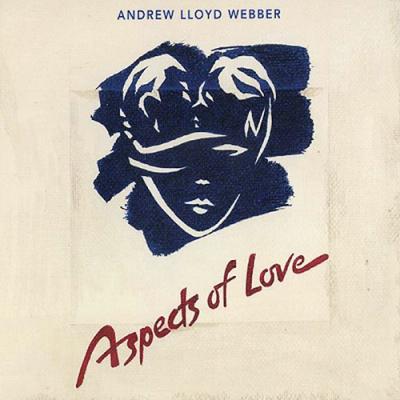
"Aspects of Love" Soundtrack Lyrics
Musical • 1989
Track Listing
›Love Changes Everything
›Parlez-Vous Francais?
›Seeing is Believing
›Chanson d'Enfance
›Everybody Loves a Hero
›She'd Be Far Better Off
›Leading Lady
›Other Pleasures
›There is More to Love
›Mermaid Song
›First Man You Remember
›Journey of a Lifetime
›Falling
›Hand Me the Wine and the Dice
›Anything But Lonely
"Aspects of Love" Soundtrack Description

How this cast album moves
It doesn’t rush. It breathes, circles, returns—like love when you’ve known someone long enough to be honest. The 1989 recording of Aspects of Love carries Andrew Lloyd Webber’s most intimate instincts: chamber textures that suddenly bloom, melodies that keep finding new faces, and a signature anthem that strolls in like a thesis and refuses to leave. You drop the needle and it’s Europe after the war, train windows, sun-dazed villas, and the stubborn hope that the heart can be taught.Production & Context

Musical Styles & Themes
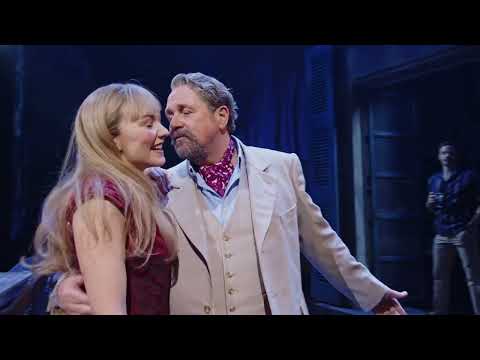
- Through-sung storytelling: recitative melts into aria, duets braid into trios, motifs return older. It’s plot as melody, conversation as counterpoint.
- Chamber-orchestral color: woodwinds for memory, solo strings for doubt, brass for decisions you can’t take back. When the drama widens, the orchestra does too.
- Pop clarity at the edges: hooks that read on first listen—most famously the title-adjacent anthem—without sandpapering the drama’s mess.
What the music says without words
Love here isn’t fireworks; it’s pressure and patience. Harmonies drift between major reassurance and minor side-eye, telling you when affection is generous and when it’s selfish. The big tune returns like a narrator—sometimes triumphant, sometimes ironic, sometimes sung through gritted teeth. That’s the trick: the song doesn’t change; the people do.Track Highlights & Scene Pairings
I’m not laying out the full tracklist—you’ve got it. But these moments do heavy lifting:- “Love Changes Everything” (Alex): an overture masquerading as a single. Sung by a young man brimming with certainty, it becomes the yardstick the show keeps measuring him against.
- “Seeing Is Believing” (duet): a soft negotiation set to melody—two people auditioning honesty and liking how it sounds.
- “The First Man You Remember” (Jenny/George): tender, a little dangerous. The orchestration tells you more than the words; strings walk on eggshells.
- “Anything But Lonely” (Rose): torch-song steel. A choice made with eyes open, sung with the unimpeachable logic of someone choosing survival over purity.
- Motif returns (various): the title theme threads through departures, homecomings, and compromises, each time at a different emotional temperature. That’s where the album earns its spine.
Plot & Characters
Love triangles are messy. This one is a mobile. In 1947, actor Rose Vibert flees a bad review and ends up in the French countryside with her young admirer Alex Dillingham. Enter Alex’s worldly uncle, George, who falls for Rose. Add Giulietta Trapani, George’s Venetian lover who prefers frankness to rules. Years pass. Feelings change shape. Jenny, George’s daughter, grows up—complicating loyalties further. The album maps every pivot: bright violins for infatuation, warmer hues for love that’s lived in, hard brass for the moments when desire and duty collide.Principal cast (1989 London)
- Michael Ball — Alex Dillingham
- Ann Crumb — Rose Vibert
- Kevin Colson — Sir George Dillingham
- Kathleen Rowe McAllen — Giulietta Trapani
- Diana Morrison — Jenny Dillingham
Motifs and who “owns” them
- Alex: ascending, open-throated phrases; idealism with a head of steam.
- Rose: flexible keys and restless rhythm—ambition arguing with affection.
- George: burnished timbres, slower vibrato—authority learning humility.
- Giulietta: sensual harmonic sidesteps; truth told with a smile.
- Jenny: childlike intervals that widen as the show asks harder questions.
Behind the Scenes
Legend has it Roger Moore was slated to play George and left near opening; understudy Kevin Colson stepped up and, frankly, grounded the triangle. The production’s craft team—Nunn/Lynne/Reed—bent their Les Mis-tested chops toward intimacy: smaller rooms, closer microphones, a score that trusts breath. The album packaging captured that vibe: Really Useful/Polydor pressed it wide (double-LP/CD), and the single rode the airwaves long enough to make Michael Ball a household voice well beyond theatre. A few years later, the principal quartet reunited for a television/telecast edition, which only burnished the recording’s reputation as the definitive document of this material.Quotes
“Love changes everything—hands and faces, earth and sky.”Alex’s credo, sung like a dare
“It is, without doubt, a well-oiled show, easy on the eye and ear… and that anthem dominates.”Contemporary revival notice, remembering 1989’s shadow
Critic & Fan Reactions
Then: critics clocked the elegance and raised eyebrows at the ethics. Now: listeners praise the workmanship and treat the album like a road movie for the heart—where the scenery keeps changing and the tune keeps insisting you look. Fans argue about which version of the title song hits hardest: the ardent opener, the weary reprise, or the late-show iterationSeptember, 24th 2025
A-Z Lyrics Universe
Popular lyrics
Defying Gravity
Cynthia Erivo Popular
Ariana Grande Horsepower
Post Malone Ain't No Love in Oklahoma
Luke Combs Good Riddance (Time of Your Life)
Green Day Bye Bye Bye
*NSYNC You're the One That I Wan
John Travolta & Olivia Newton-John I Always Wanted a Brother
Braelyn Rankins, Theo Somolu, Kelvin Harrison Jr. and Aaron Pierre The Power of Love
Frankie Goes to Hollywood Beyond
Auli’i Cravalho feat. Rachel House MORE ›
Cynthia Erivo Popular
Ariana Grande Horsepower
Post Malone Ain't No Love in Oklahoma
Luke Combs Good Riddance (Time of Your Life)
Green Day Bye Bye Bye
*NSYNC You're the One That I Wan
John Travolta & Olivia Newton-John I Always Wanted a Brother
Braelyn Rankins, Theo Somolu, Kelvin Harrison Jr. and Aaron Pierre The Power of Love
Frankie Goes to Hollywood Beyond
Auli’i Cravalho feat. Rachel House MORE ›
New soundtracks
GOAT
Supergirl
Avatar: Fire and Ash
Nativity 2: Danger in the Manger!
How to Train Your Dragon (Movie)
Wicked: For Good. The Original Score
Wicked: For Good
Candyman
From the World of John Wick. Ballerina
Kiss of the Spider Woman (Movie)
Sinners
TRON: Ares
F1 The Album
Red Clay
Zootopia 2
ZOMBIES 4: Dawn of the Vampires
KPop Demon Hunters
MORE ›
Lyrics / song texts are property and copyright of their owners and provided for educational purposes only.