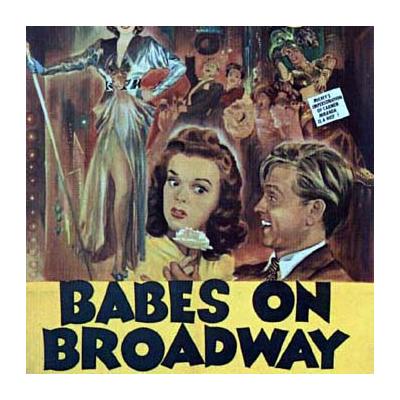
"Babes on Broadway" Soundtrack Lyrics
Musical • 1941
Track Listing
›How About You?
›Hoedown
›Mary's a Grand Old Name
›Rings on My Fingers and Bells on My Toes
›Yankee Doodle Boy
›Bombshell Over Brazil
›Blackout Over Broadway
›Minstrel Show
›Franklin D. Roosevelt Jones
›Waiting for the Robert E. Lee
›Babes on Broadway
"Babes on Broadway" Soundtrack: Description
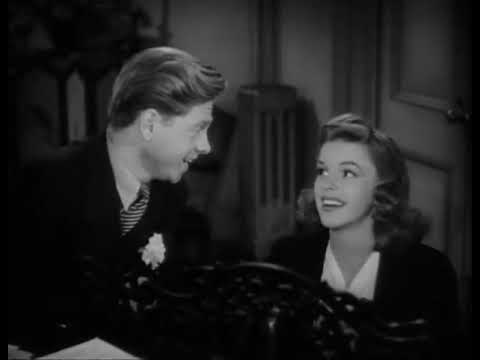
Production & Origins
Background
- The franchise moment: This is the third “let’s-put-on-a-show” entry headlined by Mickey Rooney and Judy Garland, following the earlier hits. The formula returns—kids with hustle, a cause to rally behind—and the craft tightens.
- Who steered the ship: Busby Berkeley directed, with an uncredited hand guiding a few of Garland’s big solos. You can feel that split personality: kaleidoscopic bravura on the large numbers, intimate camera awareness when Judy steps forward.
- Freed Unit sheen: Producer Arthur Freed’s team folds in arrangers and staff writers with scary efficiency. The result isn’t just songs; it’s a studio rhythm section in narrative form.
- Songwriters in the engine room: Music men with radio in their bones—Burton Lane and Roger Edens among them—tied to nimble lyricists like E.Y. “Yip” Harburg and Ralph Freed. Earworms with a wink.
Wartime window
- Released right at the turn of 1941 into 1942, the film lands as America edges from innocence toward mobilization. Benefiting children, cheering spirits, selling optimism—it’s all baked into the plot and the songs’ DNA.
Track Highlights
Moments where the soundtrack pops on record
- “How About You?” — The charmer. Tuneful, conversational, and deceptively sophisticated. It earned that major award nomination for a reason. On record, the vocal blend is warm and unhurried, like two friends discovering they harmonize in real life.
- “Anything Can Happen in New York” — A pep talk set to shoe-leather rhythm. The studio band punches accents as if the sidewalks were percussion. It sells the myth of Manhattan and gets away with it.
- “Hoe Down” — Country zest filtered through MGM gloss. Fiddle figures skitter, then a full ensemble swings the barn doors open. On the album, you can hear the choreography’s geometry through the brass hits.
- “Chin Up! Cheerio! Carry On!” — A morale-booster with choir lift. It’s wartime sentiment, yes, but arranged with unexpected restraint so the melody does the heavy lifting.
- “Bombshell from Brazil” — A cheeky, stylized nod to the era’s Latin vogue, complete with a star turn that plays more caricature than ethnography. Historically interesting, musically bright.
- “Finale / For the Show” — The curtain call logic of these films always lands. The reprise stitches the set together and leaves a last, glossy polish on the themes—ambition, community, make-believe as survival.
Story & Characters
Who’s who and what they want
- Tommy Williams — A hyperactive showman chasing Broadway applause like it’s oxygen.
- Penny Morris — Clear-eyed, talented, and not a doormat. She keeps the dream from turning into a con.
- Friends & fellow travelers — An ensemble of hoofers, vocal groups, and neighborhood characters, all folded into the cause.
- The hook — They stage a benefit show—earnest, chaotic, surprisingly polished—to help children during a brutal time. Cue setbacks, banter, and the kind of found-family chemistry you can’t fake.
Shape of the thing
- It’s a ladder of numbers: small, witty songs early; bigger set pieces mid-film; then the blowout finale. Along the way, showbiz morality gets tested, then redeemed by teamwork.
Musical Styles & Themes
- Studio swing meets stagecraft: Dance bands, choral swells, and the sparkling MGM pit orchestra. You hear precision more than improvisation, but the pulse feels lively, not mechanical.
- Optimism as drumbeat: Songs push cheer without syrup. The best sequences argue that effort and charm can organize a neighborhood in record time.
- Time-capsule caveat: The film closes with a blackface minstrel segment—a stark reminder of the era’s racist conventions. Any modern listen asks for context, not erasure.
Behind the Scenes
- Production window: Summer into fall 1941. Tight schedule, fast rehearsals, and those big Berkeley camera patterns zipped into place right before release.
- Personal whirlwind: Mid-shoot, Garland snuck off to marry bandleader David Rose. The work paused; the headlines did not. She was nineteen, working like a veteran, aging out of “kid roles” in real time.
- Cameo seasoning: A famous radio columnist opens the film as himself, voice and persona intact, which sets a playful newsreel tone before the first chorus even hits.
- Uncredited shaping: A certain soon-to-be-legend, then new at the studio, guided some of Judy’s solos—soft lighting, patient framings, a different emotional grammar than the overhead spectacle.
Cast breakdowns — 1941 film
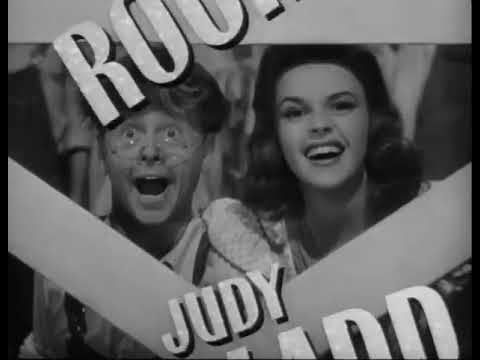
Leads & featured players
- Tommy Williams — Mickey Rooney
- Penny Morris — Judy Garland
- Miss “Jonesy” Jones — Fay Bainter
- Barbara Josephine “Jo” Conway — Virginia Weidler
- Ray Lambert — Ray McDonald
- Morton “Hammy” Hammond — Richard Quine
- Mr. Stone — Donald Meek
- As himself — Alexander Woollcott
- Plus early glimpses of Donna Reed and Margaret O’Brien
Critical & Fan Reactions
- Fans of classic Hollywood musicals treat this soundtrack like a scrapbook of studio skills: disciplined ensemble singing, razor-cut transitions, and melodies that stick to the ribs.
- Modern viewers split the difference—admiring the craft, wincing at the minstrel finale, and parsing the contrast between buoyant numbers and the era’s blind spots.
“One great moment shows Garland dancing with the shadows of unseen backup dancers.” — a modern critic reflecting on the film’s dual legacy
- Play the cast selections back-to-back and you hear the Freed Unit recipe: polish first, personality tucked inside the polish.
FAQ
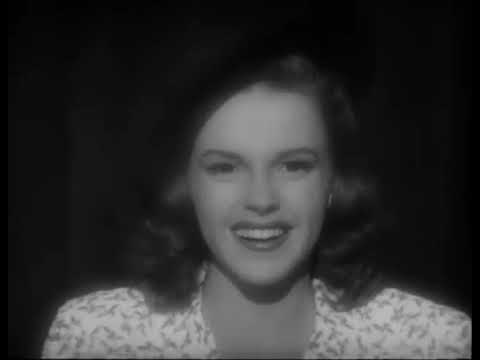
- Was there a true 1941 “original soundtrack” album?
- Not in the modern sense. Studios rarely issued full film soundtracks then. Selections were later compiled and released; some songs also appeared as studio singles.
- Which song from the film drew awards attention?
- “How About You?”—music by Burton Lane, lyric by Ralph Freed—scored the big nomination, becoming the film’s standard outside the movie.
- Who actually directed Judy Garland’s close-up musical moments?
- The credited director was Busby Berkeley, but a rising studio filmmaker lent an uncredited hand on some Garland solos, shaping their more intimate feel.
- How should we approach the blackface finale today?
- With eyes open. It’s a document of harmful conventions. Contextualize it—critically—while still assessing the film’s craft and performances.
- What’s the best way to hear the music now?
- Listen to curated soundtrack releases and anthologies that gather the film’s numbers with clean transfers. The charm survives the decades.
Additional Info
- Debuts tucked inside: That’s Donna Reed in a tiny office role and a very young Margaret O’Brien in an audition bit. Blink and you still won’t miss them; the camera loves both.
- Deleted business: A comic sketch titled “The Convict’s Return” was filmed and cut. The footage seems lost; some music elements survived on later archival discs.
- Air trailer lore: An audio “Leo Is On The Air” promo circulated to stations ahead of release—snippets, tags, hype—old-school marketing with dance shoes on.
- Singles strategy: Instead of a full OST in 1941, Judy recorded studio sides of select numbers for record labels, a common workaround before the long-playing soundtrack era.
Release, Credits & Notes
- Soundtrack Name: Babes on Broadway
- Type: musical
- Year: 1941
- Film Studio: Metro-Goldwyn-Mayer
- Director: Busby Berkeley (with uncredited assistance on certain Garland sequences)
- Producer: Arthur Freed
- Writers: Screenplay by Fred F. Finklehoffe (from his story); additional scenework by the Freed Unit brain trust
- Music Team: Songs by Burton Lane, Roger Edens, E.Y. Harburg, Ralph Freed; musical direction and adaptation folded into the studio orchestra machine
- Notable Song: “How About You?”—later a standard well beyond the film
- Runtime: about 118 minutes
- Release window: late December 1941 premiere, wide roll-out into early 1942
- Modern soundtrack releases: selections and restorations issued decades later by reissue labels and digital services, often compiling film stems and radio/alternate takes
September, 24th 2025
A-Z Lyrics Universe
Popular lyrics
Defying Gravity
Cynthia Erivo Popular
Ariana Grande Horsepower
Post Malone Ain't No Love in Oklahoma
Luke Combs Good Riddance (Time of Your Life)
Green Day Bye Bye Bye
*NSYNC You're the One That I Wan
John Travolta & Olivia Newton-John I Always Wanted a Brother
Braelyn Rankins, Theo Somolu, Kelvin Harrison Jr. and Aaron Pierre The Power of Love
Frankie Goes to Hollywood Beyond
Auli’i Cravalho feat. Rachel House MORE ›
Cynthia Erivo Popular
Ariana Grande Horsepower
Post Malone Ain't No Love in Oklahoma
Luke Combs Good Riddance (Time of Your Life)
Green Day Bye Bye Bye
*NSYNC You're the One That I Wan
John Travolta & Olivia Newton-John I Always Wanted a Brother
Braelyn Rankins, Theo Somolu, Kelvin Harrison Jr. and Aaron Pierre The Power of Love
Frankie Goes to Hollywood Beyond
Auli’i Cravalho feat. Rachel House MORE ›
New soundtracks
GOAT
Supergirl
Avatar: Fire and Ash
Nativity 2: Danger in the Manger!
How to Train Your Dragon (Movie)
Wicked: For Good. The Original Score
Wicked: For Good
Candyman
From the World of John Wick. Ballerina
Kiss of the Spider Woman (Movie)
Sinners
TRON: Ares
F1 The Album
Red Clay
Zootopia 2
ZOMBIES 4: Dawn of the Vampires
KPop Demon Hunters
MORE ›
Lyrics / song texts are property and copyright of their owners and provided for educational purposes only.