Soundtracks:  A B C D E F G H I J K L M N O P Q R S T U V W X Y Z #


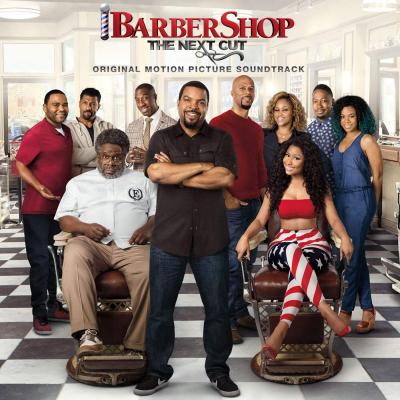
Barbershop: The Next Cut Album Cover

"Barbershop: The Next Cut" Soundtrack Lyrics

Movie • 2016

Track Listing


"Barbershop: The Next Cut" Soundtrack Description

Barbershop: The Next Cut official trailer thumbnail with Ice Cube and cast in the shop
Barbershop: The Next Cut movie trailer, 2016

FAQ

  • Is there an official soundtrack album? Yes—an Atlantic Records compilation of songs released in April 2016.
  • Is there a separate score album? Yes—Stanley Clarke’s original score was released in spring 2016 on Sony Classical.
  • Who composed the score? Jazz-fusion legend Stanley Clarke.
  • What song plays over the end credits? “Real People” by Ice Cube & Common.
  • Which track broke out after the film? Lizzo’s “Good as Hell,” which later became a chart hit.

Additional Info

  • Music supervision by Gabe Hilfer; additional supervision credits include Stephanie Diaz-Matos.
  • Two releases: a songs album (Atlantic Records) and a separate original score (Sony Classical).
  • Ice Cube & Common’s “Real People” doubles as an on-brand reconciliation moment for two Chicago rap icons—and rolls under the closing credits.
  • “Good as Hell” marked Lizzo’s major-label breakout and ties neatly to the salon setting; it later surged on charts years after the film.
  • The songs pull from classic soul/funk (Curtis Mayfield, The Staple Singers, Earth, Wind & Fire, James Brown) to mirror the shop’s intergenerational vibe.
  • Stanley Clarke’s score threads light, percussive jazz textures through family beats, community activism, and comic mischief inside the shop.
Barbershop: The Next Cut trailer still with the barbershop floor bustling
Trailer #2 thumbnail — the shop in full swing

Overview

Why does a neighborhood comedy lean so hard on Chicago soul and a jazz titan’s score? Because this story runs on fellowship, argument, and resilience—and music translates all three without raising its voice. Across the floor of Calvin’s shop, needle-drops do more than decorate; they tap history. The selections tilt old-school on purpose—respect-yourself anthems and uplift jams—while newer R&B and hip-hop cues track present-tense pride. When the film steps into heavier territory (gang violence, parenting, gender politics), Stanley Clarke’s writing softens the edges with warmth and sly swing. The result isn’t a mixtape of hits so much as a conversation: legends of the South and West Sides nodding at contemporary voices, with Clarke’s bass-forward motifs stitching scenes together like a good fade—clean, confident, never showy.

Genres & Themes

  • Classic soul & funk → community accountability and joy (Curtis Mayfield, The Staple Singers, James Brown).
  • 70s/80s R&B standards → romance and everyday swagger (Earth, Wind & Fire; Luther Vandross).
  • Contemporary R&B/hip-hop → self-affirmation and present-day Chicago (Lizzo’s salon-ready bounce; Ice Cube & Common’s civics-minded closer).
  • Jazz-leaning score → familial tenderness, comic timing, and reflective father-son beats (Clarke’s melodic bass lines, brushed percussion, and small-ensemble feel).
Trailer frame focusing on the women’s salon chairs and banter
Trailer #1 variant — the salon side’s energy

Key Tracks & Scenes

  • “Real People” — Ice Cube & Common
    Where it plays: Over the closing credits, after the ceasefire storyline resolves.
    Why it matters: Two Chicago heavyweights unite on a peace-minded track, sending audiences out on solidarity instead of cynicism.
  • “Good as Hell” — Lizzo
    Where it plays: Featured in the film’s song album and used in the movie’s salon-centric marketing; aligns with in-shop, feel-yourself moments.
    Why it matters: A self-care anthem that mirrors the film’s beauty-shop camaraderie and later became Lizzo’s breakout calling card.
  • “September” — Earth, Wind & Fire
    Where it plays: Included on the official OST and heard in-film as an energy lift during shop bustle.
    Why it matters: Chicago royalty on the speakers; a timeless groove that says “open for business, spirits up.”
  • “Respect Yourself” — The Staple Singers
    Where it plays: On the OST; thematically tied to the shop’s code and the film’s mentoring thread.
    Why it matters: A straight-spine message song that matches the barbers’ tough-love advice.
  • “Terri Apologizes to Rashad” — Stanley Clarke (score)
    Where it plays: During Terri and Rashad’s reconciliation scene.
    Why it matters: Light, tender writing gives breathing room to a relationship reset amid the shop’s noise.
  • “Calvin’s Theme” — Stanley Clarke (score)
    Where it plays: A recurring motif around Calvin’s reflective moments and father-son beats.
    Why it matters: Grounds the movie in family stakes; bass-led melody signals steadiness and care.

Music–Story Links (characters & plot beats as connected to songs)

  • When Calvin commits to protecting his block, “Real People” reframes the talkers in the chairs as doers outside the shop.
  • On the women’s side, “Good as Hell” echoes Draya/Terri tensions shifting toward sisterly truce—self-worth first, rivalry down.
  • Legacy cuts like “Respect Yourself” and “Move On Up” function like house rules: the soundtrack nudges younger characters toward accountability without a lecture.
  • Score cues titled for specific beats—“Terri Apologizes to Rashad,” “Cal and Rashad Set Up Marquis and J”—map emotional pivots (forgiveness, strategy) with nimble rhythmic writing.
Trailer still highlighting the ensemble lined up in the shop
Alternate trailer — ensemble energy and back-and-forth

How It Was Made (supervision, score, behind-the-scenes)

  • Composer: Stanley Clarke brings a jazz-fusion palette—melodic bass, small-combo feel—geared for dialogue-driven comedy with heart.
  • Music supervision: Gabe Hilfer curated the era-spanning selections; additional supervision support is credited to Stephanie Diaz-Matos.
  • Song strategy: A then-new Lizzo cut (“Good as Hell”) aligns perfectly with salon imagery; the film also commissions Ice Cube & Common’s “Real People,” turning a onetime rap rivalry into a civic-minded collaboration.
  • Score release: Sony Classical issued a dedicated score album; session players include ringers from jazz and studio worlds, with pianist/producer Robert Glasper among featured contributors.

Reception & Quotes

  • “The two rappers also wrote a song for the film, ‘Real People,’ which plays over the closing credits.” — Regional daily reviews on the film’s release weekend
  • “For Lizzo, the first sign that a licensing strategy might be paying off came when she heard ‘Good as Hell’ in 2016’s Barbershop.” — Industry coverage on her breakout
  • “Best track of the compilation… ‘Real People’.” — HipHopDX soundtrack write-up

Technical Info

  • Title: Barbershop: The Next Cut — Original Motion Picture Soundtrack (songs compilation); Barbershop: The Next Cut — Original Score Soundtrack
  • Year: 2016
  • Type: movie
  • Composers: Stanley Clarke (score)
  • Music supervision: Gabe Hilfer (additional: Stephanie Diaz-Matos)
  • Selected notable placements: “Real People” (Ice Cube & Common) — end credits; “Good as Hell” (Lizzo) — featured on OST and in salon-centric marketing; classics including “September,” “Respect Yourself,” “Move On Up,” and “People Get Up and Drive Your Funky Soul.”
  • Release context: Film opened April 15, 2016 (U.S.).
  • Labels: Atlantic Records (songs album, released April 8, 2016); Sony Classical (score album, artist site lists April 22, 2016; trade press noted early May).
  • Availability: Streaming on major services; the “Real People” video and Lizzo’s “Good as Hell” videos supported the campaign.
  • Afterlife note: “Good as Hell” later reached the U.S. Top 3 following a 2019 re-release.
Exclusive! Nicky Minaj in blunt comedy. She previously starred with her vast sirloin in a film with Cameron Diaz, playing there unremarkable role of "hither and thither", with slight intelligence. And here she plays a hairdresser. Did she think that if she will look like a person from the lower classes, it will bring her closer to ordinary people? To do this, she needs to blow off back her gigantic fifth point, to spend on clothes every month not more than $100, to put own whitest teeth in the deflated back balloons, and to cease to behave as if every movie’s queen – is she, not the main characters. Show business would only benefit without her – dominance of immense backsides tired all a couple years ago. Now she is not in a trend with her rear figures – so huge that with such a physique she if cannot fly, then certainly can would have a soft landing even falling from outer space. Ice Cube is here in several guises. He is the producer and the leading man and the main handsome. He put his arm even to the creation of the soundtrack (in particular, his song is Real People, made in the rap genre that distinguishes it from the rest of the melodies made in the genres of R&B (Good As Hell) and funk (Everything Is with magnificent lyrics)). The film was made with the participation of three large studios (New Line Cinema, Metro-Goldwyn-Mayer & Warner Bros. Pictures), and a company of Ice Cube, Cube Vision, also put a hand in the process. The collection has both old hits, for example, from the band Earth, Wind & Fire, and relatively new, for example, made by DJ Cassidy, where lyrics aren’t important, but only visuals are relevant. Mood of the collection has turned soft, light and forgettable. Exactly repeating the characteristics of this film.

September, 26th 2025

Read reviews on IMDb, Rottentomatoes.com
A-Z Lyrics Universe

Lyrics / song texts are property and copyright of their owners and provided for educational purposes only.