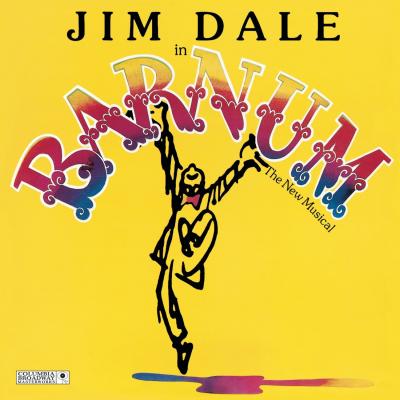
"Barnum" Soundtrack Lyrics
Musical • 2002
Track Listing
›Overture Chase
Barnum Cast
›There Is A Sucker Born Every Minute
Barnum Cast
›Humble Beginnings Chase
Barnum Cast
›Thank God I'm Old
Barnum Cast
›The Colors Of My Life 1
Barnum Cast
›The Colors Of My Life 2
Barnum Cast
›One Brick At A Time
Jim Dale
›Museum Song
Barnum Cast
›Female Of The Species Chase
Barnum Cast
›I Like Your Style
Barnum Cast
›Bigger Isn't Better
Barnum Cast
›Love Makes Such Fools Of Us All
Barnum Cast
›Midway Chase
Barnum Cast
›Out There
Jim Dale
›Come Follow The Band
Barnum Cast
›Black And White
Barnum Cast
›The Colors Of My Life (reprise)
Barnum Cast
›The Prince Of Humbug
Barnum Cast
›Join The Circus
Barnum Cast
›Finale Chase
Barnum Cast
›The Final Event: There Is A Sucker Born Ev'ry Minute (reprise)
Barnum Cast
›Come Follow The Band (bonus track)
Barnum Cast
›At Least I Tried (bonus track)
Barnum Cast
›So Little Time (bonus track)
Barnum Cast
›Join The Circus (bonus track)
Barnum Cast
"Barnum" Soundtrack Description
FAQ
- Is there an official album? Yes—the Original Broadway Cast Recording of Barnum, remastered and reissued on CD in 2002; earlier LP/CD editions date back to 1980.
- Who wrote the score? Music by Cy Coleman, lyrics by Michael Stewart, book by Mark Bramble.
- What makes the 2002 release notable? It’s a remastered reissue of the Broadway cast album with refreshed audio and full credits, widely available on modern formats.
- Which number brings the parade vibes? “Come Follow the Band.” Brass, swagger, and a built-in strut.
- Which song is Jenny Lind’s showcase? “Love Makes Such Fools of Us All.” A soaring, classical-tinged ballad.
Additional Info
- The 2002 CD reissue presents the 1980 Broadway cast album with remastered sound, credited to Sony Classical.
- Original orchestrations: Hershy Kay; original music director/conductor: Peter Howard.
- Recorded in 1980 at Columbia’s 52nd Street Studios, New York.
- Signature tunes include “There Is a Sucker Born Ev’ry Minute,” “The Colors of My Life,” “Come Follow the Band,” and “Join the Circus.”
- Some later productions add “Barnum’s Lament” and drop “The Prince of Humbug” (a Cameron Mackintosh/Mark Bramble revision).
- London’s hit 1981 production starred Michael Crawford; a separate West End cast recording exists.
- The famed tightrope bit moves around by production; the show treats circus skills as storytelling, not just spectacle.
Overview
How do you score a life built on “humbug” without short-changing the heart? Barnum solves it with contrast: brassy showmanship against tender waltz-time, patter song hustle against clear-eyed ballads. This cast album bottles the staging’s circus-theatre blend. Marches and fanfares sell the myth; intimate numbers complicate it. When the band kicks, you buy the pitch. When the strings and woodwinds step forward, you hear the marriage—Chairy’s grounded patience balancing Barnum’s glittering spin. The result is a record that plays like a big-top overture one minute and a domestic confession the next.Genres & Themes
- Brass band marches → civic spectacle, salesmanship, banners in the wind (“Come Follow the Band”).
- Patter & vaudeville → the fast-talking pitchman’s charm (“Museum Song,” “Sucker Born”).
- Waltz-ballads → marriage as counter-melody to ambition (“The Colors of My Life”).
- Parade & revue textures → episodic biography told like acts in a ring (“Join the Circus”).
- Classical-tinged aria → Lind’s public perfection vs. private ache (“Love Makes Such Fools of Us All”).
Key Tracks & Scenes
- “There Is a Sucker Born Ev’ry Minute” — Barnum
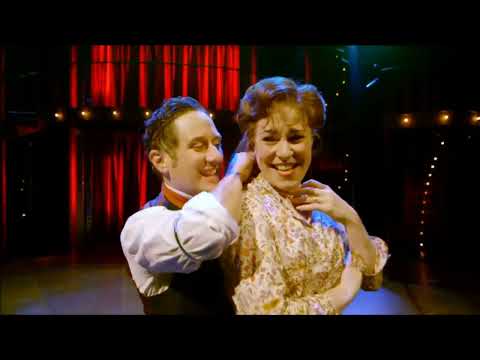
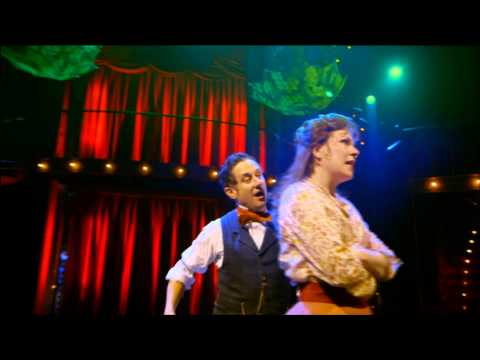
Where it plays: Opening frame; Barnum addresses us like customers under the tent (presentational).
Why it matters: Sets the rules: truth is elastic if the show delights. - “The Colors of My Life” — Barnum & Chairy
Where it plays: Early Act I confession-duet (book ballad).
Why it matters: Marriage in counterpoint—his neon palette vs. her grayscale pragmatism. - “Museum Song” — Barnum
Where it plays: Building the American Museum; rapid-fire patter as exhibits pile up.
Why it matters: Musicalized salesmanship; breath control as character work. - “Bigger Isn’t Better” — Tom Thumb
Where it plays: Tom Thumb’s showcase (spotlit solo).
Why it matters: Contradicts Barnum’s scale obsession with wit and bounce. - “Love Makes Such Fools of Us All” — Jenny Lind
Where it plays: Lind’s concert set-piece (onstage performance within the show).
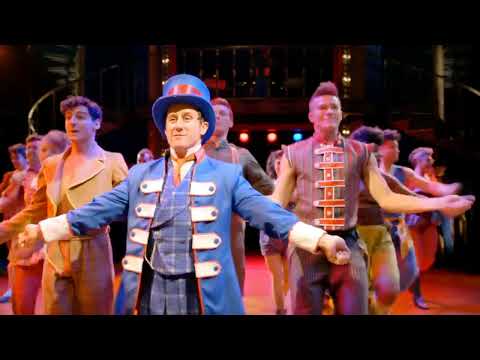
Why it matters: Virtuosic poise; complicates Barnum’s temptations. - “Come Follow the Band” — Ensemble
Where it plays: Act II parade energy (processional).
Why it matters: A civic drumline for ambition—irresistible momentum. - “Black and White” — Charity, Barnum & Ensemble
Where it plays: Bridgeport politics and compromise.
Why it matters: March-to-hymn shifts mirror Barnum’s moral calculus. - “Join the Circus” — Barnum, Bailey & Ensemble
Where it plays: Late-show pivot to the big-top partnership (11-o’clock propulsion).
Why it matters: The dream crystallizes; the band finally matches the boast. - “Out There” — Barnum
Where it plays: Transitional solo about risk and reach.
Why it matters: Often paired with a bravura circus feat onstage; the album preserves the nerve, not the wire.
Music–Story Links (characters & plot beats as connected to songs)
- The pitchman’s thesis arrives first: “Sucker Born” trains us to applaud the con—so later we notice when the con costs someone.
- Chairy’s calm in “Colors” doesn’t cancel Barnum’s dazzle; it frames it. Their marriage is the show’s key modulation.
- “Museum Song” is breathless because the enterprise is—Barnum hustles, and the patter literally shortens his breath.
- “Come Follow the Band” weaponizes joy: parades recruit; the number sells Barnum’s dream to the town and to us.
- “Join the Circus” converts private longing into public decision; the partnership with Bailey clicks into place on the downbeat.
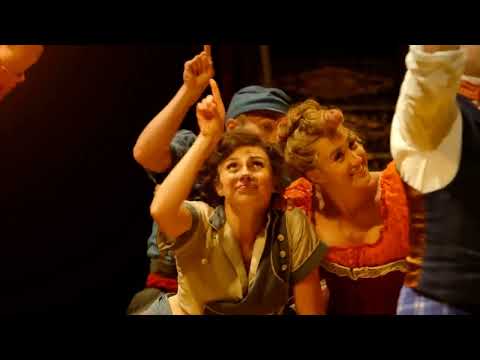
How It Was Made (supervision, score, behind-the-scenes)
- Creators: Cy Coleman (music), Michael Stewart (lyrics), Mark Bramble (book).
- The Broadway album, then the 2002 refresh: Recorded in 1980 at Columbia’s 52nd Street Studios; remastered and reissued on CD in 2002 by Sony Classical.
- Sound & shape: Orchestrations by Hershy Kay fold circus brass into theatre rhythm sections; Peter Howard conducts with parade snap and ballroom lift.
- Revisions in later productions: A 2013 UK revision introduced “Barnum’s Lament” (often replacing “The Prince of Humbug”) and updated orchestrations.
- About that tightrope: The original run famously featured a live wire-walk; later stagings shift the feat to different musical moments.
Reception & Quotes
“Dazzling… a gleeful tribute to the circus showman.” Clare Brennan
“All very jolly… a razzle-dazzle entertainment.” Michael Billington
“This one will have even your most long-dormant foot tap-tap-tapping.” Peter Filichia
Technical Info
- Title: Barnum (Original Broadway Cast Recording) — 2002 Remaster
- Year / Type: 2002 / musical (cast recording)
- Composers & Writers: Cy Coleman (music); Michael Stewart (lyrics); Mark Bramble (book)
- Music direction & orchestration: Peter Howard (music director/conductor); Hershy Kay (orchestrations)
- Recording details: 1980, Columbia 52nd Street Studios (NYC)
- Label / Release: Sony Classical CD remaster (U.S. release June 2002; remaster credits include Didier C. Deutsch & Darcy M. Proper)
- Selected notable numbers: “There Is a Sucker Born Ev’ry Minute,” “The Colors of My Life,” “Museum Song,” “Come Follow the Band,” “Black and White,” “Join the Circus,” “Love Makes Such Fools of Us All”
- Availability: Widely issued on CD and digital services; original 1980 and West End recordings also circulate
- Revision note: Some post-2013 productions include “Barnum’s Lament” (not on the 2002 Broadway album)
September, 26th 2025
A-Z Lyrics Universe
Popular lyrics
Defying Gravity
Cynthia Erivo Popular
Ariana Grande Horsepower
Post Malone Ain't No Love in Oklahoma
Luke Combs Good Riddance (Time of Your Life)
Green Day Bye Bye Bye
*NSYNC You're the One That I Wan
John Travolta & Olivia Newton-John I Always Wanted a Brother
Braelyn Rankins, Theo Somolu, Kelvin Harrison Jr. and Aaron Pierre The Power of Love
Frankie Goes to Hollywood Beyond
Auli’i Cravalho feat. Rachel House MORE ›
Cynthia Erivo Popular
Ariana Grande Horsepower
Post Malone Ain't No Love in Oklahoma
Luke Combs Good Riddance (Time of Your Life)
Green Day Bye Bye Bye
*NSYNC You're the One That I Wan
John Travolta & Olivia Newton-John I Always Wanted a Brother
Braelyn Rankins, Theo Somolu, Kelvin Harrison Jr. and Aaron Pierre The Power of Love
Frankie Goes to Hollywood Beyond
Auli’i Cravalho feat. Rachel House MORE ›
New soundtracks
GOAT
Supergirl
Avatar: Fire and Ash
Nativity 2: Danger in the Manger!
How to Train Your Dragon (Movie)
Wicked: For Good. The Original Score
Wicked: For Good
Candyman
From the World of John Wick. Ballerina
Kiss of the Spider Woman (Movie)
Sinners
TRON: Ares
F1 The Album
Red Clay
Zootopia 2
ZOMBIES 4: Dawn of the Vampires
KPop Demon Hunters
MORE ›
Lyrics / song texts are property and copyright of their owners and provided for educational purposes only.