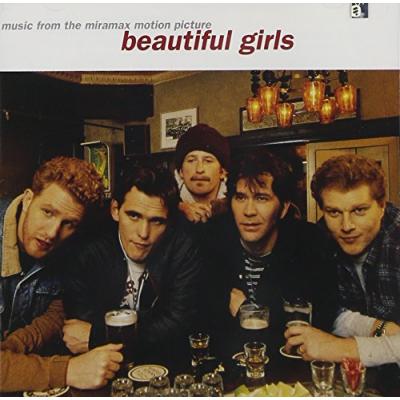
"Beautiful Girls" Soundtrack Lyrics
Movie • 1996
Track Listing
Gift, Roland
Afghan Whigs
Howlin' Maggie
Paul, Billy
Satchel
Isaak, Chris
Droge, Pete & The S
Ween
Afghan Whigs
Spinners
Kiss
Floyd, King
The Diamonds
Diamond, Neil
"Beautiful Girls" Soundtrack Description
Questions and Answers
- Is there an official soundtrack album?
- Yes — Beautiful Girls: Music From The Miramax Motion Picture (Elektra, 1996). It collects key needle-drops but not every song heard in the film.
- Who composed the original score?
- David A. Stewart (of Eurythmics) composed the score, giving the drama a warm, lightly electric undertow.
- What song everyone sings in the bar?
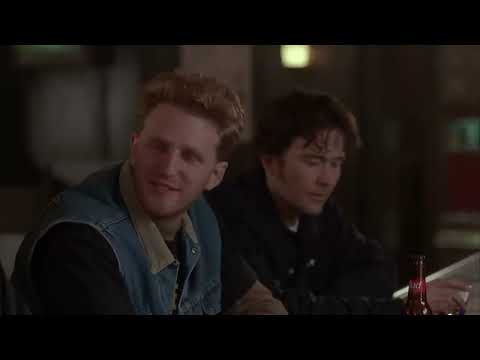
- Neil Diamond’s “Sweet Caroline” leads the big bar sing-along — a moment that doubles as a town-wide group therapy session.
- What plays over the end credits?
- Chris Isaak’s “Graduation Day” appears as a closing grace note in several releases and listings of the film’s music.
- Which track scores Paul’s snowy driveway gesture?
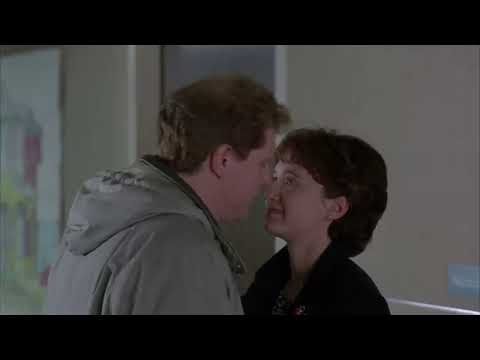
- KISS’s “Beth” accompanies Paul’s romantic misfire as he clears Jan’s driveway — both tender and a tad delusional.
- Is Pete Droge’s “Beautiful Girl” actually in the movie?
- Yes. It’s featured prominently and was co-written with David A. Stewart; it also appears on the official album.
Additional Info
- The official CD was issued by Elektra in 1996 (catalog no. 61888-2), pairing ’70s soul and classic-rock with ’90s alt acts.
- Amanda Scheer-Demme is credited as Music Supervisor; her tastemaking fingerprints are all over the film’s bar-band DNA.
- Several cues in the film don’t appear on the album (a typical ’90s move); a notable example: a Rolling Stones track referenced by fans.
- “Beautiful Girl” by Pete Droge & The Sinners — co-written with score composer David A. Stewart — acts like a mission statement for the film’s wistful mood.
- That “Sweet Caroline” sing-along? It landed the year before the song became a Fenway Park staple (as reported by Rolling Stone).
- The album sequences Chris Isaak next to Afghan Whigs and Ween — a time-capsule of mid-’90s eclecticism (according to Elektra’s release notes and retailer listings).
Overview
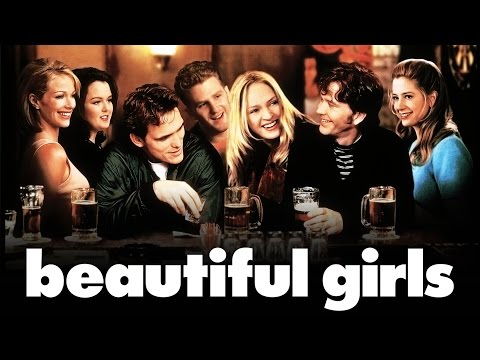
Why does a small-town bar sound like a jukebox from three decades at once? Because Beautiful Girls is about crossroads — thirty is looming, winter won’t let up, and old crushes still burn. The soundtrack matches that inner weather: warm soul to soften the edges, classic rock to flex nostalgia, and a few ’90s alt cuts that say, “we’re not kids anymore, but we’re not settled either.”
The selections do double duty. Some tracks are diegetic — the bar piano, the jukebox, the reunion dance — binding characters together in public rituals. Others float in from the film’s point of view, like gently electrified score motifs from David A. Stewart that cushion the bruises. Put simply: the music lets these people say things they cannot quite say to each other.
Genres & Themes
- ’70s Soul & Philly Groove → vulnerability with swagger; it’s how old friends try optimism on for size.
- Classic Rock Slow-burners → aging bravado; those tracks prop up denial, then quietly puncture it.
- Bar-piano standards / sing-alongs → communal therapy; everyone’s got a part, even if they’re off-key.
- ’90s Alt & Indie → contemporary doubt; newer cuts score the uneasy step into adulthood.
- Warm, tastefully electric score → interior monologue; Stewart’s textures keep the film from tipping into cynicism.

Key Tracks & Scenes
“Sweet Caroline” — Neil Diamond
Where it plays: Stinky’s bar, mid-film; Willie moves from talking to playing, and the whole town piles into the chorus (diegetic).
Why it matters: A public sing-along that blasts through awkwardness — a ritual that makes strangers into a choir.
“Be for Real” — The Afghan Whigs
Where it plays: Andera and Paul dance at the bar to tweak Jan (diegetic).
Why it matters: Desire weaponized as performance; the Whigs’ cover drips with taunting intimacy.
“Beth” — KISS
Where it plays: Over Paul’s grand (and misguided) driveway gesture (non-diegetic use against a diegetic world).
Why it matters: The ballad’s sincerity underlines Paul’s love-as-cosplay — poignant and a little pathetic.
“Graduation Day” — Chris Isaak
Where it plays: Closing stretch / end credits in common cue lists.
Why it matters: Nostalgia without the hangover; Isaak reframes endings as commencements.
“Beautiful Girl” — Pete Droge & The Sinners
Where it plays: A featured placement early; its chiming guitars set the film’s wistful register.
Why it matters: Title-echo and tone-setter; a promise that the film keeps returning to.
“Could It Be I’m Falling in Love” — The Spinners
Where it plays: At the reunion/bar milieu as couples reshuffle (diegetic).
Why it matters: Smooth optimism for messy choices — the film’s thesis in four minutes.
“I Ran (So Far Away)” — A Flock of Seagulls
Where it plays: Party/bar needle-drop that time-stamps these friends’ shared history (diegetic).
Why it matters: New wave gloss as memory glue; it’s less about lyrics than about era.
“Me and Mrs. Jones” — Billy Paul
Where it plays: As complicated romances surface; smooth, guilty velvet.
Why it matters: The movie keeps asking: what’s romance, what’s habit, and what’s an excuse?
Music–Story Links (characters & plot beats as connected to songs)
- Group → “Sweet Caroline”: the chorus collapses distance; everyone admits they want belonging more than they want to be cool.
- Paul → “Beth”: borrowing someone else’s devotion anthem can’t manufacture maturity; the song exposes his arrested development.
- Willie & Andera → “Be for Real”: flirtation becomes theatre; the needle-drop frames their self-mythologizing.
- Town memory → “I Ran”: nostalgia that still stings; the track timestamps a misspent confidence.
- Ensemble → “Could It Be I’m Falling in Love”: Motown warmth offers a safe room where people risk small truths.
How It Was Made (supervision, score, behind-the-scenes)
Director Ted Demme leaned into community spaces — especially the bar — so music had to feel lived in. Music Supervisor Amanda Scheer-Demme filled those rooms with era-crossing staples and prickly ’90s cuts, while David A. Stewart’s score threaded electric warmth between scenes. Clearances favored songs that characters might actually pick on a jukebox or play at a reunion, which keeps the film’s big set-pieces (like the sing-along) credible.
The official album mirrors that intent: Ween sits next to The Spinners; Afghan Whigs cover classic soul; Chris Isaak waves everyone out the door. It’s a mixtape that could plausibly be stacked on the bar, not a studio-polished greatest-hits disc (as stated in the 1996 Elektra release materials and common retailer notes).
Reception & Quotes
Critics praised the ensemble chemistry; the soundtrack was often singled out by fans for how “real” it felt — like a night out that accidentally turned meaningful. The bar sing-along has since lived beyond the film in memory and memes (according to NME magazine).
“What’s nicest is how the film treasures the good feelings people can have for one another.” Roger Ebert
“Portman is the movie’s most poignant and witty presence.” The Washington Post
“Warm, thoughtful… buoyed by an excellent cast.” Rotten Tomatoes consensus
Technical Info
- Title: Beautiful Girls — Music From The Miramax Motion Picture (album); Beautiful Girls (film)
- Year: 1996 (film & album release window)
- Type: Movie soundtrack (various artists) + original score
- Composer (score): David A. Stewart
- Music Supervision: Amanda Scheer-Demme
- Label (album): Elektra (U.S.)
- Official album status: Available digitally via major retailers; CD issued in 1996. Not every film cue appears on the album.
- Selected notable placements (in film): “Sweet Caroline” (bar sing-along); “Be for Real” (provocative dance); “Beth” (snowy driveway); “Graduation Day” (closing mood); “Beautiful Girl” (tone-setting feature); “Could It Be I’m Falling in Love” (reunion groove).
- Release context: Miramax film, U.S. theatrical release February 9, 1996.
Canonical Entities & Relations
| Subject | Relation | Object |
|---|---|---|
| Ted Demme | directed | Beautiful Girls (1996 film) |
| Scott Rosenberg | wrote | Beautiful Girls (screenplay) |
| David A. Stewart | composed | Original score for Beautiful Girls |
| Amanda Scheer-Demme | music-supervised | Beautiful Girls (film) |
| Neil Diamond | performed | “Sweet Caroline” (bar sing-along in film) |
| Pete Droge & The Sinners | performed | “Beautiful Girl” (featured in film & on album) |
| The Afghan Whigs | performed | “Be for Real” (diegetic dance scene) |
| KISS | performed | “Beth” (used over Paul’s gesture) |
| Chris Isaak | performed | “Graduation Day” (end-credits mood) |
| The Spinners | performed | “Could It Be I’m Falling in Love” (reunion/bar placement) |
| Miramax Films | distributed | Beautiful Girls (1996) |
| Elektra Records | released | Beautiful Girls: Music From The Miramax Motion Picture (1996 CD) |
| Knights Ridge, Massachusetts | is | Fictional setting where diegetic music scenes occur |
Sources: IMDb Soundtracks; Apple Music album listing; Discogs release notes; Amazon retailer page; Ringostrack title page; MoviesOST scene listings; Wikipedia film entry; Rolling Stone & NME coverage of “Sweet Caroline.”
October, 23rd 2025
A-Z Lyrics Universe
Cynthia Erivo Popular
Ariana Grande Horsepower
Post Malone Ain't No Love in Oklahoma
Luke Combs Good Riddance (Time of Your Life)
Green Day Bye Bye Bye
*NSYNC You're the One That I Wan
John Travolta & Olivia Newton-John I Always Wanted a Brother
Braelyn Rankins, Theo Somolu, Kelvin Harrison Jr. and Aaron Pierre The Power of Love
Frankie Goes to Hollywood Beyond
Auli’i Cravalho feat. Rachel House MORE ›