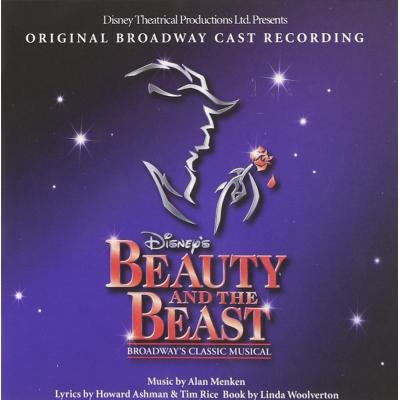
"Beauty and the Beast (Musical)" Soundtrack Lyrics
Musical • 1994
Track Listing
"Beauty and the Beast Musical" Soundtrack Description
Questions and Answers
- Is there an official soundtrack album for the 1994 Broadway musical?
- Yes—the Original Broadway Cast Recording (Walt Disney Records) released in 1994 features Susan Egan, Terrence Mann, Burke Moses, Gary Beach, and more.
- Which numbers were written specifically for the stage version?
- New songs include “Home,” “If I Can’t Love Her,” “Me,” “No Matter What,” and “Maison des Lunes.” “Human Again” (first conceived for the film) was also staged.
- What’s the album’s focus compared to the 1991 film soundtrack?
- It retains film classics (“Belle,” “Gaston,” “Be Our Guest,” “Beauty and the Beast”) while expanding character arcs—especially the Beast and Belle—through added ballads.
- Was “A Change in Me” on the original 1994 album?
- No. It was added to the show in 1998 for Toni Braxton; it’s not on the 1994 cast album, though Susan Egan later recorded it for her solo release.
- Did the cast album receive industry recognition?
- Yes—the Original Broadway Cast Recording was certified Gold by the RIAA in 2000 (according to Playbill).
- Where did the Broadway production premiere and when?
- It opened at the Palace Theatre on April 18, 1994; later moved to the Lunt-Fontanne Theatre, running until July 29, 2007.
Additional Info
- The OBC album’s producers are Alan Menken, Howard Ashman, and Tim Rice—an unusual triple credit that mirrors the score’s two-lyricist history.
- “If I Can’t Love Her” became the Beast’s signature stage ballad and a vocal showpiece for Terrence Mann.
- “Human Again,” cut from the 1991 film, found a home on stage and later resurfaced in the film’s 2002 special edition.
- Toni Braxton’s 1998 Belle debut prompted the new act-two song “A Change in Me,” premiered on daytime TV—pure Broadway-meets-pop synergy (as reported by Playbill).
- The album was released on CD and cassette in 1994 and has been widely available digitally ever since.
- Music supervision on Broadway was by David Friedman, aligning vocal arrangements with Disney’s orchestral sheen.
- The show helped kick the door open for Disney Theatrical’s later mega-hits—think The Lion King (as stated in Vanity Fair’s industry lookback).
Overview
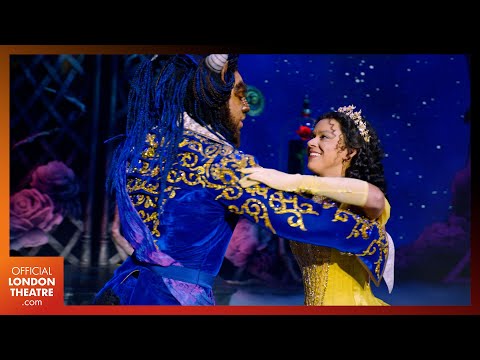
Why does a new ballad for a cursed prince feel like the missing puzzle piece? Because the 1994 Beauty and the Beast stage score leans into character psychology. The Original Broadway Cast album keeps the film’s melodic spine—Menken’s earworms and Ashman’s wit—then opens new rooms in the castle: Belle’s homesickness in “Home,” the Beast’s despair in “If I Can’t Love Her,” and the village’s comic bluster in “Me.”
On record, you hear the translation from animated charm to Broadway musculature: bigger orchestrations, punchier dance breaks, and clearer motivations. The result is a soundtrack that doesn’t just replay nostalgia; it documents Disney’s first modern foray into Broadway, a pivot that altered the commercial map of musical theatre (per Variety’s historical coverage and Disney’s D23 retrospective).
Genres & Themes
- Show-tune classicism → transformation: Sweeping waltzes and reprises mirror the curse lifting—musically and emotionally.
- Comic patter & music-hall → village satire: “Gaston” and “Me” lampoon small-town bravado.
- Pop ballad language → interior monologue: “Home” and “If I Can’t Love Her” translate fairy tale archetypes into first-person confession.
- Production numbers → spectacle-as-hospitality: “Be Our Guest” weaponizes tap-and-brass showmanship to make kindness feel combustible.
Key Tracks & Scenes
“Belle” — Ensemble
Where it plays: Opening tableau in the provincial town; Belle’s bookish routine vs. village gossip (diegetic snippets within a non-diegetic frame).
Why it matters: Establishes the town’s rhythm and Belle’s outsider status; the album’s counterpoint showcases Disney’s Sondheim streak.
“Gaston” — Gaston, LeFou & Company
Where it plays: Tavern sequence after Belle rejects Gaston; clinking-mugs choreography.
Why it matters: A comic masculinity anthem that telegraphs Act II conflict; the cast album’s percussion pops.
“Home” — Belle
Where it plays: Early in Act I after Belle takes her father’s place at the castle (non-diegetic solo).
Why it matters: A resilient reframe: physical captivity vs. emotional agency. Egan’s vocal on the album is a blueprint for later Belles.
“If I Can’t Love Her” — Beast
Where it plays: Act I finale; the Beast confronts his breaking point.
Why it matters: The new heart of the stage score—an aria of self-knowledge that justifies the musical’s existence beyond the film.
“Human Again” — Castle Staff & Belle
Where it plays: Mid-to-late Act II; the household dreams of restoration.
Why it matters: World-building through choral optimism; a number with a rare film-to-stage-to-film journey.
Track–Moment Index (approximate, not exhaustive)
| Song | Scene / Moment | Approx. Placement | Diegetic? | Notes |
|---|---|---|---|---|
| Belle | Town wake-up, gossip counterpoint | Act I, opening | Mixed | Introduces core motifs |
| Home | Belle processes the bargain | Act I, early | No | New for stage |
| Gaston | Tavern boasts escalate | Act I, mid | Yes (in-universe song) | Dance break expanded |
| If I Can’t Love Her | Beast’s crisis soliloquy | Act I, finale | No | Stage-defining ballad |
| Human Again | Enchanted staff dream of release | Act II, mid | No | Restored concept number |
Music–Story Links (characters & plot beats)
- Belle’s agency (“Home”) → resilience arc: The lyric turns captivity into choice, reframing later acts of empathy.
- Beast’s interiority (“If I Can’t Love Her”) → earned transformation: The aria sets stakes beyond cosmetics; love becomes discipline, not a lightning bolt.
- Village chorus (“Gaston”) → mob logic: Harmonic unison forecasts Act II’s “Kill the Beast” mentality—groupthink set to a drinking song.
- Household optimism (“Human Again”) → community stakes: The servants’ dreams give the curse a social cost, not just a romance penalty.
How It Was Made (supervision, score, behind-the-scenes)
The score is by Alan Menken, with lyrics by Howard Ashman (film carryovers) and Tim Rice (new stage material). Music supervision on Broadway was by David Friedman, whose vocal arrangements shaped the show’s Disney-to-Broadway blend. The album’s producers are Menken, Ashman, and Rice—fitting for a property bridging two lyricists’ eras.
“A Change in Me” arrived in 1998 when Toni Braxton joined as Belle; she premiered it on The Rosie O’Donnell Show before it entered the running order (according to Playbill). The musical first opened at the Palace Theatre on April 18, 1994, later moving to the Lunt-Fontanne; the cast recording preserved that inaugural company within weeks of opening (per IBDB and album documentation). Disney’s D23 retrospective situates the show as Disney Theatrical’s foundation for later global hits, with the creative team revisiting the material in reimagined tours.
Reception & Quotes
Critics pegged the album/show as more than a film souvenir; the added ballads gave the story operatic stakes. The recording ultimately went Gold in the U.S., and the property’s stage life stretched over a decade on Broadway (according to Playbill and IBDB). Recent touring revivals continue to highlight the score’s durability.
“The animated film’s score, songs and sentiment remain intact—this time brought to life onstage.” Los Angeles Times
“Froufrou at times, but with a cast to die for and a smashing score.” Los Angeles Times
“Disney’s first Broadway venture reset the industry math.” Variety
Availability: The 1994 OBC album is on major digital platforms; original releases were CD and cassette. Regional cast recordings (Australia, Vienna) followed. (as noted by D23 and Playbill)
Technical Info
- Title: Beauty and the Beast Musical — Original Broadway Cast Recording
- Year: 1994
- Type: Musical (cast album)
- Composers/Lyricists: Alan Menken (music); Howard Ashman & Tim Rice (lyrics)
- Book (show): Linda Woolverton
- Principal Cast on Album: Susan Egan (Belle), Terrence Mann (Beast), Burke Moses (Gaston), Gary Beach (Lumière), Beth Fowler (Mrs. Potts), Tom Bosley (Maurice)
- Music Supervision (Broadway): David Friedman
- Label: Walt Disney Records
- Original Release Formats: CD, Cassette; later digital
- Certification: RIAA Gold (Dec 7, 2000)
- Notable Stage-Only Additions: “Home,” “If I Can’t Love Her,” “Me,” “No Matter What,” “Maison des Lunes,” “Human Again”; “A Change in Me” added in 1998 (not on OBC album)
- Broadway Run (context): Opened April 18, 1994 (Palace Theatre); transferred to Lunt-Fontanne; closed July 29, 2007
Canonical Entities & Relations
| Subject | Verb | Object |
|---|---|---|
| Alan Menken | composed music for | Beauty and the Beast (musical) |
| Howard Ashman | wrote lyrics for | Beauty and the Beast (film songs used in the musical) |
| Tim Rice | wrote new lyrics for | Beauty and the Beast (musical) |
| Linda Woolverton | wrote book for | Beauty and the Beast (musical) |
| David Friedman | served as | Music Supervisor (Broadway production) |
| Walt Disney Records | released | Original Broadway Cast Recording (1994) |
| Palace Theatre (Broadway) | hosted opening of | Beauty and the Beast (1994) |
| Lunt-Fontanne Theatre (Broadway) | hosted transfer of | Beauty and the Beast (1999–2007) |
Sources: IBDB; Playbill; Variety; D23; Los Angeles Times; Disney Wiki (Fandom) for release minutiae; Discogs; Wikipedia (cross-checked).
October, 23rd 2025
A-Z Lyrics Universe
Cynthia Erivo Popular
Ariana Grande Horsepower
Post Malone Ain't No Love in Oklahoma
Luke Combs Good Riddance (Time of Your Life)
Green Day Bye Bye Bye
*NSYNC You're the One That I Wan
John Travolta & Olivia Newton-John I Always Wanted a Brother
Braelyn Rankins, Theo Somolu, Kelvin Harrison Jr. and Aaron Pierre The Power of Love
Frankie Goes to Hollywood Beyond
Auli’i Cravalho feat. Rachel House MORE ›