Soundtracks:  A B C D E F G H I J K L M N O P Q R S T U V W X Y Z #


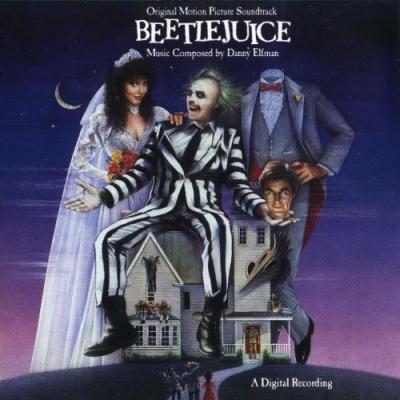
Beetlejuice Album Cover

"Beetlejuice" Soundtrack Lyrics

Movie • 1988

Track Listing


"Beetlejuice" Soundtrack Description

1988 Beetlejuice theatrical trailer frame: green title card with warped typography over black
Beetlejuice (1988) Soundtrack Trailer, 1988

Questions and Answers

Is there an official soundtrack album for the 1988 movie?
Yes—Beetlejuice (Original Motion Picture Soundtrack), released June 7, 1988 by Geffen Records. It’s primarily Danny Elfman’s score plus two Harry Belafonte recordings.
Which Belafonte songs are actually used on-screen?
“Day-O (The Banana Boat Song)” powers the dinner-possession scene; “Jump in the Line (Shake, Senora)” lifts the end celebration. Two other Belafonte tracks are heard in-film but not on the original album.
What music plays during the dinner-possession set piece?
Harry Belafonte’s “Day-O” blares while the guests are puppeted into a giddy calypso routine—one of the film’s signature moments.
Who composed the score, and what does it sound like?
Danny Elfman wrote a carnival-gothic score—oompah rhythms, pipe-organ color, and wild orchestral glissandi that scream “Burton” before the credits finish.
Did the album chart or win awards?
It peaked at No. 118 on the Billboard 200 and earned a Saturn Award nomination for Best Music; Elfman also received a BMI Film Music Award.
Is there a later expanded or remastered edition?
Yes—multiple reissues, including a high-profile vinyl remaster for the 30th anniversary, plus various label pressings since the original 1988 release.

Additional Info

  • The album was issued on LP, cassette, and CD in 1988; later vinyl reissues kept the score in circulation for new listeners (as noted by music-press retrospectives).
  • The soundtrack album includes “Day-O” and “Jump in the Line,” but not the other two Belafonte cuts heard in the film.
  • Elfman’s “Main Titles” became a calling card for his Burton collaborations, arriving between Pee-wee’s Big Adventure and Batman.
  • The movie’s complete score (with clean cues) appears as an isolated music track on some DVD/Blu-ray editions—handy for deep listening.
  • That dinner scene? Catherine O’Hara’s precision lip-sync sells the joke; the cue choice was a masterstroke (according to Pitchfork’s feature on the calypso centerpiece).
Trailer frame: the Maitlands in the attic with miniature town—hint of whimsical macabre tone
Attic miniatures, maximal mischief: Elfman’s tone in one image.

Overview

Why does a calypso sing-along crash a haunted dinner party? Because Beetlejuice plays horror for giggles and grief for bounce, and the soundtrack follows suit. Danny Elfman’s score pinballs between circus menace and pipe-organ pomp, while Harry Belafonte’s vintage sides swing the doors open to pure anarchic joy.

Structurally, the album is a compact ride: headline set-pieces (“Main Titles,” “The Afterlife,” “The Incantation”) bracket the Belafonte injections so the tone can pivot from ghoul to goof at will. The result is a musical world where the afterlife is equal parts carnival and conga line. (as stated in Apple Music’s editorial blurb and in several critic roundups)

Genres & Themes

  • Calypso classics ↔ Possession-as-prank: Belafonte’s “Day-O” and “Jump in the Line” turn hauntings into party tricks—joy weaponized.
  • Carnival-gothic orchestral ↔ Comic dread: Brass stabs, bass clarinet growls, and hurdy-gurdy textures make the afterlife sound like a midway at midnight.
  • Waltz & oompah pastiche ↔ Bureaucratic absurdity: The Netherworld waiting room cues treat red tape like vaudeville.
  • Pipe-organ grandeur ↔ Supernatural swagger: “Main Titles” announces a trickster spirit with cathedral pomp and a smirk.
Trailer moment: sandworm attack across the dunes—rhythmic, stop-motion chaos
Sandworms move in rhythm; the score does, too.

Key Tracks & Scenes

“Main Titles” — Danny Elfman
Where it plays: Opening credits over the miniature town; sets the film’s carnival-gothic pulse (~00:00–00:02).
Why it matters: Establishes the mischievous motif Elfman keeps twisting all film long.

“The Afterlife” — Score
Where it plays: Netherworld waiting room and bureaucracy montages (~00:25–00:32).
Why it matters: Vaudeville meets horror-comedy; woodwinds and bones-rattle percussion turn paperwork into slapstick.

“Day-O (The Banana Boat Song)” — Harry Belafonte
Where it plays: Dinner party possession; guests lip-sync while fighting their own bodies (~00:46–00:50).
Why it matters: The movie’s iconic tonal flip—terror via irresistible groove. (according to Time-adjacent pop-culture coverage and industry retrospectives)

“The Incantation” — Score
Where it plays: Seance goes wrong; Lydia bargains with the chaotic ghost (~01:12–01:16).
Why it matters: Organ-driven dread that keeps the comedy sharp rather than grim.

“Jump in the Line (Shake, Senora)” — Harry Belafonte
Where it plays: Final celebration; Lydia levitates in the foyer to a post-haunting conga (~01:25–01:27).
Why it matters: Releases the pressure valve and sends the movie out grinning; the cue later becomes shorthand for the film itself. (according to ScreenRant’s soundtrack explainer)

Track–Moment Index (approximate guide)
Song/CueSceneApprox. TimecodeDiegesisNotes
Main TitlesMiniature-town flyover~00:00–00:02ScoreSignature Elfman carnival motif
The AfterlifeWaiting room / bureaucracy~00:25–00:32ScoreComic woodwinds, jaunty pulse
Day-O (The Banana Boat Song)Dinner possession~00:46–00:50Source/DiegeticCalypso needle-drop drives choreography
The IncantationSeance chaos~01:12–01:16ScoreOrgan & choir color
Jump in the Line (Shake, Senora)Finale celebration~01:25–01:27Source/DiegeticLydia floats; pure release

Music–Story Links (characters & plot beats as connected to songs)

  • Domestic normal → supernatural prank: “Day-O” turns a tense dinner into gleeful humiliation—Beetlejuice’s chaos without Beetlejuice on screen.
  • Red tape in the hereafter: “The Afterlife” recasts dread as bureaucracy; the jaunty gait makes death feel like a DMV with fangs.
  • Temptation and trickery: Organ swells in “The Incantation” score the seance’s slide from help to havoc.
  • Joy as exorcism: “Jump in the Line” reframes haunting as house-party; the Deetz home finally breathes.
Trailer image: Lydia Deetz framed against the staircase banister—setup for the finale dance
From gloom to boom: Lydia’s finale float needs a dance track.

How It Was Made (supervision, score, behind-the-scenes)

Composer Danny Elfman built a punchy, “unplayable-sounding” (his joke) carnival score to match Tim Burton’s macabre whimsy. Early cues locked tone so tightly that the film’s identity snaps into place by the first bars of “Main Titles.” The Belafonte choices came via production brain-trust and cast taste, giving a left-field calypso spine to an otherwise orchestral world. (according to Pitchfork’s feature and later interviews with Elfman)

Release strategy was old-school: Geffen issued the album in summer 1988 across formats; later, anniversary vinyl pressings kept the cult fire burning. The movie’s home-video releases even tucked an isolated score track onto some discs—catnip for film-music nerds. (as reported in film and soundtrack reference entries)

Reception & Quotes

Retro critics and fans keep circling back to two truths: Elfman’s score codified the Burton–Elfman sound, and the Belafonte drops made the film immortal at parties. The album saw modest but real chart action and award nods that cemented its afterlife. (according to Billboard chart records and a 1989 New York Times column)

“A calypso needle-drop so audacious it defines the movie’s personality.” Pop-culture retrospectives
“Elfman’s ‘Main Titles’ is carnival menace—instantly iconic.” Film-music commentary
“Sometimes the scariest move is a conga line.” Critic quip

Technical Info

  • Title: Beetlejuice (Original Motion Picture Soundtrack)
  • Year: 1988
  • Type: Movie soundtrack
  • Composer: Danny Elfman
  • Key on-screen songs: “Day-O (The Banana Boat Song)” and “Jump in the Line (Shake, Senora)” by Harry Belafonte
  • Label: Geffen Records (original 1988 issue; later reissues incl. anniversary vinyl)
  • Charts & awards: Billboard 200 peak No. 118; Saturn Award nomination (Best Music); BMI Film Music Award (Elfman)
  • Notable availability: Some DVD/Blu-ray editions include an isolated score track; streaming editions of the album are widely available.

Canonical Entities & Relations

SubjectRelationObject
Danny ElfmancomposedBeetlejuice (1988) score
Harry Belafonteperformed“Day-O (The Banana Boat Song)”; “Jump in the Line (Shake, Senora)”
Geffen RecordsreleasedBeetlejuice soundtrack (1988)
Tim BurtondirectedBeetlejuice (1988)
Michael Keatonstarred asBetelgeuse (Beetlejuice)
Catherine O’Haraperformed to“Day-O” in dinner possession sequence
Trailer stinger: Beetlejuice smirking toward camera—mischief telegraphed
The grin says it all; the orchestra finishes the sentence.

Sources: Wikipedia (film & soundtrack entries); New York Times (1989 column cited in discographies); Billboard; Pitchfork; ScreenRant; Apple Music editorial; IMDb Soundtracks; Tim Burton/Warner fan wikis for release minutiae.

Harry Belafonte, who performed pair of songs here (Day-O and Jump In Line (Shake, Shake Senora)) is not only a singer, but also an actor, a writer of songs, producer, activist and humanitarian. Lately he became a politician acting in Obama’s administration. Who would doubt that such a brilliantly dark and funny movie, entertaining and fabulous, full of irony and stunning characters, would be filmed by someone other than Tim Burton. This happened back in 1988, but since then it is considered one of the best motion pictures of Halloween’s theme and for same parties. It is often referred to, and in general, it certainly served a springboard for the career of this genius, in many aspects, director. No less excellent actors starring in it, many of whom have made or continue their starry careers: Alec Baldwin, Geena Davis, Michael Keeton, Catherine O'Hara, Jeffrey Jones, Winona Ryder (how amazingly beautiful she was young!). Harry Belafonte also acted as a voice of The Balladeer, but has not been specified in the credits. Ingenious Danny Elfman wrote the rest – instrumental – support, which is the vast majority. It is defiant, the same as movie (e.g., Beetle-Snake). With a budget of USD 15 mil, the film grossed in domestic box USD 73.7 million. The international distribution it did not have. The list of awards includes 1 Oscar’s nomination and 1 win, in 1988 (for the best makeup). We are totally agree with this Oscar, for the best make-up, when it comes to the protagonist – a playful demon named Beetlejuice, acted by Michael Keeton. Not only that. He played the same character, which is at one stand with Joker, but spiced him with own infernal jokes, being himself the character from the underworld. A pity that they did not give him the Oscar for the best performance of hell’s spoony!

October, 23rd 2025


A-Z Lyrics Universe

Lyrics / song texts are property and copyright of their owners and provided for educational purposes only.