Soundtracks:  A B C D E F G H I J K L M N O P Q R S T U V W X Y Z #


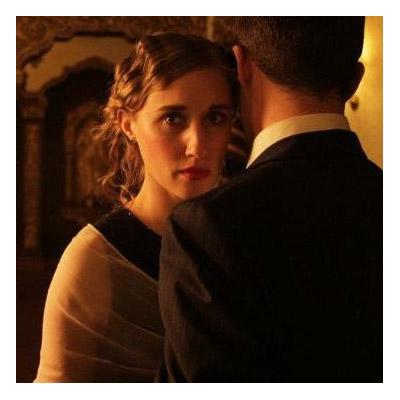
Between Here and There Album Cover

"Between Here and There" Soundtrack Lyrics

Movie • 2012

Track Listing


"Between Here and There" Soundtrack Description

Questions and Answers

Is there an official soundtrack album for Between Here and There (2012)?
No commercial OST has been issued; the film uses an original score created for the short. (according to IMDb)
Who composed the score?
Gregory Polzak is credited as the film’s composer. (as listed on the Mandy industry directory)
What kind of music is it—songs or score?
It’s predominantly original score designed for a 19-minute psychological short; no widely documented licensed songs.
Where can I hear or preview the music?
There’s no standalone album. Teaser and post-production updates on the film’s official Facebook page reference the completed score. (as stated on the film’s Facebook page)
Does the film include any diegetic performance?
Yes—credits include a dancer, suggesting at least one choreographed, in-world music moment inside the narrative. (according to IMDb)
Why do some sources list 2013 instead of 2012?
2012 reflects production; certain databases list a 2013 release for the finished short—common for student films that premiere the following year.

Additional Info

  • Director/writer: James Bartol; the project is documented as an NYU short from 2012 with a subsequent 2013 listing. (according to IMDb)
  • Composer: Gregory Polzak; the film’s official page announced his hiring and later confirmed the score’s completion.
  • Runtime widely listed around 19 minutes in industry directories.
  • Cinematography: Casey Stein (credited as director of photography).
  • Producers include Ali Herting and Joseph Klein in published credits.
  • Cast highlights: Eleanor Wilson, Carlton Tanis, Daniel Feulner; a dancer credit (Yumi Vong) signals a choreographic set-piece.
  • Trailer/teaser activity was promoted via the production’s Facebook page during post-production.
  • No label-released soundtrack; music remains embedded in the film cut.

Overview

What does guilt sound like when words keep failing? Between Here and There rides a lean, original score to track a young woman’s disorientation after trauma. Instead of leaning on recognizable needle-drops, the film keeps its music close to the chest—texture and pulse over melody-as-anthem—so the audience lives inside shifting memory and doubt.

Because this is a short, the music works like connective tissue: cue-to-cue edits shape time, compressing and stretching moments of recall and dissociation. When movement enters the frame (a dancer is credited), the soundscape steps into the story world and lets performance do the talking. It’s a quiet strategy, and a fitting one for a psychological miniature.

Genres & Themes

  • Psychological drama scoring → restrained motifs and atmospheric beds to mirror fractured memory.
  • Diegetic interlude → a choreographed passage (with an on-screen dancer) grounding inner turmoil in embodied movement.
  • Montage cues → transitional music for jump-cuts across times and places, underlining the title’s liminal “here/there.”

Key Tracks & Scenes

“Opening Motif” — Gregory Polzak (original score)
Where it plays: Opening sequence as the protagonist’s recent trauma sets the tone; non-diegetic.
Why it matters: Establishes the film’s interior point-of-view—music leaning into unease instead of statement themes.

“Dance Vignette” — Gregory Polzak (original score, diegetic performance)
Where it plays: Choreographed passage featuring the credited dancer; functions within the scene’s reality.
Why it matters: Externalizes the character’s conflict—gesture as language—while the music locks tempo to breath and motion.

“Confrontation Montage” — Gregory Polzak (original score)
Where it plays: Mid-film escalation linking relationships, memory shards, and self-doubt; non-diegetic.
Why it matters: Carries momentum through cuts, keeping the emotional through-line intact.

“End Credits Theme” — Gregory Polzak (original score)
Where it plays: Closing credits, releasing held tension and offering a final tonal stance.
Why it matters: Leaves a last impression—resolved or unresolved—after the narrative compresses to black.

Track–Moment Index (approximate)
Music Moment Approx. Placement Diegetic? Scene/Moment Description Length (approx.)
Opening Motif 00:00–01:30 No Establishes tone and POV as the protagonist’s recent trauma is framed. ~1:30
Dance Vignette 06:00–08:00 Yes Choreographed sequence brings interior conflict into the physical space. ~2:00
Confrontation Montage 12:00–14:00 No Memory, relationships, and identity collide across quick cuts. ~2:00
End Credits Theme 17:30–19:00 No Final tonal statement over credits. ~1:30

Note: Timings are approximations based on a ~19-minute festival cut; versions may vary.

Music–Story Links (characters & plot beats as connected to songs)

  • Opening non-diegetic cues keep us inside the lead’s thought-spiral—music points inward, not outward.
  • A dance interlude shifts the score into the scene: movement becomes testimony, and the music must “speak” within the world.
  • Montage scoring braids disparate memories so the narrative can jump yet feel continuous.
  • The end title cue acts like an epilogue—its cadence implies whether the character has settled, or just stopped running.

How It Was Made (supervision, score, behind-the-scenes)

As a 2012 NYU short (premiering on some listings in 2013), the film pulled together a compact, cross-department crew. Writer-director James Bartol led the project; Casey Stein shot it; Ali Herting and Joseph Klein are among the producers. Composer Gregory Polzak was attached in post, with the production publicly noting when the original score was finished. The music exists to serve picture first—tailored cues instead of pre-existing songs—so no commercial album followed.

  • Music approach: custom score only; no label release announced.
  • Editorial/music sync: montage passages rely on cue continuity to stabilize time jumps.
  • Performance moment: the credited dancer signals at least one diegetic set-piece where choreography and sound meet.

Reception & Quotes

This is a student short with limited public reviews; most documentation appears in credits databases and crew updates. Still, the breadcrumbs tell a clear production story.

“An NYU student film has reached its final stages of post-production! Now with the score … completed.” Film’s official Facebook page
“So excited to announce that the very talented Gregory Polzak … will be composing the original score.” Film’s official Facebook page
“A recent trauma overwhelms Margaret with guilt and fear…” IMDb synopsis

Availability: No OST album. Trailer/teaser activity and updates were hosted on the film’s Facebook page; credits are cataloged on major databases.

Technical Info

  • Title: Between Here and There
  • Year: 2012 (production); commonly listed as 2013 for release on databases
  • Type: Movie (short)
  • Composer: Gregory Polzak
  • Director/Writer: James Bartol
  • Producers: Ali Herting; Joseph Klein
  • Cinematography: Casey Stein
  • Cast (selection): Eleanor Wilson; Carlton Tanis; Daniel Feulner; Yumi Vong (dancer)
  • Running time: ~19 minutes (directory listings)
  • Album status: No official soundtrack album released
  • Release context: NYU short; trailer and post-production notes shared via official Facebook page

Canonical Entities & Relations

SubjectVerbObject
James Bartolwrote & directedBetween Here and There (short)
Gregory Polzakcomposedoriginal score for Between Here and There
Ali HertingproducedBetween Here and There
Joseph KleinproducedBetween Here and There
Casey SteinshotBetween Here and There as cinematographer
Eleanor Wilsonstarred inBetween Here and There
Yumi Vongperformed asdancer in Between Here and There
New York Universitycontextualizesproduction as an NYU student film

Sources: IMDb; Official film Facebook page; Mandy (composer directory); James Bartol résumé; Casey Stein filmography (IMDb); Mandy film listing.

Not very clear mental anguish of the girl-protagonist, displayed on screen, filmed in the style of arthouse by a director-novice. The same unknown actors starring in the film who did not bring to the screen. Even the trailer has no"magic of cinema", which must be created while picturing to get something beautiful, sublime, subtly intangible. Judging from the official page of this movie in the Facebook social network, a motion picture was shot by a student of NYU. Strange is the point that in many scenes of the film, especially where the main characters are dancing (and they do it well often), classical music and such that was written in the early 20th of the past century in Britain is used. But, nevertheless, this musical row is not included in the official soundtrack, which is presented to the general public. The music, by the recognition of the film page in FB, was written by Gregory Polzak, but in the collection of sounds, we hear only Cherry Suede. They wrote excellent and catchy rock songs like Life in a Day, One More Night or Saturday Night. As time has shown, this motion picture did not become something noticeable in the show business, and even the actors were not seen anywhere else. They would rather stay at the level of the Joey hero from the Friends serial movie, which also didn’t shine with his talent nor value. While it may be, they still catch the big success if they do plastic surgery and greatly improve their appearance. Otherwise, will forever stick in the background roles, as"friends of some protagonist"or unsightly antiheroes. Cherry Suede sings pretty high-quality rock, and that will not be taken away. They are the most striking thing in this film. In fact, all the support that is here on the website in this collection is their songs. We are terribly excited that a sound like this is still available in the world and are ready to go to their concerts. We hope you share our enthusiasm.

October, 23rd 2025


A-Z Lyrics Universe

Lyrics / song texts are property and copyright of their owners and provided for educational purposes only.