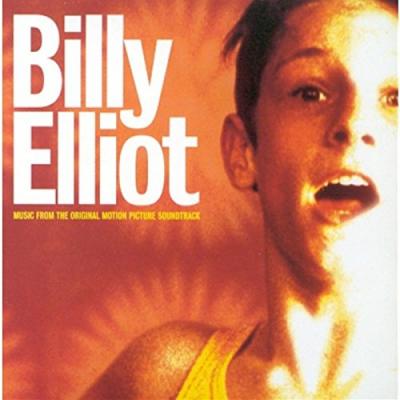
"Billy Elliot" Soundtrack Lyrics
Movie • 2000
Track Listing
T-Rex
T-Rex
Stephen Gately
The Jam
T-Rex
Eagle-Eye Cherry
The Clash
T-Rex
The Style Council
The Style Council
T-Rex
T-Rex
"Billy Elliot: Music From the Original Motion Picture" Soundtrack Description
Questions and Answers
- Is there an official soundtrack album?
- Yes. The compilation Billy Elliot: Music From the Original Motion Picture was issued on Polydor in 2000, mixing glam, punk, and dialogue interludes.
- Who composed the film’s score?
- Stephen Warbeck wrote the original score that threads between needle-drops and the miners’-strike backdrop.
- What’s the song for the “street rage” dance?
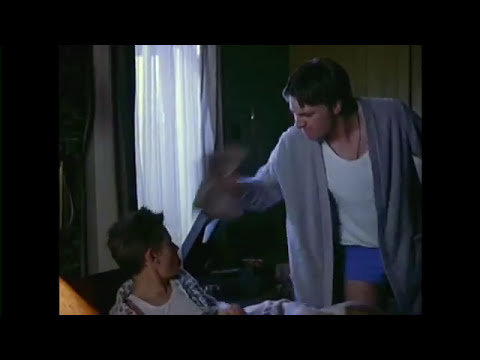
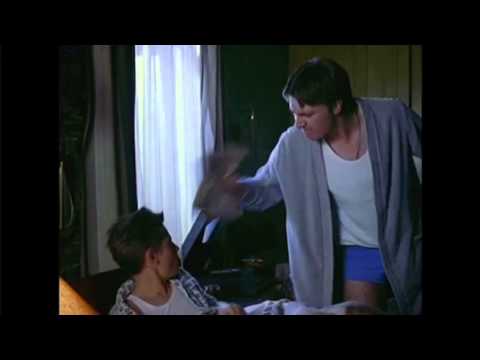
- “A Town Called Malice” by The Jam powers Billy’s furious tap through the streets—an all-timer sequence fans still cite.
- Which T. Rex tracks stand out in the film?
- “Cosmic Dancer,” “Get It On,” and “I Love to Boogie.” The last scores Billy’s buoyant lesson with Mrs. Wilkinson.
- Is every film song on the album?
- No. Some cues (e.g., certain rights-heavy tracks) don’t appear on the commercial CD, while the album includes short dialogue cuts.
- Where can I stream it?
- Major platforms carry the soundtrack and key songs; physical CDs from the original release remain common on the secondary market.
Additional Info
- Label credits list Polydor Records; early CD pressings date to 2000 with UK/Europe distribution (as documented by Discogs).
- Short dialogue tracks (“Mother’s Letter,” “Royal Ballet School”) sit between songs, a choice that mirrors the film’s heartbeat.
- The compilation leans heavily on T. Rex, with The Jam and The Clash supplying punk snap—Britain in the speakers, not wallpaper.
- Not every on-screen song landed on the CD—some licensing splits persist (common for UK films of the era).
- Warbeck’s score stays sparse by design; the pop selections do more character work than many dramas dare.
Overview
Why does a film about ballet hit this hard? Because Billy Elliot runs a live current between jukebox Britain and a kid’s private thunder. The soundtrack builds that circuit: T. Rex for swagger and joy; The Jam for clenched-jaw fury; The Clash for a community under siege.
Warbeck’s score stays light on its feet—brief, lyrical cues that let the songs speak. The result is unusually democratic: needle-drops carry character motive; score stitches the wounds. As a listen, it’s a walk down a pit village where every radio and riot shield has a beat. (as noted in The Guardian’s 2000 review)
Genres & Themes
- Glam rock (T. Rex) → joy, release, the physical pleasure of moving; Billy’s spark.
- Punk/New Wave (The Jam, The Clash) → anger and class pressure; the town’s weather report.
- Orchestral miniatures (Warbeck) → tenderness and doubt; quiet bridges after loud choices.
- Pop ballad (“I Believe”) → optimism pressed into vinyl; a softer tonic in a hard place.
Key Tracks & Scenes
“A Town Called Malice” — The Jam
Where it plays: Billy’s pent-up “street dance” release, kicking and tapping through row houses (around the middle reels; non-diegetic).
Why it matters: Class rage becomes choreography; the beat argues for a future beyond the pit. (according to The Atlantic’s scene note)
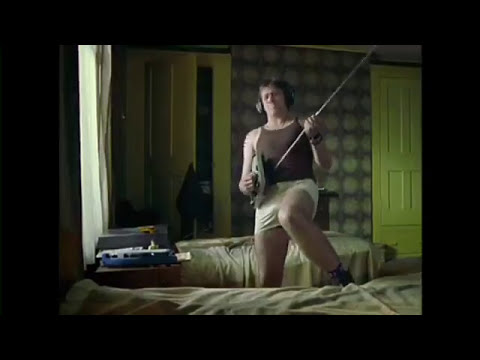
“I Love to Boogie” — T. Rex
Where it plays: Billy and Mrs. Wilkinson’s lesson—pure fizz of discovery (early-mid film; diegetic bleed).
Why it matters: A sugar-rush checkpoint: he isn’t just escaping; he’s choosing. (as highlighted in The Guardian review)
“London Calling” — The Clash
Where it plays: Riot/police montage during the miners’ strike (non-diegetic, cross-cut with clashes).
Why it matters: The private dream sits inside a public emergency; guitars ring like sirens.
“Cosmic Dancer” — T. Rex
Where it plays: Early set-up; the film teaches us how Billy hears motion (non-diegetic).
Why it matters: Glam as permission slip—movement feels legal, even inevitable.
“I Believe” — Stephen Gately
Where it plays: As a thematic counterweight in the album era; heard in promotional tie-ins and album flow.
Why it matters: The rare pop ballad on a grit-and-glam record; hope without denial.
Track–Moment Index (selected)
| Timestamp (approx.) | Scene | Song/Cue | Use | Notes |
|---|---|---|---|---|
| ~00:25 | Lesson with Mrs. Wilkinson; first “click” | “I Love to Boogie” — T. Rex | Diegetic/ambient bleed | Joy enters the room; choreography as character. |
| ~00:45 | Street “rage dance” through the terraces | “A Town Called Malice” — The Jam | Non-diegetic | Signature release; tap and stomp sync with the beat. |
| ~00:52 | Strike clashes; police charge | “London Calling” — The Clash | Non-diegetic | Montage ties home and history into one rhythm. |
| Early reels | Billy’s world primes | “Cosmic Dancer” — T. Rex | Non-diegetic | Glam tilt; movement as destiny. |
Music–Story Links (characters & plot beats as connected to songs)
- Glam = green light: When T. Rex hits, Billy gets permission to take up space; the camera and cut rhythm say “go.”
- Punk = pressure cooker: The Jam and The Clash cue the town’s mood—resentment, resolve, refusal to bow.
- Score = seams: Warbeck’s brief motifs mend scenes after shocks, especially post-riot or post-argument beats.
- Pop ballad = horizon: “I Believe” reframes the film’s grit with a promise—soft, but not naive.
How It Was Made (supervision, score, behind-the-scenes)
Stephen Daldry’s team leaned on UK catalog muscle (T. Rex, The Jam, The Clash) and let Stephen Warbeck score the silence between. Music is a second script here—dialogue snippets even make the album cut, keeping the story’s pulse audible between tracks. (as stated in Discogs listings and soundtrack overviews)
Clearances were savvy but selective: not every featured track made the retail album, and some songs circulate more readily in the film than on streaming compilations. That split actually helps the movie breathe—the needle-drops feel specific to this town, this family.
Reception & Quotes
Critics widely praised the film’s balance of tenderness and grit; the music choices were part of that spell—joy against riot shields. (according to The Guardian)
“A lot of charm, a lot of humour and a lot of heart.” The Guardian, 2000 review
“The ‘Malice’ street dance hovers between realism and the stylised world of the musical.” paraphrase of UK broadsheet criticism
Technical Info
- Title: Billy Elliot: Music From the Original Motion Picture
- Year: 2000 (film); album editions 2000+ (Polydor)
- Type: Movie soundtrack (various artists + dialogue; original score by Stephen Warbeck)
- Composer: Stephen Warbeck
- Label: Polydor Records
- Notable placements: “A Town Called Malice” (street dance); “I Love to Boogie” (lesson); “London Calling” (strike montage); “Cosmic Dancer” (set-up).
- Album character: Interleaves songs with brief dialogue tracks; not all film songs appear on the CD.
- Availability: Streaming on major platforms; 2000 CD issues circulate widely (UK/EU pressings).
Canonical Entities & Relations
| Subject | Relation | Object |
|---|---|---|
| Stephen Daldry | directed | Billy Elliot (2000) |
| Stephen Warbeck | composed | Billy Elliot original score |
| Polydor Records | released | Billy Elliot soundtrack compilation |
| The Jam | performed | “A Town Called Malice” (featured in film) |
| T. Rex | performed | “Cosmic Dancer,” “Get It On,” “I Love to Boogie” |
| The Clash | performed | “London Calling” (featured in film) |
Sources: The Guardian (film review); Discogs (release data/credits); IMDb (song credits); Wikipedia (film & music sections); SoundtrackINFO / MovieMusic listings; YouTube official clips/trailer.
October, 23rd 2025
A-Z Lyrics Universe
Cynthia Erivo Popular
Ariana Grande Horsepower
Post Malone Ain't No Love in Oklahoma
Luke Combs Good Riddance (Time of Your Life)
Green Day Bye Bye Bye
*NSYNC You're the One That I Wan
John Travolta & Olivia Newton-John I Always Wanted a Brother
Braelyn Rankins, Theo Somolu, Kelvin Harrison Jr. and Aaron Pierre The Power of Love
Frankie Goes to Hollywood Beyond
Auli’i Cravalho feat. Rachel House MORE ›