Soundtracks:  A B C D E F G H I J K L M N O P Q R S T U V W X Y Z #


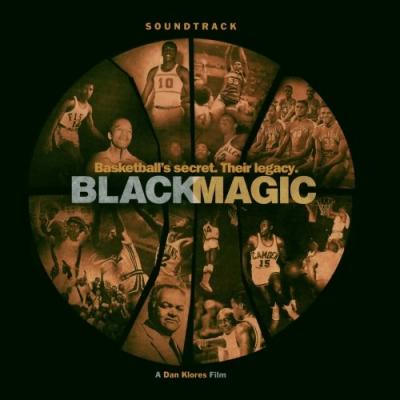
Black Magic Album Cover

"Black Magic" Soundtrack Lyrics

Movie • 2008

Track Listing


"Black Magic" Soundtrack Description

Questions and Answers

Is there an official 2008 soundtrack album for Black Magic?
Yes. Rhino released Black Magic: Music from the Dan Klores Film on March 11, 2008, as a 13-track compilation.
What kind of music is on it?
Classic soul, R&B, and funk—cuts by Earth, Wind & Fire, Arthur Conley, Booker T. & the M.G.’s, Ray Charles, Tower of Power, and more.
What’s the film, exactly?
A two-part, four-hour ESPN documentary by Dan Klores about basketball at HBCUs and the Civil Rights era, narrated by Samuel L. Jackson and Wynton Marsalis.
Is this a score or a various-artists compilation?
It’s a various-artists compilation of licensed recordings; the film mixes those with archival audio and narration.
Where can I hear the album today?
It’s available on major platforms (e.g., Apple Music, Spotify) and on CD via Rhino’s 2008 release.
Does the album include every song used in the documentary?
No—the CD is a curated highlight reel; the full film features many more songs than the 13 on the album.

Notes & Trivia

  • The soundtrack dropped the same week the film premiered on ESPN, under the Rhino imprint, aligning with Black History Month programming windows.
  • Wynton Marsalis and Samuel L. Jackson share narration duties in the film; NBA star Chris Paul provides on-camera introductions.
  • The CD plays like a soul-club set: vintage singles sequenced for momentum rather than strict chronology (according to AllMusic).
  • The documentary won a Peabody Award for its narrative power and historical depth—music is a big part of that impact.
  • Several instrumentals (Booker T. & the M.G.’s; the Bar-Kays) help bridge interviews and archival reels without stepping on dialogue.

Overview

Why do raucous Stax grooves and brass-tight funk feel right under hard truths about race and basketball? Because Black Magic doesn’t use music as filler—it uses it as living context. These songs come from the era and communities the film chronicles, so each needle-drop doubles as texture and testimony.

The 2008 album is a lean 13-track sampler of what the two-part documentary deploys more expansively. Think horn-popped celebration (“Sweet Soul Music”), grit-slick organ jams (“Boot-Leg”), and jukebox-ready floor-fillers (“Land of 1000 Dances”), offset by rhythm-section struts (“What Is Hip?”) that feel like victory laps earned after years of slight. It’s not a composer-led score; it’s a curated memory palace—one that lets interviews, narration, and archival clips breathe between songs (as reported by Variety).

Genres & Themes

  • Southern soul & Stax/Volt instrumentals → underscore grind, craft, and the day-to-day reality at HBCUs; organ riffs mirror practice-floor repetition.
  • R&B celebration anthems → channel pride and communal joy after hard-won progress; choruses act like call-and-response with the audience.
  • Funk horn-lines → translate swagger and competitive edge to sound; they often ride under highlight reels to frame athleticism as art.
  • New Orleans piano & shuffle feels → nod to historically Black music geographies the film threads through; they color anecdotes with place.

Key Tracks & Scenes

“C’mon Children” — Earth, Wind & Fire
Where it plays: Album opener and an early-film vibe setter during montage material. Non-diegetic.
Why it matters: Establishes communal forward motion—the album’s thesis of collective uplift in groove form.

“Sweet Soul Music” — Arthur Conley
Where it plays: Over archival crowd shots and celebratory transitions. Non-diegetic.
Why it matters: A roll call of the tradition the film celebrates; the lyric’s shout-outs parallel the documentary’s act of naming overlooked heroes.

“Boot-Leg” — Booker T. & the M.G.’s
Where it plays: Cutaway bridges between interviews and practice-floor B-roll. Non-diegetic.
Why it matters: Tight groove as narrative glue; its economy mirrors the film’s edit rhythm.

“Mess Around” — Ray Charles
Where it plays: Archival highlight sequences; non-diegetic.
Why it matters: Ray’s buoyancy reframes adversity with wit—the film’s tonal pivot after heavier segments.

“What Is Hip?” — Tower of Power
Where it plays: Late-film victory-energy montage; non-diegetic.
Why it matters: Brass-driven catharsis; the swagger fits scenes of recognition and legacy.

Music–Story Links (characters & plot beats)

  • When the narrative shifts from struggle to spotlight—players finally getting seen—brass-heavy funk cues kick in, giving sonic weight to recognition arcs.
  • Interview-heavy stretches lean on organ-forward instrumentals; their steady pulse keeps momentum without crowding testimony.
  • Celebratory R&B choruses often land right after institutional roadblocks are described, turning hard facts into shared release.
  • New Orleans roots piano appears around place-specific anecdotes, subtly pinning stories to geography and lineage.

How It Was Made (supervision, score, behind-the-scenes)

The film is a two-part, four-hour documentary directed by Dan Klores for ESPN. It weaves more than 200 hours of interviews with archival footage and period recordings, narrated by Samuel L. Jackson and Wynton Marsalis; NBA star Chris Paul introduces segments. Music credit listings include Sherman Foote, while the album side was compiled and released by Rhino as a concise companion to the broadcast. The selections favor historically resonant singles whose grooves can sit under archival material without trampling dialogue (as stated by The Hollywood Reporter’s coverage of the project’s scope).

Reception & Quotes

Critics praised the documentary’s sweep and the way music energizes its history-lesson core. The curated album drew favorable notes for being a punchy, party-ready digest of a much larger sonic palette (according to AllMusic).

“Extraordinary, ambitious… instantly stands as the finest.” The Hollywood Reporter
“A superb four-hour documentary… HBCUs at the center.” Peabody Awards citation
“Covers a bit more ground… from jazz and jump blues to soul, R&B, and funk.” AllMusic

Technical Info

  • Title: Black Magic — Music from the Dan Klores Film (Original Soundtrack)
  • Year: 2008
  • Type: Movie (two-part ESPN documentary)
  • Album Label: Rhino Entertainment (CD & digital)
  • Release Date (album): March 11, 2008
  • Key Artists on Album: Earth, Wind & Fire; Arthur Conley; Booker T. & the M.G.’s; Wilson Pickett; Ray Charles; Tower of Power; Bar-Kays; Average White Band
  • Narration (film): Samuel L. Jackson; Wynton Marsalis
  • Introductions (film): Chris Paul; Julius Erving
  • Music credit (film): Sherman Foote
  • Availability: Streaming (Apple Music, Spotify) and CD; the CD is a 13-track highlights set, not a complete song inventory from the film.
  • Notable Placements (album cuts): “Sweet Soul Music,” “Boot-Leg,” “Mess Around,” “What Is Hip?,” “Soul Finger.”
  • Awards (film): Peabody Award (2009).

Canonical Entities & Relations

SubjectRelationObject
Dan KloresdirectedBlack Magic (2008, ESPN documentary)
ESPN FilmsproducedBlack Magic (two-part film)
Samuel L. JacksonnarratedBlack Magic
Wynton Marsalisco-narratedBlack Magic
Chris PaulintroducedSegments of the film
Rhino EntertainmentreleasedBlack Magic: Music from the Dan Klores Film (CD/digital)
Booker T. & the M.G.’sperformed“Boot-Leg” (album track)
Ray Charlesperformed“Mess Around” (album track)
Tower of Powerperformed“What Is Hip?” (album track)
Peabody AwardshonoredBlack Magic (award winner)

Sources: AllMusic; Variety; The Hollywood Reporter; Peabody Awards; Apple TV listing; Apple Music; Spotify; Rhino product listings.

October, 23rd 2025


A-Z Lyrics Universe

Lyrics / song texts are property and copyright of their owners and provided for educational purposes only.