Soundtracks:  A B C D E F G H I J K L M N O P Q R S T U V W X Y Z #


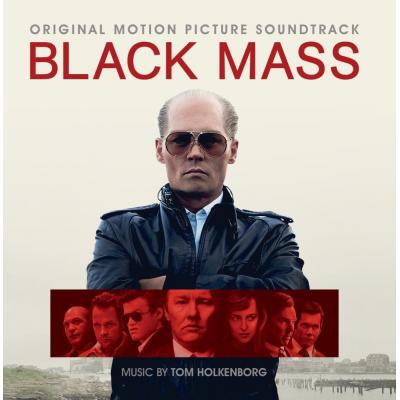
Black Mass Album Cover

"Black Mass" Soundtrack Lyrics

Movie • 2015

Track Listing


"Black Mass" Soundtrack Description

Black Mass official trailer still: Johnny Depp as Whitey Bulger in a dim South Boston bar
Black Mass – Official Trailer, 2015

Questions and Answers

Is there an official soundtrack album for Black Mass?
Yes. Black Mass (Original Motion Picture Soundtrack) features Tom Holkenborg’s score and was released by WaterTower Music on September 11, 2015.
Who composed the score, and what’s the sound?
Tom Holkenborg (aka Junkie XL) composed a somber, string-forward orchestral score with organ and restrained electronics—icy, deliberate, and fatalistic.
Are the period songs (Fleetwood Mac, Blondie, etc.) on the official score album?
No. The official album is the score only; notable source songs (e.g., Fleetwood Mac’s “Warm Ways,” Blondie’s “War Child,” Bill Evans’ “The Two Lonely People”) are not on that release.
Where can I stream the score?
It’s available on major platforms (Apple Music, Spotify) under Tom Holkenborg’s artist page as the 21-track score album.
What musical idea ties Bulger and Connolly together?
Holkenborg built parallel themes and swaps instrumentation between them (piano ⇄ cello) to mirror their shifting power and uneasy fellowship.
Does the film use silence strategically?
Yes—the kitchen-table conversation and Bulger’s late arrivals often play with near-silence or minimal scoring to heighten dread.

Notes & Trivia

  • Recorded at the Eastwood Scoring Stage on the Warner Bros. lot—Hollywood Studio Symphony with Nick Glennie-Smith conducting.
  • Holkenborg leaned on pipe organ textures—fitting for a movie literally titled Black Mass.
  • Variety highlighted the score’s wintry, elegiac tone compared to Holkenborg’s adrenaline jolt on Mad Max: Fury Road (as noted by Variety).
  • The official album runs ~61 minutes across 21 cues, ending with the quietly devastating “Take Care Kid.”
  • Source music sketches Boston from plush lounges (Bill Evans) to rough-edged bars (Rolling Stones), to disco-era radio (Thelma Houston).
  • Holkenborg handled composing, orchestrating, recording, producing, and mixing himself on the album.
  • Some licensed tracks heard in the film are absent from the official score album—common for crime dramas of this era.
Trailer frame showing tense dining-room interrogation that typifies the film’s quiet menace
Another look at the stark, low-key tension the score supports.

Overview

Why does soft jazz sit next to a funeral-paced string dirge in a South Boston mob story? Because Black Mass thrives on contrasts. The soundtrack pairs Tom Holkenborg’s glacial, organ-laced score with carefully chosen period cuts that feel like the city’s wallpaper—lulling, familiar, then suddenly menacing.

The score doesn’t race; it stalks. Themes for Bulger and Connolly trade instrumental clothes—piano to cello and back—so allegiance always feels provisional. Source songs do the social signaling: Fleetwood Mac croons warm domestic fantasy right before the floor drops out; Blondie’s bite slices through back-room bravado. It’s a sonic ecosystem where silence is a weapon, strings ache rather than soar, and every needle-drop reminds you how quickly comfort turns to complicity (according to the Motion Picture Association’s interview with Holkenborg).

Genres & Themes

  • Elegiac orchestral score → Moral winter: slow strings, organ pedals, and held low notes freeze scenes in place, underlining consequences instead of glamor.
  • 1970s–80s soft rock & jazz → Surface warmth vs. rot: Bill Evans and Fleetwood Mac sell calm and intimacy that the narrative immediately betrays.
  • Bar-room rock & disco → Power theater: Blondie and Thelma Houston puncture “business as usual,” turning rooms into stages for threats, deals, and humiliation.
  • Silence & near-silence → Predator math: long gaps force us to count breaths, especially when Bulger tests loyalties at kitchen tables and in parked cars.
Over-the-shoulder trailer shot of an FBI briefing room where the score’s strings tighten the air
Briefing rooms, cold strings—the film’s signature mood.

Key Tracks & Scenes

“Warm Ways” — Fleetwood Mac
Where it plays: A tender, private interlude hints at domestic normalcy (mid-film; non-diegetic under a quiet interior).
Why it matters: The soft-rock sheen sells a fantasy of safety that the story promptly undercuts, a deliberate irony the film uses more than once.

“War Child (Remastered)” — Blondie
Where it plays: Bar/club ambience during a swaggering, public-face moment (late first half; mostly diegetic).
Why it matters: The strut in Debbie Harry’s vocal mirrors Bulger’s performative charm before the violence underneath shows through.

“The Two Lonely People” — Bill Evans
Where it plays: A reflective scene leans into jazz piano to evoke Boston’s after-hours melancholy (early second act; non-diegetic).
Why it matters: The title says it—two characters isolated by their bargains. It’s empathy with a timer ticking.

“Black Mass Opening Title” — Tom Holkenborg
Where it plays: Titles (00:01 approx.; non-diegetic).
Why it matters: Establishes the score’s grammar: slow harmonic churn, organ foundation, strings that feel like frost.

“My Boy” — Tom Holkenborg
Where it plays: The film’s emotional hinge around Bulger’s family tragedy (mid-film).
Why it matters: The music drops its armor; sorrow hardens into rage, and from here the palette darkens (as stated in the 2015 SoundWorks conversation).

“Boston Globe” — Tom Holkenborg
Where it plays: Investigative montage (late act two).
Why it matters: Newsprint and strings—public scrutiny closes in as the harmony thins and pulses grow insistent.

Track–Moment Index (select)

Track / SongSceneApprox. TimecodeLength (approx.)Diegetic?
Black Mass Opening Title (Score)Main titles / South Boston tableau~00:01~1:10No
The Two Lonely People — Bill EvansLate-night reflection; Boston lights~00:25~3–4mNo
Warm Ways — Fleetwood MacIntimate domestic beat undercut by tension~00:55~3–4mNo (ambient mix)
War Child — BlondieBar scene / deal-making bravado~00:45~3mMostly Yes
My Boy (Score)Family tragedy pivot~01:00~4mNo
Boston Globe (Score)Expose montage~01:25~2–3mNo

Music–Story Links (characters & plot beats)

  • Bulger’s aura: Organ + low strings = ritual. When Bulger enters quietly, the harmony thins; when he speaks softly, the bass sustains do the threats for him.
  • Connolly’s bargain: Theme-swapping (piano⇄cello) blurs who is leading whom; the more Connolly “wins,” the more his music sounds like Bulger’s.
  • Domestic mirage: “Warm Ways” floats like a safe harbor—exactly so the film can smash it. Soft rock as false promise.
  • Public theater: “War Child” turns a bar into a stage. The swagger sells power to the room; the next cut shows the bill.
Night exterior in the trailer where strings and organ hang like fog over Boston streets
Night streets + sustained tones = dread calculus.

How It Was Made (supervision, score, behind-the-scenes)

Scott Cooper enlisted Tom Holkenborg after Mad Max: Fury Road, but asked for the opposite temperament—less percussion, more elegy. Sessions took place at the Eastwood Scoring Stage with Hollywood Studio Symphony and Nick Glennie-Smith on the podium. Holkenborg shouldered composing, orchestrating, recording, mixing, and album production, with Katrina Schiller leading music editorial. He also layered pipe-organ colors to deepen the ecclesiastical chill.

On theme design, Holkenborg describes Bulger as cobra-calm and humanizes both leads by mirroring their motifs and letting silence do narrative work—especially in the kitchen-table “test” scenes. The result isn’t bombast; it’s pressure. (as discussed by the Motion Picture Association; also echoed in SoundWorks Collection’s profile).

Reception & Quotes

Critics singled out the restraint. Variety called it an “elegiac orchestral score” that fits the film’s “wintry mood,” while IGN and Screen International noted the tense musical soundscapes. NPR heard it as “doleful.” (as noted by Variety and NPR)

“An elegiac orchestral score that perfectly complements the film’s desperate, wintry mood.” Variety
“Morose, yet tense… accentuates the moodiness.” IGN
“Doleful.” NPR

Availability: the 21-track score album is widely streamable; select film songs (Fleetwood Mac, Blondie, Bill Evans) are available on their respective artist releases rather than the score album.

Technical Info

  • Title: Black Mass (Original Motion Picture Soundtrack)
  • Year: 2015 (album released September 11, 2015)
  • Type: Movie score (with additional licensed songs in film)
  • Composer: Tom Holkenborg (aka Junkie XL)
  • Conducting/Orchestra: Nick Glennie-Smith; Hollywood Studio Symphony; recorded at Eastwood Scoring Stage (Warner Bros.)
  • Label: WaterTower Music
  • Music editorial: Supervising editor Katrina Schiller; music editor Jim Schultz
  • Notable source placements (film): Fleetwood Mac “Warm Ways”; Blondie “War Child”; Bill Evans “The Two Lonely People”; Wes Montgomery “Polka Dots and Moonbeams”; Thelma Houston “Don’t Leave Me This Way”
  • Album status: Official score album available; no separate “various artists” compilation for film songs
  • Runtime (album): ~61 minutes (21 cues)

Canonical Entities & Relations

SubjectRelationObject
Tom Holkenborgcomposed score forBlack Mass (2015 film)
WaterTower MusicreleasedBlack Mass (Original Motion Picture Soundtrack)
Nick Glennie-SmithconductedHollywood Studio Symphony
Hollywood Studio Symphonyrecorded atEastwood Scoring Stage, Warner Bros. Studios
Scott CooperdirectedBlack Mass (2015 film)
Fleetwood Macperformed“Warm Ways” (heard in film)
Blondieperformed“War Child” (heard in film)
Bill Evansperformed“The Two Lonely People” (heard in film)
Close-up trailer image of a tense handshake, underscored by muted strings
Threats in whispers; music in undertones.

Sources: Variety, Motion Picture Association (The Credits), SoundWorks Collection, Apple Music, IMDb, WhatSong, Movie Music UK, WaterTower Music album notes.

Even from the trailer of the film, we realize that we very, very much want to see the movie itself. Not only because of play of wonderful actors, but more due to the fascinating story. Johnny Depp, Benedict Cumberbatch, Kevin Bacon, and Dakota Johnson sharply and brilliantly show their acting talents here. Especially Depp shines, who, in contrast to other recent films on this site, Mortdecai, made a character, to whom he has a simple genetic predisposition. A nasty, dark, evil genius who speaks perfect, worn-out and balanced words with violent awareness of their weight and the consequences, that we have goosebumps sized as a gecko. A lot of Johnny, a lot of black humor, a lot of incredible dialogues and a lot of bright and catchy music in the film. Without the latter, the impression from the film would be incomplete. We can mention many great performers. But among them are Ella Fitzgerald, who performed a Christmas song in such a way that we have heard it from a new angle. And The Rolling Stones, who showed what rock is and how it should be done. It's big and bold example for all modern rockers who think that they can do rock. The only representative of the country is a song Not My Cross To Bear. Warm Ways melts you like a good Cuban cigar. Don't Leave Me This Way – colossal at quality, after which other music of this direction looks as child's play. The quality of this song should be a standard for music in general. Regardless of the genre. This collection is so highly qualitative that scale, where the maximum is marked "100", which is enough for the usual music, just is not sufficient. Perhaps another 30% on top of the maximum point – it will be a true assessment of this sound.

October, 23rd 2025

Find movie profile on IMDb and Rotten Tomatoes, read more on Wikipedia
A-Z Lyrics Universe

Lyrics / song texts are property and copyright of their owners and provided for educational purposes only.