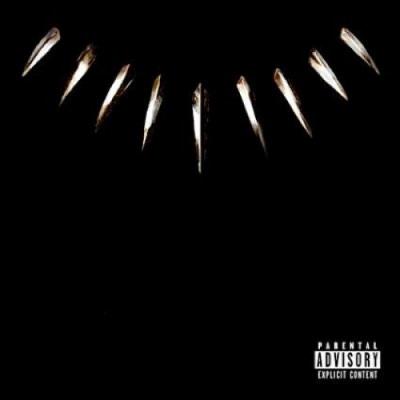
"Black Panther" Soundtrack Lyrics
Movie • 2018
Track Listing
Kendrick Lamar
Kendrick Lamar and SZA
Schoolboy Q, 2 Chainz and Saudi
Khalid and Swae Lee
Vince Staples and Yugen Blakrok
Jorja Smith
SOB X RBE
Ab-Soul, Anderson .Paak and James Blake
Jay Rock, Kendrick Lamar, Future and James Blake
Zacari and Babes Wodumo
Moxxy, Sjava and Reason
Kendrick Lamar and Travis Scott
Kendrick Lamar and The Weeknd
"Black Panther" Soundtrack Description
Questions and Answers
- Is there an official soundtrack album for the film?
- Yes—two, actually: Black Panther: The Album (curated by Kendrick Lamar; released February 9, 2018) and Black Panther (Original Score) by Ludwig Göransson (released February 16, 2018). :contentReference[oaicite:0]{index=0}
- What song kicks off the film in the 1992 Oakland prologue?
- Too $hort’s “In the Trunk” plays over the opening Oakland scene, grounding the story in Bay Area sound. :contentReference[oaicite:1]{index=1}
- Which track underscores the Busan car chase?
- “Opps” by Vince Staples & Yugen Blakrok is the high-energy needle-drop heard during the South Korea chase. :contentReference[oaicite:2]{index=2}
- What plays over the main end credits?
- “All the Stars” by Kendrick Lamar & SZA rolls over the closing credits sequence. :contentReference[oaicite:3]{index=3}
- Who supervised the film’s music and who produced the curated album?
- Music supervision was led by Dave Jordan (Format Entertainment); Kendrick Lamar produced/curated the songs album with Top Dawg’s Anthony “Top Dawg” Tiffith. :contentReference[oaicite:4]{index=4}
- What’s distinctive about the original score?
- Göransson blended West African instrumentation (talking drum, Fula flute with Baaba Maal) and a London orchestra/choir recorded at Abbey Road. :contentReference[oaicite:5]{index=5}
Additional Info
- “Wololo” by South Africa’s Babes Wodumo is heard diegetically in the film—a rare big-studio placement for the gqom scene. :contentReference[oaicite:6]{index=6}
- Göransson spent a month in Senegal, touring and recording with Baaba Maal before combining those sessions with a 92-piece orchestra at Abbey Road. :contentReference[oaicite:7]{index=7}
- “Pray for Me” (The Weeknd & Kendrick Lamar) is used for the Busan casino entrance vibe and featured heavily in marketing. :contentReference[oaicite:8]{index=8}
- The curated album debuted at No. 1 on the Billboard 200 and later won a Grammy for “King’s Dead.” (as noted by Pitchfork) :contentReference[oaicite:9]{index=9}
- “In the Trunk” was chosen to root the prologue in 1992 Oakland authenticity—local press flagged the Easter egg opening weekend. :contentReference[oaicite:10]{index=10}
- Critics singled out the end-credits pairing of “All the Stars” with the animated titles as a highlight. (according to Esquire and fan reports) :contentReference[oaicite:11]{index=11}
Overview
Why does a Bay Area trunk-rattler, a gqom club smash, and a sabar drum solo all feel at home in Wakanda? Because Black Panther treats music as world-building, not wallpaper. The film splits its sound into two pillars: a curated songs album from Kendrick Lamar’s TDE cohort and allies, and a deep-researched orchestral score by Ludwig Göransson that pulses with West African rhythm and timbre. :contentReference[oaicite:12]{index=12}
The result is a sonic identity that sells Wakanda’s duality—ancient roots and hyper-tech present. Lamar’s cuts handle swagger, politics, and exportable hooks; Göransson’s cues speak in talking drums, Fula flute cries, and choir, giving characters motifs that feel lived-in. When the two strands meet (the chase, the throne room tensions, the credits catharsis), the film moves like a music video without losing story clarity. (as stated in the A.V. Club’s coverage) :contentReference[oaicite:13]{index=13}
Genres & Themes
- West African traditions ↔ Royal ritual: sabar and talking drums color challenge rites; Baaba Maal’s voice signals communal gravitas. :contentReference[oaicite:14]{index=14}
- Hip-hop & trap ↔ Urban momentum and conflict: Lamar’s cuts (“Opps,” “Pray for Me”) energize heists and chases; they also mirror diaspora identity clashes. :contentReference[oaicite:15]{index=15}
- Gqom/ATM ↔ Global Black modernity: “Wololo” and “Redemption” nod to Southern Africa’s club language, reframing Wakanda as connected, not isolated. :contentReference[oaicite:16]{index=16}
- Orchestral heroism ↔ Legacy & burden: broad brass and choir for T’Challa’s duty; breathy, keening Fula flute for Killmonger’s haunted ambition. :contentReference[oaicite:17]{index=17}
Key Tracks & Scenes
“In the Trunk” — Too $hort
Where it plays: 1992 Oakland prologue; kids hooping as N’Jobu’s apartment scene begins (≈ 00:01:00). Diegetic street playback.
Why it matters: Plants the story in place and time; the Bay’s bass and bounce set up the film’s diaspora stakes. :contentReference[oaicite:18]{index=18}
“Wakanda” — Baaba Maal & Ludwig Göransson
Where it plays: Arrival in Wakanda and ceremonial approach to Warrior Falls (early act one). Non-diegetic with choral elements.
Why it matters: Maal’s call and drum language confer grandeur; the cue becomes the cultural heartbeat of the film. :contentReference[oaicite:19]{index=19}
“Opps” — Vince Staples & Yugen Blakrok
Where it plays: Busan pursuit—casino exit through streets/rooftops (≈ 01:05:00). Stylized needle-drop over action.
Why it matters: Industrial percussion and clipped flows sync to kinetic cutting; it’s the album’s purest on-screen adrenaline. :contentReference[oaicite:20]{index=20}
“Pray for Me” — The Weeknd & Kendrick Lamar
Where it plays: Over the casino entrance/atmosphere and in promo spots. Non-diegetic; also used across marketing.
Why it matters: Anthemic refrain frames T’Challa’s “protector” burden and team dynamic with Nakia and Okoye. :contentReference[oaicite:21]{index=21}
“All the Stars” — Kendrick Lamar & SZA
Where it plays: Main end credits (≈ 02:09:00).
Why it matters: Sends audiences out on a luminous, pan-diasporic pop statement that doubled as a charting single. :contentReference[oaicite:22]{index=22}
Track–Moment Index (Approximate)
| Time (approx.) | Song / Cue | Scene & Notes | Length (approx.) |
|---|---|---|---|
| 00:01:00 | “In the Trunk” — Too $hort | Oakland 1992 prologue; diegetic source in the courtyard. | ~0:45 |
| 00:16:00 | “Wakanda” — Baaba Maal & Göransson | Reveal of Wakanda; ceremonial procession to Warrior Falls; non-diegetic. | ~2:00 |
| 01:05:00 | “Opps” — Vince Staples & Yugen Blakrok | Busan car chase across bridge and market; stylized needle-drop. | ~1:30 |
| 02:09:00 | “All the Stars” — Kendrick Lamar & SZA | Main end credits roll; single version edit. | ~3:00 |
Music–Story Links (characters & plot beats)
- T’Challa’s duty vs. self: orchestral brass and choir elevate the monarchy motif; when paired with Maal’s voice, tradition eclipses ego. :contentReference[oaicite:23]{index=23}
- Killmonger’s arrival: the Fula (tambin) flute screams—recorded in Senegal—announce his destabilizing presence and Wakandan roots reclaimed. :contentReference[oaicite:24]{index=24}
- Global Blackness, not isolation: gqom (“Wololo”) and Lamar’s pan-artist curation argue that Wakanda listens outward as well as inward. (according to Pitchfork’s reporting on the album’s reach) :contentReference[oaicite:25]{index=25}
- Hero-as-Protector frame: “Pray for Me” refrains echo the film’s central question—what do kings owe the world?—as the team moves into Busan. :contentReference[oaicite:26]{index=26}
How It Was Made (supervision, score, behind-the-scenes)
Kendrick Lamar and TDE’s Anthony “Top Dawg” Tiffith curated the songs album after Ryan Coogler asked for a handful of originals—Lamar came back with a full-blown concept record. (according to Pitchfork news and the Motion Picture Association profile) :contentReference[oaicite:27]{index=27}
Composer Ludwig Göransson started unusually early, traveling with Baaba Maal across Senegal before recording an orchestra and 40-voice choir at Abbey Road Studio 1. Coogler famously declines temp scores, so Göransson wrote directly to picture from a massive initial cut, letting African instruments steer theme design. :contentReference[oaicite:28]{index=28}
Veteran supervisor Dave Jordan coordinated placements across marketing and film cues, aligning the Lamar cuts with action beats (e.g., “Opps” in Busan) and clearing culturally significant songs like Too $hort’s Oakland staple. :contentReference[oaicite:29]{index=29}
Reception & Quotes
- The songs album debuted at No. 1 and spun off Grammy-recognized singles; the score won the Academy Award and a Grammy. (as noted by Pitchfork and Wikipedia) :contentReference[oaicite:30]{index=30}
- Critics praised the album’s ambition and the score’s cultural specificity; some felt the album played “safer” than Lamar’s solo work. (according to The A.V. Club summary) :contentReference[oaicite:31]{index=31}
“A stunning moment in film history…an absolute milestone.” Esquire (via aggregated coverage)
“Göransson found the sound of Wakanda by honoring real traditions.” Pitchfork
Availability: Both albums are widely available (digital/streaming), with the score issued via Hollywood Records/Marvel Music and the songs album via TDE/Aftermath/Interscope. :contentReference[oaicite:32]{index=32}
Technical Info
- Title: Black Panther — Soundtrack & Original Score
- Year: 2018 (film and albums)
- Type: Movie
- Composers (Score): Ludwig Göransson; featured vocals by Baaba Maal on key cues. :contentReference[oaicite:33]{index=33}
- Music Supervision: Dave Jordan (Format Entertainment). :contentReference[oaicite:34]{index=34}
- Curated Songs Album: Black Panther: The Album — Produced/curated by Kendrick Lamar & Anthony “Top Dawg” Tiffith; labels: TDE/Aftermath/Interscope; release: Feb 9, 2018. :contentReference[oaicite:35]{index=35}
- Score Album: Black Panther (Original Score) — Hollywood Records/Marvel Music; recorded at Abbey Road; release: Feb 16, 2018. :contentReference[oaicite:36]{index=36}
- Selected notable placements: “In the Trunk” (opening), “Opps” (Busan chase), “All the Stars” (end credits), “Pray for Me” (casino entrance/marketing), “Wololo” (diegetic club vibe). :contentReference[oaicite:37]{index=37}
- Awards: Oscar — Best Original Score (Göransson); Grammys — Best Score Soundtrack (win), “King’s Dead” (win). (according to Academy/Grammy reports summarized on Wikipedia) :contentReference[oaicite:38]{index=38}
Canonical Entities & Relations
| Subject | Relation | Object |
|---|---|---|
| Ryan Coogler | directed | Black Panther (2018 film) |
| Ludwig Göransson | composed score for | Black Panther (2018 film) |
| Kendrick Lamar | curated/produced | Black Panther: The Album |
| Dave Jordan | supervised music for | Black Panther (2018 film) |
| Baaba Maal | performed vocals on | “Wakanda” (score cue) |
| Vince Staples & Yugen Blakrok | performed | “Opps” (Busan chase placement) |
| Kendrick Lamar & SZA | performed | “All the Stars” (end credits) |
| The Weeknd & Kendrick Lamar | performed | “Pray for Me” (film/marketing) |
| Babes Wodumo (feat. Mampintsha) | performed | “Wololo” (diegetic use) |
| Hollywood Records/Marvel Music | released | Black Panther (Original Score) |
| TDE / Aftermath / Interscope | released | Black Panther: The Album |
Sources: Pitchfork; Wikipedia; SFGate; PopSugar; Billboard; Variety; GQ; IMDb; Motion Picture Association profile.
It is good. In terms of special effects and the idea. And the studio that made the film: Marvel Studios that makes all hero movies of the 21st century. Though, it’s not that directly unambiguous: Black Panther (an invisible king of Uganda, a centuries-old peacekeeper) was made out like of resin, just like all latest films about Spiderman – he is no longer a human but poorly animated rubber CGI. The same is here with Black Panther: when he jumps in an environment, it is nicely visible that special effects are at the level of Titanic maybe, not Marvel of 2018. Uganda has the underground city of Eldorado, which was not in South America but in Africa, under Uganda, which is a very technologically innovative city with so many new arms that even Marvel’s most tech-advanced dude would have a hiccup: Iron Man. Is idea exciting? Yep if only Uganda was a big state, not a piece of dust like for real. It is maybe the first entirely-black film of Marvel, with the black main hero, his woman, the main antagonist, which is veeeeeeeeery tolerant. Overly, we’d say. Music in the soundtrack is not something we’d all expect from Marvel: it is 100% R’n’B (‘I Am’, ‘Big Shot’, and ‘All The Stars’) and rap (‘Oops’). The main soundtrack’s star is Kendrick Lamar, with almost every song done either by him or with his participation. The only girl here is Jorja Smith. But she’s trying to be a white girl too heavily, which is pretty disgusting from the point of view of losing her face. Mr. Lamar, though, always tried to put some deep thoughts in his lyrics (however, not always he succeeds in this while performing with other singers). His lyrics always win compared to all others in this soundtrack. Among the famed actors in the cast are: Lupita Nyong’o, Danai Gurira, Forest Whitaker, Martin Freeman (to tie a film with Marvel’s Universe), and Andy Serkis is the loudest-named of all actors in the film, a holder of 14 various awards.October, 24th 2025
Discover more about 'Black Panther', an American superhero film on Wikipedia and Internet Movie DatabaseA-Z Lyrics Universe
Cynthia Erivo Popular
Ariana Grande Horsepower
Post Malone Ain't No Love in Oklahoma
Luke Combs Good Riddance (Time of Your Life)
Green Day Bye Bye Bye
*NSYNC You're the One That I Wan
John Travolta & Olivia Newton-John I Always Wanted a Brother
Braelyn Rankins, Theo Somolu, Kelvin Harrison Jr. and Aaron Pierre The Power of Love
Frankie Goes to Hollywood Beyond
Auli’i Cravalho feat. Rachel House MORE ›