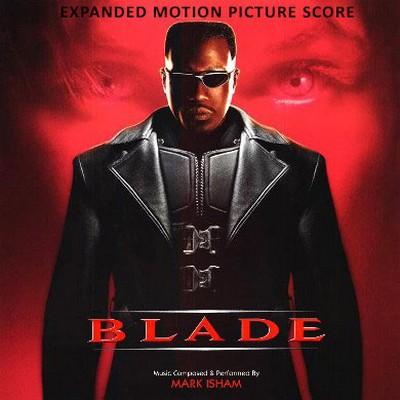
"Blade" Soundtrack Lyrics
Movie • 1998
Track Listing
Mystikal
Gang Starr
KRS-One
Down 2 Earth
P.A
Wolfpak
Kasino
Bounty Killer
Majesty feat. Bizzy Bone
Mantronik Vs. EPMD
Roger S
New Order
Expansion Union
DJ Krush
Junkie XL
"Blade" Soundtrack Description

Questions and Answers
- Is there an official 1998 soundtrack album for Blade?
- Yes—Blade: Music from and Inspired by the Motion Picture (various artists) released August 25, 1998 via TVT Soundtrax/Epic. A separate original score album by Mark Isham followed a few weeks later.
- What song plays in the opening blood-rave scene?
- New Order’s “Confusion (Pump Panel Reconstruction Mix)”—the pounding acid-techno cut that scores the sprinkler bloodbath and first fight.
- Who composed the score?
- Mark Isham. His dark, orchestral-meets-electronic score came out on Varèse Sarabande in 1998 and was later expanded in a Deluxe Edition.
- Does the compilation match every song heard in the film?
- No. The V/A album focuses on club, hip-hop, and electronic cuts; several cues and licensed tracks in the film aren’t on that disc.
- Did any of the soundtrack tracks chart or get certified?
- The album hit the Billboard 200 and went RIAA Gold the following year (per widely cited trade data).
- What’s the other big club-fight banger after the blood-rave drop?
- Junkie XL’s “Dealing with the Roster,” which slams in as the beat switches during the first melee.
Notes & Trivia
- The compilation album blends hip-hop and club electronics—an early template for comic-book movies leaning into dance/rap crossovers (as noted by AllMusic).
- “Confusion (Pump Panel Reconstruction Mix)” is the exact version in the blood-rave—four relentless minutes with minimal dialogue (per Red Bull Music Academy’s feature).
- Music supervision is credited to Dana Sano; Wesley Snipes is listed as an executive producer on the album package.
- Mark Isham’s original score originally dropped as a compact 7-track release; a later Deluxe Edition expands it dramatically (as stated by Varèse Sarabande).
- Junkie XL has said hearing his track in Blade nudged him toward a Hollywood scoring career (GQ/Wired profiles).

Overview
Why does a Marvel vampire hunter arrive to a techno avalanche and leave to symphonic menace? Because Blade treats music like weaponry: club tools for shock and swagger, score for dread and legacy. The 1998 release pairs a genre-smashing various-artists album—hip-hop and electronica—with Mark Isham’s ominous, brass-and-synth score. The mix defined the film’s identity as much as black leather and a katana.
The compilation plays like a nocturnal DJ set—acidy pulses, breakbeats, and rap features—while the score stitches rituals, conspiracies, and tragic backstory with ritualistic motifs. That hybrid helped Blade feel pulp-sleek and modern; you can hear the blueprint for later comic-book soundtracks that chase club credibility (according to Filmtracks’ overview of Isham’s approach).
Genres & Themes
- Acid techno & big-beat → physicalizes vampire nightlife and Blade’s entrance; 303 squelch = predatory pulse.
- Hip-hop crossovers → swagger cues for fight bravado and urban scale; verses act like taunts.
- Orchestral dread + synth design → the blood-god myth and cult plotting; low brass and processed percussion = ritual weight.
- Ambient/drum’n’bass one-offs → cool down or sharpen stealth beats between set-pieces.

Key Tracks & Scenes
“Confusion (Pump Panel Reconstruction Mix)” — New Order
Where it plays: The opening blood-rave in the meat-locker club, right up to Blade’s first entrance; non-diegetic club amplification.
Why it matters: Instant world-building. The relentless 303 line and kick drum make the first reveal feel mythic and merciless.
“Dealing with the Roster” — Junkie XL
Where it plays: Kicks in as the blood-rave turns into a full brawl; the camera rides the groove through Blade’s first fight.
Why it matters: Beat-switch adrenaline. It recontextualizes the melee from horror to action domination, announcing Blade’s tempo.
“Dig This Vibe” — DJ Krush
Where it plays: A cooler, head-nod moment used around transition material; non-diegetic.
Why it matters: Breath between carnage—dusty swing that adds noir texture to the urban maze.
Score motifs — Mark Isham
Where it plays: Ritual scenes and Deacon Frost’s machinations; orchestral writing braided with synth percussion.
Why it matters: Gives the mythology weight so the club energy doesn’t swallow the plot.
Music–Story Links (characters & plot beats)
- Blade’s hero entrance is a DJ move: the New Order cut builds, then the Junkie XL switch “drops” right as the fight escalates—characterized via beat selection.
- Frost’s cult scenes trade club energy for Isham’s choral-tinged dread; it frames him not as a brawler but a zealot chasing apotheosis.
- When the film pauses for origin and loss, Isham’s low brass and mournful pads flatten time—tragedy as drone, not spectacle.
- Urban chases keep a percussive bed even when melodic content thins, mirroring Blade’s economy: strike, move, vanish.

How It Was Made (supervision, score, behind-the-scenes)
The soundtrack side was assembled under music supervisor Dana Sano, with Wesley Snipes credited as an executive producer on the album packaging. The compilation leans into then-current club culture (hip-hop, techno, big-beat) while Isham tracked the score at the Newman Scoring Stage with the Hollywood Studio Symphony. Varèse Sarabande issued the score in 1998 and later expanded it with a 45-track Deluxe Edition (as stated by Varèse Sarabande). Junkie XL has repeatedly pointed to Blade as the “lightbulb” moment that steered him toward film composing (GQ; Wired).
Reception & Quotes
The album charted, went Gold, and—more importantly—set an early precedent for comic-book movies wearing club culture proudly (according to Wikipedia’s consolidated trade data). Fans still call the blood-rave “the greatest techno scene in movie history,” and critics praised Isham’s severity and texture in the score’s ritual cues (according to Filmtracks).
“All we get is four minutes of full-blast acid techno, and it’s perfect.” Red Bull Music Academy
“Isham binds ritual dread to chrome-sleek action.” Filmtracks
Technical Info
- Title: Blade — Music from and Inspired by the Motion Picture; Blade: Original Motion Picture Score
- Year: 1998
- Type: Movie
- Director: Stephen Norrington
- Composers: Mark Isham (score)
- Music Supervision: Dana Sano
- Label(s): TVT Soundtrax/Epic (compilation); Varèse Sarabande (score; later Deluxe Edition)
- Notable placements: New Order — “Confusion (Pump Panel Reconstruction Mix)”; Junkie XL — “Dealing with the Roster”
- Release context: Compilation released Aug 25, 1998; score CD followed Sept 8, 1998; later Deluxe expansion and first-ever vinyl issues in the 2020s.
- Availability: Streaming (various); physical CD; modern Deluxe/LP editions for the score.
- Chart/Certification notes: US Billboard 200; RIAA Gold (per widely cited trade tallies).
Canonical Entities & Relations
| Subject | Relation | Object |
|---|---|---|
| Stephen Norrington | directed | Blade (1998) |
| Mark Isham | composed | Blade: Original Motion Picture Score (1998) |
| Dana Sano | music supervised | Blade (1998) |
| TVT Soundtrax/Epic | released | Blade: Music from and Inspired by the Motion Picture (1998) |
| Varèse Sarabande | released | Blade: Original Motion Picture Score (1998; later Deluxe) |
| New Order | performed | “Confusion (Pump Panel Reconstruction Mix)” (blood-rave) |
| Junkie XL (Tom Holkenborg) | performed | “Dealing with the Roster” (club fight) |
Sources: Wikipedia; Discogs; Varèse Sarabande; Filmtracks; Red Bull Music Academy; SoundtrackINFO; IMDb; GQ; Wired.
October, 24th 2025
A-Z Lyrics Universe
Cynthia Erivo Popular
Ariana Grande Horsepower
Post Malone Ain't No Love in Oklahoma
Luke Combs Good Riddance (Time of Your Life)
Green Day Bye Bye Bye
*NSYNC You're the One That I Wan
John Travolta & Olivia Newton-John I Always Wanted a Brother
Braelyn Rankins, Theo Somolu, Kelvin Harrison Jr. and Aaron Pierre The Power of Love
Frankie Goes to Hollywood Beyond
Auli’i Cravalho feat. Rachel House MORE ›