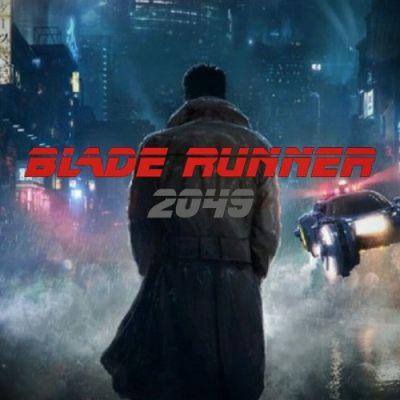
"Blade Runner 2049" Soundtrack Lyrics
Movie • 2017
Track Listing
Frank Sinatra
Elvis Presley
Elvis Presley
Frank Sinatra
Lauren Daigle
"Blade Runner 2049" Soundtrack Description
Questions and Answers
- Is there an official soundtrack album?
- Yes. Blade Runner 2049 (Original Motion Picture Soundtrack) was released October 5, 2017 via ASG Records and distributed by Epic Records.
- Who composed the score?
- Hans Zimmer and Benjamin Wallfisch co-composed the score after Jóhann Jóhannsson departed the project; the album also includes songs by Elvis Presley, Frank Sinatra, and Lauren Daigle (according to Pitchfork).
- Does the soundtrack reference Vangelis’ original score?
- Yes. Cues like “Tears in the Rain” explicitly nod to Vangelis’ 1982 palette while keeping a heavier, more industrial low end.
- Which classic songs appear in the film?
- “Suspicious Minds” and “Can’t Help Falling in Love” (Elvis Presley) and “One for My Baby (And One More for the Road)” (Frank Sinatra) appear diegetically as glitching holograms in Las Vegas.
- What’s the track people talk about during the seawall fight?
- “Sea Wall” — a long, surging action cue underscoring the climactic confrontation near the ocean barriers.
- Is the album on streaming services?
- Yes, the 24-track edition is available on Spotify and Apple Music with a runtime of roughly 1h 26m.
Notes & Trivia
- The soundtrack dropped one day before the U.S. theatrical release — a deliberate “world-build first, then watch” move (as stated in Sony/Epic’s press release).
- Jóhann Jóhannsson originally worked on the film before Zimmer and Wallfisch took over; contractual NDAs limited comment on the change (as reported by Pitchfork and IndieWire).
- A limited 2×LP pressing initially omitted the Elvis and Sinatra cuts for rights/format reasons — later reissues addressed collectors with new variants.
- “Tears in the Rain” titles a cue that directly salutes Vangelis’ iconic “Tears in rain” monologue music from 1982.
- Deva Anderson is credited as music supervisor, coordinating the blend of score, archival vocals, and diegetic holograms.
- The album earned BAFTA and GRAMMY nominations; the field that year was stacked with The Shape of Water, Black Panther, and more (according to the BAFTA and Recording Academy listings).
Overview
How do you follow Vangelis without impersonating Vangelis? Blade Runner 2049 aims for a paradox: embrace the original’s ghost while building a new body. Zimmer and Wallfisch answer with cathedral-sized sub-bass, CS-80–flavored swells, and a sheet-metal roar that makes 2049’s world feel physically heavier. The music doesn’t just score neon; it scores gravity.
Because so many cues bleed into the diegesis — especially the Vegas sequence where glitching icons croon from broken holograms — the film turns music into architecture. A crooner standard can suddenly become a threat signal. A prayer-like synth bed can become a character’s pulse. The album plays like a city breathing: slow thunder, sudden sirens, then tender, human-sized motifs (“All the Best Memories Are Hers”). (according to Rolling Stone)
Genres & Themes
- Neo-synth & industrial bass → Weight of the future: Low-frequency drones and distorted pulses amplify 2049’s environmental collapse and moral rot.
- Retro standards → Ghosts of memory: Elvis and Sinatra arrive as fragmenting holograms; nostalgia literally breaks apart on-screen.
- Ambient elegy → Identity & empathy: Long pads and distant choral textures accompany questions of personhood, love, and chosen memory.
- Motivic callbacks → Continuity with 1982: Titles and harmonic colors (“Tears in the Rain,” “Blade Runner”) gesture back without pastiche (as AllMusic-style credits note across editions).
Key Tracks & Scenes
“2049” — Zimmer & Wallfisch
Where it plays: Opening titles and K’s first sweep, establishing the city’s mass.
Why it matters: A manifesto cue: seismic bass + retro synths set the new tone while acknowledging the old.
“Sapper’s Tree” — Zimmer & Wallfisch
Where it plays: Early at Sapper Morton’s farm; frames that bone-white protein world with austere pulses.
Why it matters: Signals the film’s intimacy — brutality shot up close, scored with restraint.
“Mesa” — Zimmer & Wallfisch
Where it plays: At Wallace Corp headquarters when K is processed and evaluated; sleek, oppressive design mirrored in the cue’s glacial swells.
Why it matters: Corporate omnipotence in sound: the synths feel like moving walls.
“One for My Baby (And One More for the Road)” — Frank Sinatra
Where it plays: K triggers a holographic Sinatra performance via a vintage jukebox in the abandoned Vegas casino; fully diegetic.
Why it matters: Crooner loneliness becomes thematic shorthand for K’s own isolation and Deckard’s exile.
“Suspicious Minds” — Elvis Presley
Where it plays: Glitching Elvis hologram during K and Deckard’s first fight in Las Vegas; diegetic, intermittently cutting out.
Why it matters: Nostalgia literally misfires — love songs as broken tech; the past can’t play cleanly anymore.
“Sea Wall” — Zimmer & Wallfisch
Where it plays: The climactic seawall confrontation near the ocean barriers late in the film; non-diegetic.
Why it matters: A heaving, percussive build that pins the action to a sense of physical risk and sacrifice.
Track–Moment Index (selected)
| Track | Scene / Description | Approx. Time | Diegetic? | Notes |
|---|---|---|---|---|
| 2049 | Opening titles; city establishing sweep. | ~00:01 | Non-diegetic | Announces the new sonic weight. |
| Sapper’s Tree | K arrives at Sapper Morton’s farm. | ~00:05 | Non-diegetic | Austere pulses punctuate the first fight. |
| Mesa | Wallace Corp processing / baseline evaluation. | ~00:35 | Non-diegetic | Glacial synth pressure mirrors surveillance. |
| One for My Baby | K picks a Sinatra hologram in the vintage casino; Deckard watches. | ~01:50 | Diegetic | Cracked nostalgia as character language. |
| Suspicious Minds | Elvis hologram stutters during K vs. Deckard scuffle in Vegas. | ~01:52 | Diegetic | Playback glitches are part of the scene rhythm. |
| Sea Wall | Final fight by the seawall amid crashing surf. | ~02:25 | Non-diegetic | Signature action cue of the film. |
Music–Story Links (characters & plot beats as connected to songs)
- K’s identity crisis → “2049” + baseline motif: The opening’s tectonic synths return around his evaluations, making procedure feel like ritual.
- Deckard’s exile → Sinatra & Elvis holograms: He lives in a mausoleum of entertainment; the standards he once might have loved now glitch like unreliable memories.
- Joi’s intimacy → “All the Best Memories Are Hers”: The cue softens the soundstage, framing synthetic affection as real experience.
- Choice & sacrifice → “Sea Wall”: The score dials into breath and impact, letting the music carry what dialogue can’t at the end.
How It Was Made (supervision, score, behind-the-scenes)
Director Denis Villeneuve asked for a sound that honored Vangelis without copying him. After early work with Jóhann Jóhannsson ended, he brought in Hans Zimmer and Benjamin Wallfisch, who built a palette around massive analog-style synths, brutalist bass, and meticulous sound design. Recording and mixing engineer Alan Meyerson helped make those lows theatrical without smearing detail, while music supervisor Deva Anderson corralled clearances and on-screen crooner cues. (as stated in 2017 industry coverage and the film’s credits)
On the album side, ASG Records partnered with Epic to distribute a 24-track digital release, then a 2×CD and various limited vinyl editions. The score producers — Michael Hodges, Kayla Morrison, Ashley Culp — oversaw sequencing that lets the record breathe like the film: thunder, then hush, then a human-scale epilogue. (according to Epic/Sony Music’s announcement)
Reception & Quotes
The consensus: thunderous, textural, and reverent without being retro cosplay. Awards bodies noticed, too — BAFTA nomination for Original Music and a GRAMMY nomination for Best Score Soundtrack for Visual Media.
“Zimmer and Wallfisch’s score keeps faith with Vangelis while adding industrial heft.” Pitchfork (news brief)
“The bold and unmistakable sound of 2049.” Epic Records press materials
“A searing action centerpiece — ‘Sea Wall’ feels like collapsing concrete.” Film music reviewers’ roundups
Technical Info
- Title: Blade Runner 2049 (Original Motion Picture Soundtrack)
- Year: 2017
- Type: Movie soundtrack
- Composers: Hans Zimmer; Benjamin Wallfisch
- Music supervision: Deva Anderson
- Label / release: ASG Records (Alcon Sleeping Giant); distributed by Epic Records — digital Oct 5, 2017; 2×CD later in Oct; multiple limited vinyl editions
- Selected notable placements: “One for My Baby (And One More for the Road)” — Frank Sinatra (Vegas jukebox); “Suspicious Minds” — Elvis Presley (glitching hologram fight); “Sea Wall” — climactic seawall battle; “Tears in the Rain” — closing homage cue
- Awards: BAFTA nomination (Original Music); GRAMMY nomination (Best Score Soundtrack for Visual Media)
- Availability: 24-track edition on major streamers; some early vinyl pressings omitted the Elvis/Sinatra tracks due to licensing limits (as reported by The Vinyl Factory and retailers)
Canonical Entities & Relations
| Subject | Relation | Object |
|---|---|---|
| Hans Zimmer | co-composed score for | Blade Runner 2049 (2017) |
| Benjamin Wallfisch | co-composed score for | Blade Runner 2049 |
| Jóhann Jóhannsson | was initially attached to | Blade Runner 2049 score; later departed |
| ASG Records | released | Blade Runner 2049 (Original Motion Picture Soundtrack) |
| Epic Records | distributed | the official soundtrack |
| Deva Anderson | served as | music supervisor |
| Michael Hodges; Kayla Morrison; Ashley Culp | produced | soundtrack album |
| Frank Sinatra | performs | “One for My Baby (And One More for the Road)” (diegetic in-film) |
| Elvis Presley | performs | “Suspicious Minds” / “Can’t Help Falling in Love” (diegetic holograms) |
| Lauren Daigle | performs | “Almost Human” (end titles track) |
Sources: Epic Records / ASG press materials; Pitchfork; IndieWire; The Vinyl Factory; Apple Music; Spotify; IMDb Soundtracks & Credits; Off-world (Blade Runner Wiki); SoundWorks Collection; Discogs; Wikipedia (film & soundtrack entries).
The film was one of the most anticipated releases of 2017. It had three official trailers and was expected to surpass the original Blade Runner, also starring Harrison Ford (though this time, he doesn’t take center stage, merely reprising his role). Time never stands still, and now the leading man is Ryan Gosling. The production budget is also impressive — estimated at $185 million, compared to just $4 million in box office earnings one day before the official release. Let’s hope it doesn’t turn out to be a box office flop.
The soundtrack features two legendary performers: Elvis Presley and Frank Sinatra. They contribute some of the most iconic songs of their careers — Elvis performs “Can’t Help Falling in Love” and Frank delivers “One for My Baby.” You’ve definitely heard “Can’t Help Falling in Love” with its tender, heartfelt lyrics. It has been covered countless times since its debut, but the original still remains the most sensual and timeless version.
All the trailers feel almost too epic for such a film. Ryan Gosling plays a decent man seeking the truth — a familiar type for him. Harrison Ford appears as an elder figure who holds the answers. Ana de Armas is the beautiful face of the story; Sylvia Hoeks is even more striking. Robin Wright plays a seasoned woman who hides the truth. Lennie James — familiar from The Walking Dead — portrays a similar role here, a sort of drifter in fitting attire. Dave Bautista is, as always, the tough guy (that same not-so-bright fellow from Guardians of the Galaxy), and Jared Leto is the calm, eerie mastermind who seems to control everyone — the one who probably needs to die for others to finally breathe freely. That’s the basic picture, and there isn’t much beneath the surface — except, perhaps, the lyrics of the great songs on the film’s soundtrack.
October, 24th 2025
Read user reviews on IMDb and Rotten TomatoesA-Z Lyrics Universe
Cynthia Erivo Popular
Ariana Grande Horsepower
Post Malone Ain't No Love in Oklahoma
Luke Combs Good Riddance (Time of Your Life)
Green Day Bye Bye Bye
*NSYNC You're the One That I Wan
John Travolta & Olivia Newton-John I Always Wanted a Brother
Braelyn Rankins, Theo Somolu, Kelvin Harrison Jr. and Aaron Pierre The Power of Love
Frankie Goes to Hollywood Beyond
Auli’i Cravalho feat. Rachel House MORE ›