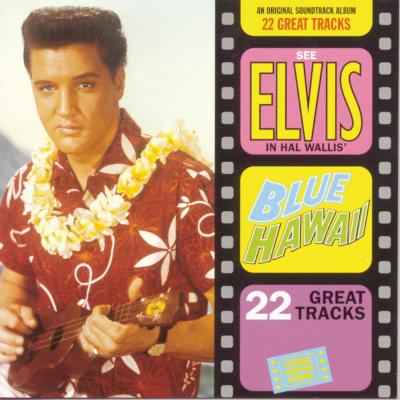
"Blue Hawaii" Soundtrack Lyrics
Movie • 1997
Track Listing
Elvis Presley
Elvis Presley
Elvis Presley
Elvis Presley
Elvis Presley
Elvis Presley
Elvis Presley
Elvis Presley
Elvis Presley
Elvis Presley
Elvis Presley
Elvis Presley
Elvis Presley
Elvis Presley
Elvis Presley
Elvis Presley
Elvis Presley
Elvis Presley
Elvis Presley
Elvis Presley
Elvis Presley
Elvis Presley
"Blue Hawaii" Soundtrack Description
Questions and Answers
- Is there an official soundtrack album for Blue Hawaii?
- Yes. RCA Victor issued the original LP in 1961, and it’s been reissued many times—most notably an expanded CD in 1997 and a deluxe Follow That Dream edition later.
- Which song plays during the wedding finale at Coco Palms?
- “Hawaiian Wedding Song” underscores the lagoon ceremony, the film’s last major musical beat.
- When does Elvis sing “Can’t Help Falling in Love” in the film?
- Early in the story he serenades Maile on ukulele—an intimate diegetic moment that became the film’s signature.
- Who handled the score and musical direction?
- Joseph J. Lilley served as musical director; the film primarily features songs performed by Elvis with small score cues bridging scenes.
- Where and when were the recordings made?
- Sessions took place at Radio Recorders, Hollywood, March 21–23, 1961, with Elvis, the Jordanaires and top Nashville/West Coast players.
- Is the 1997 CD different from later editions?
- Yes. The 1997 reissue expanded the program; a later 2008 FTD edition added many alternates and corrected a stereo-channel issue.
Notes & Trivia
- The title song “Blue Hawaii” originated in Bing Crosby’s 1937 film Waikiki Wedding; Elvis’ version reintroduced it to a new audience.
- “Can’t Help Falling in Love” borrows its melody from the 18th-century French song “Plaisir d’amour.”
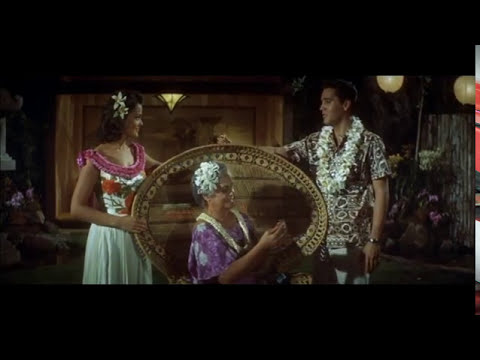
- The wedding finale was filmed at the Coco Palms lagoon on Kauaʻi—now a pilgrimage spot for film and music fans.
- The 1961 album spent 20 weeks at No. 1 on the U.S. pop LP chart (as stated by the Recording Industry Association of America and chart histories).
- Elvis sings “Beach Boy Blues” from a jail cell—one of the film’s slyest in-character performances.
- The 1997 CD reissue expanded the program; the later FTD edition corrected an earlier stereo-channel swap.
- “Rock-A-Hula Baby” shares single billing with “Can’t Help Falling in Love,” creating one of Elvis’ most durable A/B sides (according to Billboard chart retrospectives).
Overview
Why does a jailhouse blues land in the middle of a honeymoon fantasy? That’s the neat paradox of Blue Hawaii. The soundtrack balances postcard exotica (steel guitars, ukuleles, lush backing vocals) with Presley’s charm offensive, flipping between moonlit serenades and party-starting rockers. The film is light on plot and heavy on vibe, so the album carries real narrative weight—each cue ushers viewers from flirtation to fallout to reconciliation.
What makes it distinct is economy and placement. The record runs just over half an hour, yet front-loads standards—“Blue Hawaii,” “Can’t Help Falling in Love,” “Rock-A-Hula Baby”—and saves scene-specific gems for character business (“Beach Boy Blues” becomes plot commentary). The result: a soundtrack that doubles as travel brochure and character diary. (according to Entertainment industry histories, the LP’s long reign atop the charts cemented the Presley-movie formula.)
Genres & Themes
- Hapa-haole pop & Hawaiian standards → idealized island romance; location becomes a character.
- Early-’60s rock & roll shakers (“Rock-A-Hula Baby”) → group energy, party momentum, comic release.
- Orchestral easy listening ballads (“Can’t Help Falling in Love”) → sincerity, courtship, emotional anchor.
- Bluesy pastiche (“Beach Boy Blues”) → self-aware humor; the hero in a pinch, singing the punchline.
Key Tracks & Scenes
“Blue Hawaii” — Elvis Presley
Where it plays: Opening travelogue/credits, establishing the sun-kissed setting (approx. 00:01:00; non-diegetic).
Why it matters: Reprises a 1937 standard while planting the film’s dreamy postcard mood.
“Can’t Help Falling in Love” — Elvis Presley
Where it plays: Ukulele serenade to Maile early on (c. 00:25:00; diegetic).
Why it matters: The film’s emotional thesis in three minutes; a concert-closing staple for Elvis ever after.
“Rock-A-Hula Baby” — Elvis Presley
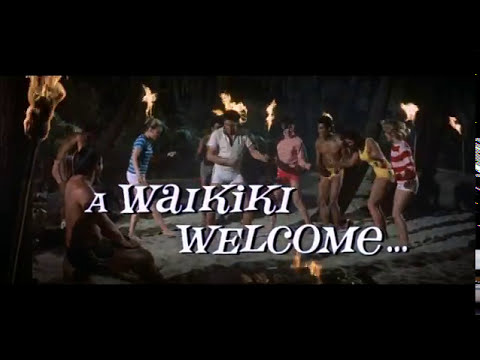
Where it plays: Party sequence with dancers and band (c. 00:52:00; diegetic).
Why it matters: Injects kinetic release and shows the movie’s easy swing between romance and revelry.
“Beach Boy Blues” — Elvis Presley
Where it plays: Sung from a jail cell after a fracas (timestamp ~01:10:44; diegetic).
Why it matters: A wink at the plot; Presley leans into blues phrasing while keeping things light.
“Hawaiian Wedding Song” — Elvis Presley
Where it plays: Finale at Coco Palms lagoon on Kauaʻi (c. 01:37:00; mostly non-diegetic underscoring).
Why it matters: Resolution music: ceremony, closure, and one last scenic swoon.
Track–Moment Index (approximate)
| Track | Scene / Description | Timestamp | Length on album | Diegetic? |
|---|---|---|---|---|
| Blue Hawaii | Opening credits & island montage | ~00:01:00 | ~2:35 | No |
| Can’t Help Falling in Love | Ukulele serenade to Maile at home | ~00:25:00 | ~3:05 | Yes |
| Rock-A-Hula Baby | Party performance with dancers | ~00:52:00 | ~1:58 | Yes |
| Beach Boy Blues | Jail cell quip-song after the fight | 01:10:44 | ~2:01 | Yes |
| Hawaiian Wedding Song | Wedding at Coco Palms lagoon | ~01:37:00 | ~2:47 | Mostly No |
Music–Story Links (characters & plot beats)
- Chad’s ukulele serenade (“Can’t Help Falling in Love”) flips the playboy image into earnest suitor—music as character pivot.
- The raucous party cue (“Rock-A-Hula Baby”) resets the group dynamic after parental pressure scenes—music as social glue.
- “Beach Boy Blues” turns consequence into comedy; singing from the cell reframes a brawl as a breezy misstep.
- The Coco Palms finale pairs setting and song—“Hawaiian Wedding Song” seals the arc and the travel-brochure fantasy at once.
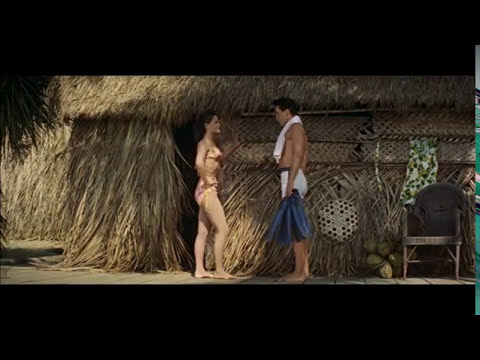
How It Was Made (supervision, score, behind-the-scenes)
Recording spanned three tightly scheduled days at Radio Recorders in Hollywood with Nashville royalty—Floyd Cramer (piano), Boots Randolph (sax), Hank Garland (guitar)—plus the Jordanaires and island-flavored specialists on ukulele and steel. RCA’s Steve Sholes produced; Joseph J. Lilley steered on the film side as musical director.
The soundtrack strategy—pack the film with more songs than a typical musical—worked so well it shaped Presley’s ’60s career. The 1997 CD reissue added outtakes and alternates; a later 2-disc FTD edition dug deeper and fixed a stereo channel reversal heard on the ’97 disc. (as stated by label discography notes and fan-club archival research)
Reception & Quotes
The album dominated U.S. and U.K. charts and nabbed a Grammy nomination for Best Sound Track Album. Decades on, “Can’t Help Falling in Love” remains Presley’s most-streamed track (as noted by industry tallies), and the film is still the shorthand for his island era.
“As a piece of escapist entertainment, Blue Hawaii could not be more perfectly gauged… and that soundtrack is why.” Entertainment Weekly, film rankings
“Twenty weeks at No. 1—Blue Hawaii was a commercial juggernaut.” Billboard chart histories
“‘Can’t Help Falling in Love’ is the film’s immortal export.” Rolling Stone commentary
Availability: The original LP is widely available on streaming; the 1997 expanded CD is common on the secondary market; the FTD deluxe remains a specialty label item. (as stated in the Recording Academy’s historical notes and label catalogs)
Technical Info
- Title: Blue Hawaii — Original Motion Picture Soundtrack
- Year: 1997 (expanded CD reissue; source film and first LP 1961)
- Type: Movie soundtrack (linked to the 1961 Paramount film)
- Primary performer: Elvis Presley (with The Jordanaires)
- Producer (album): Steve Sholes
- Musical director (film): Joseph J. Lilley
- Recording venue/dates: Radio Recorders, Hollywood — March 21–23, 1961
- Label: RCA Victor (reissue programs incl. 1997 CD; later FTD deluxe)
- Notable placements: “Can’t Help Falling in Love” (serenade), “Beach Boy Blues” (jail scene), “Hawaiian Wedding Song” (wedding finale)
- Accolades: Grammy nomination (Best Sound Track Album, 1961)
- Chart notes: U.S. pop LPs—20 weeks at No. 1; extensive multi-year chart run (as stated in chart reference books)
- Availability: Streaming (standard 14-track program); 1997 CD (expanded); FTD 2-CD (alternates/repairs)
Canonical Entities & Relations
| Subject | Relation | Object |
|---|---|---|
| Elvis Presley | performs | Blue Hawaii songs |
| Joseph J. Lilley | music director for | Blue Hawaii (film) |
| Steve Sholes | produced | Blue Hawaii (soundtrack album) |
| Norman Taurog | directed | Blue Hawaii (1961 film) |
| Hal B. Wallis | produced | Blue Hawaii (1961 film) |
| Paramount Pictures | distributed | Blue Hawaii (film) |
| Coco Palms Resort (Kauaʻi) | location of | Wedding finale sequence |
| RCA Victor | released | Original 1961 LP (later reissues) |
Sources: Paramount Pictures; RCA Victor/Elvis official discography; Recording Industry Association of America; The Recording Academy; Billboard & chart reference books; Entertainment Weekly; film-location registries.
October, 25th 2025
A-Z Lyrics Universe
Cynthia Erivo Popular
Ariana Grande Horsepower
Post Malone Ain't No Love in Oklahoma
Luke Combs Good Riddance (Time of Your Life)
Green Day Bye Bye Bye
*NSYNC You're the One That I Wan
John Travolta & Olivia Newton-John I Always Wanted a Brother
Braelyn Rankins, Theo Somolu, Kelvin Harrison Jr. and Aaron Pierre The Power of Love
Frankie Goes to Hollywood Beyond
Auli’i Cravalho feat. Rachel House MORE ›