
"Blue Skies" Soundtrack Lyrics
Musical • 1990
Track Listing
"Blue Skies" Soundtrack Description
Questions and Answers
- Is there a 1990 album release of the Blue Skies soundtrack?
- Yes. A U.S. compact disc (Vintage Jazz Classics, cat. no. VJC-1012-2) compiled music from the 1946 film Blue Skies alongside selections from Holiday Inn.
- Are these the original film performances or later studio re-recordings?
- They’re drawn from the film soundtrack sessions and production audio, distinct from Bing Crosby’s separate 1946 Decca studio album tied to the film.
- Who’s responsible for the songs and the score?
- All featured numbers are by Irving Berlin; the film’s musical score/arrangement was overseen by Robert Emmett Dolan, with choreography central to how the numbers land on screen.
- What are the standout cues fans look for on this album?
- “Puttin’ On the Ritz” (Fred Astaire’s showstopper), “You Keep Coming Back Like a Song” (Academy Award–nominated), the title song “Blue Skies,” “Heat Wave,” and the comic duet “A Couple of Song and Dance Men.”
- Did any of the film’s songs chart or get awards recognition?
- Yes. “You Keep Coming Back Like a Song” was an Oscar nominee, and Crosby’s related singles cycle around the film made the U.S. charts in the late 1940s.
- Is the 1990 CD still in print?
- It surfaces as a collector title; expect second-hand availability and occasional reissues/compilations that duplicate much of the content.
Notes & Trivia
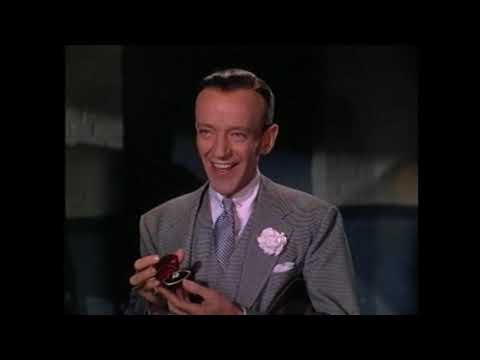
- Fred Astaire’s “Puttin’ On the Ritz” was marketed as his “last dance” in 1946; he retired briefly, then came back swinging (as noted by Turner Classic Movies).
- For “Ritz,” Astaire supervised updated lyrics and a three-part structure; he said the routine took about five weeks to prepare.
- “Heat Wave” tones down a risqué original lyric and climaxes with a daring fall that ends the character’s dance career.
- The 1990 CD (VJC-1012-2) bundles Blue Skies cues with a mini-suite from Holiday Inn, making it a de facto Irving Berlin sampler.
- “You Keep Coming Back Like a Song” earned an Oscar nomination; Crosby’s film-adjacent recordings also hit U.S. charts (per The New York Times archives coverage cited widely).
- Crosby and Astaire also headlined a 5-disc 78rpm album for Decca on release; that package later charted high in 1947.
- Modern home-video restorations highlight the Technicolor staging and the athletic mic’d tap for “Ritz” (according to The Digital Bits review).
Overview
Why does a post-war musical glow so brightly in a 1990 CD? Because Blue Skies pairs Bing Crosby’s unfussy croon with Fred Astaire’s surgical tap—and builds its story from the bones of Irving Berlin’s catalogue. The 1990 disc reframes that 1946 Technicolor blaze as a listening experience: short reprises, overture snippets, full showstoppers, and a few blink-and-you’ll-miss-them cues stitched into a coherent album arc.
It’s a jukebox musical before the term stuck—Berlin standards repurposed to push narrative beats. You hear Crosby ease into “You Keep Coming Back Like a Song,” a theme the film can’t quit; you feel the room tilt when Astaire launches “Puttin’ On the Ritz,” a number that still sounds like footlights snapping on. The CD’s sequencing preserves that balance of velvet and voltage (according to The Digital Bits review).
One more perk: this issue pairs Blue Skies with select Holiday Inn material, underlining how Crosby–Astaire–Berlin interlocked through the 1940s. It plays like a pocket tour of American popular song in transition.
Genres & Themes
- Golden-age Hollywood musical ↔ big-band rhythm sections, sweet chorus voicings, concise cue lengths to match scene work.
- Berlin standards as story engines ↔ familiar melodies repurposed for character decisions (regret, bravado, reconciliation).
- Tap-centric showpieces ↔ percussive dance functioning as “dialogue,” especially in Astaire’s solos.
- Romantic croon ↔ Crosby’s relaxed phrasing telegraphs intimacy and time passing.

Key Tracks & Scenes
“Blue Skies” — Bing Crosby
Where it plays: Crosby serenades Joan Caulfield’s Mary O’Hara; an intimate performance that the film later reprises. Diegetic, club/stage setting.
Why it matters: The title song frames optimism under pressure—the album captures Crosby’s unhurried line and the scene’s soft-focus ache.
“Puttin’ On the Ritz” — Fred Astaire
Where it plays: A late-film solo, staged in sections (office, mirrors, finale), with updated lyrics. Diegetic show number.
Why it matters: It’s the kinetic thesis of the film—precision tap as character portrait. The 1990 disc preserves the full routine’s snap and cane flourishes.
“You Keep Coming Back Like a Song” — Bing Crosby
Where it plays: Recurs as the romantic motif; closes with a duet reprise. Diegetic/transition motif.
Why it matters: The Academy Award–nominated ballad is the film’s emotional spine; on album, its reprises pace the narrative.
“Heat Wave” — Fred Astaire & Olga San Juan
Where it plays: A major Latin-themed production number; San Juan leads before Astaire’s wary approach and a bravura tap break. Diegetic stage moment.
Why it matters: A color-and-rhythm crescendo where choreography signals crisis; the album’s extended take lets the build breathe.
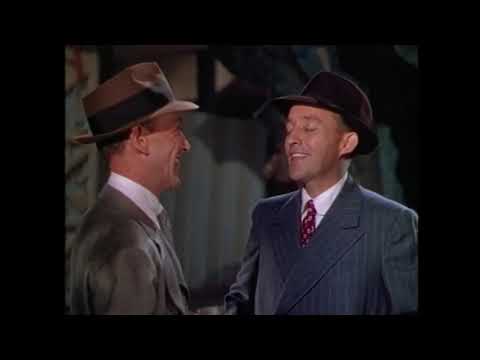
“A Couple of Song and Dance Men” — Crosby & Astaire
Where it plays: A comic duet riffing on their off-screen personas and rehearsal habits.
Why it matters: Chemistry distilled. The joke-tight tradeoffs feel like two emcees swapping hats mid-patter.
Track–Moment Index (concise)
| Track | Album Length | Approx. Film Placement | Scene Context |
|---|---|---|---|
| Puttin’ On the Ritz | ~4:34 | Late act | Astaire’s three-section solo; “last dance” aura. |
| Heat Wave | ~6:42 | Late-mid | San Juan leads; Astaire solo with dramatic fall. |
| You Keep Coming Back Like a Song | ~2:18 (main) | Recurring | Romantic motif; final duet reprise. |
| Blue Skies | ~3:03 | Early–mid | Crosby serenade; tender setup for later choices. |
| A Couple of Song and Dance Men | ~2:23 | Mid-film | Comic duet; friendly one-upmanship. |
Music–Story Links (characters & plot beats)
- When Jed (Astaire) returns to the stage, “Puttin’ On the Ritz” plays like a character confession—ambition, discipline, and loneliness, all in 4/4.
- Johnny (Crosby) uses “You Keep Coming Back Like a Song” as emotional shorthand; every reprise implies the choices he won’t quite make.
- Mary (Caulfield) becomes the hinge between croon and tap: “Blue Skies” promises calm, but choreography keeps undercutting the fantasy.
- “Heat Wave” flips tone into crisis—the spectacular staging masks a relationship free-fall beneath.
How It Was Made (supervision, score, behind-the-scenes)
Irving Berlin’s catalogue powers the film; Robert Emmett Dolan handled the scoring duties, while Hermes Pan (and Dave Robel on “Ritz”) shaped the movement vocabulary that makes these cues land like dialogue. Astaire’s “Ritz” prep famously stretched to weeks of rehearsal, updated lyrics, and a mirror-maze finale engineered to multiply his silhouette.
The 1990 CD curates those on-screen performances and interludes—overtures, stingers, reprises—into a collector-minded listen. It also folds in Holiday Inn highlights, underscoring the Crosby–Astaire–Berlin loop across the decade.
Reception & Quotes
On release, the film sold its songs as much as its story; modern critics still read it as a quintessential “jukebox musical.” The 1990 album does the same for listeners—tight, tuneful, and full of scene-born energy (according to The Digital Bits review).
“Crosby… goes through the film with as much passion as a wet pillow.” The Digital Bits (Blu-ray review)
“Cheerfully diverting… [it] catalogues some songs of Irving Berlin.” The New York Times (Bosley Crowther)
“A Technicolor, Berlin-composed, Crosby-and-Astaire-performed evocation of a cerulean horizon.” ZekeFilm (Blu-ray review)
Availability: The 1990 VJC CD appears on secondary markets; overlapping reissues exist internationally. Expect minor variations in mastering and cue lengths across editions.
Technical Info
- Title: Blue Skies — Original Motion Picture Soundtrack (album pairs with Holiday Inn)
- Year: 1990 (CD issue discussed)
- Type: Musical (film soundtrack compilation)
- Songs by: Irving Berlin
- Score/Arrangements: Robert Emmett Dolan (film)
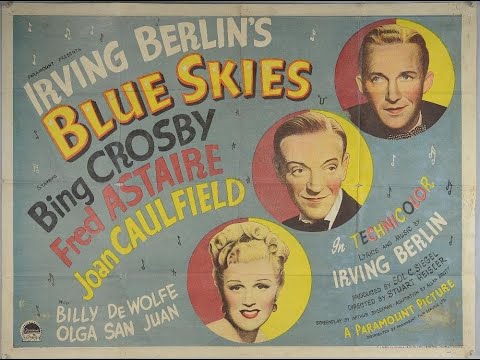
- Primary performers: Bing Crosby, Fred Astaire, Joan Caulfield, Olga San Juan
- Notable placements: “Puttin’ On the Ritz,” “Blue Skies,” “You Keep Coming Back Like a Song,” “Heat Wave,” “A Couple of Song and Dance Men”
- Label (1990 CD): Vintage Jazz Classics — VJC-1012-2 (U.S.)
- Album notes: Compiled cues and film versions; includes Holiday Inn selections; ~37 tracks on this edition
- Awards context: “You Keep Coming Back Like a Song” nominated for Best Original Song
- Studio/Film: Paramount Pictures; released in 1946 (as stated by Turner Classic Movies)
- Chart/legacy notes: Decca’s 78rpm companion album reached high U.S. album chart positions in 1947 (per historical trade coverage).
Canonical Entities & Relations
| Entity | Relation | Entity |
|---|---|---|
| Irving Berlin | wrote songs for | Blue Skies (1946 film) |
| Robert Emmett Dolan | scored | Blue Skies (1946 film) |
| Fred Astaire | performed | “Puttin’ On the Ritz” (film routine) |
| Bing Crosby | performed | “Blue Skies” / “You Keep Coming Back Like a Song” |
| Hermes Pan | choreographed | major dance numbers |
| Stuart Heisler | directed | Blue Skies (1946 film) |
| Paramount Pictures | released | Blue Skies (1946 film) |
| Vintage Jazz Classics | issued | Blue Skies soundtrack CD (1990) |
| Decca Records | released | Blue Skies 78rpm/LP albums (1946–49) |
| Olga San Juan | performed | “Heat Wave” (with Astaire) |
| Joan Caulfield | co-starred in | Blue Skies (1946 film) |
| Holiday Inn (1942 film) | shares music with | 1990 CD compilation |
Sources: Turner Classic Movies; IMDb Soundtracks; Soundtrack Collector; The Digital Bits; ZekeFilm; Wikipedia (film & Decca album entries).
October, 25th 2025
A-Z Lyrics Universe
Cynthia Erivo Popular
Ariana Grande Horsepower
Post Malone Ain't No Love in Oklahoma
Luke Combs Good Riddance (Time of Your Life)
Green Day Bye Bye Bye
*NSYNC You're the One That I Wan
John Travolta & Olivia Newton-John I Always Wanted a Brother
Braelyn Rankins, Theo Somolu, Kelvin Harrison Jr. and Aaron Pierre The Power of Love
Frankie Goes to Hollywood Beyond
Auli’i Cravalho feat. Rachel House MORE ›