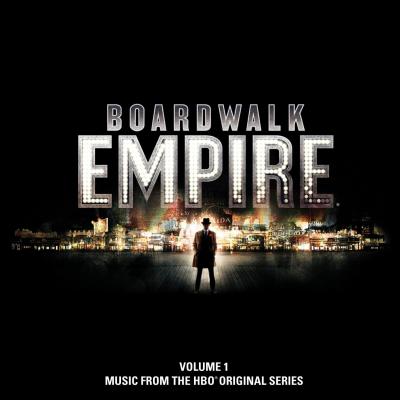
"Boardwalk Empire Vol. 1" Soundtrack Lyrics
TV • 2011
Track Listing
Vince Giordano And The Nighthawks
Stephen DeRosa
Regina Spektor
Vince Giordano And The Nighthawks
Catherine Russell
Vince Giordano And The Nighthawks
Kathy Brier
Vince Giordano And The Nighthawks
Loudon Wainwright III
Vince Giordano and The Nighthawks ft. Nellie McKay
Kathy Brier
Leon Redbone
Vince Giordano And The Nighthawks
Kathy Brier
Martha Wainwright
Stephen DeRosa
"Boardwalk Empire Vol. 1" Soundtrack Description
Questions and Answers
- Is there an official soundtrack album for the show’s early seasons?
- Yes. Boardwalk Empire Vol. 1: Music from the HBO Original Series was released in 2011 on Elektra and compiles era-styled performances tied to Seasons 1–2. (as stated by AllMusic)
- Who shaped the show’s song choices and period sound?
- Music supervisor Randall Poster steered the curation, working closely with Vince Giordano & The Nighthawks to recreate 1910s–20s material with modern fidelity.
- What’s the opening titles music?
- “Straight Up and Down” by The Brian Jonestown Massacre—an intentional anachronism chosen to jolt expectations.
- Did the album win any awards?
- Yes. It earned the 2012 Grammy Award for Best Compilation Soundtrack for Visual Media. (according to the Recording Academy’s listings)
- Are the vocals by cast members or guest artists?
- Both. Cast (e.g., Stephen DeRosa; Kathy Brier) and notable guests (Regina Spektor, Leon Redbone, Loudon Wainwright III) appear, mirroring the show’s mix of diegetic club numbers and background cues.
- Is the album focused on vintage transfers or new recordings?
- Primarily new recordings in period arrangements—that’s why the sound is clean yet era-accurate, a production hallmark of the series band.
Notes & Trivia
- The album arrived September 13, 2011, on Elektra; it later charted on Billboard’s Top Jazz Albums. (as stated in Entertainment Weekly’s listing and industry charts)
- Terence Winter okayed a rock-leaning opener (“Straight Up and Down”) to signal a modern POV on a period story.
- Vince Giordano & The Nighthawks functioned like the show’s in-house orchestra, cutting multiple sides in 1920s instrumentation.
- Cast vocal turns matter: Stephen DeRosa channels Eddie Cantor, and Kathy Brier channels Sophie Tucker’s belt—both are on the album.
- Loudon Wainwright III’s haunting “Carrickfergus” plays out an episode’s end credits (Season 1, Ep. 5), then lands on the album.
- The compilation won a Grammy the year after release; Volume 2 (2013) followed with indie luminaries covering Prohibition standards. (according to Pitchfork)
Overview
Why does a Jazz Age drama open with a modern psych-rock riff? Because Boardwalk Empire treats history as a living, pulsing organism. Vol. 1 captures that energy in studio-fresh recordings that honor 1910s–20s repertoire without embalming it. Brass bites, reeds purr, and voices—sometimes by the cast—sell the swagger and ache of Prohibition nightlife.
Rather than crate-digger “exact reissues,” the album leans on meticulous re-creations by Vince Giordano & The Nighthawks and guests like Regina Spektor, Leon Redbone, Loudon Wainwright III, and Martha Wainwright. It’s jukebox and narrative engine at once: club numbers work diegetically on screen, then replay on the album as self-contained performances. (according to NME magazine)
Genres & Themes
- Hot jazz & early big-band → social heat, political deal-making, and the thrill of vice.
- Vaudeville belters (Tucker/Cantor lineage) → power, desire, and showbiz survival (heard via Kathy Brier & Stephen DeRosa).
- Irish folk (“Carrickfergus”) → memory and exile, a melancholy counterpoint to Atlantic City bravado.
- Blues standards → consequences under the glitter; Catherine Russell’s “Crazy Blues” shades the show’s moral hangover.
- Contemporary opener → Brian Jonestown Massacre’s “Straight Up and Down” frames the series with tension and surprise.
Key Tracks & Scenes
“I Never Knew I Had a Wonderful Wife (Till the Town Went Dry)” — Stephen DeRosa with Vince Giordano & The Nighthawks.
Where it plays: The pilot interweaves the Cantor number with Nucky’s hospital visit and domestic cross-cuts (diegetic-to-non-diegetic bleed). Approx. end-sequence montage.
Why it matters: A cheeky Prohibition lyric turns into moral irony for Atlantic City’s power brokers.
“Some of These Days” — Kathy Brier (as Sophie Tucker).
Where it plays: Season 1, Episode 9 “Belle Femme” — Tucker performs it in-club as Nucky angles for a new mayor; reprises into end credits. ~00:50–00:58.
Why it matters: The torch-song’s toughness mirrors Nucky’s consolidation move—glamour masking ruthlessness.
“Carrickfergus” — Loudon Wainwright III.
Where it plays: Season 1, Episode 5 ending — rolls over closing credits. ~00:56–00:58.
Why it matters: A seafaring lament pulls the gaze off the boardwalk lights toward loss and longing—an elegy inside a crime saga.
“After You Get What You Want (You Don’t Want It)” — Kathy Brier.
Where it plays: Season 1 finale “A Return to Normalcy” features Brier’s Berlin showstopper in the club setting (diegetic performance) early in the episode’s political-night sweep.
Why it matters: Berlin’s punchline doubles as a theme for the series: appetite, satisfaction, and the next scheme.
“My Man” — Regina Spektor.
Where it plays: Recorded for the album; used around the series’ club ambience as a mood signifier.
Why it matters: A modern voice interpreting a 1921 torch classic underlines the show’s new/old balancing act.
Track–Moment Index (selected)
| Track | Episode | Approx. Time | Placement | Scene / Moment |
|---|---|---|---|---|
| I Never Knew I Had a Wonderful Wife | Pilot | ~00:55 | Diegetic→non-diegetic | Hospital visit cross-cut; wry Prohibition punchline over montage |
| Some of These Days | S1E9 “Belle Femme” | ~00:50–00:58 | Diegetic & end credits | Sophie Tucker performance as Nucky makes a pivotal ask |
| Carrickfergus | S1E5 | ~00:56–00:58 | End credits | Quiet, mournful end-cue after a bruising hour |
| After You Get What You Want | S1E12 “A Return to Normalcy” | ~00:05 | Diegetic | Early club sequence as election-night machinations spool up |
Music–Story Links (characters & plot beats as connected to songs)
- Ambition framed as entertainment: The Tucker numbers (“Some of These Days,” “After You Get What You Want”) are staged as spectacle while Nucky reassigns power—lyrics telegraph his transactional worldview.
- Elegy amid empire-building: “Carrickfergus” closes S1E5 with Irish melancholy that refracts the show’s immigrant backstories and Jimmy’s uneasy orbit.
- Prohibition’s punchline: “Wonderful Wife (Till the Town Went Dry)” winks at the social engineering behind bootlegging—it’s funny until the montage turns sobering.
- Modern ear, period heart: the rock opener cues us to watch for timeless motives under antique costumes.
How It Was Made (supervision, score, behind-the-scenes)
Randall Poster’s supervision pulled together a hybrid approach: period repertoire, newly recorded in historically correct orchestrations, cut largely with Vince Giordano & The Nighthawks as the show’s engine room. Guest singers (Regina Spektor, Leon Redbone, the Wainwrights) were then cast for character and color—a method that made the “jukebox” feel like part of the narrative architecture.
The title cue—The Brian Jonestown Massacre’s “Straight Up and Down”—was picked specifically to feel “unexpected” over 1920 visuals, a creative decision signed off by Terence Winter. The result: a sonic identity that announces itself before a line is spoken. (as stated in The Hollywood Reporter)
Reception & Quotes
Upon release, the album drew praise for its fidelity and freshness, and it took home the Grammy for Best Compilation Soundtrack for Visual Media the following winter. Volume 2 (2013) extended the concept with indie luminaries covering Prohibition standards—proof the formula scaled. (as stated in 2013 Pitchfork coverage)
“A simply great jukebox—historically tuned, dramatically alive.” The Guardian on Poster’s soundtrack work
“Period music that doesn’t feel like museum audio.” Critics on the Giordano sessions
Technical Info
- Title: Boardwalk Empire Vol. 1: Music from the HBO Original Series
- Year: 2011
- Type: TV soundtrack (compilation)
- Label: Elektra Records
- Key Contributors: Randall Poster (music supervisor); Vince Giordano & The Nighthawks (principal ensemble); featured performances by Stephen DeRosa, Kathy Brier, Regina Spektor, Leon Redbone, Loudon Wainwright III, Martha Wainwright, Catherine Russell, Nellie McKay
- Theme Music: “Straight Up and Down” — The Brian Jonestown Massacre
- Awards: Grammy Award — Best Compilation Soundtrack for Visual Media (2012)
- Availability: Digital and CD; original release September 13, 2011
Canonical Entities & Relations
| Subject | Relation | Object |
|---|---|---|
| Randall Poster | music-supervised | Boardwalk Empire (HBO series) |
| Vince Giordano & The Nighthawks | performed | multiple tracks on Vol. 1 |
| Regina Spektor | performed | “My Man” on Vol. 1 |
| Loudon Wainwright III | sang | “Carrickfergus” (S1E5 end credits; album version) |
| Kathy Brier | portrays | Sophie Tucker; performs “Some of These Days” & “After You Get What You Want” |
| Terence Winter | approved opener | “Straight Up and Down” for main titles |
| Elektra Records | released | Boardwalk Empire Vol. 1 (2011) |
Sources: AllMusic; The Hollywood Reporter; Wikipedia; Apple Music; Vince Giordano (official); Pitchfork; Boardwalk Empire Wiki (Fandom); IMDB Soundtrack listings; Archeophone Records.
October, 25th 2025
'Boardwalk Empire Vol. 1': Wikipedia, DiscogsA-Z Lyrics Universe
Cynthia Erivo Popular
Ariana Grande Horsepower
Post Malone Ain't No Love in Oklahoma
Luke Combs Good Riddance (Time of Your Life)
Green Day Bye Bye Bye
*NSYNC You're the One That I Wan
John Travolta & Olivia Newton-John I Always Wanted a Brother
Braelyn Rankins, Theo Somolu, Kelvin Harrison Jr. and Aaron Pierre The Power of Love
Frankie Goes to Hollywood Beyond
Auli’i Cravalho feat. Rachel House MORE ›