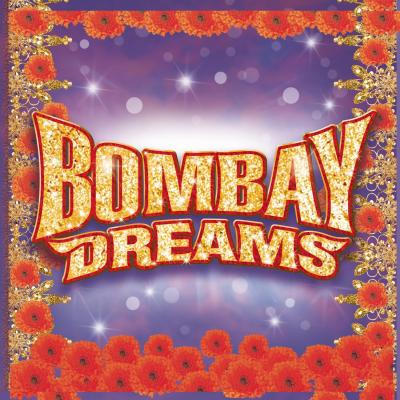
"Bombay Dreams" Soundtrack Lyrics
Musical • 2002
Track Listing
"Bombay Dreams" Soundtrack Description

Questions and Answers
- Is there an official soundtrack album?
- Yes—the Original London Cast Recording (2002) is widely available on streaming and CD; it’s the canonical album for the show.
- Who wrote the score and lyrics?
- Music by A. R. Rahman, lyrics by Don Black; the book is by Meera Syal and Thomas Meehan (as stated on Andrew Lloyd Webber’s official site).
- What’s the big splashy number with the onstage water?
- “Shakalaka Baby” — the famous wet-sari/fountain sequence that became the production’s calling card on both sides of the Atlantic.
- What ballad carries the late-show emotional payoff?
- “The Journey Home,” sung by Akaash; it functions as a reflective, aspirational soliloquy near the end of Act II.
- Are there different London vs. Broadway song lineups?
- Yes. The Broadway version reshuffled material and introduced changes to song order and content; numbers like “How Many Stars?” and “Is This Love?” featured prominently in the Broadway run (according to Playbill and IBDB listings).
- Who led music supervision/orchestrations on Broadway?
- Paul Bogaev handled musical supervision/orchestrations (Tony-nominated), while the West End production featured key arranging/orchestration work by Christopher Nightingale.
Notes & Trivia
- The show’s signature fountain effect in “Shakalaka Baby” required dedicated plumbing and safety choreography—stagecraft articles singled it out as a technical feat.
- Several tunes were adapted from Rahman’s earlier film hits (e.g., “Chaiyya Chaiyya”), rewritten to serve new plot beats in the stage story (per Variety’s notes on the score’s hybrid nature).
- The London cast album was issued under Andrew Lloyd Webber’s Really Useful Group licensing with Polydor/Universal in the UK and Sony Classical in the U.S. (according to Playbill’s release coverage).
- Broadway kept the “Bollywood goes meta” premise but restructured numbers and tightened the book for New York audiences (as reported by Playbill).
- Rahman’s cross-genre palette—raga to club pop—led TIME to reaffirm his “Mozart of Madras” sobriquet around the show’s Broadway opening.

Overview
Why does a musical about fame dunk its leads in a fountain? Because Bombay Dreams is about spectacle as destiny. Rahman’s score swerves from devotional procession to electro-bhangra to lush melodrama, and the show leans into that elasticity. The soundtrack doubles as a thesis: image is currency, but melody is memory.
On record, the 2002 Original London Cast Recording plays like a guided tour—overture sparkle, party bangers, and introspective ballads. Onstage, the same cues become social signposts: who belongs, who’s pretending, who’s ascending. The music’s job isn’t only to dazzle; it has to sell the dream and then ask what the dream costs. (according to the Andrew Lloyd Webber organization’s production notes)
Genres & Themes
- Bollywood pop & filmi dance ↔ aspiration, stardom mythmaking; upbeat tracks launch Akaash from slum tour guide to screen idol.
- Qawwali/processional cues ↔ communal identity; big-company numbers frame public rituals where private stakes leak out.
- Power ballads ↔ interior reckoning; “The Journey Home” and “How Many Stars?” soundtrack choices over fantasies.
- Hybrid orchestration (Western pit + Indian percussion) ↔ the show’s East–West conversation in sound.
Key Tracks & Scenes
“Shakalaka Baby”
Where it plays: A show-within-the-show film shoot erupts into the famous fountain routine; diegetic dance number that sells Akaash’s rise.
Why it matters: The wet-sari spectacle is the production’s pop billboard—pure fantasy, ruthless optics.
“Chaiyya Chaiyya”
Where it plays: A kinetic ensemble sequence reimagined for the stage; diegetic performance energy bridges plot turns.
Why it matters: Re-purposes a known Rahman anthem to stamp the musical’s Bollywood bona fides while moving the company chessboard.
“How Many Stars?”
Where it plays: Akaash and Priya’s late-act reckoning about love vs. ambition; largely non-diegetic, on a quieter, reflective canvas.
Why it matters: Reorients the narrative from fame to feeling, giving the album one of its most enduring melodies.
“The Journey Home”
Where it plays: Akaash’s Act II soul-search; non-diegetic solo that looks past celebrity to roots and responsibility.
Why it matters: The show’s emotional anchor; on record, it’s a stand-alone highlight.
“Wedding Qawwali”
Where it plays: Festive ceremony number that doubles as a pressure cooker for the leads’ choices; partially diegetic with processional textures.
Why it matters: Fuses community sound with private fallout—classic musical theatre alchemy.
Track–Moment Index (selected)
| Song | Placement | Diegesis | Scene notes |
|---|---|---|---|
| Shakalaka Baby | Act I, mid-show | Diegetic | Film-shoot fountain number; the iconic wet-sari sequence audiences remember first. |
| Chaiyya Chaiyya | Act II, early ensemble | Diegetic | Momentum surge that re-stacks loyalties and rivalries. |
| How Many Stars? | Act II, late | Non-diegetic | Duet of doubt and desire; a pause in the spectacle. |
| The Journey Home | Act II, late solo | Non-diegetic | Akaash reframes success in terms of belonging and purpose. |
| Wedding Qawwali | Act II, finale-adjacent | Mixed | Community celebration scored as narrative crucible. |
Music–Story Links (characters & plot beats)
- When “Shakalaka Baby” erupts, the number doesn’t just entertain—it manufactures a star. The sound is glossy; the fountain tells you who controls the camera.
- “Chaiyya Chaiyya” moves bodies and allegiances at once; rhythm becomes peer pressure, nudging Akaash toward choices he’ll interrogate later.
- “How Many Stars?” flips the lights from neon to starlight—Rahman pares back the groove so Priya and Akaash can hear themselves think.
- “The Journey Home” is the thesis rebuttal to celebrity: melody over machinery; roots over ratings.

How It Was Made (supervision, score, behind-the-scenes)
Conceived by Andrew Lloyd Webber and filmmaker Shekhar Kapur, the musical premiered at London’s Apollo Victoria in 2002 with Rahman’s score, Don Black’s lyrics, and a book by Meera Syal and Thomas Meehan. The Broadway transfer (2004) featured revised structure and song order. (according to Playbill and the Andrew Lloyd Webber organization)
On the music team, Christopher Nightingale contributed arranging/orchestration leadership in the West End, while Broadway credited Paul Bogaev with musical supervision/orchestrations (he earned a Tony nomination for it). The pit blended a traditional show orchestra with Indian percussion and timbres, matching the hybrid sound you hear on the London album.
The cast album was recorded in 2002 with the original London company and issued via Universal/Polydor in the UK and by Sony Classical in the U.S.; it remains the primary listening document of the score (as reported by Playbill).
Reception & Quotes
“At its best… a sweet, exuberantly danced, pop-bright spectacle.” — Variety (London review)
“Broadway, meet Bollywood.” — TIME on Rahman’s crossover impact
Critically, the opulence and choreography drew raves, while the book took heat; awards attention in New York centered on design, choreography, and orchestrations. Commercially, London ran two years before the Broadway transfer. (according to Playbill and IBDB)
Technical Info
- Title: Bombay Dreams
- Year: 2002 (West End premiere); Broadway transfer 2004
- Type: musical (stage)
- Composers/Lyricist: A. R. Rahman (music); Don Black (lyrics)
- Book: Meera Syal & Thomas Meehan
- Original Producer: Andrew Lloyd Webber
- Music Supervision & Orchestrations: West End—arranging/orchestration by Christopher Nightingale; Broadway—musical supervision/orchestrations by Paul Bogaev (Tony nominee)
- Key numbers highlighted: “Shakalaka Baby,” “Chaiyya Chaiyya,” “How Many Stars?,” “The Journey Home,” “Wedding Qawwali”
- Cast Recording: Original London Cast Recording (2002). UK label: Polydor/Universal under licence from The Really Useful Group; U.S. release by Sony Classical (per Playbill’s release notice). Streaming available on major DSPs.
- Notable staging: The “Shakalaka Baby” fountain effect became the show’s hallmark.
Canonical Entities & Relations
| Subject | Relation | Object |
|---|---|---|
| A. R. Rahman | composed music for | Bombay Dreams (stage musical) |
| Don Black | wrote lyrics for | Bombay Dreams (stage musical) |
| Meera Syal | co-wrote book for | Bombay Dreams (stage musical) |
| Thomas Meehan | co-wrote book for | Bombay Dreams (stage musical) |
| Andrew Lloyd Webber | originally produced | Bombay Dreams (stage musical) |
| Christopher Nightingale | arranged/orchestrated for | Bombay Dreams (West End) |
| Paul Bogaev | music supervised & orchestrated | Bombay Dreams (Broadway) |
| Preeya Kalidas / Raza Jaffrey | originated roles in | London production cast |
| Manu Narayan / Anisha Nagarajan | originated roles in | Broadway production cast |
Sources: Andrew Lloyd Webber Organisation; Playbill; IBDB; Variety; TIME magazine; Apple Music/Spotify album listings; stagecraft features on the “Shakalaka Baby” fountain.
October, 25th 2025
A-Z Lyrics Universe
Cynthia Erivo Popular
Ariana Grande Horsepower
Post Malone Ain't No Love in Oklahoma
Luke Combs Good Riddance (Time of Your Life)
Green Day Bye Bye Bye
*NSYNC You're the One That I Wan
John Travolta & Olivia Newton-John I Always Wanted a Brother
Braelyn Rankins, Theo Somolu, Kelvin Harrison Jr. and Aaron Pierre The Power of Love
Frankie Goes to Hollywood Beyond
Auli’i Cravalho feat. Rachel House MORE ›