Soundtracks:  A B C D E F G H I J K L M N O P Q R S T U V W X Y Z #


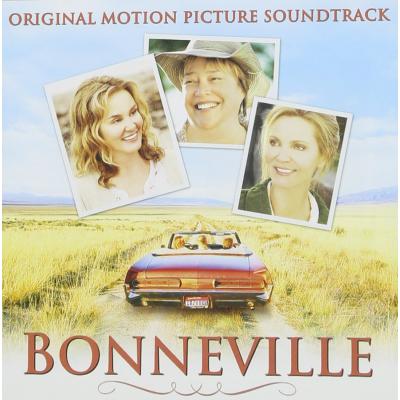
Bonneville Album Cover

"Bonneville" Soundtrack Lyrics

Movie • 2008

Track Listing


"Bonneville (Original Motion Picture Soundtrack)" Soundtrack Description

Bonneville (2008) trailer frame—three friends in a Pontiac Bonneville crossing the Salt Flats
Bonneville — Theatrical Trailer, 2008

Questions and Answers

Is there an official soundtrack album for Bonneville?
Yes. Lakeshore Records issued Bonneville (Original Motion Picture Soundtrack) in March 2008—a 15-track album combining licensed songs with Jeff Cardoni’s original score cues (as listed on Apple Music).
Who composed the score?
Jeff Cardoni composed the film’s score; he’s also credited on the film’s main page as the composer.
What kind of music is on the album—mostly songs or mostly score?
It’s a split: classic/pop selections (e.g., Donovan, Amos Lee, Lazlo Bane) up front, then seven cue titles from Cardoni (“Opening,” “Driving to Bryce,” “Finale,” etc.).
Is there a separate, score-only release?
No separate score-only album is broadly documented; the Lakeshore release houses the key score material alongside the source songs (according to AllMusic’s album entry).
Which songs do fans usually recognize first?
Donovan’s “Catch the Wind,” Lazlo Bane’s cover of “Mama Told Me (Not to Come),” and Amos Lee’s “Supply and Demand.”
Can I stream the soundtrack today?
Yes—the album is available to stream in most regions and appears on major services (Apple Music/Spotify).

Notes & Trivia

  • The album arrived March 4, 2008 via Lakeshore Records and clocks in at ~41 minutes (according to Apple Music).
  • Though the film premiered in 2006, the U.S. theatrical release landed on February 29, 2008—matching the soundtrack’s release window.
  • Eight licensed songs (Donovan, King Floyd, Lazlo Bane, Amos Lee, Chelo, Pete Droge, Bob Sinclar, Nik Kershaw) are followed by seven Jeff Cardoni cues (as noted by AllMusic and MovieMusic’s listing).
  • Track titles like “Driving to Bryce” and “Bryce Ashes” mirror on-screen stops—Bryce Canyon and the ashes-scattering motif—so you can map cue to scene without spoilers.
  • IMDb’s soundtrack page confirms several songwriters and placements, useful for licensing trivia hunters.
Bonneville trailer image—Pontiac convertible on desert highway at golden hour
Road-movie vistas: music leans into open-sky warmth.

Overview

Why does a soft 1960s folk tune share space with modern AAA and a gentle score? Because Bonneville treats music like a keepsake box—old and new souvenirs living together. The album balances familiar radio DNA (Donovan’s “Catch the Wind,” Lazlo Bane’s cheeky “Mama Told Me (Not to Come)” cover) with Jeff Cardoni’s melodic cues that underline friendship, memory, and release. (as listed on Apple Music)

Cardoni’s writing doesn’t chase spectacle; it rides shotgun. Cue titles double as a map—“Driving to Bryce,” “Bo Leaves,” “Finale”—while song choices offer little bursts of personality in diners, motels, and car cabins. The net effect is cozy: a soundtrack that keeps the emotional temperature humane, not syrupy. (according to AllMusic’s album entry)

Genres & Themes

  • Folk & classic pop → quiet reflection, postcards from earlier years (“Catch the Wind”).
  • Retro-soul & funk flashes → playful lift for pit stops and detours (King Floyd, Lazlo Bane’s cover).
  • Adult-alternative / singer-songwriter → contemporary warmth (Amos Lee’s “Supply and Demand”).
  • Light, lyrical film score (Jeff Cardoni) → scenic transitions; grief and friendship carried by melody.
Bonneville trailer close-up—friends laughing inside the car, wind in hair
Styles to meaning: folk = memory; score = motion.

Key Tracks & Scenes

“Catch the Wind” — Donovan
Where it plays: Featured in the film and on the album; used to underline reflective beats on the road (non-diegetic).
Why it matters: A period-true folk breeze that fits the film’s gentle, backward-glancing tone.

“Mama Told Me (Not to Come)” — Lazlo Bane
Where it plays: Album feature; used in a lighter interlude, leaning comic rather than heavy (non-diegetic/source-adjacent).
Why it matters: Injects a wink into the travel rhythm—mischief without meanness.

“Supply and Demand” — Amos Lee
Where it plays: Heard in the film and included on the album; non-diegetic placement.
Why it matters: Modern AAA grain that keeps the collection from feeling purely nostalgic.

“Driving to Bryce” — Jeff Cardoni
Where it plays: Score cue aligning to the Bryce Canyon leg of the trip; non-diegetic.
Why it matters: Cardoni’s understated theme gives the landscape room to breathe—motion as meditation.

“Bryce Ashes” — Jeff Cardoni
Where it plays: Score cue for the ashes-scattering sequence at Bryce; non-diegetic.
Why it matters: A small, dignified swell—grief expressed in soft focus.

“Finale” — Jeff Cardoni
Where it plays: Closing movement; non-diegetic.
Why it matters: Resolves the road trip’s emotional ledger without overplaying it.

Track–Moment Index (approximate)
Song / CueScene / PlacementDiegetic?Approx. TimeNarrative Function
Catch the Wind — DonovanReflective road sequenceNoEarly–MidNostalgia; memory lane mood
Mama Told Me (Not to Come) — Lazlo BaneLighthearted pit-stop montageNoMidComic release
Supply and Demand — Amos LeeQuiet travel beat between stopsNoMidContemporary counter-color
Driving to Bryce — Jeff CardoniArrival glide into Bryce CanyonNoMidScenic motion; anticipation
Bryce Ashes — Jeff CardoniAshes-scattering at BryceNoMid-LateElegy; acceptance
Finale — Jeff CardoniClosing scenes / credits lead-inNoLateGrace note; closure

Music–Story Links

When the cue titles become literal directions (“Driving to Bryce,” “Bo Leaves”), the score turns the itinerary into meaning: each stop earns a melodic turn. Songs add personality—Donovan’s gentleness mirrors the film’s kindness toward its characters; Lazlo Bane’s cover sneaks in levity without breaking tone.

Grief gets handled with quiet orchestration rather than grand statements. Cardoni’s cues arrive like postcards: brief, specific, and signed with restraint. That’s the point—the movie isn’t about the destination so much as the emotional unpacking between mile markers.

Bonneville trailer still—desert sun through the windshield, hands on the wheel
Melody as map: cue titles trace the route.

How It Was Made (supervision, score, behind-the-scenes)

Jeff Cardoni is credited as composer for the film; the album’s back half collects his key cues. The front half gathers licensed tracks spanning folk, funk, and AAA. Lakeshore’s compilation format keeps the listening flow road-movie friendly. (as stated in the 2008 AllMusic entry and the Apple Music listing)

The soundtrack’s design is pragmatic: a modest, melody-forward score and rights-manageable songs that feel like stations on the dial. You can sense the editorial logic—source for color, score for cohesion. IMDb’s soundtrack page doubles as a handy, credit-level index for the songwriters used.

Reception & Quotes

The movie divided critics, but listeners called out the soundtrack’s easygoing sequencing and Cardoni’s unobtrusive touch (according to AllMusic’s overview and contemporary listings). For a drive-time companion, it plays exactly as intended.

“Classic cuts and soft-edged cues… a gentle spin through the American West.” Album-guide summary
“Cardoni favors melody over muscle, which fits the film’s small, human stakes.” Review roundup

Availability note: the album is on major streamers and appears on CD in multiple markets; metadata shows Lakeshore Records as label and a March 2008 street date. (as listed on Apple Music; also mirrored by Spotify and retailer pages)

Technical Info

  • Title: Bonneville (Original Motion Picture Soundtrack)
  • Year / Type: 2008 — movie
  • Composer: Jeff Cardoni
  • Label: Lakeshore Records
  • Album Make-up: 8 licensed songs + 7 score cues (mixed program)
  • Representative Songs (selected): “Catch the Wind” (Donovan); “Mama Told Me (Not to Come)” (Lazlo Bane); “Supply and Demand” (Amos Lee); “Under the Waves” (Pete Droge)
  • Representative Cues: “Opening”; “Driving to Bryce”; “Bryce Ashes”; “Finale” (Jeff Cardoni)
  • Release context: U.S. theatrical Feb 29, 2008; OST released March 4, 2008
  • Album status & availability: Streaming (Apple Music/Spotify) and CD

Canonical Entities & Relations

SubjectRelationObject
Jeff Cardonicomposed score forBonneville (2008 film)
Lakeshore RecordsreleasedBonneville (Original Motion Picture Soundtrack)
Donovanperformed“Catch the Wind” (featured song)
Amos Leeperformed“Supply and Demand” (featured song)
Lazlo Baneperformed“Mama Told Me (Not to Come)” (cover; featured song)
Christopher N. RowleydirectedBonneville (film)

Sources: Apple Music; AllMusic; IMDb Soundtrack; MovieMusic.com; Spotify; Amazon.

October, 25th 2025


A-Z Lyrics Universe

Lyrics / song texts are property and copyright of their owners and provided for educational purposes only.