Soundtracks:  A B C D E F G H I J K L M N O P Q R S T U V W X Y Z #


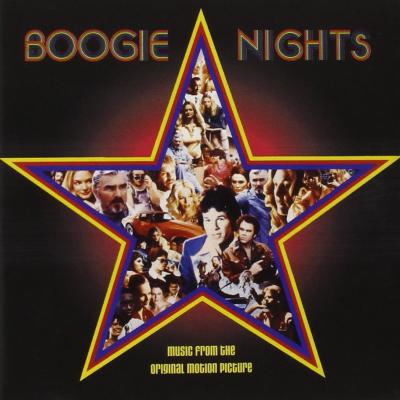
Boogie Nights vol. 1 Album Cover

"Boogie Nights vol. 1" Soundtrack Lyrics

Movie • 1997

Track Listing


"Boogie Nights: Music From the Original Motion Picture (Vol. 1)" Soundtrack Description

Boogie Nights (1997) official trailer thumbnail featuring the ensemble cast under neon lights
Boogie Nights — Official Trailer, 1997

Questions and Answers

Is there an official soundtrack album for the film?
Yes. The first compilation—often called “Vol. 1”—is Boogie Nights: Music From the Original Motion Picture, released in 1997 on Capitol Records.
When did Vol. 1 come out, and who released it?
October 7, 1997, via Capitol Records/EMI. Physical editions include CD and cassette in multiple territories.
Is there a second volume?
Yes. Boogie Nights #2 (More Music From the Original Motion Picture) followed in 1998, gathering additional cues from the movie.
Who composed the film’s original score?
Michael Penn composed the score; his instrumental “The Big Top (Theme from ‘Boogie Nights’)” closes Vol. 1.
Who supervised the music?
Karyn Rachtman and Bobby Lavelle handled music supervision and clearances on the film and album releases.
What are the most talked-about song moments?
The opening club oner to “Best of My Love,” and the late drug-deal sequence scored to “Sister Christian” and “Jessie’s Girl” (with those nerve-jangling firecrackers).

Notes & Trivia

  • Vol. 1 arrived October 7, 1997, just days before the U.S. theatrical rollout; Capitol handled the release.
  • Track 13 on Vol. 1 is Michael Penn & Patrick Warren’s nine-minute “The Big Top (Theme from ‘Boogie Nights’),” a mini-suite that ties the needle-drops together.
  • Vol. 2 dropped in 1998, adding jukebox staples like “Mama Told Me (Not to Come),” “Joy,” and “Jessie’s Girl.”
  • The film famously opens with an unbroken club shot set to The Emotions’ “Best of My Love”—a disco calling card for the whole soundtrack (as noted by ScreenRant).
  • Yes, Heatwave’s 1976 hit “Boogie Nights” is not in the film or on the albums—an oft-asked bit of trivia.
Trailer frame: the tracking shot into the 1970s nightclub that sets the film’s musical tone
That opening oner + “Best of My Love” = mission statement.

Overview

Why does a sprawling adult-industry saga feel like a mixtape you can’t put down? Because Boogie Nights treats songs as emotional scene partners, not mere wallpaper. Vol. 1 packs 1970s radio oxygen—disco, soft rock, Latin-funk novelties—then lets Michael Penn’s carousel-like theme glue it all together. It’s cinema via crate-digging: needle-drops that chart innocence, ascent, burnout, and uneasy rebirth.

Capitol’s compilation mirrors the movie’s arc. Early tracks chase the giddy, communal rush of fame; mid-film cuts lean sleeker and shinier; late-reel cues get brittle and dangerous. You can hear the decade flip without a calendar. (According to AllMusic’s capsule and Apple Music’s listing, Vol. 1 deliberately balances hits with left-field selections to match the film’s tonal swing.)

Genres & Themes

  • Disco & Philly soul → communal high, found family; the club as sanctuary (e.g., The Emotions).
  • AM soft rock → romance and denial; sunshine melodies masking hairline cracks.
  • Latin-funk/novelty grooves (“Jungle Fever”) → sensuality as spectacle; winking, gaudy glamour.
  • Power-ballad arena rock (“Sister Christian”) → counterfeit confidence; menace grinning behind nostalgia.
  • Original score (Michael Penn) → carnival melancholy; a revolving-door motif that resets the room between bangers.
Trailer still: sunlit backyard pool party suggesting a montage scored by 70s radio hits
Mixtape storytelling: every vibe shift is a plot beat.

Key Tracks & Scenes

“Best of My Love” — The Emotions
Where it plays: The opening club tracking shot; non-diegetic, but synced to the room’s pulse.
Why it matters: Announces the film’s worldview: joy first, consequences later. (As stated in ScreenRant’s song guide.)

“Jungle Fever” — Chakachas
Where it plays: Early party/club textures; non-diegetic placement that leans into sensual camp.
Why it matters: A wink and a shimmy; sleaze with a brass-section grin.

“Spill the Wine” — Eric Burdon & War
Where it plays: Pool-party ambiance and transitional scenes; non-diegetic.
Why it matters: Psychedelic swagger that paints success as a daydream you can wade into.

“Sister Christian” — Night Ranger
Where it plays: The tense late-film drug-deal sequence at Rahad Jackson’s house; diegetic (on the stereo).
Why it matters: The sugary chorus turns into a torture rack—firecrackers and small talk drag the nerves raw. (IndieWire has a concise breakdown of how the scene’s diegetic sound works.)

“Jessie’s Girl” — Rick Springfield
Where it plays: Continues the same sequence; diegetic; the mood curdles from goofy sing-along to panic.
Why it matters: Nostalgia weaponized—what used to be pure radio bliss now feels like a trap.

Track–Moment Index (select cues)
TrackScene / MomentApprox. placementDiegetic?Notes
Best of My LoveClub intro long take (the “we’re-in-it” shot)Opening minutesNoCamera glides through the found-family ecosystem.
Spill the WinePool party montageEarly–midNoFloaty, intoxicated success.
Jungle FeverClub/party connective tissueEarlyNoCheeky novelty adds texture and era-specific color.
Sister ChristianRahad Jackson coke deal (Alfred Molina)LateYesDiegetic stereo; firecrackers spike the tension.
Jessie’s GirlDrug-deal sequence escalatesLateYesFrom sing-along to dread in one cut.
The Big Top (Theme)End-album instrumental suiteAlbum closerMichael Penn’s carousel motif ties the set together.

For a fuller scene-by-scene rundown, ScreenRant’s “Every Song In the Movie” guide is a practical cross-reference; Apple Music lists the Vol. 1 running order.

Music–Story Links (characters & plot beats as connected to songs)

  • Found-family rush → “Best of My Love” turns the club into a living thesis: community before credit.
  • Rise as fantasy → “Spill the Wine” frames the pool party like a dream you can buy into—until it evaporates.
  • Surface heat vs. inner risk → “Jungle Fever” flirts with camp while hinting that desire has a price tag.
  • 80s comedown → “Sister Christian” / “Jessie’s Girl” rebrand nostalgia as menace; the party soundtrack becomes a metronome for bad decisions.
  • Circle of spectacle → “The Big Top” literalizes the circus metaphor—acts change, the ring stays.
Trailer cutaway: late-night valley streets hinting at the movie’s dangerous third-act tone
By the third act, the jukebox smiles with its teeth.

How It Was Made (supervision, score, behind-the-scenes)

Music supervisors Karyn Rachtman and Bobby Lavelle cleared a dense web of 70s/80s masters and sequenced songs so camera movement felt rhythmic, not random. Michael Penn’s original score sits lightly but decisively—his “The Big Top” cue (with Patrick Warren) gives the album an epilogue that feels like a curtain call. Capitol’s release strategy in 1997 leaned on familiar radio gold to draw casual listeners, then Vol. 2 in 1998 deepened the crate. (According to AllMusic and discographic credits.)

Reception & Quotes

Critics long ago canonized the film; the soundtrack shares that glow as one of the sharpest pop-needle-drop mixes of the 1990s. Vol. 1 and Vol. 2 both earned strong capsule reviews on AllMusic, and the Rahad Jackson scene is now a fixture in essays about diegetic tension (as IndieWire noted).

“From music—diegetic, Night Ranger’s ‘Sister Christian’—to the firecrackers… the sequence is a masterclass in sustained anxiety.” —IndieWire
“American musician Michael Penn composed Boogie Nights’ official score, but it’s the mainstream hits that truly enliven the storyline.” —ScreenRant

Technical Info

  • Title: Boogie Nights: Music From the Original Motion Picture (Vol. 1)
  • Year: 1997
  • Type: Movie soundtrack (compilation)
  • Label: Capitol Records (EMI)
  • Release date: October 7, 1997 (U.S.)
  • Score composer: Michael Penn
  • Music supervision: Karyn Rachtman; Bobby Lavelle
  • Companion album: Boogie Nights #2 (More Music From the Original Motion Picture) — 1998 (Capitol)
  • Selected notable placements (not full tracklist): “Best of My Love” (The Emotions), “Spill the Wine” (Eric Burdon & War), “Jungle Fever” (Chakachas), “Sister Christian” (Night Ranger), “Jessie’s Girl” (Rick Springfield), “The Big Top” (Michael Penn & Patrick Warren).
  • Availability: Streaming on major platforms; original CD/cassette widely circulated; Vol. 2 also on digital.

Canonical Entities & Relations

SubjectRelationObject
Boogie Nights (1997 film)directed byPaul Thomas Anderson
Boogie Nights: Music From the Original Motion Picture (Vol. 1)released byCapitol Records (EMI)
Boogie Nights: Music From the Original Motion Picture (Vol. 1)includes“The Big Top (Theme from ‘Boogie Nights’)” — Michael Penn & Patrick Warren
Boogie Nights #2 (More Music…)released1998 on Capitol; companion to Vol. 1
Boogie Nights (1997 film)music supervised byKaryn Rachtman; Bobby Lavelle
Boogie Nights (1997 film)original score byMichael Penn

Sources: Discogs (Vol. 1 & Vol. 2 master/release pages); Apple Music album listing; ScreenRant song-placement guide; IMDb soundtrack & full-credits pages; Wikipedia film overview; IndieWire scene analysis.

October, 25th 2025


A-Z Lyrics Universe

Lyrics / song texts are property and copyright of their owners and provided for educational purposes only.