Soundtracks:  A B C D E F G H I J K L M N O P Q R S T U V W X Y Z #


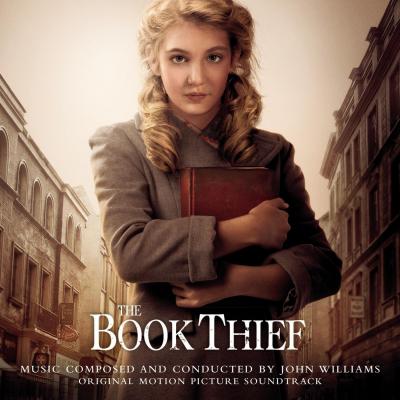
Book Thief, The Album Cover

"Book Thief, The" Soundtrack Lyrics

Movie • 2013

Track Listing


"Book Thief, The" Soundtrack Description

The Book Thief 2013 official trailer still, featuring Liesel in wartime Germany
The Book Thief — official trailer, 2013

Questions and Answers

Is there an official soundtrack album for the 2013 film?
Yes. The Book Thief (Original Motion Picture Soundtrack) features John Williams’ score and was released in November 2013 by Sony Classical and Fox Music.
Who composed the score, and why was it notable in his career?
John Williams composed and conducted the score. It was his first non–Steven Spielberg film score since the mid-2000s—something film music outlets highlighted at the time.
Does the movie use any period songs in addition to the score?
Yes. A handful of traditional and nationalist-era pieces (e.g., “Wiegenlied,” “Blue Danube,” and patriotic songs) appear diegetically in scenes depicting public events and domestic life.
What song is in the film’s marketing?
Bastille’s “Haunt” underscores a TV spot/trailer cut; it is associated with the promotion, not the score album.
Did the score receive awards attention?
Yes. It earned Academy Award, BAFTA, and Golden Globe nominations for Best Original Score; the album later won a Grammy for Best Instrumental Album.
Where can I legally stream the score?
It’s available on major platforms (e.g., Apple Music, Spotify) under the title The Book Thief (Original Motion Picture Soundtrack).

Notes & Trivia

  • John Williams recorded the score at the Newman Scoring Stage in Los Angeles with the Hollywood Studio Symphony.
  • The first trailers used contemporary tracks (including Bastille’s “Haunt”) to reach younger audiences—an intentional contrast to the film’s orchestral score.
  • Some on-screen events feature diegetic period music (lullabies and patriotic songs), underscoring the regime’s omnipresence in public life.
  • The album runtime is just over 52 minutes across 22 cues; fan favorites include “Ilsa’s Library,” “The Snow Fight,” and “Max and Liesel.”
  • The score’s lyrical main theme mirrors Liesel’s inner voice—soft woodwinds and piano, later blossoming into strings. (as noted in Movie Music UK’s review)
Trailer frame: Hans and Liesel by the piano in The Book Thief
Marketing leaned on human-scale moments rather than battle scenes.

Overview

Why does a quiet piano melody carry more weight than a parade of drums? Because The Book Thief is a war film seen from a child’s doorway. John Williams answers that viewpoint with a luminous, small-scale score—piano, solo winds, tender strings—letting intimacy cut through the noise of history.

The music sits between lullaby and lament. When Liesel discovers reading, the cues breathe; when Nazi spectacle swells outside, harmonies tighten. You won’t find bombast here. The design is purposeful: chamber-like textures for home and friendship, cautious crescendos for danger, and radiant reprises when words—and compassion—win the moment. According to film trade coverage, this became Williams’ most delicate wartime palette since Schindler’s List, yet it speaks in a completely different register: wonder first, grief second.

Genres & Themes

  • Classical film score → innocence against authoritarian pageantry; woodwinds = curiosity, harp/piano = fragile hope.
  • Waltz & salon colors → borrowed echoes of pre-war Central Europe; brief needle-drops (e.g., Strauss) signal tradition repurposed by the regime.
  • Diegetic propaganda music → brass-heavy marches at rallies frame fear as “normal,” a sonic cage for the characters.
  • Lyrical leitmotifs → Liesel’s theme (rising three-note figure) returns at turning points: the basement friendship, stolen-book rituals, and the coda.
Trailer frame: book burning square with crowds and banners in The Book Thief
Public spectacle scenes use diegetic bands; Williams stays intimate when the story turns inward.

Tracks & Scenes

“Ilsa’s Library” — John Williams
Where it plays: Accompanies Liesel’s first stunned encounter with the mayor’s wife’s library; non-diegetic. The cue breathes with harp arpeggios and woodwind filigree as she touches the spines.
Why it matters: It’s the film’s pure wonder cue—the musical sound of literacy as sanctuary.

“The Snow Fight” — John Williams
Where it plays: The basement snow day with Max and the Hubermanns; non-diegetic. Light pizzicato and playful winds track a rare burst of joy.
Why it matters: Joy under siege. Williams writes childlike meter to remind us play is an act of resistance.

“Learning to Read” — John Williams
Where it plays: Hans tutors Liesel at night; non-diegetic. Piano phrases mimic halting syllables that slowly connect.
Why it matters: Motif-building equals word-building—the cue literally “teaches” the theme as Liesel learns.

“Max and Liesel” — John Williams
Where it plays: Quiet scenes of exchange between the hidden refugee and the girl; non-diegetic, strings forward.
Why it matters: A second theme—tender, almost hymn-like—braids with Liesel’s motif to score chosen family.

“The Book Thief” — John Williams
Where it plays: Over arc-defining moments of risk and compassion, later reprised into the end sequence.
Why it matters: The title cue crystallizes the score’s moral axis: empathy requires action.

“Wiegenlied (Op. 49 No. 4)” — Johannes Brahms
Where it plays: Briefly heard diegetically in a domestic context (lullaby reference).
Why it matters: A fragile, private sound world contrasts with public militarism.

“Blue Danube Waltz” — Johann Strauss II
Where it plays: Snippets as source music evoke pre-war salon culture, displaced by the regime’s pageantry.
Why it matters: A bittersweet echo of a Europe being erased.

Patriotic songs (e.g., “Deutschlandlied”; “Kampflied der Nationalsozialisten”)
Where it plays: Public rallies and processions; diegetic band/brass.
Why it matters: These blunt textures frame the social pressure that surrounds the Hubermann household.

“Haunt” — Bastille (marketing)
Where it plays: Used prominently in a TV spot/trailer; not part of the score album.
Why it matters: A modern, moody pulse introduced the story to new audiences. (according to Movie Insider’s trailer listing)

Music–Story Links (characters & plot beats as connected to songs)

  • When Liesel steps into Ilsa’s library, piano + solo winds lift like a breath held too long—music scoring the revelation that books can be rebellion.
  • Basement play (“The Snow Fight”) temporarily silences exterior marches; Williams insulates the sound space so joy can survive five minutes longer.
  • Hans’s accordion isn’t the theme, but the score imitates its warmth; cues around his scenes soften orchestration to feel “played in the room.”
  • Rally scenes flip the mix: diegetic bands dominate, the score retreats—storytelling by soundstage placement, not just melody. (as stated in contemporary reviews)
Trailer frame: crowded town square at night in The Book Thief
Williams opposes public brass with private piano—two sonic worlds colliding.

How It Was Made (supervision, score, behind-the-scenes)

Williams wrote a chamber-scaled orchestral score and recorded at the Newman Scoring Stage in late September–early October 2013. The album arrived in early November via Sony Classical/Fox Music. Music prep and orchestration teams kept textures translucent—lots of woodwinds, harp, and intimate string writing. According to Film Music Reporter’s coverage and label listings, this project marked a rare non-Spielberg feature for Williams in that period, prompting extra attention from film-music press.

Marketing featured a separate music identity: the Bastille track “Haunt” in a TV spot and online trailers, while trailer-house cues like Audiomachine’s “Day One” also circulated in promo edits. The film itself stays loyal to Williams’ score and occasional period source music for authenticity.

Reception & Quotes

Critics widely praised the restraint: a melodic Williams score that refuses sentimentality even when the narrative invites it. Trade and awards trackers noted Oscar, BAFTA, and Globe nominations, with a later Grammy win for the album. (according to industry databases)

“Williams finds wonder without gloss, writing curiosity into every woodwind turn.” Movie Music UK
“A respectful tone and strong performances, with a score that keeps the film intimate.” summary of critical consensus

Technical Info

  • Title: Book Thief, The — Original Motion Picture Soundtrack
  • Year / Type: 2013 / movie
  • Composer & Conductor: John Williams
  • Label: Sony Classical / Fox Music
  • Recording: Newman Scoring Stage, Sept–Oct 2013
  • Album Runtime: ~52 minutes (22 cues)
  • Awards: Oscar, BAFTA, Golden Globe nominations (Best Original Score); later Grammy win (Best Instrumental Album)
  • Notable Source Music in Film: “Wiegenlied (Op. 49 No. 4)” (Brahms); “Blue Danube” (Johann Strauss II); patriotic songs including “Deutschlandlied” and “Kampflied der Nationalsozialisten” (diegetic)
  • Marketing Music (not on OST): Bastille — “Haunt”; trailer music library cuts (e.g., Audiomachine)
  • Availability: Streaming on major platforms; physical CD release via Sony Classical.

Canonical Entities & Relations

SubjectRelationObject
John WilliamscomposedThe Book Thief (Original Motion Picture Soundtrack)
Sony ClassicalreleasedThe Book Thief (Original Motion Picture Soundtrack)
Brian PercivaldirectedThe Book Thief (2013 film)
Markus ZusakwroteThe Book Thief (2005 novel)
Twentieth Century FoxdistributedThe Book Thief (2013 film)
Newman Scoring Stagehosted recordingThe Book Thief score sessions

Sources: Wikipedia (film & album pages); Apple Music listing; Spotify listing; IMDb Soundtracks; Movie Insider (TV spot); Discogs releases; Movie Music UK review; YouTube official trailers.

October, 25th 2025

'The Book Thief' is an American-German war drama film directed by Brian Percival and starring Geoffrey Rush, Emily Watson, and Sophie Nélisse. Learn more: Wikipedia, IMDb
A-Z Lyrics Universe

Lyrics / song texts are property and copyright of their owners and provided for educational purposes only.