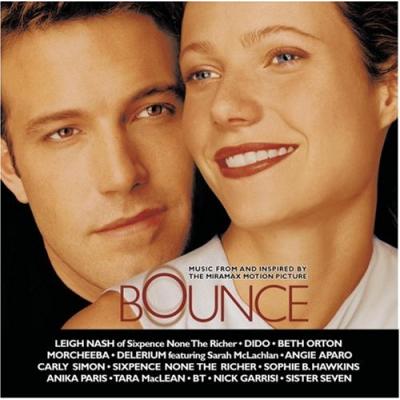
"Bounce" Soundtrack Lyrics
Movie • 2000
Track Listing
Leigh Nash
Beth Orton
Dido
Tara MacLean
Delerium/Sarah McLachlan
Anika Paris
Sophie B. Hawkins
Nic Garrisi
Morcheeba
Angie Aparo
Carly Simon
Sixpence None the Richer
Sister 7
BT
"Bounce (Music From and Inspired by the Miramax Motion Picture)" Soundtrack Description
Questions and Answers
- Is there an official soundtrack album for Bounce?
- Yes—there are two: a songs compilation, Bounce: Music From and Inspired by the Miramax Motion Picture (various artists), and a separate original score album by Mychael Danna. (as listed on Apple Music)
- What’s the big end-credits single?
- Leigh Nash’s “Need to Be Next to You,” written by Diane Warren and produced by Matt Serletic; it charted on U.S. Adult Top 40/AC in 2000–01.
- Who composed the film’s score?
- Mychael Danna. His score album includes cues like “Crash,” “Seven Steps,” and “Can We Try?”
- Who handled music supervision?
- Randall Poster is credited as music supervisor on the film. (as documented by The Numbers and Discogs credits)
- Which notable artists appear on the songs album?
- Dido (“Here With Me”), Beth Orton (“Central Reservation” – Then Again Version), Delerium feat. Sarah McLachlan (“Silence”), Morcheeba (“Rome Wasn’t Built in a Day”), Carly Simon (“Our Affair” remix), among others.
- Can I stream the soundtrack(s) today?
- Yes. Both the compilation and the score are available on major platforms; regional metadata and labels vary slightly by edition.
Notes & Trivia
- The songs compilation was issued with Miramax/RCA branding, while the score album appears under Varèse Sarabande licensing on digital storefronts (as listed on Apple Music).
- “Need to Be Next to You” was Leigh Nash’s first solo single after Sixpence None the Richer—written by Diane Warren and later covered by Sara Evans. (according to Wikipedia’s single entry)
- Randall Poster’s supervision helped mix late-’90s/early-’00s AAA with trip-hop and adult-pop staples—Dido, Beth Orton, Morcheeba—fitting the film’s mellow, urban-romance tone. (Discogs credits corroborate the album curation)
- Danna’s score album is a compact listen (~30 minutes across 18 cues), with short, motif-driven tracks that mirror the film’s intimate scale.
- IMDb’s soundtrack page documents additional source cuts heard in-film beyond the album sequence (BT, Smokey Robinson & The Miracles, etc.).
Overview
Why pair a Diane Warren power-ballad with hushed trip-hop and featherweight score cues? Because Bounce plays romance as recovery. The compilation leans on intimate, late-night radio textures (Dido, Beth Orton, Morcheeba), while Mychael Danna’s score supplies small, reflective gestures—piano figures, soft strings, and cue titles that trace the relationship’s stops and starts. (as listed on Apple Music)
The headline single—Leigh Nash’s “Need to Be Next to You”—functions like the film’s thesis in pop form: direct, earnest, and radio-ready. Around it, the curation stays restrained; nothing shouts. The soundtrack’s strength is mood: quietly modern in 2000, now a time capsule of adult-contemporary cool. (as noted by Discogs and soundtrack retailers)
Genres & Themes
- AAA / adult-pop → emotional clarity without melodrama (Dido, Sophie B. Hawkins).
- Trip-hop / downtempo → urbane glide for night drives and interior monologues (Morcheeba, Delerium feat. Sarah McLachlan).
- Indie-folk crossover → confessional edge and wistfulness (Beth Orton).
- Minimalist film score (Mychael Danna) → short cues marking turning points (“Crash,” “Seven Steps,” “Can We Try?”).
Key Tracks & Scenes
“Need to Be Next to You” — Leigh Nash
Where it plays: Featured prominently during the film’s closing stretch and end credits; non-diegetic.
Why it matters: The film’s emotional capstone—a Diane Warren ballad that became Nash’s solo debut and charted on Adult Top 40/AC.
“Here With Me” — Dido
Where it plays: Used in montage/transition beats; non-diegetic on the compilation.
Why it matters: Late-’90s crossover classic that signals intimacy and urban melancholy in a single synth-wash.
“Central Reservation (Then Again Version)” — Beth Orton
Where it plays: Romantic reflection sequences; non-diegetic.
Why it matters: Folk-electronica blend that keeps the film’s tone grounded and adult.
“Silence” — Delerium feat. Sarah McLachlan
Where it plays: Background needle-drop vibe; non-diegetic.
Why it matters: An iconic trance-pop crossover that adds spiritual ache without overpowering the scene.
“Rome Wasn’t Built in a Day” — Morcheeba
Where it plays: Light-lift interlude; non-diegetic.
Why it matters: Breezy groove offering optimism after heavier beats.
Track–Moment Index (approximate)
| Song / Cue | Scene / Placement | Diegetic? | Approx. Moment | Narrative Function |
|---|---|---|---|---|
| Need to Be Next to You — Leigh Nash | Closing sequence & credits | No | Late | Declaration of intent; emotional closure |
| Here With Me — Dido | Transitional city-night montage | No | Mid | Yearning; interior voice |
| Central Reservation — Beth Orton | Quiet reflection after a reveal | No | Mid-late | Vulnerability without melodrama |
| Silence — Delerium feat. Sarah McLachlan | Ambient underscore in an introspective beat | No | Mid | Atmosphere; suspended time |
| “Crash” — Mychael Danna (score) | Recollection/plot hinge | No | Early | Sets the film’s moral gravity |
| “Can We Try?” — Mychael Danna (score) | Pre-final reconciliation | No | Late | Gentle resolution motif |
Music–Story Links
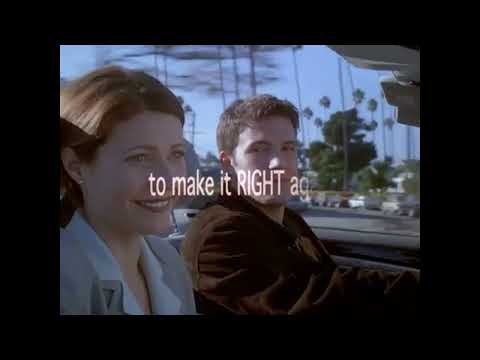
The source cuts act like diary entries—songs the characters might actually live with—while Danna’s cues stitch their decisions together. When the Warren-penned single arrives, it serves as a plain-spoken epilogue. The trip-hop and AAA choices keep the film’s moral tangle contemporary but un-showy; every track nudges the couple toward honesty rather than operatic fireworks.
How It Was Made (supervision, score, behind-the-scenes)
Music supervision: Randall Poster (credit appears in production databases), whose taste often blends classic pop with modern alt selections—here, that meant Dido and Beth Orton alongside Morcheeba and a new Diane Warren ballad. (as documented by The Numbers and Discogs)
Score: Mychael Danna wrote a concise, piano-and-strings-led score; the official album collects 18 short cues totaling ~30 minutes, including “Crash,” “Seven Steps,” and “Can We Try?” (as listed on Apple Music and retailer pages)
Single: Leigh Nash’s “Need to Be Next to You” launched the campaign and served as her solo debut. (according to Wikipedia’s single entry)
Reception & Quotes
While the film drew mixed notices, the soundtrack’s adult-contemporary mix and the Warren/Nash single were praised for fit and accessibility. Fans of Danna’s subtle dramatic writing consider Bounce an understated entry in his 2000s run.
“Danna keeps it intimate—small cues that do quiet, necessary work.” Filmtracks overview
“A tasteful, radio-friendly companion to a grown-up romance.” Retailer summary
Availability: both albums are on major streamers, with physical CDs circulating under Miramax/Varèse Sarabande and RCA-linked editions.
Technical Info
- Primary Title(s): Bounce: Music From and Inspired by the Miramax Motion Picture (various artists); Bounce (Music From the Miramax Motion Picture) — Original Score by Mychael Danna
- Year / Type: 2000 — movie
- Composer: Mychael Danna (score)
- Music Supervision: Randall Poster
- Key Songs (selected): “Need to Be Next to You” (Leigh Nash); “Here With Me” (Dido); “Central Reservation – Then Again Version” (Beth Orton); “Silence” (Delerium feat. Sarah McLachlan); “Rome Wasn’t Built in a Day” (Morcheeba)
- Labels / Release context: Compilation under Miramax/RCA; score under Varèse Sarabande licensing on digital platforms; 2000 original release window
- Availability: Streaming (regional variations apply) and CD
Canonical Entities & Relations
| Subject | Relation | Object |
|---|---|---|
| Mychael Danna | composed | Bounce original score (2000) |
| Leigh Nash | performed | “Need to Be Next to You” (end-credits single) |
| Diane Warren | wrote | “Need to Be Next to You” |
| Randall Poster | served as | Music Supervisor for Bounce |
| Varèse Sarabande | released (license) | Bounce original score album |
| RCA / Miramax | released | Music From and Inspired by compilation |
| Don Roos | wrote and directed | Bounce (film) |
Sources: Apple Music; Discogs; The Numbers; IMDb (film & soundtrack pages); Wikipedia (“Need to Be Next to You”; film entry); Filmtracks; Amazon/retail listings; Miramax site; Spotify.
October, 25th 2025
A-Z Lyrics Universe
Cynthia Erivo Popular
Ariana Grande Horsepower
Post Malone Ain't No Love in Oklahoma
Luke Combs Good Riddance (Time of Your Life)
Green Day Bye Bye Bye
*NSYNC You're the One That I Wan
John Travolta & Olivia Newton-John I Always Wanted a Brother
Braelyn Rankins, Theo Somolu, Kelvin Harrison Jr. and Aaron Pierre The Power of Love
Frankie Goes to Hollywood Beyond
Auli’i Cravalho feat. Rachel House MORE ›