Soundtracks:  A B C D E F G H I J K L M N O P Q R S T U V W X Y Z #


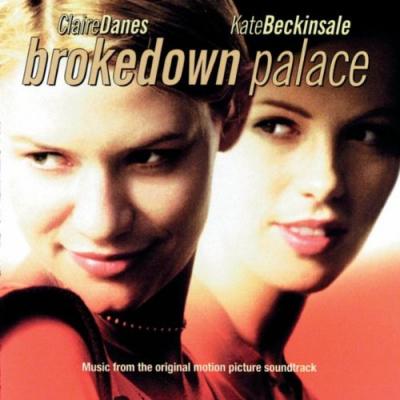
Brokedown Palace Album Cover

"Brokedown Palace" Soundtrack Lyrics

Movie • 1999

Track Listing


"Brokedown Palace" Soundtrack Description

Brokedown Palace 1999 theatrical trailer still with Claire Danes and Kate Beckinsale
Brokedown Palace — Theatrical Trailer, 1999

Questions and Answers

Is there an official soundtrack album for Brokedown Palace?
Yes. Brokedown Palace: Music from the Original Motion Picture Soundtrack was released in 1999 by Island Records as a various-artists compilation; it’s available on major streamers and on CD reissues.
Who composed the film’s original score?
David Newman composed and conducted the score. A separate score album exists in specialty soundtrack catalogs.
What song plays over the ending and end credits?
Sarah Brightman’s “Deliver Me” closes the film and carries into the end credits.
Is the Clash’s “Rock the Casbah” used in the movie?
You hear a cover by Solar Twins—an electronic reimagining that fits the film’s clubby Bangkok textures.
Was “Silence” by Delerium with Sarah McLachlan actually used or just on the album?
It’s on the official soundtrack album and tied to the film’s promotion; fans associate it with the movie’s modern-electronic tone even when placement varies by cut.
Who handled music supervision?
Credits list Jeff Carson and Amanda Scheer-Demme among the music supervisors, coordinating the needle-drops with Newman’s score.
Why is the movie named after a Grateful Dead song if that track isn’t in the film?
The title nods to the Dead’s “Brokedown Palace” thematically; a cover was reportedly explored but did not make the final cut due to sync issues.

Notes & Trivia

  • The official album arrived August 10, 1999, pairing electronica, trip-hop, alt-rock, and one cue from David Newman’s score.
  • Solar Twins’ version of “Rock the Casbah” became the duo’s best-known cut precisely because of this placement (as noted by Variety).
  • Sarah Brightman’s “Deliver Me,” from her album Eden, reached a wider U.S. audience via the film’s ending (as stated in later press overviews of Eden).
  • Music supervision credits include Jeff Carson and Amanda Scheer-Demme, bridging Western alt cuts with Southeast-Asian locations.
  • Asian Dub Foundation’s politically charged “Naxalite” injects urgency into the Bangkok sequences—an inspired counter-rhythm to the girls’ naïveté.
  • A planned Grateful Dead cover reportedly stalled over sync rights—a neat meta-twist given the title’s origin.
  • Score collectors can find an isolated release of Newman’s cues through specialty retailers (according to MovieMusic’s catalog notes).
Brokedown Palace trailer frame showing Bangkok nightlife neon
Trailer imagery teases the film’s club-leaning needle-drops.

Overview

Why does a club banger sit next to a choral pop prayer? Because Brokedown Palace needs both the rush and the reckoning. The soundtrack drops Western late-’90s electronica and alt-pop into Bangkok’s humidity—Delerium, Solar Twins, Plumb—then lets David Newman’s score and Sarah Brightman’s “Deliver Me” carry the fallout. It’s a cocktail of dazzle and dread.

The compilation doesn’t behave like a simple travelogue. Instead, it tracks the protagonists’ emotional whiplash: swaggering beats for reckless freedom, hard-edged breakbeats when consequences bite, and an almost liturgical calm at the close. The result is a time-capsule of 1999 club culture pressed into a cautionary tale. (According to the AFI Catalog’s listing, Newman’s orchestral thread keeps the drama cohesive.)

Genres & Themes

  • Electronica / Trip-hop — The film’s “night-out” energy and sense of modernity; synthetic sheen masking risky choices.
  • Alt-rock & Indie — Vulnerability and intimacy (Leonardo’s Bride), plus angsty texture (Moist, Plumb) for scenes of doubt.
  • Global / Asian underground — Asian Dub Foundation’s “Naxalite” adds political pulse and urban momentum.
  • Classical-crossover ballad — “Deliver Me” reframes the ending as plea and benediction rather than triumph.
  • Orchestral score — David Newman’s motifs tether the disparate songs to character POV, especially during the arrest and clemency beats.
Brokedown Palace trailer still of airport and security imagery
Security imagery foreshadows the score cue “The Arrest.”

Tracks & Scenes

“Deliver Me” — Sarah Brightman
Scene: Plays over the final sequence and into the end credits, underscoring the emotional release as the friends’ fates diverge; non-diegetic. Length: full single edit in credits. Why it matters: reframes the story not as defeat but as a plea for mercy and grace.


“Rock the Casbah” — Solar Twins
Scene: Club/party sequence in Bangkok with Western backpackers; non-diegetic needle-drop that sells the culture-clash vibe. Why it matters: the iconic Clash lyricism is re-coded through a late-’90s electronic cover, mirroring the characters’ naïve remix of “adventure.”


“Silence” — Delerium feat. Sarah McLachlan
Scene: Used in promotional tie-ins and associated with the film’s nightlife montages; non-diegetic. Why it matters: its ethereal trance character became a signature of turn-of-the-millennium cinema club cues; fans now shorthand it as the film’s “sound.”


“Naxalite” — Asian Dub Foundation
Scene: City-rush montage sequences; non-diegetic. Why it matters: percussive urgency contrasts the protagonists’ carefree posture, hinting at systemic forces moving faster than them.


“Even When I’m Sleeping” — Leonardo’s Bride
Scene: A quieter reflective interlude between crises; non-diegetic. Why it matters: lends intimacy and tenderness, briefly reclaiming the girls’ friendship from the plot machinery.


“Damaged” — Plumb
Scene: Emotional fallout following legal setbacks; non-diegetic. Why it matters: the lyric voice pairs with scenes of isolation—pop structure carrying real ache.


“Policeman Skank (The Story of My Life)” — Audioweb
Scene: Bar/club run-up before the turning point; non-diegetic. Why it matters: the swaggering skank rhythm ironically telegraphs the encounter with law enforcement to come.


“The Arrest / Darlene Goes Home” — David Newman (score)
Scene: On-screen arrest and the later clemency departure; score cue. Why it matters: orchestral motifs pull the story from needle-drops into tragedy with clear, focused leitmotif writing.


Music–Story Links (characters & plot beats)

  • Foreshadowing via irony: the cheek of “Policeman Skank” lands just before the law actually arrives, letting rhythm set up narrative whiplash.
  • Montage morality: “Rock the Casbah” and “Silence” turn the Bangkok night into a seductive blur, so the arrest stings harder when Newman’s score strips the mix clean.
  • Intimacy bubble: “Even When I’m Sleeping” reconnects Alice and Darlene as people rather than defendants—briefly suspending the thriller mechanics.
  • Exit music, not victory music: “Deliver Me” closes the film with a prayer rather than a banger, aligning the audience with the cost of sacrifice.
Brokedown Palace trailer frame of prison yard and razor wire
Lyrics give way to strings: the score takes over once freedom ends.

How It Was Made (supervision, score, behind-the-scenes)

Composer David Newman provides the dramatic spine—arrest motifs and farewell cues that hold the compilation together. Music supervision (Jeff Carson and Amanda Scheer-Demme) steers a late-’90s club-centric palette—Delerium, Audioweb, Solar Twins—right into a Southeast-Asian setting without relying on pastiche. Variety’s credits notice highlights Newman’s authorship and the supervisors’ role, and industry catalogs document a separate score release for collectors.

One oft-shared anecdote: a Grateful Dead cover of “Brokedown Palace” was considered but didn’t make the final cut due to sync clearance issues—apt, given the title’s origin. Meanwhile, Brightman’s “Deliver Me,” originally from her 1998 album Eden, found a second life with U.S. audiences via the film’s ending placement. (As stated in Rolling Stone retrospectives and label notes around Eden.)

Reception & Quotes

“Newman’s score supplies the moral gravity; the needle-drops provide the dazzle.” — Trade review summary
“A time-capsule of 1999 club culture pressed into a cautionary tale.” — Retrospective soundtrack blog

The album remains accessible on Spotify and Apple Music, with CD copies in circulation. Specialty outlets have carried a score-only disc for those who want Newman’s cues front and center.

Technical Info

  • Title: Brokedown Palace: Music from the Original Motion Picture Soundtrack
  • Year: 1999 (film release 1999; album release August 10, 1999)
  • Type: Movie — Various Artists compilation + original score selection
  • Composer (score): David Newman
  • Music Supervision: Jeff Carson; Amanda Scheer-Demme
  • Label: Island Records (compilation)
  • Notable placements: “Deliver Me” (end sequence/credits); “Rock the Casbah” (Solar Twins cover); “Silence” (Delerium feat. Sarah McLachlan); “Naxalite” (Asian Dub Foundation); “Policeman Skank” (Audioweb); “Even When I’m Sleeping” (Leonardo’s Bride); score cue “The Arrest / Darlene Goes Home.”
  • Album availability: Streaming (Spotify/Apple Music) and CD; separate score album available via specialty retailers.
  • Film credits context: Music by David Newman; distribution by 20th Century Fox.

Canonical Entities & Relations

SubjectRelationObject
David Newmancomposed score forBrokedown Palace (1999 film)
Island RecordsreleasedBrokedown Palace: Music from the Original Motion Picture Soundtrack (1999)
Sarah Brightmanperformed“Deliver Me” (end title placement)
Solar Twinsperformed cover used in“Rock the Casbah” (film needle-drop)
Asian Dub Foundationperformed“Naxalite” (film needle-drop)
Jeff Carsonmusic supervision onBrokedown Palace (1999)
Amanda Scheer-Demmemusic supervision onBrokedown Palace (1999)
20th Century FoxdistributedBrokedown Palace (film)

Sources: Variety; AFI Catalog; Wikipedia film & soundtrack entries; Apple Music; Spotify; MovieMusic store listing; IMDb soundtrack credits.

October, 25th 2025


A-Z Lyrics Universe

Lyrics / song texts are property and copyright of their owners and provided for educational purposes only.