Soundtracks:  A B C D E F G H I J K L M N O P Q R S T U V W X Y Z #


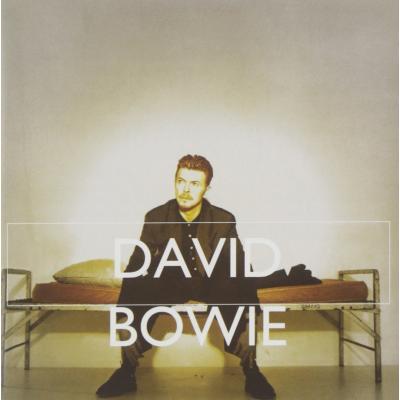
Buddha of Suburbia Album Cover

"Buddha of Suburbia" Soundtrack Lyrics

TV • 2007

Track Listing


"Buddha of Suburbia" Soundtrack Description

BBC Two trailer frame for The Buddha of Suburbia (1993) with title card and suburban street
BBC Two trailer for The Buddha of Suburbia (TV serial), 1993.

Questions and Answers

Is there an official soundtrack album for the TV serial?
Yes—David Bowie’s The Buddha of Suburbia was issued in 1993 and widely reissued in 2007; it originated from Bowie’s music for the BBC Two serial, though most album tracks are reworked pieces. (as stated on DavidBowie.com and widely documented in discographies)
So do all album tracks appear in the broadcast?
No. The series used Bowie’s title theme in the opening/credits and drew on 1970s songs; the 1993 album contains fresh compositions and re-imaginings—only the title track is shared directly.
Why is the year 2007 important?
In 2007 the album was reissued worldwide and the TV serial finally received a commercial DVD release in the UK, bringing both score-adjacent music and the show itself back into print. (according to the official 2007 press notice)
What’s the main theme song I’ll hear on the show?
David Bowie’s “The Buddha of Suburbia” (the series theme), later issued as a single and in slightly different mixes on the album.
Did the TV serial feature older Bowie songs too?
Yes—period tracks such as “Time” and “Fill Your Heart” appear in the broadcast, reinforcing the 1970s setting, while the album pursues a broader, experimental palette. (as discussed by respected Bowie scholars)
Is the 2007 edition different?
Content-wise it mirrors the 1993 album (with remastering/packaging changes). The key story is availability: 2007 made both the album and the series accessible again.

Notes & Trivia

  • Bowie composed music for the 1993 BBC Two adaptation of Hanif Kureishi’s novel; he then turned that work into a full album recorded in six days. (as outlined in major Bowie references)
  • Only the title track is heard in the broadcast exactly as on record; the rest of the album was reimagined for listening rather than literal underscore. (according to the TV serial’s music notes)
  • The album slipped out in 1993 with modest promotion and later became a cult favorite—Bowie called it a personal favorite years later. (as reported by reputable music press)
  • 2007 brought a remastered CD and the first UK DVD of the series—handy for fans who’d only known off-air recordings. (as stated in the 2007 press announcement)
  • The single “The Buddha of Suburbia” reached the UK Top 40; one version features Lenny Kravitz on guitar. (per UK chart and single notes)
BBC Two trailer shot of 1970s London street life in The Buddha of Suburbia
1970s London vibe: the series uses period songs plus Bowie’s theme.

Overview

Why does a “soundtrack” barely sound like TV wallpaper? Because Bowie didn’t just score The Buddha of Suburbia—he spun it into a stand-alone album. The BBC Two serial (1993) leans on his theme and era-appropriate 1970s cuts; the 1993 album, reissued in 2007, refracts that brief through ambient instrumentals, art-pop detours, and one of his most tender sleepers, “Strangers When We Meet.” (according to the BBC Archive and Bowie’s own notes)

The result is a two-track story: on screen, the theme and period songs ground Karim’s coming-of-age; on record, Bowie raids and recontextualizes his 1970s DNA—Low/Eno textures, beat experiments, glam ghosts—into a compact, exploratory suite. That 2007 remaster mostly changed access, not content, but it reignited attention to a record many critics now treat as a “lost gem.”

Genres & Themes

  • Art-pop & Glam Echoes — Nostalgia and self-invention; the album winks at Bowie’s 70s eras while refusing pastiche.
  • Ambient & Minimal Motifs — Interior monologue; instrumentals like “The Mysteries” read like thought-bubbles.
  • Jazz/Experimental Threads — City restlessness; skittering keys and harmonies in “South Horizon.”
  • Singer-song micro-drama — “Strangers When We Meet” turns suburban yearning into widescreen romance.
  • Diegetic nostalgia (in-show) — 1970s cuts (“Time,” “Fill Your Heart”) place viewers in parties, pubs, and rehearsals of identity.
Fast-cut trailer image: teenage parties and stage lights in The Buddha of Suburbia
Glamour vs. growing up: the music toggles between rush and reflection.

Tracks & Scenes

“The Buddha of Suburbia” — David Bowie
Where it plays: Series main titles/credits; also used in promotional spots (TV broadcast).
Why it matters: A nostalgic theme that quotes Bowie’s own past while introducing Karim’s myth-making. Single versions and an album mix circulate; one features Lenny Kravitz on guitar.

“Time” — David Bowie (1973)
Where it plays: Prominently used in the serial to frame decadent 70s nightlife and self-invention.
Why it matters: Anchors the period mood with cabaret-glam swagger; importantly, it’s broadcast-only—not on the 1993 album.

“Fill Your Heart” — David Bowie (1971)
Where it plays: Heard in playful, romantic passages to offset suburban gloom.
Why it matters: Its buoyancy counters the series’ class/race tensions; again, a broadcast-only placement, not on the album proper.

“Strangers When We Meet” — David Bowie
Where it plays: Album highlight (not used directly in the broadcast), later re-recorded in 1995.
Why it matters: A yearning pop drama that listeners often map to Karim’s loves and masks; an emotional north-star of the LP.

“South Horizon” — David Bowie
Where it plays: Album cue; jittery, jazz-tinged instrumental study.
Why it matters: Reads like the city’s interior weather—tube-line clatter and ambition—more conceptually linked than literally placed in-show.

“The Mysteries” — David Bowie
Where it plays: Album cue; slow-bloom ambient piece.
Why it matters: A reflective counterweight to the serial’s sexual and social hustle; functions as inner monologue for the listener.

“Bleed Like a Craze, Dad” — David Bowie
Where it plays: Album cue; quasi-industrial twitch.
Why it matters: Pushes the identity theme into edgier textures—suburbia with sharp elbows.

“Sex and the Church” — David Bowie
Where it plays: Album cue; rhythm study with spectral vocals.
Why it matters: Mirrors the story’s tug-of-war between desire, performance, and imposed morality.

Music–Story Links (characters & plot beats)

  • When the theme hits, it’s Karim’s legend forming in real time—Bowie stitches autobiography and fiction, and the series borrows that confidence for its chapter breaks.
  • 70s period cuts in the broadcast (“Time,” “Fill Your Heart”) place Karim in rooms where songs dictate style codes—what you play signals who you’re trying to be.
  • The album’s instrumentals (“South Horizon,” “The Mysteries”) aren’t literal cues on TV, but they deepen the same tensions: speed vs. stillness, mask vs. self.
  • “Strangers When We Meet” reframes suburban romance as epic yearning—an interpretive lens fans carry back to pivotal crush scenes in the series.
Trailer frame: close-up on lead character Karim amid bustling London crowd
Theme as identity machine: the song turns a teenager’s life into myth.

How It Was Made (supervision, score, behind-the-scenes)

Bowie accepted Hanif Kureishi’s invitation to provide music for the adaptation, then expanded the brief into a full album with multi-instrumentalist Erdal Kızılçay—basic tracks in a six-day sprint, later touches from pianist Mike Garson. The album nods to Bowie’s 70s periods (Low/Eno ambience, glam after-images) yet stands as its own 1993 statement. (as summarized by reputable Bowie histories; according to BBC and label notes)

Because the broadcast used a mix of period songs and original elements, the album was marketed as a “soundtrack” but effectively functions as a companion studio work. In 2007, EMI/Virgin remastered and reissued it while the BBC serial finally arrived on UK DVD—key for fans who’d never seen a clean transfer. (as stated in the 2007 Bowie press release)

Reception & Quotes

“The most overlooked album in Bowie’s oeuvre… began life as a soundtrack and became a suite of offbeat songs.” — summary of contemporary retrospectives
“A gloriously experimental mish-mash of 70s influences.” — paraphrase of British broadsheet coverage

Critical opinion has warmed over time; the 2007 return to print and later box-set remaster lifted it from cult status, with many writers calling it a “forgotten gem.” (according to Pitchfork’s box-set review roundup)

Technical Info

  • Title: The Buddha of Suburbia (album; companion to BBC Two TV serial)
  • Year (this article’s edition): 2007 reissue/remaster (originally released 1993)
  • Type: TV — Companion album / soundtrack-adjacent studio work
  • Composer/Artist: David Bowie
  • Theme heard in broadcast: “The Buddha of Suburbia” (series main titles/credits)
  • Other music in broadcast: 1970s songs including Bowie’s “Time” and “Fill Your Heart” (album-exclusive reworks cover different ground)
  • 2007 release context: Worldwide CD remaster; UK DVD of the TV serial released the same week
  • Labels: Arista/BMG (1993 EU/UK original); EMI/Virgin (2007 reissue)
  • Availability: Streaming on major platforms; 2007 CD widely available; 2021 remaster included in the Bowie Brilliant Adventure (1992–2001) box

Canonical Entities & Relations

SubjectRelationObject
David Bowiecomposed theme forThe Buddha of Suburbia (BBC Two TV serial, 1993)
David BowierecordedThe Buddha of Suburbia (1993 album; reissued 2007)
Hanif Kureishiwrotenovel The Buddha of Suburbia (1990), source for TV serial
Roger MichelldirectedThe Buddha of Suburbia (TV serial)
BBC TwobroadcastThe Buddha of Suburbia (1993)
EMI/VirginreissuedThe Buddha of Suburbia (CD, 2007)
Arista/BMGreleasedThe Buddha of Suburbia (original album, 1993)

Sources: BBC Archive; DavidBowie.com 2007 press notice; Wikipedia (album & TV serial entries); Discogs (2007 CD & master pages); Pitchfork (box-set review context); Official Charts/UK single notes; respected Bowie scholarship blogs.

October, 26th 2025


A-Z Lyrics Universe

Lyrics / song texts are property and copyright of their owners and provided for educational purposes only.