Soundtracks:  A B C D E F G H I J K L M N O P Q R S T U V W X Y Z #


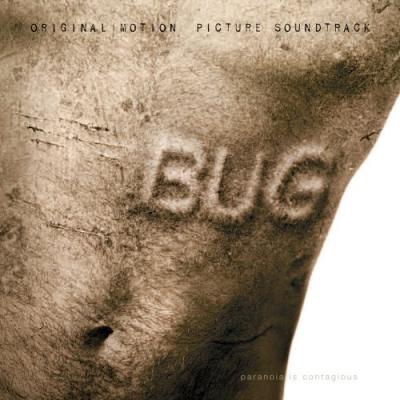
Bug Album Cover

"Bug" Soundtrack Lyrics

Movie • 2007

Track Listing


"Bug" Soundtrack Description

Bug (2006/2007) official trailer thumbnail with Ashley Judd and stark motel imagery
Bug — movie trailer, 2007

Questions and Answers

Is there an official soundtrack album for Bug?
Yes. Lionsgate Records released two titles on May 22, 2007: a 12-track various-artists album and Brian Tyler’s original score album.
Who handled the film’s music?
Composer Brian Tyler wrote the score; Serj Tankian contributed the “Bug Theme” and additional music; Jay Faires oversaw music supervision.
What song plays over the end credits?
“Disappearing Act” by Chris Cornell closes the film (a non-album single used as the end-title cue).
Why do some listings say Scott Weiland’s song is “Learning to Drive” and others say “Beautiful Day”?
It’s the same track under different titles: originally circulated as “Learning to Drive,” later issued by Weiland as “Beautiful Day.”
Where can I listen to the soundtrack today?
Both the compilation and the score are available on major streaming services and digital stores worldwide.
Is the film wall-to-wall music?
No—the movie uses music sparingly (a few source songs, opening/closing, and tense score cues), leaning into silence and sound design for dread.

Notes & Trivia

  • Scott Weiland’s contribution appears under two titles—“Learning to Drive” and “Beautiful Day”—with a Friedkin-directed music video for the single (as reported by UPI in 2007).
  • Serj Tankian created the “Bug Theme” and provided additional music alongside Tyler’s score (per the artist’s own news post).
  • The end-title song “Disappearing Act” by Chris Cornell is in the film but not on the main various-artists album.
  • Tyler’s score album features evocatively titled cues—“The Temptation of Dr. Sweet,” “Aphids,” “The Solution of Fire”—which mirror key plot beats.
  • The compilation curates eclectic source songs (Leon Russell, Los Tigres del Norte, Susan Tedeschi, The Backsliders), giving the motel world a lived-in radio/TV texture.
  • Critics frequently note how sparingly the movie uses music, saving impact for select cues and the harrowing final stretch (as Movie Music UK observed).
Alternate HD trailer frame: Michael Shannon and Ashley Judd in a blue-lit motel room
Alternate trailer cut for Bug, 2006/2007

Overview

Why does a love story about two lonely people sound so quiet—until it doesn’t? Bug builds dread with restraint: ambient hums, radio bleed, and brief jukebox moments make the motel feel real, while Brian Tyler’s score and Serj Tankian’s theme slip in like a fever, then bloom into panic.

The soundtrack splits in two: an eclectic song set that grounds us in everyday America (country, classic R&B, norteño, singer-songwriter) and a modernist score that mimics obsession. That tension—comfort versus corrosion—tracks the couple’s spiral. When the movie finally lets music surge, it’s because the characters do too.

For listeners, the albums also serve different uses. The compilation is a snapshot of textures you’d hear drifting from TVs and bars; the score is a psychological map. Together they document how Friedkin calibrates sound to make paranoia sing (or, sometimes, refuse to).

Genres & Themes

  • Minimalist horror score → encroaching obsession: buzzing drones, atonal swells, and sustained pulses mirror delusional focus.
  • Bar/road radio (country, roots-rock, classic R&B) → “ordinary life” veneer: source songs feel casual and social, the very normalcy Agnes craves.
  • Norteño/Tex-Mex color → regional texture: a TV/radio world outside the motel keeps intruding—life goes on, even as theirs implodes.
  • 70s songwriter classic (“This Masquerade”) → performance vs. reality: the lyrics’ mask motif rhymes with characters pretending they’re in control.
Trailer still: stark hallway and buzzing lights hinting at paranoia
Trailer imagery: light, hum, and the sound of nerves

Tracks & Scenes

“Disappearing Act” — Chris Cornell
Where it plays: End credits immediately following the climactic finale; non-diegetic.
Why it matters: A bruised, elegiac coda that lets the film exhale—grim acceptance after unchecked delusion.

“Bug Theme” — Serj Tankian
Where it plays: Used across the film as a signature motif and on the official album; non-diegetic when featured.
Why it matters: A jagged, nervy fingerprint for the story’s paranoia; its texture suggests buzzing, scratching, and restless thought.

“Learning to Drive” / “Beautiful Day” — Scott Weiland
Where it plays: Featured on the official soundtrack and tied to the film’s promotional cycle; appears in-film under the earlier title in music clearances; non-diegetic.
Why it matters: Its glossy-turned-uneasy arc mirrors Agnes and Peter’s rush from tenderness to mania.

“This Masquerade” — Leon Russell
Where it plays: Included on the soundtrack and used in the film; typically as source ambiance; diegetic.
Why it matters: A classic about facades—perfect irony for a story where self-deception becomes shared fantasy.

“Cowboy Boots” — The Backsliders
Where it plays: Bar/jukebox ambience early on; diegetic.
Why it matters: Establishes a social, everyday Oklahoma soundscape before the motel turns into a pressure cooker.

“Viva Mi Sinaloa” — Los Tigres del Norte
Where it plays: Heard as regional source music (TV/radio); diegetic.
Why it matters: Another “world keeps turning” needle-drop—life, dance, and movement set against Agnes’s stasis.

“Searchin’” — Alvin Robinson
Where it plays: Background source music; diegetic.
Why it matters: Old-school R&B that lends warmth and contrast, highlighting how alien the score will feel later.

“The Temptation of Dr. Sweet” — Brian Tyler
Where it plays: Non-diegetic during Dr. Sweet’s probing visit; modernist tension as persuasion turns to coercion.
Why it matters: The cue’s mounting pressure tracks a crucial truth-versus-delusion showdown.

“The Solution of Fire” — Brian Tyler
Where it plays: Non-diegetic in the finale’s fever pitch.
Why it matters: The title says it: a scorched, terminal “answer” that locks music and image into one horrifying decision.

Music–Story Links (characters & plot beats)

  • When Agnes finally accepts Peter’s worldview, Tyler’s sustained drones stop hovering at the edges and move center-stage—a sonic sign she’s crossed the line.
  • Source songs (country/R&B/norteño) mark the “real world” beyond the motel. Every time they vanish, the couple’s bubble tightens.
  • Leon Russell’s “mask” metaphor echoes Peter’s rehearsed explanations—music about performance underscoring a performance of certainty.
  • The Cornell end-title lands like a curtain drop; after flame and fervor, the voice is the only human touch left.
Trailer frame: grainy neon sign and night sky foreshadowing the film’s hum and hiss
Teaser cut imagery: neon hums and motel isolation

How It Was Made (supervision, score, behind-the-scenes)

Friedkin asked Brian Tyler for an aggressively textural palette—buzzes, scrapes, and low, physical pulses rather than big themes. Serj Tankian contributed the spiky “Bug Theme” and additional cues, extending the sonic metaphor of infestation. Music supervision (Jay Faires with the Lionsgate team) cleared a patchwork of period and regional source tracks—Leon Russell to Los Tigres del Norte—so the outside world could drift through the door in radio/TV moments (per SoundtrackCollector database and label notes).

The Weiland track’s titling history (“Learning to Drive” vs. “Beautiful Day”) reflects a transitional release path and its cross-life on Weiland’s solo album; Friedkin even directed the song’s video—one of those rare director/artist crossovers (as reported by UPI in 2007). On album, Tyler’s suite structure (“Birth/Life/Death”) and finale cues (“The Solution of Fire”) foreshadow how the film will escalate—something reviewers of the score have called out (as Movie Music UK noted).

Reception & Quotes

Critics were split on the movie’s extremity but singled out how sound is wielded—more as pressure than decoration—and how the songs/score divide reflects the story’s two realities.

“Begins as an ominous rumble of unease, and builds to a shriek.” Roger Ebert
“Friedkin uses light, color, and sound to capture subjective experience.” Slant Magazine
“There’s really very little [score] in the film… what is there helps set a mood.” Movie Music UK

Availability: The various-artists soundtrack and Tyler’s score are both active on streaming storefronts (according to Apple Music’s listing).

Technical Info

  • Title: Bug — Original Motion Picture Soundtrack (Various Artists); Bug (Original Score) — Brian Tyler
  • Year / Type: 2007 / movie
  • Composer(s): Brian Tyler (score); additional music & “Bug Theme” by Serj Tankian
  • Music Supervision: Jay Faires (Lionsgate) and team
  • Selected notable placements: “Disappearing Act” (Chris Cornell) — end titles; “This Masquerade” (Leon Russell) — classic source; “Cowboy Boots” (The Backsliders), “Viva Mi Sinaloa” (Los Tigres del Norte), “Searchin’” (Alvin Robinson) — ambient bar/radio; Tyler cues “The Temptation of Dr. Sweet” and “The Solution of Fire” — interrogation/finale beats.
  • Label: Lionsgate Records (distributed via Sony/RED)
  • Release timing: Albums dated May 22, 2007; U.S. theatrical release followed days later.
  • Album status: Digital/streaming available for both albums; CDs issued at release.
  • Notes: Some in-film songs (e.g., Cornell’s end title) were not on the various-artists album.

Canonical Entities & Relations

SubjectRelationObject
Brian Tylercomposed score forBug (2006/2007)
Serj Tankianperformed“Bug Theme”
Chris Cornellwrote & performed“Disappearing Act” (end title)
Scott Weilandwrote & performed“Learning to Drive” / “Beautiful Day”
Jay Fairessupervised music onBug
Lionsgate RecordsreleasedBug soundtrack & score (2007)
William FriedkindirectedBug
Tracy LettswroteBug (play & screenplay)
Leon Russellperformed“This Masquerade” (on soundtrack)
Los Tigres del Norteperformed“Viva Mi Sinaloa” (on soundtrack)
The Backslidersperformed“Cowboy Boots” (on soundtrack)
Alvin Robinsonperformed“Searchin’” (on soundtrack)
Susan Tedeschiperformed“I Fell in Love” (on soundtrack)
Chainsaw Kittensperformed“She Gets” / “Kick Kid” (the latter not on album)

Sources: Wikipedia (film & soundtrack); IMDb (soundtracks/clearances); Apple Music; Spotify; SoundtrackCollector; FilmMusic.com (Soundtrack.Net); UPI; Movie Music UK; Slant Magazine; DVDBeaver.

October, 26th 2025


A-Z Lyrics Universe

Lyrics / song texts are property and copyright of their owners and provided for educational purposes only.