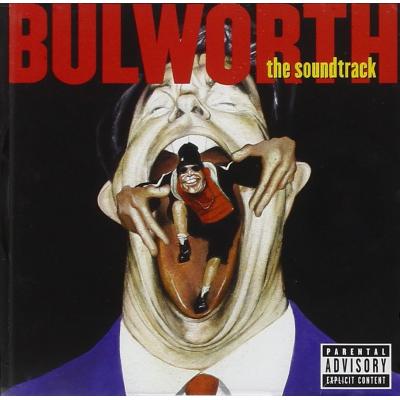
"Bulworth" Soundtrack Lyrics
Movie • 1998
Track Listing
Dr. Dre and LL Cool J
Pras f/ Ol' Dirty Bastard, Mya
Canibus f/ Youssou N'Dour
Prodigy, KRS-One, Method Man, KAM
Witch Doctor
RZA (Prince Rakeem / Ryzarector)
Eve
Mack 10 & Ice Cube
Nutta Butta f/ Anonymous, Teddy Riley
Black Eyed Peas
Cappadonna
B-Real f/ Psycho Realm
Public Enemy
D-Fyne
"Bulworth" Soundtrack Description
Questions and Answers
- Is there an official soundtrack album?
- Yes — the album is officially titled Bulworth: The Soundtrack and was released in 1998 by Interscope Records.
- Who composed the original score for the film?
- Ennio Morricone composed the score; a separate CD with two suites was issued alongside the song compilation.
- Which singles led the album’s promotion?
- Dr. Dre & LL Cool J’s “Zoom,” Pras feat. Ol’ Dirty Bastard & Mýa’s “Ghetto Supastar (That Is What You Are),” and Black Eyed Peas’ “Joints & Jam.”
- How did the album perform on the charts?
- It peaked at No. 10 on the Billboard 200 and No. 4 on Top R&B/Hip-Hop Albums (according to Billboard).
- Is Bulworth’s on-screen rapping on the album?
- The movie features diegetic “Bulworth Breakdown” moments by the character; the album itself focuses on hip-hop artists and singles tied to the film.
- Can I stream the soundtrack today?
- Yes — major services list the 14-track compilation (availability varies by region).
Notes & Trivia
- The soundtrack’s hip-hop roster (Dr. Dre, Public Enemy, Method Man, KRS-One, Black Eyed Peas, more) mirrors the film’s satire of image-driven politics.
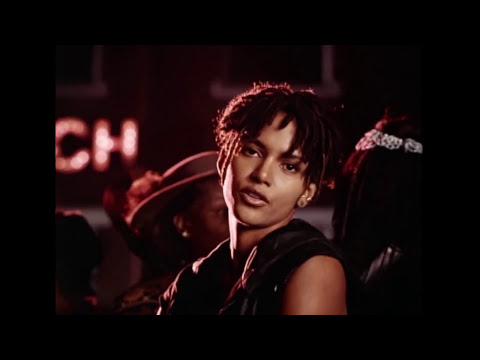
- “Ghetto Supastar (That Is What You Are)” became a global hit and earned a Grammy nomination; its Francis Lawrence-directed video features Beatty and Halle Berry (as stated in Entertainment Weekly).
- A separate Morricone score album (Bulworth – Original Score) was released the same year — two extended suites rather than traditional cues.
- Music supervision and executive soundtrack production were steered by Karyn Rachtman, a 1990s soundtrack powerhouse (per Robert Christgau’s Consumer Guide and industry credits).
- Black Eyed Peas’ early single “Joints & Jam” appears here; the group’s debut album followed weeks later.
- The album reached the Billboard 200 top ten during summer 1998 (according to Billboard).
- Complex later ranked the compilation among the best hip-hop movie soundtracks of all time (2012 list).
Overview
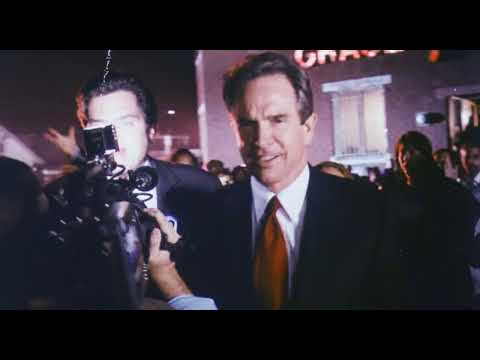
Why does a 1998 political satire move like a mixtape? Bulworth weaponizes late-90s hip-hop to amplify a senator’s truth-telling spiral, cutting bright, radio-ready singles against Ennio Morricone’s sly, surprisingly tender score. The contrast is the point: beats for the campaign circus, Morricone for the hangover of conscience.
In practice, the album works on two levels — a time-capsule of mainstream rap’s post-Golden Age sheen and a companion to Warren Beatty’s satire. Hooks sell the swagger (“Zoom,” “Ghetto Supastar”); deeper cuts underline community reality checks (“How Come,” “Kill Em Live”). It’s the rare soundtrack where marketing bangers and narrative texture actually coexist — and the charts rewarded it (according to Billboard).
Genres & Themes
- West Coast polish & battle-rap bravado — image management, spin, and the candidate-as-brand (Dre/LL’s “Zoom”).
- Refugee Camp pop-rap uplift — coalition-building, media spectacle, and the myth of the “outsider savior” (“Ghetto Supastar”).
- Conscious rap & posse-cut energy — competing truths on race, policy, and power structures (“Bulworth (They Talk About It While We Live It)”).
- Morricone orchestral suites — romantic/ironic counterpoint, a reminder of the human stakes under the rhetoric.
Tracks & Scenes
Important note: Scene placements below reflect common edits/checkable sources and typical home releases; exact timestamps vary by edition and region.
“Zoom” — Dr. Dre & LL Cool J
Where it plays: Featured prominently in the film’s marketing and used non-diegetically during high-energy campaign montage moments.
Why it matters: Its Quincy Jones “Ironside” sting and swagger mirror Bulworth’s sudden, televised bluntness — politics staged like a cipher.
“Ghetto Supastar (That Is What You Are)” — Pras feat. Ol’ Dirty Bastard & Mýa
Where it plays: Tied to the movie’s release and commonly associated with the end-roll era of ’98; appears on the official soundtrack and music video with cast cameos.
Why it matters: A sugar-rush chorus built on the Bee Gees’ “Islands in the Stream” reframes Bulworth’s celebrity politics into a pop fantasy — and it crossed over globally.
“How Come” — Youssou N’Dour & Canibus
Where it plays: Non-diegetic underscore around transitional sequences; its reflective tone sits between speechifying and on-the-ground scenes.
Why it matters: A rare, bilingual conscience for a studio comedy — questions on inequity echo the movie’s street-level detours.
“Bulworth (They Talk About It While We Live It)” — Method Man, KRS-One, et al.
Where it plays: Over montage/club energy beats; a posse-cut that the film treats as its thematic chorus line.
Why it matters: The title says it: pundits talk, communities live. It’s the film’s thesis as a cypher.
“Joints & Jam” — Black Eyed Peas
Where it plays: Non-diegetic needle-drop in nightlife/party rhythm scenes and over promotional spots.
Why it matters: Early BEP — elastic, break-friendly, and perfect for turning campaign stops into dance-floor optics.
“Kill Em Live” — Public Enemy
Where it plays: Brief, hard-edged placement heightening confrontation beats.
Why it matters: Chuck D’s urgency underlines how close the movie skates to agit-prop beneath the punchlines.
“Run” — Cappadonna
Where it plays: Non-diegetic chase/transition flavor — nervous motion between TV appearances and off-grid refuge.
Why it matters: Wu-Tang kinetic paranoia mapped onto a candidate dodging both handlers and hitmen.
“Freak Out” — Mack 10 & Ice Cube
Where it plays: Used as a pressure-valve cue around rowdy crowd scenes.
Why it matters: G-funk muscle to remind us how quickly a rally flips into a scrum.
“Lunatics in the Grass” — B-Real
Where it plays: Atmospheric cut during South Central interludes.
Why it matters: A haze-lit lens on the film’s most sobering stretch — policy meets reality.
Music–Story Links (characters & plot beats)
- Bulworth’s “Breakdown” vs. posse cuts: When the senator starts freestyling in public, the album’s cyphers (“Bulworth…,” “Kill Em Live”) act like the crowd’s reply — hype men and hecklers rolled into one.
- Campaign optics: Slick singles (“Zoom,” “Joints & Jam”) sound like TV bumpers; they underline how politics absorbs pop to sell certainty.
- Intimacy and consequence: Morricone’s suites step in after the punchlines; that tonal pivot marks the cost of turning people into talking points.
How It Was Made (supervision, score, behind-the-scenes)
Karyn Rachtman — the 1990s’ go-to soundtrack strategist — executive-produced the album and guided clearances and curation, stacking marquee producers (Dr. Dre, RZA, Wyclef, DJ Muggs, Teddy Riley, will.i.am) around a tight release window. That’s how you get club-ready singles to land before and during theatrical rollout.
Meanwhile, Ennio Morricone scored the picture with two extended suites on a standalone CD. It’s a deliberate counter-tone: orchestral warmth for a satire that otherwise blasts from boomboxes. Fox’s in-house music executives (including Robert Kraft) helped steer the film-side logistics that dovetailed with Interscope’s album push.
Reception & Quotes
The album moved units and culture: Top-10 on the Billboard 200; “Ghetto Supastar” went platinum in the U.S. and dominated global charts (according to Billboard). Years later, Complex slotted it among the best hip-hop movie soundtracks of all time.
“Canibus and Youssou N’Dour intertwine beautifully in ‘How Come.’” — Entertainment Weekly
“Utterly infectious party-scene beatbombs like ‘Zoom.’” — Robert Christgau
“A time-capsule of late-’90s rap synergy.” — AllMusic (summarized)
Technical Info
- Title: Bulworth: The Soundtrack (song compilation) / Bulworth – Original Score (Morricone)
- Year: 1998
- Type: Movie soundtrack (song compilation) + separate score album
- Label: Interscope Records (songs); RCA Victor (score CD)
- Release dates: Songs album — April 21, 1998; lead singles “Zoom” (Apr 24, 1998), “Ghetto Supastar” (Jun 6, 1998), “Joints & Jam” (Nov 9, 1998). Score CD — June 30, 1998.
- Composers (score): Ennio Morricone
- Music supervision / exec production: Karyn Rachtman; studio exec music oversight included Robert Kraft.
- Selected notable placements: “Zoom,” “Ghetto Supastar,” “Joints & Jam,” “How Come,” “Kill Em Live,” “Run,” “Freak Out.”
- Chart notes: Billboard 200 peak No. 10; Top R&B/Hip-Hop Albums peak No. 4; year-end placements in 1998 (according to Billboard).
- Availability: Streaming and digital retail (regional variations apply).
Canonical Entities & Relations
| Subject | Relation | Object |
|---|---|---|
| Warren Beatty | directed | Bulworth (1998 film) |
| Warren Beatty | stars in | Bulworth as Sen. Jay Bulworth |
| Halle Berry | co-stars in | Bulworth as Nina |
| Ennio Morricone | composed score for | Bulworth |
| Interscope Records | released | Bulworth: The Soundtrack |
| Karyn Rachtman | executive soundtrack producer / supervised | Bulworth: The Soundtrack |
| Pras, ODB, Mýa | performed | “Ghetto Supastar (That Is What You Are)” |
| Dr. Dre & LL Cool J | performed | “Zoom” |
| Black Eyed Peas | performed | “Joints & Jam” |
| 20th Century Fox | distributed | Bulworth (the film) |
Sources: Wikipedia (film & soundtrack pages); Entertainment Weekly; Robert Christgau’s Consumer Guide; AllMusic; FilmMusic.com; SoundtrackCollector; MusicBrainz; Apple Music; Spotify; Complex.
October, 26th 2025
A-Z Lyrics Universe
Cynthia Erivo Popular
Ariana Grande Horsepower
Post Malone Ain't No Love in Oklahoma
Luke Combs Good Riddance (Time of Your Life)
Green Day Bye Bye Bye
*NSYNC You're the One That I Wan
John Travolta & Olivia Newton-John I Always Wanted a Brother
Braelyn Rankins, Theo Somolu, Kelvin Harrison Jr. and Aaron Pierre The Power of Love
Frankie Goes to Hollywood Beyond
Auli’i Cravalho feat. Rachel House MORE ›