Soundtracks:  A B C D E F G H I J K L M N O P Q R S T U V W X Y Z #


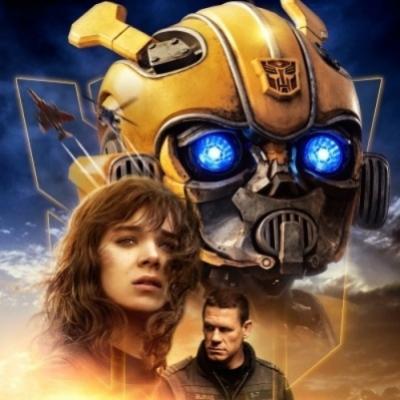
Bumblebee Album Cover

"Bumblebee" Soundtrack Lyrics

Movie • 2018

Track Listing


"Bumblebee" Soundtrack Description

Bumblebee (2018) official teaser trailer frame of Charlie and the yellow VW Beetle in the garage
Bumblebee — official teaser trailer still, 2018

Questions and Answers

Is there an official soundtrack album?
Yes. Bumblebee (Motion Picture Soundtrack) was released December 21, 2018 by Republic Records; the companion score album by Dario Marianelli arrived the same day via Paramount Music. (according to Apple Music and Wikipedia)
What’s the lead single?
Hailee Steinfeld’s “Back to Life” (released November 2, 2018) is the lead single; she performed it at the 2018 MTV EMAs. (as noted by Billboard)
Who composed the original score?
Dario Marianelli—marking the first Transformers film not scored by Steve Jablonsky.
Does the movie really use Stan Bush’s “The Touch”?
Yes. It drops as a winking homage to the 1986 animated film, during a cliff-diving pep talk.
Where can I find precise song placements?
Fan-curated logs like WhatSong map scenes in detail (e.g., “Bigmouth Strikes Again” for Charlie’s morning routine; “Never Gonna Give You Up” after she fixes Bee’s radio). (as stated in WhatSong’s entry)
Is there a limited-edition score release?
La-La Land Records issued a limited 2,000-copy score CD in 2021.

Notes & Trivia

  • The soundtrack leans hard into 1980s radio cuts—The Smiths, Tears for Fears, a-ha, Bon Jovi—because the film is set in 1987. (as ScreenRant’s guide summarizes)
  • “Back to Life” was marketed alongside the film with an official lyric video and playlist push. (according to Apple Music)
  • Music supervision is credited to Maggie Rodford, a frequent collaborator with director Travis Knight. (per album credits)
  • Marianelli’s score makes this the first mainline Transformers entry without Jablonsky’s themes—reviewers noticed. (as noted by Wikipedia and Zanobard Reviews)
  • La-La Land released a 2,000-copy limited edition of the score in 2021 for collectors.
Trailer frame: Charlie in the driver’s seat as the radio scan begins
Radios, mixtapes, and Bee’s personality: the soundtrack as dialogue device.

Overview

Why does an Autobot sound like a greatest-hits station? Because Bumblebee turns mixtape culture into character: Bee talks through radio clips while Charlie (Hailee Steinfeld) meets him halfway with cassettes and pop-timed courage. The soundtrack’s 80s bedrock—The Smiths, Tears for Fears, a-ha, Bon Jovi—doesn’t just date the story; it codes emotion the way good teen movies do.

Meanwhile Dario Marianelli’s score hums underneath with warm synth pads and string pulses, a lighter, friendlier palette than the franchise’s earlier, metallic bombast. The blend converts set pieces into coming-of-age beats: a car chase that grooves to Sammy Hagar, a cliff-jump scored by Stan Bush’s cult classic. Critics called out how the music’s gentler touch matches the film’s throwback heart (as stated in Den of Geek’s piece on the soundtrack’s key moments).

Genres & Themes

  • 80s pop & new wave: bright synths, big hooks; optimism and vulnerability for Charlie’s arc.
  • AOR & hair-rock: road-worthy swagger (“Runaway,” “I Can’t Drive 55”) for kinetic chase beats.
  • Mixtape as voice: Bee’s radio-quote shtick literalizes identity through snippets and songs.
  • Warm-retro score: Marianelli shifts to melody-forward textures—friendship and wonder over brute force.
Trailer close-up: Bee and Charlie share a quiet moment in the garage bathed in gold light
Styles with jobs: radio bops for bonding, score swells for wonder.

Tracks & Scenes

Key placements compiled from the official album + reliable scene logs; minute:second can vary by cut/territory.

“Bigmouth Strikes Again” — The Smiths
Where it plays: Charlie’s morning routine—brushing teeth, air-drumming; early character intro (non-diegetic).
Why it matters: Establishes her 80s-alt taste and the film’s witty, bedroom-radio tone.

“Never Gonna Give You Up” — Rick Astley
Where it plays: After Charlie fixes Bee’s radio and cycles through stations; Bee “speaks” in pop clips (diegetic).
Why it matters: The cheeky needle-drop that signals Bee’s sense of humor and the radio-voice conceit.

“Everybody Wants to Rule the World” — Tears for Fears
Where it plays: Sunroof-up drive; the wind steals Memo’s shirt as the two lean into freedom (non-diegetic).
Why it matters: Dreamy, bittersweet liberation—the teen-movie heart of the film.

“Take On Me” — a-ha
Where it plays: Charlie installs Bee’s new radio; an impromptu dance-off shows his playful side (diegetic into non-diegetic).
Why it matters: Visualizes trust forming; Bee mirrors Charlie’s moves.

“I Can’t Drive 55” — Sammy Hagar
Where it plays: Patrol-car chase with Charlie and Memo; Bee punches it (non-diegetic).
Why it matters: On-the-nose speed anthem that turns tension into grin-inducing momentum.

“Unchained Melody” — Sam Cooke
Where it plays: In the garage with Charlie’s late father’s records; first real hug between Charlie and Bee (diegetic/needle-drop).
Why it matters: A tender, pre-80s classic that reframes grief as connection.

“Runaway” — Bon Jovi
Where it plays: Charlie bikes away after being mocked; moodier independence beat (non-diegetic).
Why it matters: AOR grit for a small rebellion.

“The Touch” — Stan Bush
Where it plays: Cliff-diving encouragement scene; Bee cues it up like a pep talk (diegetic gag).
Why it matters: A franchise in-joke turned sincere bravery boost—pure fan sugar.

“Save a Prayer” — Duran Duran
Where it plays: Early discovery of the VW in the junkyard; shimmering awe as Charlie clocks something special (non-diegetic).
Why it matters: New-romantic glow for the “meet-cute.”

“Back to Life” — Hailee Steinfeld
Where it plays: End credits and a brief earlier reprise; also released as the film’s single (non-diegetic).
Why it matters: Bridges character and marketing; a modern pop bow on an 80s-driven playlist.

“Let’s Go” — The Cars
Where it plays: Near the Golden Gate goodbye as Charlie and Bee part ways (non-diegetic).
Why it matters: A bittersweet cruise-away that sells the ending’s sunny ache.

Music–Story Links (characters & plot beats as connected to songs)

  • Mixtape empathy: The radio jokes (“Never Gonna Give You Up”) aren’t just gags; they’re Bee trying on human feelings until he learns Charlie’s language.
  • Freedom cues: “Everybody Wants to Rule the World” and “Let’s Go” frame movement as healing: sunroof-out joy vs. the grown-ups’ control fantasies.
  • Legacy handshakes: “The Touch” stitches 1986 nostalgia into Charlie’s coming-of-age, rebranding fan service as mentorship.
  • Grief to grace: Spinning her dad’s records (“Unchained Melody”) lets Charlie re-author loss with Bee as witness.
Trailer composition: Bee protects Charlie as sparks and debris rain, orchestral pulse rising
When the stakes spike, the pop drops and Marianelli’s score takes over.

How It Was Made (supervision, score, behind-the-scenes)

Director Travis Knight steered the franchise toward a friendlier sonic palette. Music supervisor Maggie Rodford cleared a wall of 80s staples, while Dario Marianelli wrote a character-first score—more analog warmth, less steel-grind. Republic Records handled the song compilation; Paramount Music issued the score; and later, La-La Land pressed a 2,000-copy collector’s edition on CD for the score faithful. (as stated in Wikipedia; label listings corroborate details)

Reception & Quotes

“The soundtrack is a mixtape masterstroke that helps sell the film’s throwback charm.” Den of Geek
“The score to Bumblebee is fine… a well-implemented underscore for a movie.” Zanobard Reviews

Critics widely praised the warm 80s selections and the way Bee’s radio “voice” humanizes him—an observation that pops up across roundups and reviews. (as ScreenRant’s and Den of Geek’s coverage notes)

Technical Info

  • Title: Bumblebee (Motion Picture Soundtrack) — songs; Bumblebee (Motion Picture Score) — Dario Marianelli
  • Year: 2018
  • Type: Movie
  • Director: Travis Knight
  • Score Composer: Dario Marianelli
  • Music Supervision: Maggie Rodford
  • Label(s): Republic Records (songs compilation); Paramount Music (score); La-La Land Records (limited edition score CD, 2021)
  • Lead single: “Back to Life” — Hailee Steinfeld (released Nov 2, 2018; performed at 2018 MTV EMAs)
  • Selected notable placements: “Bigmouth Strikes Again” (The Smiths); “Never Gonna Give You Up” (Rick Astley); “Everybody Wants to Rule the World” (Tears for Fears); “Take On Me” (a-ha); “I Can’t Drive 55” (Sammy Hagar); “Unchained Melody” (Sam Cooke); “Runaway” (Bon Jovi); “The Touch” (Stan Bush); “Let’s Go” (The Cars); “Back to Life” (Hailee Steinfeld).
  • Availability: Soundtrack & score stream widely; physical limited score available via La-La Land’s 2021 run.

Canonical Entities & Relations

SubjectRelationObject
Travis KnightdirectsBumblebee (2018)
Dario Marianellicomposes score forBumblebee
Maggie Rodfordsupervises music forBumblebee
Republic RecordsreleasesBumblebee (Motion Picture Soundtrack)
Paramount MusicreleasesBumblebee (Motion Picture Score)
La-La Land Recordsissues limited edition CD ofBumblebee score (2021)
Hailee Steinfeldperforms single“Back to Life”
Stan Bushperforms“The Touch” (featured in film)

Sources: Apple Music album page; ScreenRant “Every Song On Bumblebee’s Soundtrack”; Den of Geek feature; Wikipedia (soundtrack & score pages); WhatSong scene index; La-La Land Records listing; Billboard coverage of the lead single; Paramount’s official trailers.

October, 26th 2025


A-Z Lyrics Universe

Lyrics / song texts are property and copyright of their owners and provided for educational purposes only.