
"Carousel" Soundtrack Lyrics
Musical • 1994
Track Listing
Rodgers & Hammerstein
Rodgers & Hammerstein
Rodgers & Hammerstein
Rodgers & Hammerstein
Rodgers & Hammerstein
Rodgers & Hammerstein
"Carousel" Soundtrack Description
Questions and Answers
- Is there an official recording tied to the 1994 Broadway revival?
- Yes—the 1994 Broadway Revival Cast Recording was released on CD by Angel Records and remains widely available on the second-hand market.
- Who are the standout vocal performances on that album?
- Audra McDonald’s sparkling Carrie Pipperidge and Sally Murphy’s intimate Julie Jordan anchor the set; Michael Hayden’s dramatic Billy centers the big solos.
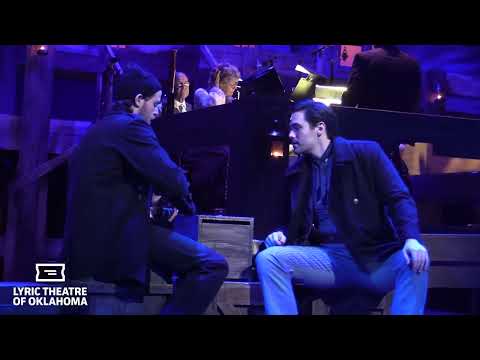
- Does the revival preserve the show’s iconic “Bench Scene” and “Soliloquy”?
- Absolutely. The album features the full “If I Loved You” Bench Scene sequence and Billy’s extended “Soliloquy,” both recorded with revival cast dialogue.
- Where can I hear “You’ll Never Walk Alone” from this production?
- Nettie’s showpiece closes the album’s arc; the revival’s interpretation leans orchestral and choral for an expansive finish.
- Is the 1994 album different from earlier Carousel recordings?
- Yes—while faithful to Rodgers & Hammerstein, it captures Nicholas Hytner’s darker revival tone and includes spoken transitions, offering a more theatrical listen than older studio sets.
- Did the 1994 staging win awards that reflect its musical impact?
- Yes—among several Tonys, Audra McDonald won Featured Actress; the production also took Best Revival and honors for direction, choreography, and design (as noted by The New York Times).
Notes & Trivia
- The 1994 Lincoln Center Theater revival (transferring to Broadway) reframed the show with a starker realism while retaining lush orchestration (as reported by the Rodgers & Hammerstein Organization).
- Audra McDonald’s Carrie earned a Tony, launching a now-legendary career—her witty “Mister Snow” is a highlight of the album (according to major Broadway histories).
- The revival cast album preserves snippets of dialogue, making it feel like a night at the theater rather than a studio session.
- Critics singled out the revival’s “Bench Scene” pacing—measured, searching, and emotionally exacting.
- Multiple Carousel recordings exist; the 1994 disc is often praised as a top modern reference for the score’s dramatic shape.
- The production originated at London’s National Theatre (1992–93) before the New York run, shaping the album’s dramatic DNA.
Overview
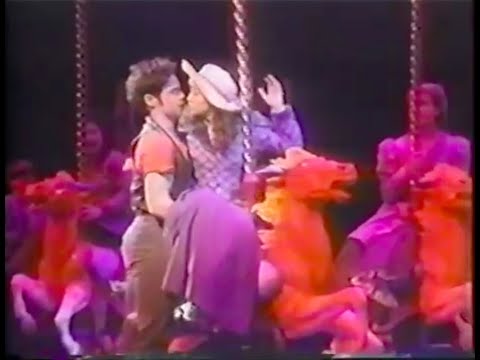
Why does a swooning waltz score carry one of Broadway’s most bruising love stories? In the 1994 revival, “Carousel” answered by sharpening the drama and letting the orchestra breathe. The cast recording sweeps from silvery woodwinds to brassy exclamation points, framing a New England seaside romance that never quite learns how to be gentle.
Unlike studio-perfect anthologies, this album leaves theatrical edges intact—dialogue curls into “If I Loved You,” rhythms stretch in “Soliloquy,” and ensemble scenes bustle like real clambakes. The result is a document that sings and stings at once, foregrounding character over prettiness (as stated by the Rodgers & Hammerstein Organization and contemporary reviews).
Genres & Themes
- Golden-Age Broadway symphonic writing — sweeping strings and winds carry longing and moral consequence.
- Waltz time as destiny — the recurring carousel pulse turns romance into a cycle: desire, regret, hope, repeat.
- Ballad vs. bravura — Julie’s introspection (“What’s the Use of Wond’rin’?”) contrasts with Billy’s showpiece muscle (“Soliloquy”), mapping inner weather to orchestral color.
- Community choruses — clambake and June celebrations set social stakes; private choices echo in public song.
- Hymn-tinted uplift — “You’ll Never Walk Alone” reframes tragedy with communal grace.
Tracks & Scenes
"The Carousel Waltz" — Orchestra
Where it plays: Opens the show with a wordless overture as the fair awakens; staging often shows the ride and crowd ritual (overture length ~7 minutes, Act I opening).
Why it matters: Sets the circular heartbeat—romance and risk twined in 3/4.
"You're a Queer One, Julie Jordan" — Carrie & Julie
Where it plays: Early in Act I in the milltown; a teasing duet that sketches friendship right before fate steps in at the carousel (roughly the first 15–20 minutes).
Why it matters: Establishes Julie’s quiet stubbornness and Carrie’s warmth, a foil dynamic the album captures crisply.
"If I Loved You (Bench Scene)" — Julie & Billy
Where it plays: The famous twilight bench scene, Act I (roughly 20–35 minutes into the show); partly diegetic conversational song that swells into full aria-like phrases.
Why it matters: A masterclass in conditional love; the recording preserves the hesitant talk leading into melody, making the confession both intimate and evasive.
"(When I Marry) Mister Snow" — Carrie
Where it plays: Early Act I after the bench scene; Carrie imagines domestic order with Enoch Snow.
Why it matters: Sunny comic relief and a thematic counterweight—security vs. Billy and Julie’s volatility.
"June Is Bustin’ Out All Over" — Nettie & Company
Where it plays: Act I festival sequence at Nettie’s; big outdoor energy, dance-driven (mid-show).
Why it matters: Community in bloom; the revival recording’s rhythmic lift is infectious and frames what the leads might lose.
"Blow High, Blow Low" — Jigger, Billy & Men
Where it plays: Late Act I among the wharf crowd, diegetic masculine swagger before the robbery plot gels.
Why it matters: A rousing camaraderie song that darkens Billy’s path; the chorus bite on the 1994 disc is flinty.
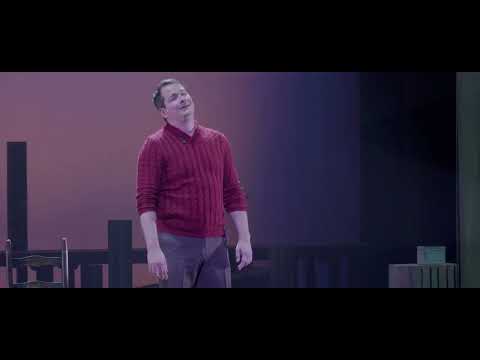
"Soliloquy" — Billy
Where it plays: End of Act I on the shore; Billy imagines fatherhood, dreams, and pressure in a seven-minute dramatic arc.
Why it matters: The album’s dramatic summit—ambition curdles into desperation. You hear the cliff he’s about to step over.
"A Real Nice Clambake" — Company
Where it plays: Act II’s communal reset after the crisis, diegetic festivity around Nettie’s spread.
Why it matters: Food, friends, and that fragile feeling of normal—beautifully balanced choral textures.
"What’s the Use of Wond’rin’?" — Julie
Where it plays: Mid-Act II; a private defense of a flawed man, sung like a prayer.
Why it matters: The moral knot at the show’s center; the revival’s gentle rubato underlines Julie’s self-compromise.
"You’ll Never Walk Alone" — Nettie & Company
Where it plays: Act II consolation and finale reprise; non-diegetic hymn rising to communal promise.
Why it matters: The score’s benediction—after hardship, a hand on your shoulder. The 1994 chorus makes it land.
Music–Story Links (characters & plot beats)
- Bench Scene → Destiny Loop: The hesitant “If I Loved You” cadence foreshadows the show’s circular morality; love unsaid becomes harm undone—if only.
- “Soliloquy” → Catastrophe: The orchestral muscle that sells fatherly pride also sells the panic that drives Billy toward the robbery.
- “Mister Snow” vs. “Blow High, Blow Low”: Carrie’s orderly dream collides with Jigger’s swagger; the album makes the social fork audible.
- “What’s the Use of Wond’rin’?” → Complicity: Julie’s lullaby logic smooths what shouldn’t be smoothed, setting up the need for Nettie’s hymn.
- “You’ll Never Walk Alone” → Community Repair: Private suffering returns to the group for healing; the choral crescendo is the town knitting itself back together.
How It Was Made (supervision, score, behind-the-scenes)
The 1994 Broadway revival—transferred from Nicholas Hytner’s London staging—leaned into psychological realism without sanding off Rodgers’ symphonic sweep. The cast album, produced under the Angel Records banner, keeps live-theatre air in the takes, including short dialogue bridges that give “If I Loved You” and “Soliloquy” their narrative gravity. Audra McDonald’s Carrie pops with conversational clarity; Sally Murphy’s Julie floats vowels with chamber-like intimacy; Michael Hayden’s Billy is actor-driven, dramatic first, vocal showboat second (a choice many critics endorsed).
Orchestral forces embrace vintage color—cornets, warm strings, woodwinds with bite—rather than pop gloss. The recording’s mix balances pit and stage, letting the choral bodies in “June” and “Clambake” sound like a real town. The revival’s accolades (direction, choreography, design, performance) mirrored how fully the musical elements served the storytelling (as noted by The New York Times and the official Rodgers & Hammerstein Organization).
Reception & Quotes
Critical consensus paints the 1994 disc as a reference version for modern listeners: theatrically alive, dramatically pointed, musically plush. It stands alongside historic studio sets and later “complete score” recordings that spotlight different priorities (as observed in long-running musical-theatre discographies and recent press).
“A soap opera no longer—Hytner’s revival finds muscle in the music.” The New York Times
“McDonald’s Carrie is definitive on record.” Broadway critics’ retrospectives
“The chorus sound turns the town into a character.” Cast-album reviewers
Context note: New orchestral recordings continue to appear, underlining the score’s longevity (The Guardian’s 2024 review of a complete Carousel
set is a recent example).
Technical Info
- Title: Carousel — 1994 Broadway Revival Cast Recording
- Year: 1994 (cast album); stage revival opened March 24, 1994
- Type: Musical (Broadway revival); Original Broadway score by Richard Rodgers (music) & Oscar Hammerstein II (lyrics)
- Principal Performers (revival): Michael Hayden (Billy), Sally Murphy (Julie), Audra McDonald (Carrie), Eddie Korbich (Enoch), Shirley Verrett (Nettie), Fisher Stevens (Jigger)
- Direction/Choreography (revival): Nicholas Hytner (direction); Sir Kenneth MacMillan (choreography)
- Label (1994 album): Angel Records (EMI)
- Availability: CD in circulation via retailers/resale; digital tracks appear intermittently depending on region/rights.
- Accolades (production): Tony Awards for Best Revival, Featured Actress (Audra McDonald), Direction, Choreography, Scenic Design.
- Selected notable placements: “If I Loved You” Bench Scene, “Soliloquy,” “You’ll Never Walk Alone,” “June Is Bustin’ Out All Over.”
- Release context: Revival originated at London’s National Theatre (1992–93), transferred to NY’s Vivian Beaumont Theater in 1994.
Canonical Entities & Relations
| Subject | Relation | Object |
|---|---|---|
| Richard Rodgers | composed | Carousel (musical) |
| Oscar Hammerstein II | wrote lyrics/libretto for | Carousel (musical) |
| Nicholas Hytner | directed | 1994 Broadway revival of Carousel |
| Sir Kenneth MacMillan | choreographed | 1994 Broadway revival of Carousel |
| Audra McDonald | portrayed | Carrie Pipperidge (1994 revival) |
| Sally Murphy | portrayed | Julie Jordan (1994 revival) |
| Michael Hayden | portrayed | Billy Bigelow (1994 revival) |
| Angel Records | released | Carousel (1994 Broadway Revival Cast Recording) |
| Vivian Beaumont Theater | hosted | 1994 Broadway revival run |
| Rodgers & Hammerstein Organization | stewards rights for | Carousel |
Sources: Rodgers & Hammerstein Organization; The New York Times; Angel Records/EMI listings; Discogs/retail catalog entries; The Guardian.
October, 26th 2025
A-Z Lyrics Universe
Cynthia Erivo Popular
Ariana Grande Horsepower
Post Malone Ain't No Love in Oklahoma
Luke Combs Good Riddance (Time of Your Life)
Green Day Bye Bye Bye
*NSYNC You're the One That I Wan
John Travolta & Olivia Newton-John I Always Wanted a Brother
Braelyn Rankins, Theo Somolu, Kelvin Harrison Jr. and Aaron Pierre The Power of Love
Frankie Goes to Hollywood Beyond
Auli’i Cravalho feat. Rachel House MORE ›