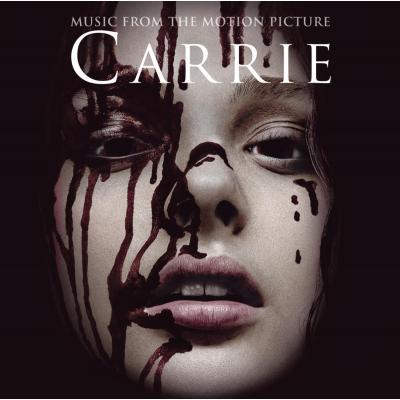
"Carrie"Soundtrack Lyrics
Movie • 2013
Track Listing
Ends Of The Earth
Tennessee Ernie Ford
Portugal. The Man
Haim
Tennessee Ernie Ford
Krewella
Passion Pit
Cults
Hanni El Khatib
Rogue Wave
A Place To Bury Strangers
Vampire Weekend
The Naked And Famous
The Civil Wars
Haerts
Matrimony
"Carrie (2013)" Soundtrack Description
Questions and Answers
- Is there an official soundtrack album for Carrie (2013)?
- Yes—two, actually: a various-artists album (“Music From the Motion Picture”) and Marco Beltrami’s original score, both released in October 2013.
- Who composed the score and who supervised the songs?
- Marco Beltrami composed the score; Randall Poster served as music supervisor.
- What song plays during the prom dance before things go wrong?
- “Dust to Dust” by The Civil Wars plays as Carrie and Tommy slow-dance at the prom.
- Which high-energy track underscores the prom crowd?
- Krewella’s “Live for the Night” powers the prom floor just before the vote is announced.
- Is the Lord Huron track actually in the film?
- Yes—“Ends of the Earth” appears early, tied to Sue and Tommy’s relationship beat.
- Does the movie use any classic hymns?
- Yes—Margaret White sings “Let the Lower Lights Be Burning,” and “His Amazing Grace” is heard on a radio as Carrie prepares for prom.
Notes & Trivia
- The film shipped with two official releases: a 12-track songs album on Columbia Records and a 20-cue score album on Sony Classical.
- Randall Poster, frequent collaborator of auteurs from Scorsese to Wes Anderson, handled song supervision—useful for balancing pop with dread.
- Beltrami’s score titles wink at teen-horror tone (“When Periods Attack,” “Headbanger”).
- Two Tennessee Ernie Ford hymns puncture the pop sheen, tilting scenes toward Margaret’s severe religiosity.
- Prom cues swing from synth-pop euphoria to elegy and then to total sonic meltdown—on purpose, says the album sequencing.
- Both albums dropped the same week the film opened in the U.S.—a classic “event-week” rollout (as stated in the 2013 Sony Classical announcement).
Overview
Why lace a teen-horror remake with gleaming indie pop? Because Carrie (2013) thrives on contrasts: euphoric radio hits framing a girl who never gets invited to the party. The soundtrack starts as a sleepover playlist—Lord Huron, HAIM, Vampire Weekend—then pivots into hushed hymns and Beltrami’s serrated strings. The clash is the point.
As a listening experience, it’s bifurcated. The songs album conjures the social world Carrie longs for—hallway swagger, prom-night buzz—while the score album crawls under the skin with tremolo strings and stingers that punctuate telekinetic awakenings. Together they map the story’s velocity from awkward tenderness to uncontainable catastrophe (according to FilmMusic.com’s credits summary and the official album pages).
Genres & Themes
- Indie/Alt Pop (Vampire Weekend, HAIM, Passion Pit): surface cool; how teens self-score their lives. It’s aspirational wallpaper that makes the eventual rupture sting more.
- EDM/Pop-EDM (Krewella): ecstatic crowd energy; the prom as a pressure cooker.
- Folk/Americana (Lord Huron, The Civil Wars): tenderness and temporary safety; Sue and Tommy’s good intentions.
- Traditional Hymns (Tennessee Ernie Ford): Margaret’s worldview weaponized; sonic austerity inside a pop world.
- Original Score (Marco Beltrami): sharp string surges and tense ostinati that mark Carrie’s telekinetic control growing scene by scene.
Tracks & Scenes
“Ends of the Earth” — Lord Huron
Where it plays: Early in the film as Sue Snell and Tommy Ross share an intimate moment in a parked car (around the 18-minute mark). Non-diegetic.
Why it matters: Establishes Sue/Tommy’s decency before their fateful decision to invite Carrie into their circle. :contentReference[oaicite:0]{index=0}
“Come Alive” — Hanni El Khatib
Where it plays: As Chris, Tina, and Billy mock Carrie online and plan the prank (≈00:20). Non-diegetic.
Why it matters: The gritty garage pulse underlines cruelty masquerading as teen bravado. :contentReference[oaicite:1]{index=1}
“Let the Lower Lights Be Burning” — Tennessee Ernie Ford
Where it plays: Margaret White sings it at home, her voice turning comfort into control (≈00:21). Diegetic (vocal).
Why it matters: A character theme in miniature—piety as pressure. :contentReference[oaicite:2]{index=2}
“Hip Hop Kids” — Portugal. The Man
Where it plays: Hallway encounter where Tommy asks Carrie to prom (≈00:39). Non-diegetic.
Why it matters: A swaggering rhythm wraps a kind gesture, hinting that normal teen life might be possible. :contentReference[oaicite:3]{index=3}
“Let Me Go” — HAIM
Where it plays: Montage prep; Sue decorating, then abruptly running to be sick (≈00:53). Non-diegetic.
Why it matters: The lyric edge and tom-driven urgency foreshadow the moral knot Sue can’t shake. :contentReference[oaicite:4]{index=4}
“Diane Young” — Vampire Weekend
Where it plays: Pre-prom flurry as students suit up (≈00:55). Non-diegetic.
Why it matters: Carefree bop that makes the coming tonal collapse land harder. :contentReference[oaicite:5]{index=5}
“His Amazing Grace” — Tennessee Ernie Ford
Where it plays: Heard on the radio as Carrie gets ready and Tommy arrives (≈01:00). Diegetic (source on radio).
Why it matters: Ironclad morality meets a hopeful evening; the dissonance is chilling. :contentReference[oaicite:6]{index=6}
“Young Blood” — The Naked and Famous
Where it plays: Over the graduation-party vibe leading into prom (≈01:01). Non-diegetic.
Why it matters: Glossy neon nostalgia for a rite of passage Carrie’s been denied. :contentReference[oaicite:7]{index=7}
“Live for the Night” — Krewella
Where it plays: On the prom floor as the crowd surges (≈01:02). Diegetic (dance track).
Why it matters: Peak euphoria right before the story’s moral test: the vote. :contentReference[oaicite:8]{index=8}
“Dust to Dust” — The Civil Wars
Where it plays: Carrie and Tommy’s slow dance (≈01:04). Diegetic at prom volume, plays like a gentle curtain over the gym.
Why it matters: The film’s most tender respite; it makes the bucket shock feel like betrayal, not just spectacle. :contentReference[oaicite:9]{index=9}
“All the Days” — HAERTS
Where it plays: The prom-king and queen nomination sequence (≈01:07). Non-diegetic.
Why it matters: Shimmering synth-pop that frames Carrie’s big moment as genuinely earned—until it isn’t. :contentReference[oaicite:10]{index=10}
“Take a Walk” — Passion Pit
Where it plays: Over ballot counting/manipulation (≈01:09). Non-diegetic.
Why it matters: A catchy earworm ironically scores the conspiracy that breaks Carrie’s night. :contentReference[oaicite:11]{index=11}
“I Can Hardly Make You Mine” — Cults
Where it plays: End-credits coda (≈01:34). Non-diegetic.
Why it matters: A stylish exit track that reasserts the film’s pop skin after fire and fury. :contentReference[oaicite:12]{index=12}
Music–Story Links (characters & plot beats)
- Sue & Tommy’s compass: “Ends of the Earth” scopes their sincerity; later, “Dust to Dust” dignifies their plan, so the prank’s cruelty feels doubly undeserved. :contentReference[oaicite:13]{index=13}
- Margaret’s dominion: Hymns (“Lower Lights,” “His Amazing Grace”) turn scenes into sermons; when pop intrudes, we hear the war inside Carrie. :contentReference[oaicite:14]{index=14}
- Prom arc in three songs: “Live for the Night” (euphoria) → “All the Days” (hope) → silence/screams + Beltrami’s stabs (reckoning). :contentReference[oaicite:15]{index=15}
- Beltrami’s leitmotifs: early cues like “Mind Over Matter” and “Sue Gets an Idea” trace Carrie’s agency from fear to control (as heard on the score album). (as stated in the 2013 Sony Classical release notes) :contentReference[oaicite:16]{index=16}
How It Was Made (supervision, score, behind-the-scenes)
Composer Marco Beltrami (two-time Oscar nominee) delivered a taut 20-track score album released digitally by Sony Classical the same week as the film’s U.S. opening. The cues move from small, inquisitive textures to explosive set-pieces in the gym. (per Sony Classical’s release announcement via Yale School of Music; album page listings) :contentReference[oaicite:17]{index=17}
Music supervision came from Randall Poster, whose brief was to thread contemporary youth culture through a story about shame and control. His placements—Vampire Weekend, HAIM, Passion Pit—sit alongside stark hymns to keep Margaret’s presence audible even when she’s off-screen. (as reported by FilmMusic.com’s credits) :contentReference[oaicite:18]{index=18}
The companion various-artists album arrived on Columbia Records with 12 cuts, functioning as the film-world mixtape; meanwhile Beltrami’s score got separate billing. (according to Apple Music and Discogs listings) :contentReference[oaicite:19]{index=19}
Reception & Quotes
Critical response to the film was mixed, but reviewers consistently praised the cast and recognized the remake’s polish. The music releases earned attention from film-music watchers the week of the premiere. (as stated by Rotten Tomatoes and trade coverage) :contentReference[oaicite:20]{index=20}
“It boasts a talented cast.” Rotten Tomatoes consensus
“The reboot is as good a Carrie remake as possible.” Kevin C. Johnson, St. Louis Post-Dispatch (via Wikipedia)
“Almost too easy to enjoy.” Mick LaSalle, San Francisco Chronicle (via Wikipedia)
Availability note: both albums are on digital services; physical editions include CD and later vinyl issues. (according to Apple Music, Discogs, and FilmMusic.com) :contentReference[oaicite:21]{index=21}
Technical Info
- Title: Carrie (2013) – Soundtrack
- Year / Type: 2013 / Movie
- Composer (Score): Marco Beltrami
- Music Supervisor: Randall Poster
- Song Highlights in Film: Lord Huron “Ends of the Earth”; The Civil Wars “Dust to Dust”; Krewella “Live for the Night”; Passion Pit “Take a Walk”; HAERTS “All the Days”; HAIM “Let Me Go”; Tennessee Ernie Ford hymns; Cults “I Can Hardly Make You Mine”. :contentReference[oaicite:22]{index=22}
- Albums: Carrie – Music From the Motion Picture (Columbia, 12 tracks) & Carrie – Original Score (Sony Classical, 20 cues). Release window: Oct 11–21, 2013 (regionally staggered). (according to Apple Music and Yale School of Music news) :contentReference[oaicite:23]{index=23}
- Film Release: U.S. theatrical release Oct 18, 2013. :contentReference[oaicite:24]{index=24}
- Label / Formats: Columbia Records (songs: digital, CD, later vinyl); Sony Classical (score: digital). :contentReference[oaicite:25]{index=25}
- Notable Editorial Choice: Pop-EDM into hymn into silence during the prom to accentuate Margaret’s grip vs. teen euphoria. (as inferred from scene/track placements) :contentReference[oaicite:26]{index=26}
Canonical Entities & Relations
| Subject | Relation | Object |
|---|---|---|
| Marco Beltrami | composed score for | Carrie (2013 film) |
| Randall Poster | supervised music for | Carrie (2013 film) |
| Columbia Records | released | Carrie – Music From the Motion Picture (2013) |
| Sony Classical | released | Carrie – Original Score (2013) |
| Kimberly Peirce | directed | Carrie (2013 film) |
| Metro-Goldwyn-Mayer / Screen Gems | produced/distributed | Carrie (2013 film) |
| Lord Huron, The Civil Wars, Krewella, Passion Pit, HAERTS, HAIM, Cults | performed songs in | Carrie (2013 film) |
Sources: FilmMusic.com; Apple Music; Discogs; SoundtrackRadar; Yale School of Music news; IMDb; Wikipedia.
October, 26th 2025
'Carrie' is a 2013 American supernatural horror film, directed by Kimberly Peirce. Learn more: Wikipedia, IMDbA-Z Lyrics Universe
Cynthia Erivo Popular
Ariana Grande Horsepower
Post Malone Ain't No Love in Oklahoma
Luke Combs Good Riddance (Time of Your Life)
Green Day Bye Bye Bye
*NSYNC You're the One That I Wan
John Travolta & Olivia Newton-John I Always Wanted a Brother
Braelyn Rankins, Theo Somolu, Kelvin Harrison Jr. and Aaron Pierre The Power of Love
Frankie Goes to Hollywood Beyond
Auli’i Cravalho feat. Rachel House MORE ›