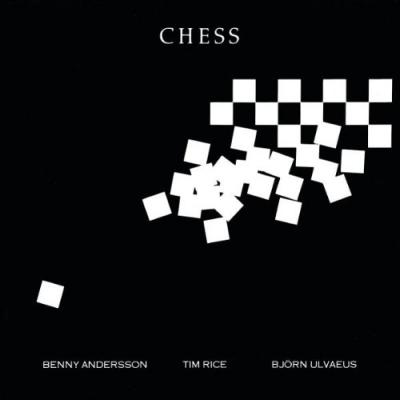
"Chess: London" Soundtrack Lyrics
Musical • 1996
Track Listing
"Chess: London (1996)" Soundtrack Description
Questions & Answers
- So… what exactly is “Chess: London (1996)” as a soundtrack?
- In the UK, 1996 widely saw two Chess-related CDs in circulation: a UK reissue of the original double-album (the concept/London material) and a separate Chess in Concert disc recorded in Gothenburg (1994) but released mid-90s. No brand-new “1996 London cast” studio album was created that year.
- Is this the same music as the famous 1986 West End staging?
- Song stack and orchestral sound largely follow the London version (Trevor Nunn’s staging era), though recordings most people own are the 1984 concept album or the 1994 Gothenburg concert release.
- What label pressed the UK double-CD that kept popping up in shops in 1996?
- Polydor/Polar issued a 2×CD set in the UK/EU market (catalogs such as 847 445-2 circulate); it’s a reissue of the classic recording rather than a new 1996 studio cast.
- Was there a 1996 London production with its own album?
- There was a 1996 UK tour using the London version’s script/song order, but no dedicated “1996 London tour cast album” entered wide retail.
- Where can I verify the different recordings?
- Check Wikipedia’s Chess page for version history, CastAlbums Database for discography specifics, and Discogs for the mid-90s Polydor/Polar reissues; Ovrtur documents the 1996 UK tour.
- Who wrote the score and lyrics?
- Music by Benny Andersson & Björn Ulvaeus; lyrics by Tim Rice.
Overview
Is it a concept album? A London cast? A concert? With Chess, the answer is “yes, depending on the year.” If you picked up a “Chess: London” double-CD in 1996, you almost certainly bought a UK/EU reissue of the classic studio set (the one that birthed “One Night in Bangkok” and “I Know Him So Well”) or you found the mid-90s release of the Gothenburg concert. Either way, the listening experience skews “London version” in shape and orchestral heft—grand choruses, sinuous synths, and that cool Cold War pulse.
What distinguishes these mid-90s discs isn’t new material so much as accessibility: the reissue put the album back in shops, while the concert release captured a front-row vantage on the score’s theatre DNA. For a 1996 buyer, “Chess: London” functioned like a gateway: you got the West End architecture (Merano → Bangkok), the ABBA-honed hooks, and Tim Rice’s razor-edged diplomacy games—no new plot, but newly easy to own.
Additional Info
- No brand-new 1996 studio cast: the UK double-CD commonly dated 1996 is a reissue of the classic recording in Polydor/Polar packaging.
- Parallel disc: Chess in Concert (recorded Gothenburg 1994) saw mid-90s release and often sits beside the reissue in shop bins.
- 1996 stage activity: a UK tour used the London version structure; it did not spawn a widely distributed cast album.
- Core creators: music by Benny Andersson & Björn Ulvaeus; lyrics by Tim Rice; arrangements/orchestrations in this era associated with Anders Eljas.
- Best-known cuts: “Merano,” “Nobody’s Side,” “One Night in Bangkok,” “Anthem,” “Pity the Child,” “I Know Him So Well,” “Endgame.”
Notes & Trivia
- “One Night in Bangkok” from the original album hit No. 3 on the U.S. Hot 100—rare for a stage-origin song.
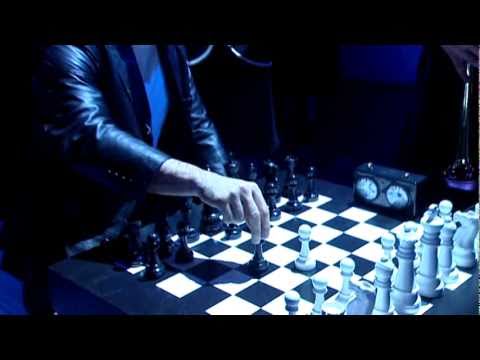
- Tim Rice’s London version tells Act I in Merano, Italy and Act II in Bangkok—two tournaments, two political climates.
- The 1996 UK tour’s song order broadly tracked the London template; some finales swapped in “Nobody’s Side” reprises on tour.
- Anders Eljas’s orchestrations helped fuse synth-pop and symphonic weight—the show’s signature sonic blend.
- Mid-90s CDs commonly carry Polydor/Polar catalog numbers (e.g., 847 445-2) even though the music predates 1996.
Genres & Themes
Symphonic pop/rock — glossy synths against full orchestra = statecraft as spectacle.
Operetta-adjacent ensembles — fugues and counterpoint telegraph competing agendas.
Ballad power — relationship bargaining becomes anthemic confession (“Anthem,” “I Know Him So Well”).
Electro swagger — “Bangkok” struts with drum machines and rap-cadence verses: media circus, commodified genius.
Tracks & Scenes
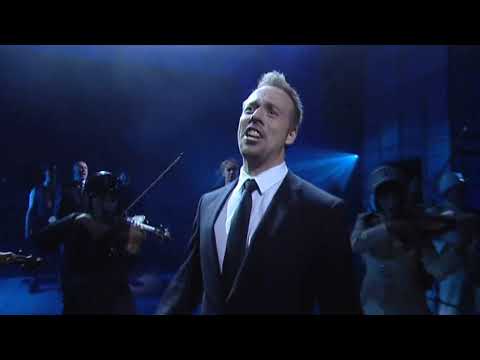
“Merano” — Company
Where it lands: Act I opener; the Italian resort town sells itself as a genteel host before the storm.
Why it matters: Sets the satire dial—civic boosterism vs. geopolitical dread.
“The Russian and Molokov / Where I Want to Be” — Anatoly
Where it lands: Early Act I; Anatoly confides ambition and doubt.
Why it matters: Humanizes the “Soviet machine” narrative with a private credo.
“The American and Florence / Nobody’s Side” — Freddie, Florence
Where it lands: Act I mid-game; their professional/personal contract frays.
Why it matters: Florence’s independence theme—loyalty in a no-win arena.
“Quartet (A Model of Decorum and Tranquility)” — Ensemble
Where it lands: Press-conference chaos.
Why it matters: Counterpoint equals crossed motives; the PR mask slips.
“One Night in Bangkok” — Freddie
Where it lands: Act II arrival in Thailand; the tournament becomes TV sport.
Why it matters: Pop-rap swagger frames the media spectacle that consumes the game.
“Anthem” — Anatoly
Where it lands: Act I climax (London version); a love-of-country without flags.
Why it matters: Chess’s moral center—patriotism as integrity, not propaganda.
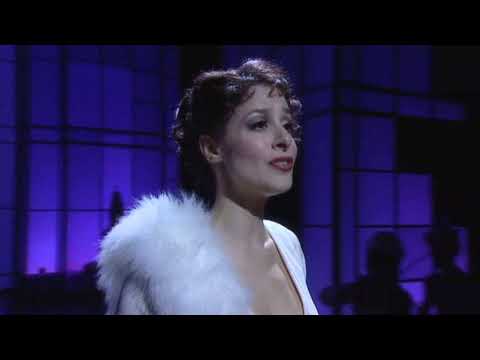
“I Know Him So Well” — Florence & Svetlana
Where it lands: Late Act II; two women map the cost of loving a divided man.
Why it matters: Pop duet classic; vulnerability without melodrama.
“Pity the Child” — Freddie
Where it lands: Act II confession.
Why it matters: Backstory detonates; bravado collapses into abandonment trauma.
“Endgame / You and I” — Company
Where it lands: Finale; political bargains resolve the board.
Why it matters: Strategy beats romance; the state always captures a piece.
Music–Story Links
Each “hit” is a plot lever. “Nobody’s Side” doesn’t just soar—it authorizes Florence to exit toxic alliances. “Anthem” reframes Anatoly’s defection as a moral choice rather than a press narrative. “Pity the Child” pulls the rug from under Freddie’s swagger so the endgame can be tragic, not just clever. And the crowd-pleasing “Bangkok” doubles as critique: the louder the hook, the more the media drowns the people making sacrifices off-camera.
How It Was Made
Creators: music by Benny Andersson & Björn Ulvaeus; lyrics by Tim Rice. London architecture: the 1986 West End version (Trevor Nunn) fixed the two-tournament structure (Merano/Bangkok) that mid-90s recordings reflect. Orchestration: Anders Eljas’s charts define the hybrid sound. Recordings in 1996 circulation: Polydor/Polar’s 2×CD reissue of the classic studio set; Chess in Concert (Gothenburg, recorded 1994) issued mid-90s, English-language.
Reception & Quotes
By the mid-90s, the album’s reputation had settled: a theatrical concept record with genuine pop hits, and a show that lives in multiple “editions.”
“A sumptuously recorded… grandiose pastiche… lavishly arranged for the London Symphony Orchestra.” The New York Times via Wikipedia
“One Night in Bangkok” reached No. 3 on the Hot 100—proof the score punched beyond theatre.” Wikipedia (chart history)
“1996 UK tour tracked the London version; documentation shows cast but no mass-market album from that run.” Ovrtur / fan discographies
Availability: the mid-90s Polydor/Polar double-CD reissue is common on second-hand markets; the Gothenburg Chess in Concert (1994 recording, released mid-90s) streams widely. Check Discogs and CastAlbums for exact editions and catalog numbers.
Technical Info
- Title: Chess: London (1996) — soundtrack context & recordings
- Year: 1996 (reissue & mid-90s concert release activity)
- Type: Musical (London version lineage)
- Composers: Benny Andersson, Björn Ulvaeus
- Lyricist: Tim Rice
- Key recordings in circulation (UK, mid-90s): Polydor/Polar 2×CD reissue of the classic album; Chess in Concert (Gothenburg 1994, English) issued mid-90s.
- 1996 stage context: UK tour (London version structure); no dedicated 1996 London cast album widely released.
- Label(s): Polydor / Polar (reissues); various for the concert set.
Canonical Entities & Relations
| Benny Andersson | composed music for | Chess (musical) |
| Björn Ulvaeus | composed music for | Chess (musical) |
| Tim Rice | wrote lyrics for | Chess (musical) |
| Anders Eljas | orchestrated | key concert/stage versions |
| Polydor / Polar | reissued | Chess double-CD in UK/EU (mid-90s) |
| Gothenburg Symphony forces | performed | Chess in Concert (recorded 1994; released mid-90s) |
| UK Tour (1996) | staged | London-version Chess across the UK |
Sources: Wikipedia, Discogs, CastAlbums Database, Ovrtur.
October, 28th 2025
A-Z Lyrics Universe
Cynthia Erivo Popular
Ariana Grande Horsepower
Post Malone Ain't No Love in Oklahoma
Luke Combs Good Riddance (Time of Your Life)
Green Day Bye Bye Bye
*NSYNC You're the One That I Wan
John Travolta & Olivia Newton-John I Always Wanted a Brother
Braelyn Rankins, Theo Somolu, Kelvin Harrison Jr. and Aaron Pierre The Power of Love
Frankie Goes to Hollywood Beyond
Auli’i Cravalho feat. Rachel House MORE ›