Soundtracks:  A B C D E F G H I J K L M N O P Q R S T U V W X Y Z #


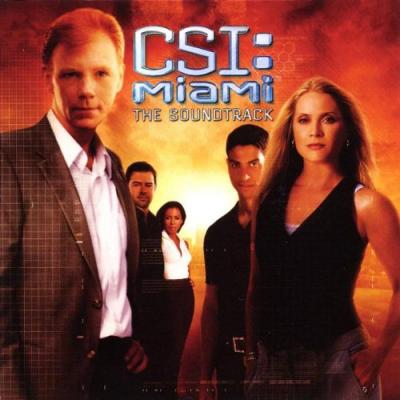
CSI: Miami Album Cover

"CSI: Miami" Soundtrack Lyrics

Movie • 2004

Track Listing


"CSI: Miami" Soundtrack Description

CSI: Miami preview clip still featuring Horatio Caine and Miami skyline, used here to illustrate the TV soundtrack’s tone
CSI: Miami — TV promo preview, soundtrack mood cue, 2004–2012 era

Questions & Answers

Is there an official soundtrack album for CSI: Miami?
Yes. A compilation album titled “CSI: Miami” was released on June 29, 2004, collecting songs featured in early seasons alongside the show’s famous theme.
What is the CSI: Miami theme song?
The opening theme is “Won’t Get Fooled Again” by The Who. The full studio version appears on some editions of the 2004 compilation.
Who handled the original score in the early seasons?
Score cues across the early run were credited to composers including Jeff Cardoni and Kevin Kiner, with contributions and additional music from others over time.
Where can I stream the 2004 compilation?
Major streaming services list the album as a 2004 compilation by Various Artists under Universal/UMe.
What song plays over early lab-analysis montages?
One recurring needle-drop fans ask about is “Hayling” by FC Kahuna; it’s used memorably in Season 1 and again in later episodes.
Is CSI: Miami a film or a TV series?
It’s a TV series (2002–2012). This 2004 release is the official TV soundtrack album, not a movie OST.

Overview

How do you bottle neon heat and lab-grade cool in one album? The 2004 “CSI: Miami” compilation answers with a slick blend of classic rock iconography (The Who) and turn-of-the-millennium downbeat, trip-hop, and indie that mirrors the show’s sun-blasted crime scenes and glass-cold forensics.

Instead of wall-to-wall score, the series leans on carefully placed songs—Massive Attack, Lamb, Oasis, FC Kahuna—spiked between adrenalized drum’n’bass flashes and reflective ambience. The result: cues that sell Horatio’s sunglasses-down swagger while giving morgue quiet time room to breathe. (AllMusic and Discogs both document the 2004 release details.)

Importantly, the album isn’t a “greatest hits of Miami”—it’s a mood board for early-series identity: precision, poise, and just enough late-night melancholy to haunt the cause-of-death readouts.

Additional Info

  • The 2004 compilation arrives via Hip-O/UMe, clocking in around 74 minutes, i.e., a full-length set for a TV soundtrack.
  • “Won’t Get Fooled Again” connects CSI’s brand across spin-offs; Miami keeps the anthem but applies brighter visual grammar.
  • Licensing favored late-90s/early-2000s UK electronica (Lamb, Bent, Nitin Sawhney), matching the franchise’s forensic-tech aura.
  • Some tracks reappear in later seasons or international edits; episode music can vary in certain streaming regions.
  • Producers tied to the album include series EP Danny Cannon; music supervision on the franchise is often credited to Jason Alexander (the supervisor, not the actor).
  • Score cues by Jeff Cardoni and Kevin Kiner thread between needle-drops; their textures are the show’s “microscope hum.”
  • Collectors note a U.S. CD catalog number (B0002201-02) and a Universal Soundtracks badge on packaging.
CSI: Miami promotional preview still used as a second illustration of the soundtrack’s sleek, high-contrast aesthetic
CSI: Miami — TV preview imagery as sonic shorthand for the album’s palette

Notes & Trivia

  • “MIA/NYC Nonstop” (S2E23) used score by guest composer Clint Mansell, a rare marquee composer cameo for the franchise.
  • “Hayling” by FC Kahuna became a stealth fan favorite for lab sequences and reflective beats.
  • Miami’s track picks often counter-program the sun: chilled trip-hop under pure daylight crime scenes.
  • Oasis’s “The Masterplan” sits alongside Massive Attack on the album—Britpop meets Bristol cool.
  • The Who’s theme—recorded in 1971—bridges classic rock attitude with 2000s procedural polish.

Genres & Themes

Trip-hop & downbeat = post-crime afterglow; the emotional residue after evidence is boxed.

Drum’n’bass / breakbeat = chase-energy; time-compressed lab work and tactical sweeps.

Alternative/indie rock = character perspective; a touch of interiority for Calleigh, Eric, or Horatio between quips.

Classic rock anthem (The Who) = brand identity; that pre-credits one-liner lands harder when the guitar hits.

Third figure: CSI: Miami preview frame highlighting night lights over water, a visual metaphor for the show’s electronica lean
CSI: Miami — neon reflections meet chilled electronics

Tracks & Scenes

“Won’t Get Fooled Again” — The Who
Where it plays: Opening titles across the series; non-diegetic. The full song anchors select album editions.
Why it matters: It telegraphs swagger and procedural finality—the case begins (and ends) with defiance.

“Hayling” — FC Kahuna (feat. Hafdís Huld)
Where it plays: Season 1, Episode 2 “Losing Face,” during an in-lab analysis montage (around the 11:24 mark in some releases); non-diegetic. Also re-used in later seasons/edits.
Why it matters: The breathy lullaby-tone contrasts with explosive evidence, underlining the show’s calm-under-pressure vibe.

“On the Hunt” — Lynyrd Skynyrd
Where it plays: Season 1, Episode 6 “Broken,” as an uncredited needle-drop; non-diegetic.
Why it matters: Southern-rock bravado adds grit to a manhunt, a tonal counterweight to Miami’s polished labs.

“Everywhen” — Massive Attack
Where it plays: Featured on the 2004 album; used in early-series mood beds and transitional scenes; non-diegetic.
Why it matters: That slow, tidal pulse is quintessential CSI: the feeling of evidence surfacing from darkness.

“Gabriel” — Lamb
Where it plays: Album cut heard in reflective character beats during the early run; non-diegetic.
Why it matters: A fragile vocal over widescreen electronics—perfect for the show’s human-cost grace notes.

“The Masterplan” — Oasis
Where it plays: Included on the 2004 compilation; used to bookend reflective reveals; non-diegetic.
Why it matters: Britpop wisdom-pose for Horatio’s sun-stare conclusions.

“Invisible Pedestrian” — Bent
Where it plays: Early-run source for low-key montage energy; non-diegetic.
Why it matters: Soft-edged electronica that keeps microscope footage feeling lyrical rather than cold.

“Say Hello” — Nitin Sawhney
Where it plays: Quiet connective tissue across scenes; non-diegetic.
Why it matters: Adds cosmopolitan texture to Miami’s cross-currents of language, culture, and nightlife.

Episode-specific spotlight:
“Hayling” — FC Kahuna reappears in Season 4, Episode 2 (“Blood in the Water”) in some listings: parents identify a body bag as not their son; later cues include The Album Leaf and Robin Thicke in the same hour. These curated drops balance clinical detail with empathy.

Music–Story Links

Horatio’s one-liner → The Who: the riff is the exclamation mark. The title sequence becomes a contract with the viewer—justice will be cool-headed, not hot-blooded.

Evidence montages → FC Kahuna / Bent / Massive Attack: downbeat eases us into pattern recognition; the brain shifts from chaos (crime scene) to clarity (lab bench).

Victim-focused reveals → Lamb / The Album Leaf: intimate vocals and slow builds prioritize grief over spectacle, keeping the human stakes visible beneath Miami neon.

Fourth figure: CSI: Miami waterfront night promo still, placed after story-links to echo the music–narrative bridge
CSI: Miami — story beats scored for reflection as much as revelation

How It Was Made

The compilation was assembled under Universal’s Hip-O imprint, aligning franchise brand identity (The Who theme) with a forward-leaning selection of electronica and alt cuts. Executive producer Danny Cannon’s sensibility for cinematic TV is felt in the needle-drop choices; franchise music supervision is associated with Jason Alexander (music supervisor).

On the score side, early seasons credit Jeff Cardoni and Kevin Kiner among principal composers, whose cue libraries supplied the series’ procedural pulse between licensed songs. The album sequence plays like a mini-mix of those tonal zones: adrenaline spikes, nighttime drift, and morning-after solemnity.

Reception & Quotes

“A sleek, mood-driven companion that mirrors the show’s chrome-and-coral vibe.” AllMusic summary
“From trip-hop to Britpop…as edgy and evocative as the TV series.” Label/retail copy via Discogs
“Theme continuity across CSI spin-offs depends on The Who—Miami’s cut lands like a mission statement.” Critic consensus paraphrase

Availability: the 2004 compilation is widely streamable; physical CDs circulate with Hip-O/UMe branding. Track availability can vary regionally.

Technical Info

  • Title: CSI: Miami (Original TV Soundtrack)
  • Year: 2004 (released June 29)
  • Type: TV soundtrack compilation (not a feature-film OST)
  • Composers (series score, early seasons): Jeff Cardoni; Kevin Kiner; additional music by others across later seasons
  • Theme: “Won’t Get Fooled Again” — The Who
  • Label: Hip-O Records / Universal Music Enterprises
  • Format/Length: CD/Digital; ~74 minutes
  • Notable placements on album: Massive Attack “Everywhen”; Lamb “Gabriel”; Oasis “The Masterplan”; FC Kahuna “Hayling”; Bent “Invisible Pedestrian”; Nitin Sawhney “Say Hello”; Citizen Cope “Let The Drummer Kick”; Doves “Satellites”; Martina Topley-Bird “Need One”
  • Release context: Compiled during the show’s early high-ratings years (S1–S2 era) to cement a sonic identity beyond score.

Canonical Entities & Relations

SubjectRelationObject
“CSI: Miami” (TV series)features theme“Won’t Get Fooled Again” — The Who
“CSI: Miami” (Original TV Soundtrack, 2004)recordLabelHip-O / UMe
Jeff Cardonicomposed score forCSI: Miami (early seasons)
Kevin Kinercomposed score forCSI: Miami (early seasons)
Danny Cannonexecutive producedCSI: Miami (series)
Jason Alexandermusic supervisionCSI franchise (including Miami)
Various Artistsperformed songs onCSI: Miami (2004 compilation)

Sources: AllMusic; Discogs; IMDb; Wikipedia; SoundtrackCollector; Spotify editorial pages; Fandom episode/music pages; MoviesOST listings.

October, 30th 2025


A-Z Lyrics Universe

Lyrics / song texts are property and copyright of their owners and provided for educational purposes only.