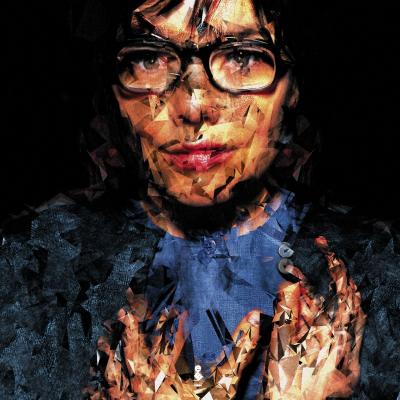
"Dancer In The Dark" Soundtrack Lyrics
Movie • 2000
Track Listing
Bjork
Bjork
Bjork
Bjork
Bjork
Bjork
"Selmasongs (Music from the Motion Picture ‘Dancer in the Dark’)" Soundtrack Description
Questions & Answers
- Is there an official soundtrack album?
- Yes — Björk’s soundtrack album is titled Selmasongs (Music from the Motion Picture ‘Dancer in the Dark’), released in 2000.
- Who wrote the music and lyrics?
- Original music by Björk; lyrics involve Björk with Lars von Trier and Sjón. Orchestral arrangements/conducting by Vince Mendoza.
- Are the album versions different from the film?
- In several cases, yes. Most famously, “I’ve Seen It All” is a Björk–Thom Yorke duet on the album, while Peter Stormare sings the male part in the film.
- Which song was Oscar-nominated?
- “I’ve Seen It All” was nominated for Best Original Song at the 73rd Academy Awards.
- Is “My Favorite Things” on the album?
- No. The film quotes Rodgers & Hammerstein’s number from The Sound of Music, but it’s not included on the commercial album.
- What’s with the track “107 Steps”?
- It’s the execution-walk number: Selma’s dread is paced out by a guard counting steps, turning footsteps into rhythm.
- Does Catherine Deneuve actually sing?
- Yes — she joins Björk on “Cvalda,” the factory-set showstopper.
Overview
How do you score a character who escapes into musicals while reality closes in? Selmasongs answers by folding clank and hiss — factory presses, train tracks, footfalls — into songs that bloom from Selma’s imagination. It’s pop, orchestral color, and musique concrète threaded into one tragic arc.
The album mirrors the film’s conceit: everyday noise becomes rhythm, and rhythm becomes refuge. “Cvalda” bangs the factory into a tap routine; “I’ve Seen It All” rides a train’s pulse into a hard-earned, almost-defiant acceptance; “107 Steps” turns dread into counting. Wikipedia and AllMusic both note how the album differs from the film (different duet partner, missing cues), which matters because Selmasongs was issued before many viewers saw the movie.
Additional Info
- Album name & date: Selmasongs (2000); released September 18, 2000 internationally, aligned to the film’s rollout.
- Key collaborators: Producer/programmer Mark Bell; lyric contributions by Sjón and Lars von Trier; orchestration/conducting by Vince Mendoza.
- Found-sound DNA: Several songs are built from location sounds — factory rhythms in “Cvalda,” train loops in “I’ve Seen It All.”
- Different in-film vs. album: Peter Stormare duets in the film on “I’ve Seen It All”; Thom Yorke replaces him on the album.
- Not on the album: The film’s use of Rodgers & Hammerstein’s “My Favorite Things” and the in-film “Next to Last Song” aren’t included on Selmasongs.
- Vocals by cast: Catherine Deneuve features on “Cvalda”; Siobhan Fallon Hogan appears on “107 Steps.”
- Label info: Released via One Little Indian (UK/Europe) with Elektra handling U.S./Canada distribution on digital storefronts.
- Oscar note: “I’ve Seen It All” received a Best Original Song nomination (Björk famously wore the swan dress at the ceremony).
Notes & Trivia
- Von Trier filmed musical numbers with ~100 fixed digital cameras, then cut angles together — the opposite of his handheld dramatic scenes.
- Valgeir Sigurðsson helped craft the train-loop rhythm that drives “I’ve Seen It All.”
- Björk’s album versions tweak lyrics to avoid plot spoilers, since Selmasongs predated many territories’ releases.
- The overture plays over abstract color fields — a visual prologue before the Dogme-style drama kicks in.
- “107 Steps” literalizes movement as meter: a guard’s count becomes the beat to the gallows.
Genres & Themes
Musique concrète & industrial pop: everyday noise (presses, trains, steps) becomes groove — Selma hears rhythms where others hear drudgery.
Orchestral sweep: Vince Mendoza’s strings give Selma’s fantasies lift and scale — romance, even when reality won’t allow it.
Art-pop balladry: Björk’s melodic lines keep humanity at the center; acceptance without surrender.
Tracks & Scenes
“Cvalda” — Björk feat. Catherine Deneuve
Where it plays: The factory erupts into a staged routine; machinery clangs morph into percussion as Selma and Kathy move through the presses (largely diegetic-to-imagined).
Why it matters: It’s the film’s statement of purpose — labor noise becomes liberation music.
“I’ve Seen It All” — Björk (film duet with Peter Stormare; album duet with Thom Yorke)
Where it plays: On the railway bridge during Selma’s walk home; train rhythms set the pulse as two voices weigh loss vs. acceptance (non-diegetic fantasy seeded by real-world sound).
Why it matters: The movie’s moral fulcrum — Selma reframes absence as “already seen.”
“In the Musicals” — Björk
Where it plays: In court, when language fails Selma; sketching pencils and courtroom sounds spark a full defense-in-song (imagination takes over).
Why it matters: The trial’s chaos turns into choreography — a plea in the only language she trusts.
“Scatterheart” — Björk
Where it plays: A dreamlike, post-crisis release that floats forgiveness above horror (non-diegetic fantasia).
Why it matters: Grace note in a grim story; the album version’s lyrics differ significantly from the film.
“107 Steps” — Björk feat. Siobhan Fallon Hogan
Where it plays: The death-row walk — a guard’s count turns into the song’s meter as Selma moves toward the gallows (diegetic source transfigured into music).
Why it matters: Movement becomes music; fear becomes form.
“New World” — Björk
Where it plays: Selma’s final, unaccompanied song at the gallows; the film ends before the last line completes (then titles).
Why it matters: A “curtain song” that refuses catharsis — hope cut mid-note.
“Overture” — Björk (instrumental)
Where it plays: Opening titles over abstract color fields; a staged musical preface before the handheld realism.
Why it matters: Announces that this tragedy will be a musical — just not the kind you expect.
Music–Story Links
- Work becomes wonder: “Cvalda” retools factory noise into choreography — Selma’s coping mechanism codified as song.
- Acceptance vs. denial: “I’ve Seen It All” lets Selma choose perspective over despair; the duet frames two philosophies of suffering.
- Body as metronome: “107 Steps” uses breath and footsteps to keep time; the closer she gets, the steadier the rhythm.
How It Was Made
Björk wrote and produced the core material, with Mark Bell programming/producing and Sjón and Lars von Trier contributing lyrics. Vince Mendoza arranged and conducted the orchestral forces. Several numbers were built from on-set recordings — trains and presses — with Valgeir Sigurðsson shaping the signature train loop in “I’ve Seen It All.” Von Trier staged the musical sequences with roughly a hundred fixed digital cameras, then cut between angles to make the numbers feel “bigger” than the gritty drama around them.
Reception & Quotes
“It smashes down the walls of habit… a bold, reckless gesture.” Roger Ebert
“Factory scene filmed with a hundred fixed cameras.” The New Yorker
“The most shallow and crudely manipulative [film] of 2000.” The Guardian
Album notice: AllMusic and Metacritic summarize generally favorable reviews for the record, noting its blend of orchestral sweep and found-sound pop.
Technical Info
- Title: Selmasongs (Music from the Motion Picture ‘Dancer in the Dark’)
- Year: 2000
- Type: Movie soundtrack
- Music by: Björk
- Lyrics by: Björk; Lars von Trier; Sjón
- Orchestration/Conductor: Vince Mendoza
- Production/Programming: Björk; Mark Bell; (notable programming: Valgeir Sigurðsson)
- Featured vocals: Catherine Deneuve (“Cvalda”); Siobhan Fallon Hogan (“107 Steps”); Thom Yorke (album duet on “I’ve Seen It All”)
- Label/Release: One Little Indian (global); U.S./Canada digital listings credit Elektra (Sept 18, 2000)
- Awards: “I’ve Seen It All” — Academy Award nominee, Best Original Song (2001)
- Availability: Widely streaming (Spotify/Apple Music); physical editions on multiple labels/pressings.
Canonical Entities & Relations
| Subject | Relation | Object |
|---|---|---|
| Björk | composed/performed | Selmasongs (soundtrack album) |
| Sjón | co-wrote lyrics for | songs on Selmasongs |
| Lars von Trier | co-wrote lyrics for | songs on Selmasongs |
| Vince Mendoza | orchestrated & conducted | album recordings |
| Mark Bell | produced/programmed | key tracks on Selmasongs |
| Valgeir Sigurðsson | created rhythm loop in | “I’ve Seen It All” |
| Catherine Deneuve | performed vocals on | “Cvalda” |
| Thom Yorke | duet vocal (album) | “I’ve Seen It All” |
| Dancer in the Dark (film) | features music by | Björk |
| One Little Indian / Elektra | released/distributed | Selmasongs |
Sources: Wikipedia; AllMusic; The New Yorker; Roger Ebert; Apple Music; Spotify; Discogs.
This is one of a few films where stars Björk (Iceland singer, whose full name is Björk Guðmundsdóttir), directed by cult Lars von Trier. She wrote music to this film. She possesses all the songs in this soundtrack. This singer is excessively successful, as for Iceland performer. How much do you know other singers from that cold piece of land? If to name only really famous ones outside this state, not looking in Wikipedia, then she will be the only one. For a long time, she lives & works in US and that movie really triggered her to move there to continue her so brightly started career. For that film of 2000, she received 16 various awards and nominations of different kind for acting talent and 7 more for composing talent which vividly expressed not only in music, but in her lyrics in songs to a film. Not before, not after, she had so much attention to her humble person, but since then she participated in 3 more films and released 5 more disks. This motion picture four times overcame its budget in the box office, though we cannot call it tremendous – only USD 46 million vs. USD 12.5 of budget. Catherine Deneuve also received her piece of glory, but a true star was Björk. This film tells a story of Czech immigrant in US, who is not supported by anyone and raises a small son. She is wooed by persistent man, also a blue collar of that factory, the same poor as the girl. What is really heartbreaking is that she loses her vision because of progressing illness and one day this wooer actually uses this against her – he steals a purse of almost blind woman, where she kept lots of money for the eye operation. She has own bright world. In song Cvalda she introduces her friend from the factory with fine lyrics; in Scatterheart reveals own sadness and In the Musicals dreams of herself as an actress of the musical.October, 30th 2025
A-Z Lyrics Universe
Cynthia Erivo Popular
Ariana Grande Horsepower
Post Malone Ain't No Love in Oklahoma
Luke Combs Good Riddance (Time of Your Life)
Green Day Bye Bye Bye
*NSYNC You're the One That I Wan
John Travolta & Olivia Newton-John I Always Wanted a Brother
Braelyn Rankins, Theo Somolu, Kelvin Harrison Jr. and Aaron Pierre The Power of Love
Frankie Goes to Hollywood Beyond
Auli’i Cravalho feat. Rachel House MORE ›