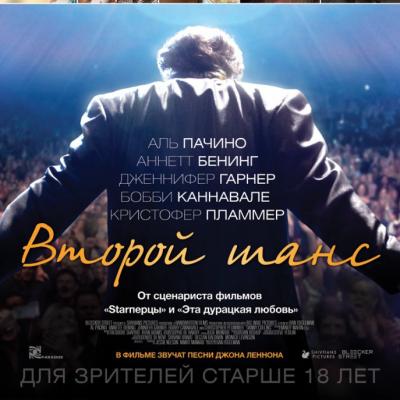
"Danny Collins" Soundtrack Lyrics
Movie • 2015
Track Listing
John Lennon
John Lennon
John Lennon
John Lennon
Beirut
John Lennon
John Lennon
John Lennon
John Lennon
John Lennon
"Danny Collins" Soundtrack Description
Overview
What happens when a redemption story is scored with the music of someone who practically wrote the book on second chances? Danny Collins answers with a jukebox of John Lennon deep cuts and classics threaded through a tender, funny drama about an aging pop star (Al Pacino) trying to start again. The soundtrack doesn’t merely decorate scenes; it becomes Danny’s moral compass — a running conversation with Lennon’s voice about honesty, fatherhood, and fear.
Original score by Ryan Adams and Theodore Shapiro provides intimate connective tissue — guitar-led cues, warm keys, and soft percussion — while fully-licensed Lennon masters drop in at pivotal turns (“Whatever Gets You Thru The Night,” “Beautiful Boy,” “Love,” and more). It’s a rare studio film that lands so many Beatles-adjacent clearances and then uses them with restraint. The end result: a soundtrack that feels like a letter from the past guiding a man toward a different future.
Questions & Answers
- Is there an official soundtrack album?
- There wasn’t a widely released commercial compilation of all songs. Select tracks (the Lennon masters) are available on their original releases; the film’s original score by Ryan Adams & Theodore Shapiro was not issued as a standalone album.
- Who composed the score?
- Ryan Adams and Theodore Shapiro co-composed the original score.
- How many John Lennon songs are in the movie?
- Nine Lennon songs were licensed and used across the film.
- What song plays when Danny reaches out to his son?
- “Beautiful Boy (Darling Boy)” underscores that emotional stretch of the story.
- Which original songs are performed by Al Pacino as Danny?
- “Hey Baby Doll” and “Don’t Look Down” are original in-world songs tied to the character, with Pacino performing.
- Who handled music supervision?
- A small team: Matthew Rush Sullivan, Julia Michels, and Julianne Jordan are credited with music supervision roles.
- Does the film use any classical music?
- Yes — Bach’s “Brandenburg Concerto No. 3” appears as a brief classical needle drop.
Notes & Trivia
- Nine Lennon masters in one studio dramedy is unusual; the clearances famously hinged on a direct ask to Yoko Ono.
- Two original songs (“Hey Baby Doll,” “Don’t Look Down”) were longlisted for the 2015 Best Original Song Oscar.
- Pacino’s character is inspired by a real-life letter John Lennon wrote to musician Steve Tilston decades earlier.
- Al Pacino performs in-character during staged concert sequences; a vocal coach worked with him for phrasing and breath.
- The film briefly drops a classical cue — Bach’s “Brandenburg Concerto No. 3” — as a tonal palate cleanser.
Genres & Themes
Classic rock & Lennon solo cuts → candor and course-correction. Lennon’s post-Beatles material often confronts self-delusion; the film rides that energy to nudge Danny from denial to truth.
Acoustic score motifs → vulnerability. Adams & Shapiro’s cues feel like private thoughts — fingerpicked guitar and soft keys shadowing Danny’s late-night honesty and morning-after resolve.
Bar-band sheen & diegetic pop → celebrity performance vs. person. “Hey Baby Doll,” the cheesy crowd-pleaser, represents the gilded cage Danny built for himself.
Tracks & Scenes
"Whatever Gets You Thru The Night" — John Lennon
Scene: Early in the film as Danny spirals through booze-and-powder excess, this track blasts over a hedonistic montage. Non-diegetic; quick-cut nightlife and hotel hallways.
Why it matters: The lyric hook reframes as irony — Danny’s “through the night” choices are exactly what he must outgrow.
"Beautiful Boy (Darling Boy)" — John Lennon
Scene: Plays around the stretch when Danny tries to connect with his estranged son; used as tender emotional underscoring rather than source music.
Why it matters: A father-to-child lullaby becomes a bridge for a father who missed the lullabies the first time.
"Imagine" — John Lennon
Scene: Non-diegetic needle drop in a reflective passage as Danny contemplates changing course (hotel-room recalibration / letter reverie).
Why it matters: A utopian anthem recast as an inner monologue: picture a life not built on applause.
"Nobody Told Me" — John Lennon
Scene: Mid-film transition cue, covering travel and awkward first attempts at normalcy; plays non-diegetically.
Why it matters: “Strange days indeed” mirrors the fish-out-of-water comedy of a superstar buying reading glasses and showing up to doctor visits.
"Love" — John Lennon
Scene: Quiet, intimate moment underscoring a late conversation that strips away stage persona.
Why it matters: Minimalist production and direct lyric match the film’s naked confessions.
"Hold On" — John Lennon
Scene: Short needle drop during a lull in the second act; outside-the-plot lyric encouragement mirrors Danny’s “one good day at a time.”
Why it matters: Turns a pep talk into a gentle sonic mantra.
"#9 Dream" — John Lennon
Scene: Briefly woven as a dreamy transition cue; non-diegetic.
Why it matters: Surreal “ah! böwakawa poussé, poussé” textures echo Danny’s jet-lagged, dislocated state.
"Working Class Hero" — John Lennon
Scene: Early concert/intro context and/or montage accent, non-diegetic; used to underline the dissonance between Danny’s champagne lifestyle and the sincerity he once chased.
Why it matters: The title stings — he’s drifted far from the “hero” in the song.
"Hey Baby Doll" — Danny Collins (Al Pacino)
Scene: Diegetic: Danny performs it on stage to rapt fans — the reliable, retro hit everyone expects.
Why it matters: The catchy sugar-rush is a plot device: every time he plays it, he postpones growth.
"Don’t Look Down" — Danny Collins (Al Pacino)
Scene: Diegetic rehearsal/demo moment as Danny toys with new material he’s scared to unveil.
Why it matters: Title doubles as advice to himself: stop glancing at the safety net.
"Mary" — Ryan Adams
Scene: A gentle score piece that cushions introspective beats (non-diegetic).
Why it matters: The acoustic palette keeps the story human-scale between the big songs.
"Brandenburg Concerto No. 3 — I. Allegro" — J. S. Bach
Scene: Classical interlude (source or montage); a short, sparkling palate cleanser amid rock and pop.
Why it matters: Signals “new air” in the cut — a reset between louder, lyric-driven cues.
"The Rip Tide" — Beirut
Scene: Low-key transitional montage (non-diegetic), modern indie texture.
Why it matters: Expands the soundtrack’s palette beyond Lennon without breaking its wistful mood.
"Itsy Bitsy Spider" — Traditional (sung by Hope)
Scene: Diegetic: a family moment with Danny’s granddaughter; small, domestic, unvarnished.
Why it matters: The sound of the life Danny’s learning to value.
Music–Story Links
When Danny first reads the long-lost Lennon letter, the film’s score dials almost to silence, then lets a Lennon track answer him back — as if John were still writing margin notes on Danny’s choices. Later, “Beautiful Boy” reframes Danny’s pursuit: he isn’t chasing a chart; he’s chasing a relationship. Even cheeseball diegetic hits like “Hey Baby Doll” become moral props — if he leans on them, growth stalls; if he risks new material, the story moves forward.
How It Was Made
Dan Fogelman wrote and directed the film, inspired by a true Lennon letter to folk musician Steve Tilston. To get this music, producers made a direct appeal to Yoko Ono, ultimately securing use of nine Lennon masters — an exceptional feat for a modestly budgeted character piece. Music supervision credits include Matthew Rush Sullivan, Julia Michels, and Julianne Jordan. Score duties were shared by Ryan Adams and veteran composer Theodore Shapiro, who previously collaborated on an original song for another film.
Reception & Quotes
Critics frequently singled out the Lennon integrations and the warmth of the Adams/Shapiro score. Audience chatter often pointed to how well “Beautiful Boy” works in context — obvious, sure, but effective.
“Nine Lennon songs — and the film uses them thoughtfully.” — The Wall Street Journal
“‘Beautiful Boy’ lands right when Danny reaches for fatherhood.” — The Washington Post
“Adams and Shapiro stitch gentle cues between the big needle drops.” — trade coverage summary
Additional Info
- Clearances: a personal connection to Yoko Ono was pivotal in getting the Lennon catalog approved.
- Oscar longlist: “Don’t Look Down” and “Hey Baby Doll” made the 2015 Academy longlist for Best Original Song.
- Inspiration: the premise adapts the Steve Tilston letter story, swapping in a fictionalized U.S. pop icon.
- Label reality: no comprehensive soundtrack album — fans built playlists from existing Lennon remasters.
- Diegetic vs. non-diegetic: the film smartly toggles between onstage performance and interior monologue song use.
- Classical curveball: brief Bach offering keeps the sonic field from feeling too monochrome.
Technical Info
- Title: Danny Collins — Soundtrack
- Year: 2015
- Type: Movie (comedy-drama)
- Composers (score): Ryan Adams; Theodore Shapiro
- Music Supervision: Matthew Rush Sullivan; Julia Michels; Julianne Jordan
- Selected Notable Placements: John Lennon — “Whatever Gets You Thru The Night,” “Beautiful Boy,” “Imagine,” “Love,” “Hold On,” “#9 Dream,” “Nobody Told Me,” “Working Class Hero”
- Original Songs (diegetic): “Hey Baby Doll”; “Don’t Look Down” (performed by Al Pacino as Danny)
- Classical: Bach — “Brandenburg Concerto No. 3” (I)
- Release Context: U.S. theatrical release March 2015
- Album/Availability Notes: No official all-in-one soundtrack compilation; Lennon tracks available on remastered editions; score not widely released as an album.
Canonical Entities & Relations
| Subject | Relation | Object |
|---|---|---|
| Dan Fogelman | wrote & directed | Danny Collins (film) |
| Ryan Adams | co-composed score for | Danny Collins |
| Theodore Shapiro | co-composed score for | Danny Collins |
| Matthew Rush Sullivan | served as | Music Supervisor |
| Julia Michels | served as | Music Supervisor |
| Julianne Jordan | served as | Music Supervisor |
| John Lennon recordings | featured in | Danny Collins — nine masters |
| Bleecker Street | distributed | Danny Collins (U.S.) |
| Steve Tilston letter | inspired | premise of Danny Collins |
Sources: The Wall Street Journal; The Washington Post; Metacritic credits; Wikipedia.
October, 30th 2025
Danny Collins: movie profile on IMDb, article on WikipediaA-Z Lyrics Universe
Cynthia Erivo Popular
Ariana Grande Horsepower
Post Malone Ain't No Love in Oklahoma
Luke Combs Good Riddance (Time of Your Life)
Green Day Bye Bye Bye
*NSYNC You're the One That I Wan
John Travolta & Olivia Newton-John I Always Wanted a Brother
Braelyn Rankins, Theo Somolu, Kelvin Harrison Jr. and Aaron Pierre The Power of Love
Frankie Goes to Hollywood Beyond
Auli’i Cravalho feat. Rachel House MORE ›